
Reviewed · KYOTO CRAFT & CALLIGRAPHY WORKSHOPS
Ikebana Traditional Japanese Art of Flower Arranging
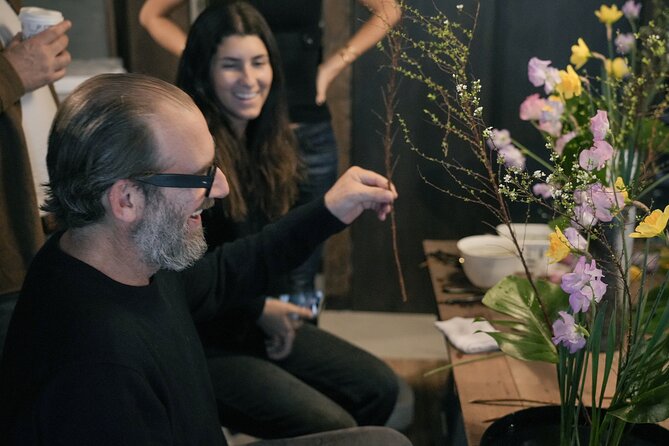
Ikebana makes Kyoto feel quieter. I love the hands-on rhythm of arranging seasonal stems, and I love how the class treats flowers as living things through mindfulness and wabi-sabi calm.
Because this is a short, focused 1 hour 30 minutes session, you will leave with practical skills, but you may not get the deeper, long-form breakdown of ikebana schools and rules you might hope for.
Key highlights at a glance
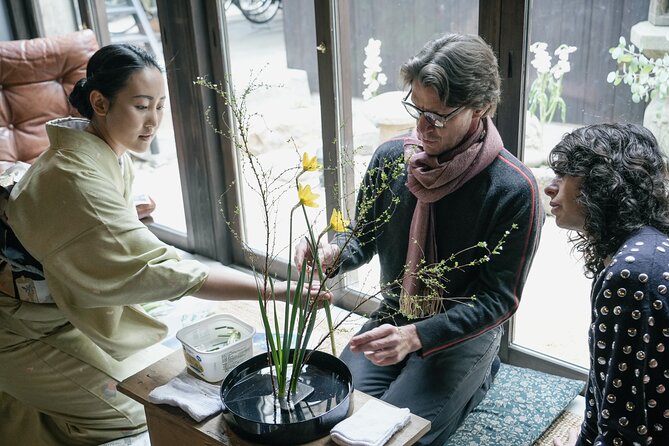
- Two beginner styles to learn, Nageire and Moribana
- Small group size with a maximum of 6 for more personal guidance
- Seasonal flowers and a classroom pace built for first-timers
- Mindfulness + wabi-sabi aesthetics tied directly to how you place each stem
- Freshness care tips intended to help arrangements last up to two weeks
A calm Kyoto studio, not a big tourist show
This ikebana class is set up for people who want something real and doable, not a lecture you forget the next day. You meet in Kyoto’s Kamigyo Ward, in an address area around Tanbayacho, with the activity ending back at the same spot. Since it’s described as near public transportation, you can actually fit it into a day of sightseeing without stress.
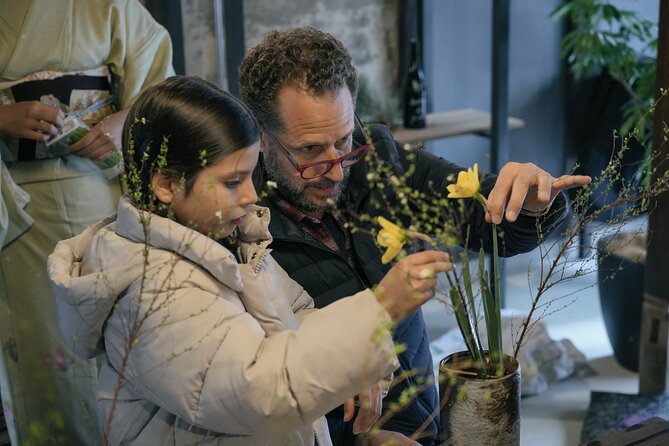
The group size matters. With a maximum of 6, the instructor can correct your angles and spacing without making you feel rushed. That small class feel is one of the reasons this works well even if you have never arranged flowers before.
You’re also stepping into a place that feels like it belongs to Japan, not a generic workshop room. One participant noted a typical Japanese house setting, and that matches the overall vibe: quiet, tidy, and designed for attention.
You can also read our reviews of more tours and experiences in Kyoto.

What you learn: ikebana philosophy, wabi-sabi, and two classic styles
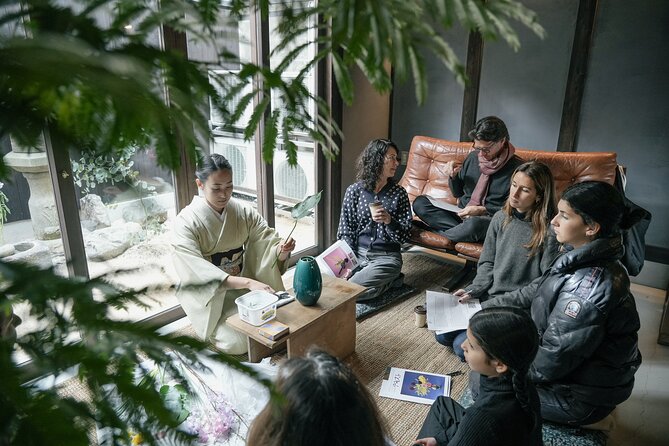
Ikebana translates as living flowers. The idea isn’t just to make something pretty. It’s to create balance using the natural characteristics of each stem, as a way of giving the flowers new life.
The class connects that philosophy to how you work. You’ll be nudged to slow down and notice what you are doing, which is why the experience is described as a hands-on method of mindfulness. The aesthetic goal is wabi-sabi minimalist simplicity, meaning the arrangement is meant to feel thoughtful and restrained, not crowded.
Now, the practical part. You’ll learn traditional techniques and methods used in ikebana, taught by an English-speaking expert. You’ll also focus on seasonal flowers, which helps your arrangement feel connected to the time of year rather than generic store blooms.
A big plus for beginners is that the instructor teaches two styles designed to be approachable: Nageire and Moribana. That gives you variety in a short session. It also helps you understand that ikebana is not one single formula. You can learn a basic mindset, then see how the approach changes when you switch styles.
How the 1.5 hours unfolds, step by step
Even though there’s no big list of city stops, the class itself has a clear rhythm. Here’s what that structure means for you as a first-time student.
1) Start with context and core principles
You begin with an introduction to what ikebana is trying to do. You’re told the flowers are living beings, and the practice is framed as tuning into their feelings as you ponder the arrangement. That may sound poetic, but it has a practical effect: it pushes you to treat each stem like it has a role, not like it’s interchangeable.
You’ll also get the minimalist rules of balance and harmony. In a short class, this matters because you need a mental map fast.
2) Watch a demonstration of two arrangements
Then you see two flower arrangements demonstrated. Watching first is a huge help. It lets you understand what “good” looks like before you start cutting, placing, and adjusting your own work.
It also helps you avoid a common beginner mistake: overthinking the mechanics but missing the overall relationship between stems. A clear demo makes the relationships visible.


3) Get hands-on, with guidance while you create
After the demonstrations, you create your own arrangement. You are not just observing. This is where the class earns its value.
The pacing is designed for flexibility. In descriptions of the instructor’s teaching style, people highlight that they had room to work at their own speed while still getting direction. In plain terms, that means you’re less likely to feel lost.
4) Learn freshness and longevity tips
You’ll also learn tips and tricks to maintain fresh flowers so they last up to two weeks. That is a surprisingly useful takeaway if you’re thinking like a visitor with limited space and time. You might not remember every philosophical detail, but you can use those care ideas right away.
The important thing here is not the exact technique. The important thing is that you leave with actionable guidance to help your flowers stay good longer.
5) End right where you started
The activity ends back at the meeting point. That keeps your schedule clean. You do not need a second commute afterward to keep the day going.
Nageire and Moribana: why learning two styles is worth your time
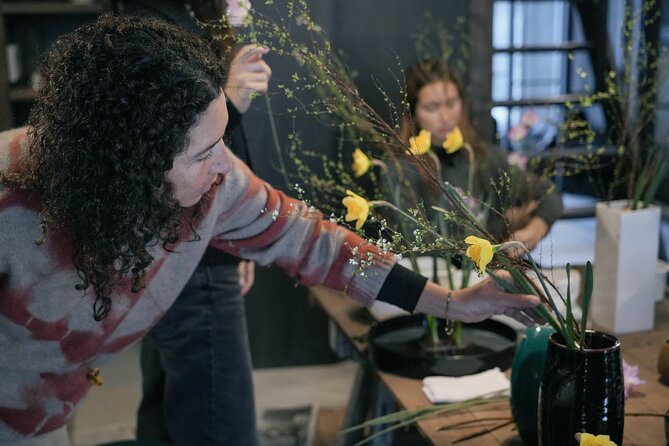
A one-and-a-half-hour class can easily feel like a quick craft. This one avoids that trap by teaching two classic beginner styles, Nageire and Moribana.
Here’s why that’s valuable for you:
- You learn the underlying mindset, then see it applied in different ways.
- You get more satisfaction out of the session because you experience more than one approach.
- It helps you avoid the confusion that often hits after a demo. One style can feel like a fluke. Two styles help you understand patterns.
You don’t have to become an ikebana student right away. The goal is to walk away with a new way to look at stems, lines, and balance. If you return home and see flowers differently, the class did its job.
The mindfulness angle that actually changes how you place stems
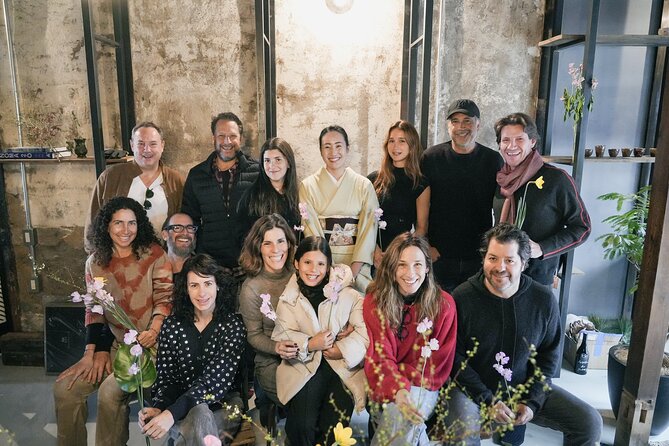
Many cultural workshops claim mindfulness. This one ties mindfulness to the physical act of arranging. You’re not asked to sit still for an hour. You’re asked to pay attention while you build.
That matters because flowers move your focus in a natural way. Even without special tools, you start noticing things like direction, height, and how one stem affects the rest. That attention is what the course describes as a way to practice mindfulness.
You’ll also feel the wabi-sabi philosophy in the results. Instead of an arrangement that tries to look loud, the goal is balance and harmony, with room for simplicity.
And yes, there’s a bit of 300-year tradition behind it. The class framework is built on techniques with a long lineage, not a modern version invented for tourists.
Practical value: what you get for $72.26 in Kyoto

The price is listed at $72.26 per person for about 1 hour 30 minutes. That’s not the cheapest activity in Kyoto, but it’s also not a big multi-hour tour with transportation costs.
The value comes from three things you can’t fake:
- A real skill practiced in real time, with hands-on instruction
- A small group size that helps you get feedback
- Seasonal materials and care guidance, including tips aimed at lasting up to two weeks
If you’ve been collecting generic souvenirs, this class offers a different kind of memory. It’s a practical experience you can carry forward. Even if you never do ikebana again, you’ll still have a new lens for nature and simplicity.
Also, learning with an English-speaking expert reduces friction. You can focus on the arrangement instead of translating everything in your head.
The one real drawback to plan for
Short classes are always tradeoffs, and this one is no exception. One participant described wanting more discussion about ikebana itself, including the history, different schools, and basic rules. That is a fair consideration.
So if you’re the kind of traveler who wants a deep, structured lecture plus lots of time for repetition, you might feel the session is too brief for that level of detail.
That said, the class does include both philosophy and practical instruction, plus it covers two styles. It’s best thought of as an introduction that gives you a working understanding, not a full curriculum.
Where the class is, and how to make it easy on yourself

You meet at a specific address in Kamigyo Ward, Tanbayacho area, and the location is near public transportation. For a Kyoto day, that’s exactly what you want.
Plan to arrive a few minutes early. With small classes, being late can throw off the instructor’s flow and cut into your hands-on time.
Also, you’ll likely want comfortable clothing and shoes. You are working on an arrangement, so you do not want to spend the whole session worried about what you’re wearing.
A note on reliability
Most classes run smoothly, but there is one outlier report included in the information you were given: a no-show situation with the meeting point and no answer by phone or chat. This looks like an unusual case, but it does suggest a practical habit: if you have any doubt the day of, reach out before heading out and keep your confirmation handy.
Who this experience suits best
This is a good fit if you want any of the following:
- You’re a beginner who likes clear structure: demo first, then hands-on.
- You enjoy calm, mindful activities that feel respectful to the culture.
- You want something Kyoto-specific that is not just walking past sights.
- You like minimal aesthetics and nature-focused thinking.
It can also be a great couples activity. One description emphasizes how fun the session was to make together, with flexibility for both people to create their own arrangements.
Tips to get the most out of your session
Because it’s 1 hour 30 minutes, your goal is to walk away with skills you can use later. Here’s how to do that.
- Ask questions while you are working. If something feels unclear, raise it right away rather than waiting for the end.
- Focus on what the instructor shows during the demos. Watch the relationships between stems, not just how they look.
- Take notes on the freshness care guidance aimed at lasting up to two weeks.
- If you want more history or school details, consider going in knowing this is an introduction and you’ll likely need a longer follow-up class or reading for the deep theory.
Should you book Ikebana in Kyoto?
Yes, you should book it if you want a short, small-group, hands-on way to learn ikebana in Kyoto. The combination of Nageire and Moribana, the English-speaking instruction, and the emphasis on mindfulness and wabi-sabi balance makes it more than a simple craft stop.
Skip it or reconsider if you need a long lecture on ikebana schools, full history, and extensive rules practice. This class is structured for practical learning, not a deep academic survey.
Finally, if you love nature details and you want a skill you can remember long after your trip, this is a smart use of time in Kyoto. It turns flowers into something you think about differently, and that is the kind of souvenir you actually keep.
FAQ
How long is the ikebana class?
The class is about 1 hour 30 minutes.
Where is the meeting point in Kyoto?
You meet at Japan, 602-8287 Kyoto, Kamigyo Ward, Tanbayachō, 3481 シンフォニー北野東, and the activity ends back at the meeting point.
Is the instructor available in English?
Yes, the class is taught by an English-speaking ikebana expert.
What styles will I learn?
You learn two ikebana styles in the session: Nageire and Moribana.
How big is the group?
The maximum group size is 6 travelers.
Do I get a mobile ticket?
Yes, it includes a mobile ticket.
What is the cancellation policy?
You can cancel for a full refund if you cancel at least 24 hours before the experience’s start time.
More Tour Reviews in Kyoto
Not for you? Here's more nearby things to do in Kyoto we have reviewed




Kyoto Craft & Calligraphy Workshops, compared.
 ★ 5.0Chopsticks Making Workshop in Gion with Engraving OptionFrom $15958 reviews
 ★ 4.8Authentic knife making experience at a blacksmith in KyotoFrom $154350 reviews
 ★ 5.0Calligraphy class at Buddhist temple in city centerFrom $55167 reviews
 ★ 5.0Roketsu dyeing experience: M course Roketsu Dyeing ExperienceFrom $25163 reviews
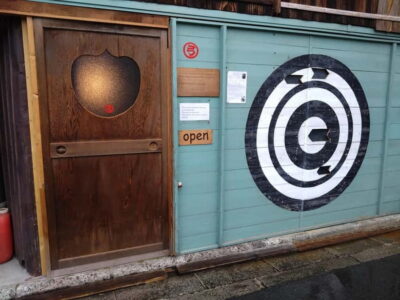 ★ 4.9Japanese Archery Workshop with Experienced InstructorFrom $38132 reviews
 ★ 4.8Japanese Calligraphy ClassFrom $5189 reviews
 ★ 5.0TAIKO, Japanese Drum Experience from KyotoFrom $11586 reviews
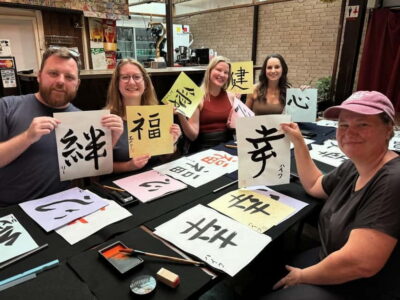 ★ 4.7Japanese Calligraphy WorkshopFrom $3284 reviews
Browse the lists this tour appears in