
Reviewed · KYOTO CRAFT & CALLIGRAPHY WORKSHOPS
Kyoto: Japanese Calligraphy Workshop
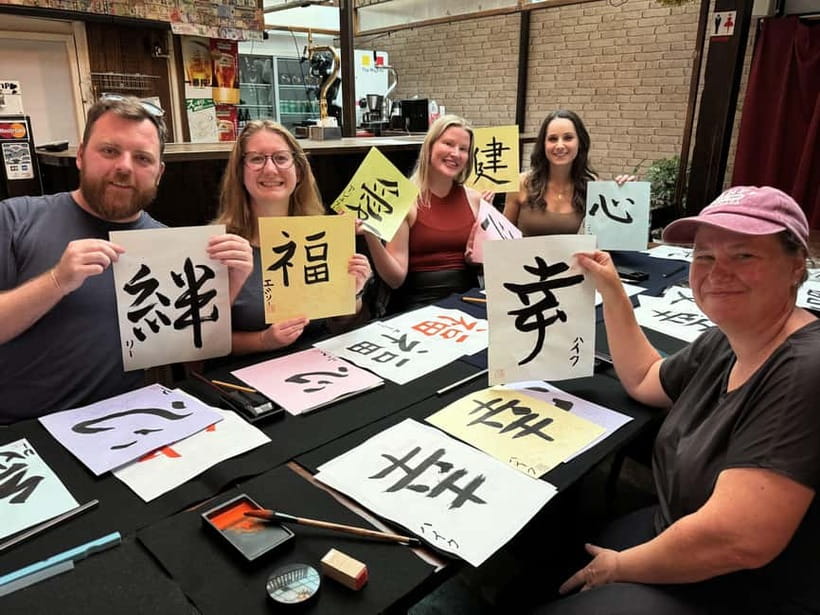
Kyoto turns your handwriting into art. This Japanese calligraphy workshop at Gojo Paradiso, by the Takase River on Kiyamachi Street, puts you at a table with a skilled instructor to practice SHODO and make kanji step by step, even if you are starting from zero. I especially like the hands-on, small-group format (up to 10 people) and the fact you finish with a take-home piece on rice paper. One thing to keep in mind is it is not suitable for kids under 10, so it is more of an adults-and-older-kids activity.
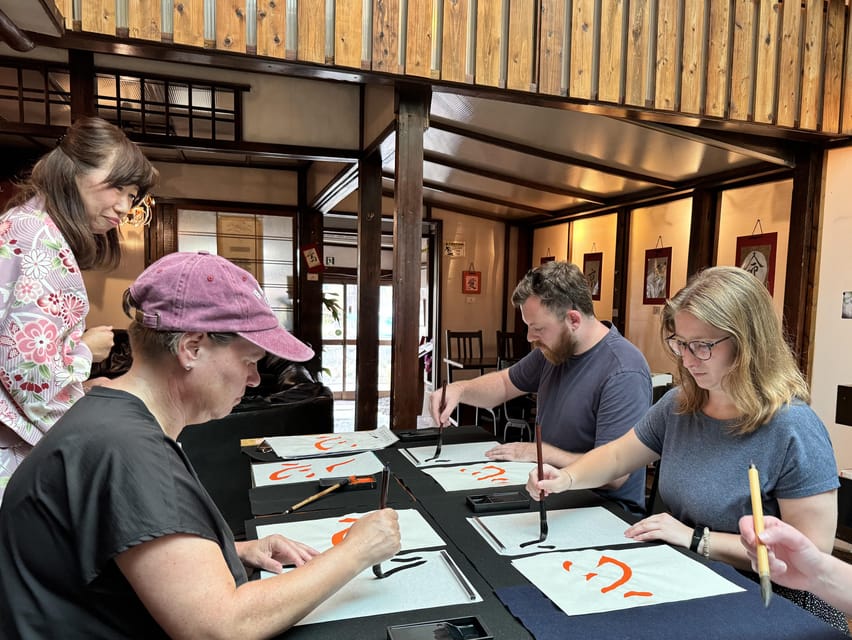
You’ll spend about 1 to 2 hours learning the basics, not rushing past them. The session starts with the meaning and history of calligraphy, then you practice brush strokes, then you create your own character and often your name in kanji, with time for photos and a look at the gallery at the end.
Key things to know before you try Kyoto calligraphy SHODO
- Gojo Paradiso location on Kiyamachi Street makes it easy to pair with your Kyoto sightseeing day
- Up to 10 participants means the instructor can give real feedback on your strokes
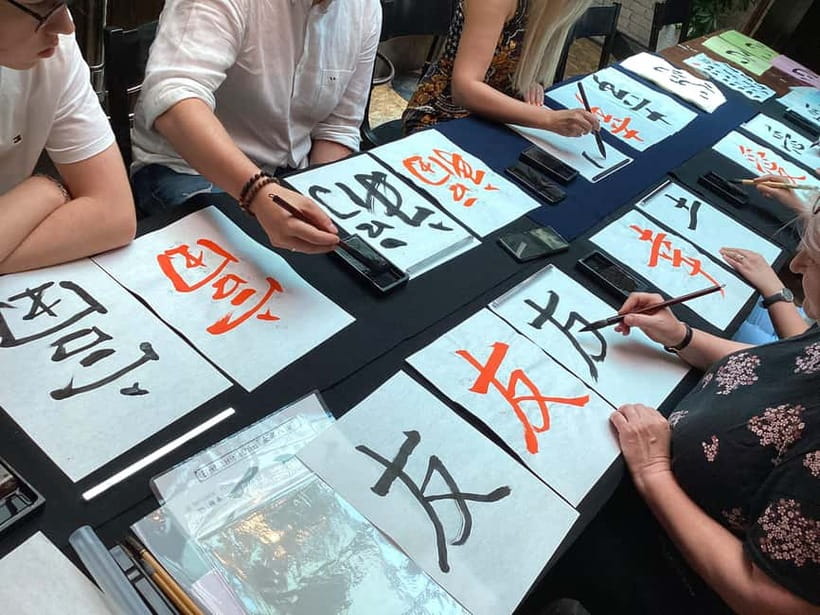
- You learn basic brush strokes first, then apply them to kanji you can actually recognize
- You leave with a personal take-home calligraphy piece on rice paper
- The workshop supports English and Japanese instruction
- It’s designed for beginners, not just people who already write calligraphy at home
Why this SHODO workshop in central Kyoto feels surprisingly practical
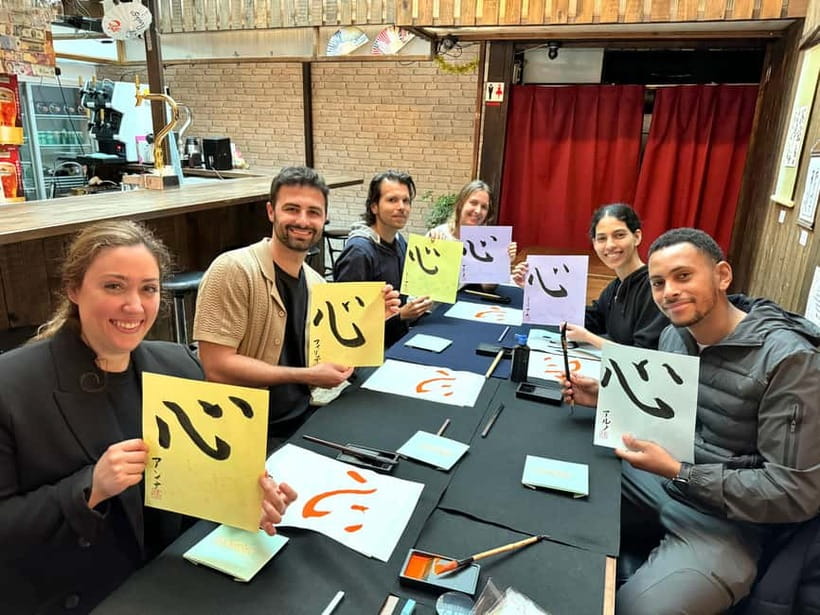
A Kyoto calligraphy workshop sounds cultural and poetic. It is both, but the best part is how physical it is. You learn by doing, with your own brush in your hand, so even the quiet strokes turn into a real skill you can keep using later.
I like that the class is structured for beginners. You are not thrown into fancy characters right away. Instead you build the strokes in a steady order, then combine them into something you can be proud to take home.
It also helps that the workshop is small. With a group limited to 10, you get more attention than you would in a big demonstration. That matters for calligraphy, because one tiny adjustment in pressure or direction can change the whole look of a character.
More Kyoto temple visits, food tours, tea experiences, and day trips to compare

Finding Gojo Paradiso near the Keihan stations
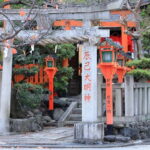
You meet at Gojo Paradiso along the Takase River on Kiyamachi Street. It’s a short walk from public transit, which is a big deal in Kyoto where time can disappear fast.
From Keihan Kiyomizu Gojo Station, it’s about a 5-minute walk. From Keihan Shichijo Station, you’re looking at about a 10-minute walk. The location is also listed as 386 meters from Kiyomizu Gojo Station, which is handy if you like to gauge walking distance before you step outside.
Tip: if you are doing this on a day packed with temples, leave a little cushion. Even a quick walk can take longer if you are detouring for snacks, views, or a photo stop along the river.
What happens during the 1 to 2 hour lesson, from basics to your final piece
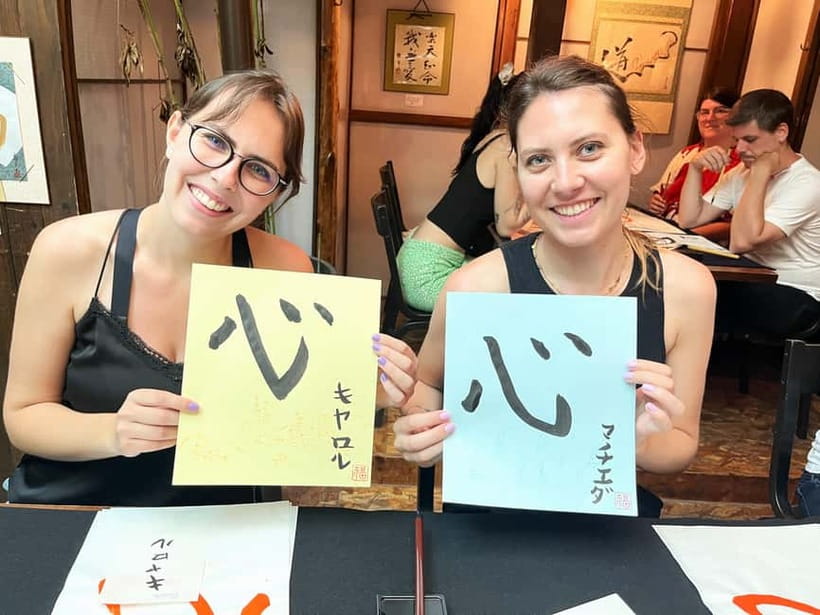
The workshop runs roughly 1 to 2 hours, depending on the session start time you book. The structure stays consistent, so you can plan your day without stress.
1) Intro to calligraphy meaning and style
You begin with context, not just technique. You learn about the history and meaning of Japanese calligraphy, often called SHODO. This part is useful because it explains why the strokes are treated with care, why order matters, and why the writing is meant to show both form and feeling.
If you are the type who likes knowing what you are doing, this section makes the later practice make more sense.
2) Brush stroke practice for beginners
Next you work on the foundational brush strokes that form kanji. This is where the class earns its value. You get guided, step-by-step practice so the brush moves correctly: the direction, the flow, and the way each stroke starts and ends.
What you’re really learning here is control. You are not only drawing lines, you are shaping movement. That is why even a first timer can end up with something that looks like calligraphy instead of a random ink drawing.
3) Writing kanji and often your name in kanji
After the strokes, you move into writing characters. You’ll create a piece with the strokes you practiced, and you may also write your name in kanji, depending on the exercises in your session.
One past class stood out for how personal it felt, including help with writing names in kanji. That kind of detail is a big part of why this works as a souvenir. It is not generic wall art, it’s tied directly to you.
4) Photos, gallery time, and special orders
The final part gives you breathing room. You can take photos, explore a gallery, and place special orders. This is a nice change of pace from the intense concentration earlier in the workshop.
If you want to compare your work to examples, this is the time. If you just want to grab a few pictures and head out, you can do that too.
The instructor setup that makes your strokes improve fast
Calligraphy can feel intimidating because it looks effortless when the pros do it. The class does a good job removing that mystery by breaking the work down.
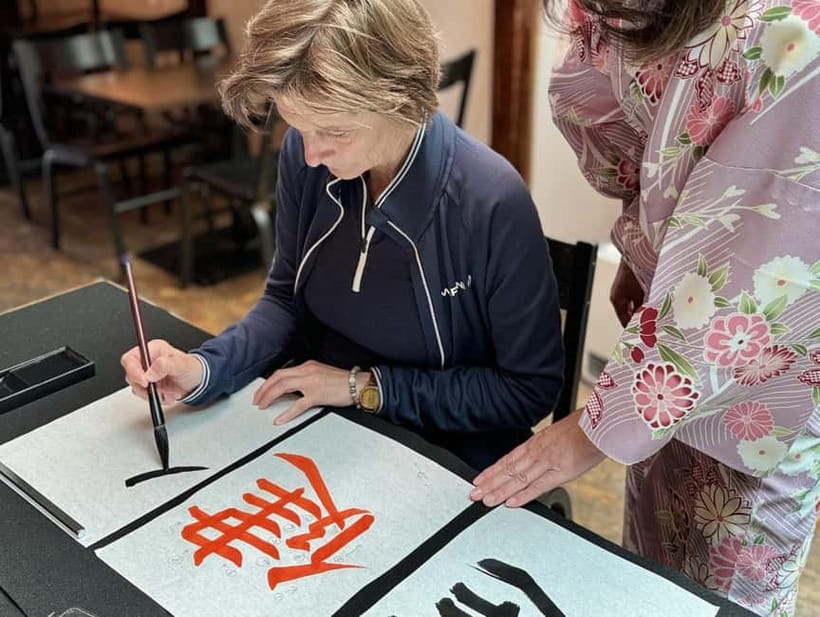
In past sessions, instructors have been described as very patient, encouraging, and focused on helping each participant. Some students also noted that the instructor spent time individually during exercises. And in at least one example, the teacher worked with helpers to support the group.
You can expect a calm pace with guidance as you go. That matters because calligraphy is not a race. The goal is clean strokes and consistent form, not speed.
Also, the instruction is available in English and Japanese. If you worry about not understanding, this is one of the clearest signals that the workshop is built to work for international visitors.
The take-home piece on rice paper is the real souvenir
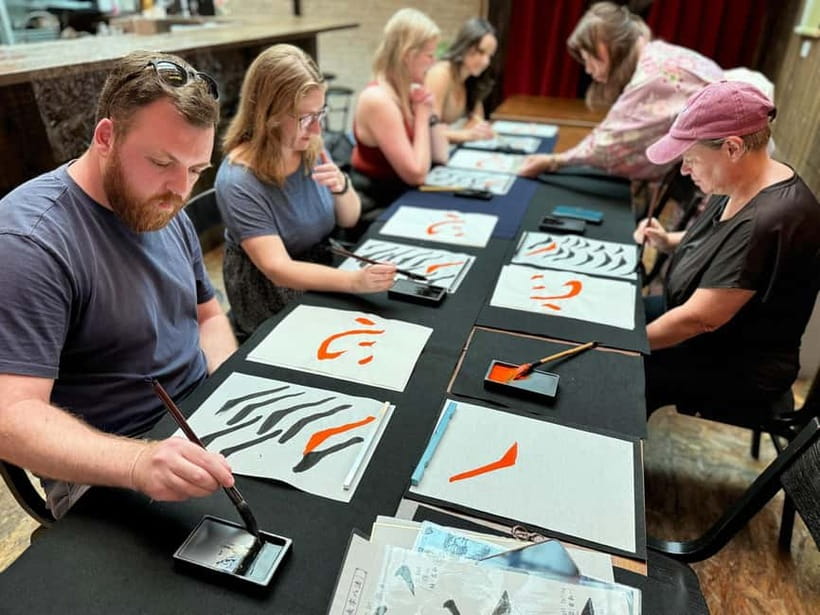
The best memory is the ink in your hands and the finished kanji in front of you. This workshop ends with a one-of-a-kind calligraphy piece you take home.
You’ll create your artwork during class, then you leave with the final sheet. Past participants specifically mentioned rice paper as the material, and some also noted that their teacher stamped the piece after it was finished.
That stamp detail might sound small, but it turns your paper into something that feels official and special, not like a craft project you did in a classroom.
One extra perk that has appeared in some sessions is a small handmade gift from the instructor, sometimes described as gold-accented. You cannot count on this every time, but it’s a nice sign of how much care the instructor puts into the overall experience.
Price and value: how $32 stacks up for Kyoto calligraphy
At $32 per person, this is priced like a focused activity, not a big tour with transportation. The value comes from what is included and what you get to keep.
You get:
- An expert calligraphy instructor
- All necessary supplies
- Time to learn strokes, write your character, and take home your work
Supplies matter here. Calligraphy materials are not just pens and paper, they are brushes, ink setup, and quality sheets. The fact you don’t have to source any of that yourself is a win in Kyoto, where finding the right thing can take time.
The small group size also supports the price. If you were paying more for a similar activity, you would usually expect larger groups or less guidance. Here, the class is designed to keep you supported as you learn.
And because the duration is only 1 to 2 hours, it fits into almost any itinerary without dragging your whole day.
Who should book this workshop, and who should skip it
This Kyoto calligraphy workshop is a great fit if you:
- Are curious about SHODO and want real hands-on practice
- Want a beginner-friendly class with clear guidance
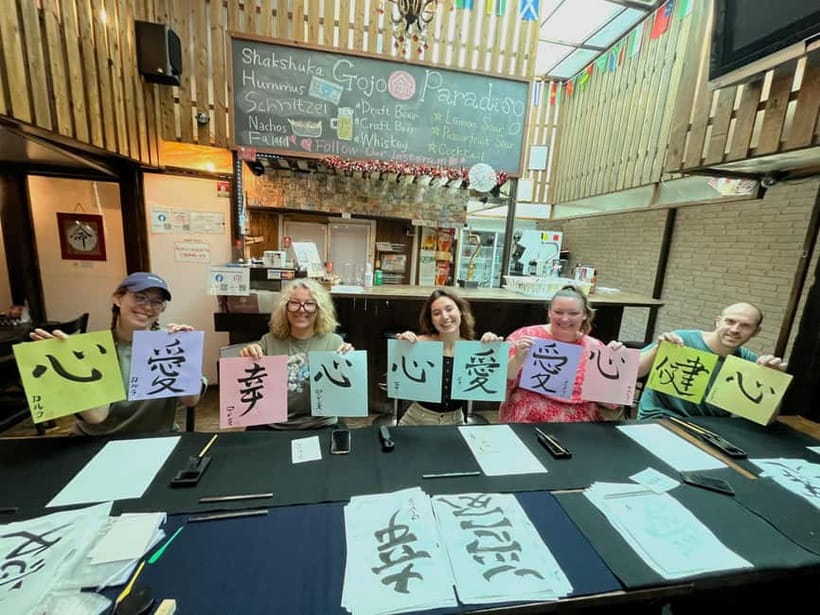
- Like taking home a personal souvenir tied to your own name or a character you wrote
It’s also ideal for couples. The activity is interactive, not passive, and you can compare your final pieces afterward.
You might skip it if:
- You want something much more performance-based, like a stage show with a short lesson
- You are traveling with younger children, since it is not suitable for kids under 10
And if you have limited mobility, you can breathe easy. The workshop is wheelchair accessible.
Best ways to get the most from your class
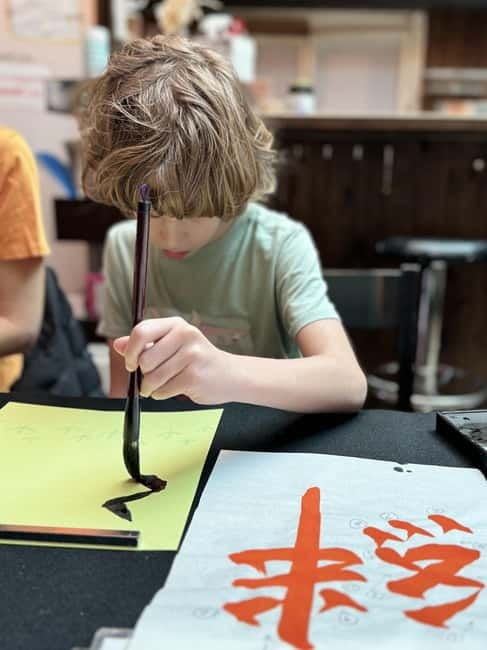
This kind of workshop rewards a simple approach: slow down and follow the stroke order.
A few practical tips:
- Be ready to concentrate. Calligraphy requires quiet attention, even if the class is friendly and relaxed.
- Ask questions when you do not understand the stroke direction or pressure. The whole point of a small group is getting feedback while you still have your brush in hand.
- Take your time on the final piece. The class gives you the chance to create something you will want to display.
Also, if you plan to do a lot of walking in Kyoto that day, schedule this earlier when you still have energy. You are sitting and practicing, so you’ll want your body to feel comfortable.
Should you book Kyoto Japanese calligraphy at Gojo Paradiso?
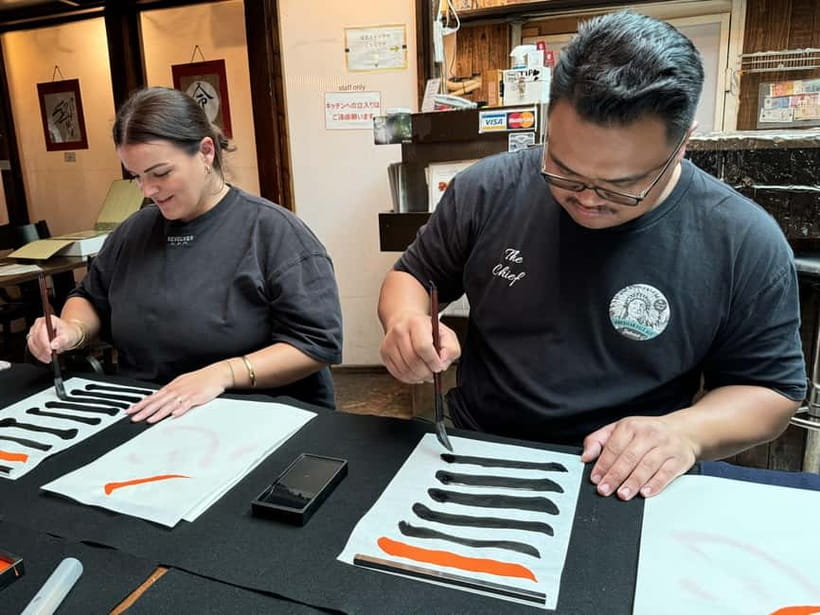
If you want a Kyoto activity that is genuinely hands-on, not just a photo stop, I think this is a smart booking. The workshop is built for beginners, runs a reasonable 1 to 2 hours, and includes supplies plus a take-home calligraphy masterpiece on rice paper.
The biggest reasons to choose it are the small-group format, guided stroke practice that helps your work improve, and the personal payoff of writing kanji you can keep as a memory. For $32, you’re paying for instruction and materials, and you leave with something tangible.
FAQ
How long is the Kyoto Japanese calligraphy workshop?
The workshop duration is listed as 1 to 2 hours.
Is the class for beginners?
Yes. The workshop is guided step by step, for complete beginners and for people who have some experience.
What languages are used during the workshop?
The instructor can teach in English and Japanese.
Is there an age limit?
It is not suitable for children under 10 years old.
How small is the group?
The workshop is a small group with a limit of 10 participants.
Where is the meeting point?
You meet at Gojo Paradiso on Kiyamachi Street along the Takase River. It is about a 5-minute walk from Keihan Kiyomizu Gojo Station and about a 10-minute walk from Keihan Shichijo Station.
Is it wheelchair accessible?
Yes, the workshop is wheelchair accessible.
Can I cancel and get a refund?
You can cancel up to 24 hours in advance for a full refund.
More Workshops & Classes in Kyoto

More Tour Reviews in Kyoto

Not for you? Here's more nearby things to do in Kyoto we have reviewed


Kyoto Craft & Calligraphy Workshops, compared.
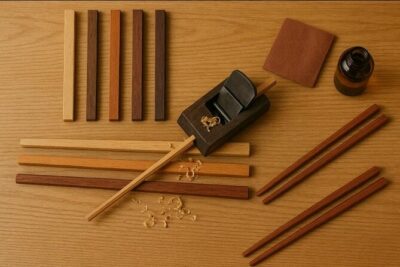 ★ 5.0Chopsticks Making Workshop in Gion with Engraving OptionFrom $15958 reviews
 ★ 4.8Authentic knife making experience at a blacksmith in KyotoFrom $154350 reviews
 ★ 5.0Calligraphy class at Buddhist temple in city centerFrom $55167 reviews
 ★ 5.0Roketsu dyeing experience: M course Roketsu Dyeing ExperienceFrom $25163 reviews
 ★ 4.9Japanese Archery Workshop with Experienced InstructorFrom $38132 reviews
 ★ 4.8Japanese Calligraphy ClassFrom $5189 reviews
 ★ 5.0TAIKO, Japanese Drum Experience from KyotoFrom $11586 reviews
 ★ 5.0Shamisen Experience in Kyoto 【Private】From $9982 reviews
Browse the lists this tour appears in