

Reviewed · WORKSHOPS
Itajime Shibori Scarf Class
A scarf workshop, quietly magical in Kyoto. This 30 to 60 minute itajime shibori class at the Kyoto Shibori Museum turns Japanese dyeing technique into a wearable souvenir, with museum time built in. You also get the culture context as you work, so it is not just a craft, it is a small slice of how people in Japan think about materials and pattern.
I especially love the hands-on pace, with clear guidance while you manipulate the fabric and get it dyed. I also like that you can choose Japanese fabrics up front, so the scarf feels personal from the start.
One possible drawback: the classroom can be hard to spot, since it is on the 2nd floor, and street signage is not always obvious. Plan a few extra minutes to find the entrance.
Key highlights
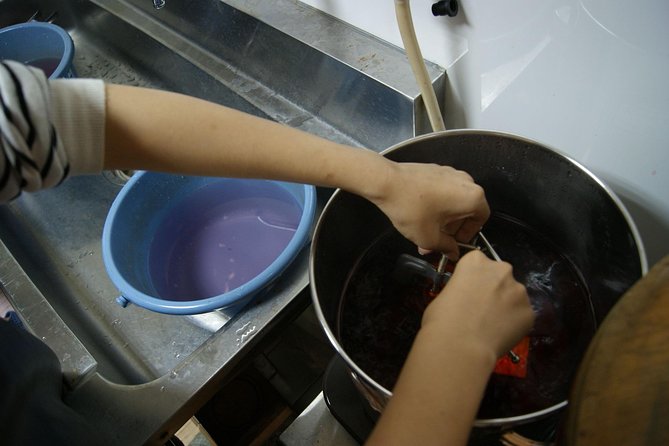
- 30 to 60 minutes making an itajime shibori scarf
- Small group size (max 10) for attentive teaching
- Museum admission included, so you do more than dye cloth
- Choose fabrics before the dyeing step
- See and learn shibori as you wait for the scarf to dry
- Take your scarf home, ready to gift or wear
Kyoto Shibori Museum: a small, focused way to learn real dyeing
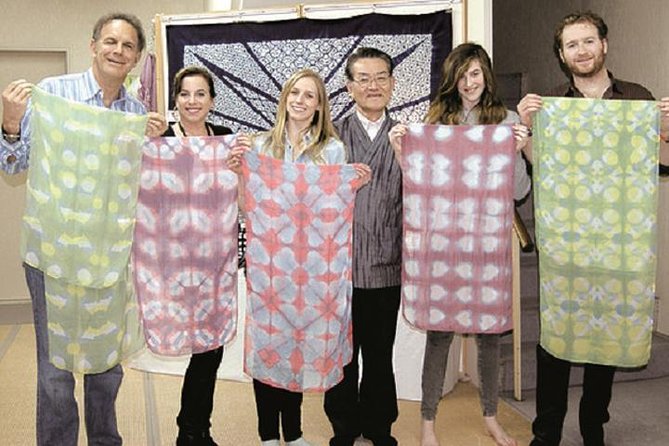
If you want one Kyoto activity that feels both calm and skill-based, this class fits well. You are not doing a fast stop-and-go version of shibori. Instead, you get a session that is short enough to slot into a day, but structured enough that you finish with something you made yourself.
The workshop happens at the Kyoto Shibori Museum, and the big win is that the learning does not stop when the dyeing starts. The museum side of the experience gives you context for shibori, including how old it is and why people value the technique. In the room where you work, the staff keep things practical. In the museum upstairs, you can slow down and look at the results other artists have achieved.
The price, $43.60 per person, is surprisingly reasonable for what you get. You get a teacher-led craft plus museum admission that helps you understand what you are making. If you have ever bought souvenirs and wondered what was behind them, this style of class is built to answer that question while you are still holding the fabric.
More Kyoto temple visits, food tours, tea experiences, and day trips to compare

Itajime shibori, explained in plain terms that make sense
Shibori is a traditional Japanese dyeing method, and in this museum setting, you get a chance to understand why it matters. The class frames it as the oldest dyeing method in Japan, and that historical angle helps your scarf feel more like a cultural object than a trendy craft.
What makes itajime shibori different is the way the fabric is prepared before dyeing. You will follow instructions using traditional tools, and your teacher will walk you through what you are doing and why. The point is not to sound technical. The point is to connect your actions to the patterns you end up with.
I like that the museum teaches the technique through what you see and what you do. When you watch a film about the process and then look at examples, the steps click. You can stand there, study a pattern, and think, okay, this is what happens when you prepare fabric in a certain way.
You also get that cultural context in a low-pressure way. There is time for questions, and the staff come across as genuinely invested in helping people make sense of the craft. One highlight from the experience is how hands-on it feels even for beginners.
Choosing your fabrics: the easiest way to make it feel personal
Before the dyeing begins, you get to choose from Japanese fabrics. That matters more than it sounds, because shibori patterns are shaped by how the fabric takes dye. Even if you do not know the science, you can feel the difference in texture and appearance as you work through the process.
If you are traveling with kids or teenagers, the fabric selection step is a great hook. It is a simple choice, but it gives them ownership early. That tends to keep attention high during a class that is hands-on and repetitive in a good way.
I also think this choice is what makes the take-home souvenir feel like yours. You do not just buy a scarf off a shelf. You make decisions, follow instructions, and then see your result after dyeing and drying.
Quick tip: if you have strong color preferences, make them early. Once you are focused on prepping and dyeing, you will not want decision-making to add stress. Pick what feels exciting, then commit to the process.
The workshop itself: guidance, patience, and a fun finish
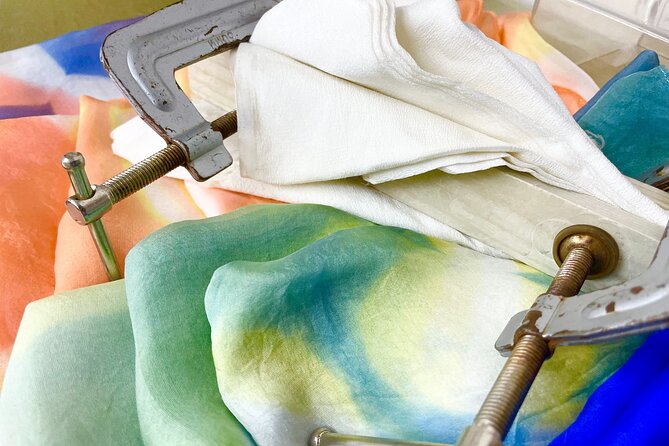
The scarf-making portion typically runs 30 to 60 minutes, and it is built around you following steps with a teacher. This is not a sit-and-watch show. You are actively doing the work, and the instructions are clear enough that even people who do not think of themselves as crafty can keep up.
A major praised aspect of the experience is the teaching style. Guests repeatedly highlight how clear the instructions are and how hands-on the class feels. There is also a sense of patience, with staff members making sure you are comfortable with each step before moving on.
As the workshop progresses, you are likely to feel two things at the same time: concentration and relief. Concentration because you are working with prep and dyeing steps that need attention. Relief because you are not guessing. The staff guide you through, and you learn what each action is intended to create.
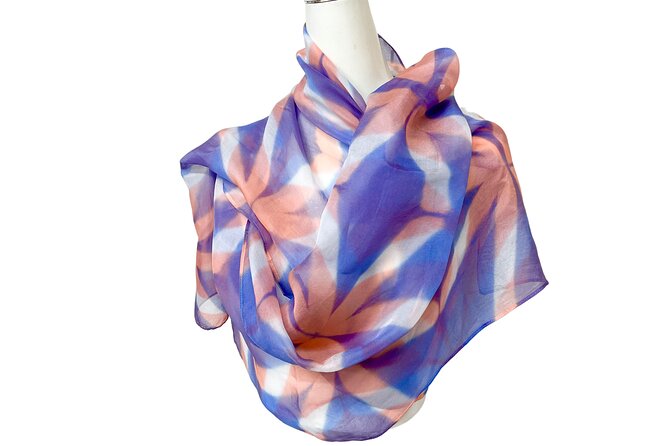
Then comes the part everyone seems to remember: the grand reveal. When the dyeing and preparation steps are done, you get to see how your scarf turned out. That reveal is part craft payoff, part mini-history lesson, because the patterns connect back to what shibori is known for.
If you are traveling with children, you might enjoy the extra care the museum staff put into finishing touches. One account mentioned a certificate being made for a child after the scarf was complete. That kind of small recognition can make the whole thing feel special, especially for younger makers.
Museum time while your scarf dries: where the value really shows

The smartest design of this experience is that the class includes museum time while your scarf dries. Dyeing takes time, and instead of waiting in awkward silence, you get a cultural break.
The museum displays on the 2nd floor are a major part of the experience. Guests highlight that the exhibits are beautiful and that you can see impressive shibori pieces while you wait. There is also mention of a movie about the process. That combination works well because it gives you both inspiration and explanation.
What I like about this setup is that you do not just learn the technique. You learn the results. You can look at masterpieces, then compare the idea of how they might be made to what you just did with your own fabric.
Also, museum time gives you flexibility. If you are slow at drying pauses, you can take your time walking the displays. If you are fast, you still have enough time to relax and absorb without feeling rushed.
One practical note: since the classroom is on the 2nd floor, the logistics can be slightly confusing at first. If you arrive and cannot immediately find the class room, ask quickly and then move up. Once you are inside, the space feels small and personable, not like a big factory workshop.



Timing, location, and how to plan your Kyoto day
This is a good half-day activity, but it is not a half-day commitment in the typical sense. It is closer to a short stop that can anchor part of your day. With a session around 30 to 60 minutes and museum time included, you can fit it between sightseeing blocks without burning the whole afternoon.
Location-wise, the workshop is near public transportation, so you do not need to build a complicated route. It also has limited parking: two car parking spaces and bicycle parking spaces are available. If you are driving, it is worth knowing the parking is limited, so arrive with a backup plan.
Because the experience depends on drying time, you should avoid scheduling too many things right after your class ends. Leave yourself some buffer. Even if you are the most efficient traveler in Kyoto, drying and finishing take a moment, and you will want that time to explore upstairs before leaving.
Another planning angle is group size. With a maximum of 10 travelers, it feels manageable. You are not stuck waiting behind a long line of people, and the class can stay interactive.
Price and value: why $43.60 feels fair for what you leave with
At $43.60, this workshop is priced like a straightforward craft class. What makes it better value is the museum component and the guidance you get while making the scarf.
If you only made a scarf with no context, you might feel like you bought a souvenir. Here, you leave with a deeper appreciation of shibori because you saw examples and learned how the dyeing process works. The museum admission being included changes the math.
You are also paying for small-group instruction. That attention matters. You get clearer results, more confidence, and a smoother experience from start to finish. In a skill-based craft, guidance is not a luxury, it is part of the product.
And then there is the take-home payoff. You get a handmade scarf as your memento. It is something you can actually use, show, or gift, and it carries a story that is easy to explain when you get back home.
Who should book this itajime shibori scarf class
This is a great match if you want a hands-on Kyoto activity that teaches you something real without being too long. The minimum age is 6 years, and adult pricing applies to all ages, so families can plan accordingly.
It is also a solid pick for solo travelers. With the small group size and teacher attention, you are not lost in a crowd. If you like museums but also want to do something creative, this combines both.
I would especially recommend it if you are curious about Japanese crafts, dyeing techniques, or how traditional methods influence modern aesthetics. Shibori is not a one-time trick. It is a craft with history and variety, and the museum side helps you see that.
If you hate waiting, you might find the drying pause a little slow, but in this case it is paired with museum exploration and exhibits, so it stays worthwhile rather than dead time.
Should you book the itajime shibori scarf class in Kyoto?
Yes, if you want a structured, hands-on Kyoto experience that ends with something you made and something you understood. The combination of scarf-making, teacher support, and museum admission makes the price feel justified, not inflated.
Book it especially if you like calm activities with clear steps, and if you want to learn shibori in a way that sticks. Just give yourself a little extra time to locate the 2nd-floor classroom when you arrive.
FAQ
How long is the itajime shibori scarf class?
The class runs about 30 minutes to 1 hour.
Where does the class take place?
It takes place in Kyoto at the Kyoto Shibori Museum.
Is museum admission included?
Yes. Admission ticket is included with the experience.
How big is the group?
The class has a maximum of 10 travelers.
What will I do during the class?
You will make an itajime shibori scarf with a teacher, using traditional tools and fabrics, and you will learn about shibori.
Can I choose what fabric I use?
Yes. You can choose from Japanese fabrics.
Will I take the scarf home?
Yes. You can take the handmade scarf memento home.
What is the minimum age to participate?
The minimum age is 6 years, and adult pricing applies to all ages.
Do I get a mobile ticket?
Yes. The experience includes a mobile ticket.
Is there free cancellation?
Yes. You can cancel for a full refund if you cancel up to 24 hours in advance. Within 24 hours, the amount is not refunded.
More Workshops & Classes in Kyoto


More Tour Reviews in Kyoto

Not for you? Here's more nearby things to do in Kyoto we have reviewed






Workshops, compared.
 ★ 4.345-Minute Tea Ceremony Lesson ExperienceFrom $222,378 reviews
 ★ 5.0Ramen Cooking Class at Ramen Factory in KyotoFrom $1311,937 reviews
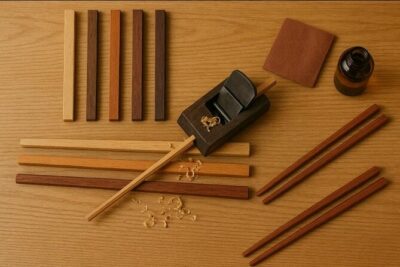 ★ 5.0Chopsticks Making Workshop in Gion with Engraving OptionFrom $15958 reviews
 ★ 4.9Samurai Sword Class by Experts in Traditional ArtsFrom $64657 reviews
 ★ 4.9Ramen Cooking Class at a Ramen Factory with SouvenirFrom $127532 reviews
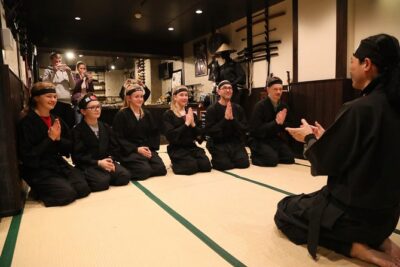 ★ 5.0Ninja 1-hour Hands-on Lesson by Japanese master in Kyoto -EntryFrom $80489 reviews
 ★ 5.0Ramen, Gyoza, and Onigiri Cooking ClassFrom $90445 reviews
 ★ 5.0The Original Small-Group Sushi Making Class in KyotoFrom $69436 reviews
Browse the lists this tour appears in