
Reviewed · KYOTO BIKE & E-BIKE TOURS
KIYOTO’s Kyoto Private E-Cycling Tour: Highlights & Hidden Gems
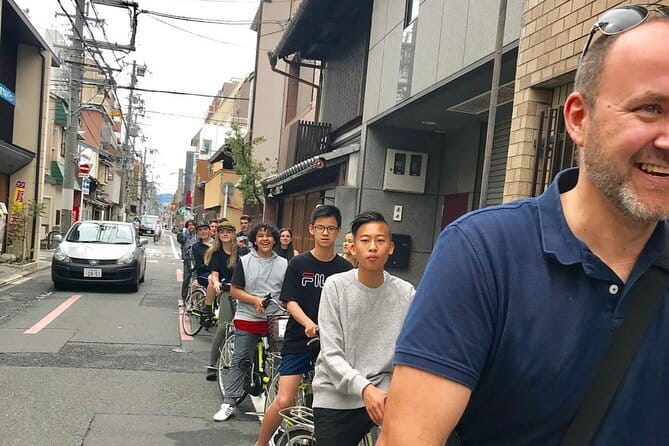
Kyoto is easier on two wheels. This private e-cycling tour helps you knock out major shrines and temples fast, while still stopping for the quiet stuff and the photo spots. The ride is guided, so you do not lose time figuring out where to go next.
Two things I really like: the e-bike rental is included, so you just show up and ride. And your guide mixes landmark context with practical local details, plus they are the type who will actually help you get good pictures instead of rushing you through.
One drawback to consider: you do need moderate fitness and you must be able to ride a bicycle, since the tour is built around moving through the city (and some stretches are in busy areas).
Why This Private Kyoto E-Cycling Feels Like the Smart Plan
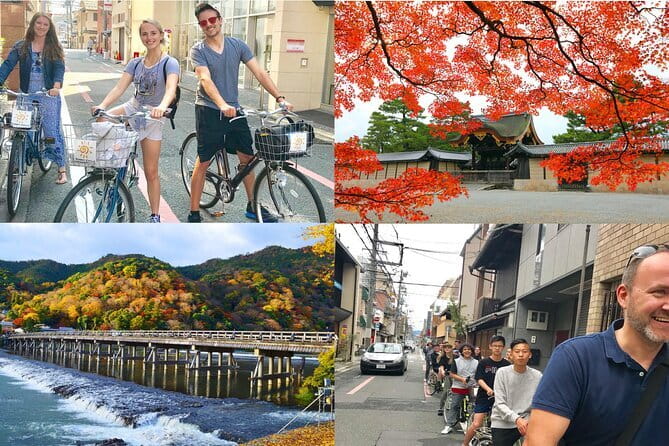
If Kyoto is on your list, this tour format is a cheat code. You cover a lot of ground without turning your day into a marathon of uphill walks and long detours.
I also like that it is built around a guide who can slow you down or speed you up based on what you want to do. And if you are traveling with kids, there are bike options and seat options available by request, which is not something you can assume on every tour.
The main consideration is traffic and road comfort. Kyoto streets can get crowded, so this works best if you feel confident riding and following your guide’s instructions.
Key Stops, Real-World Value, and the Little Extras
- E-bike included, equipment-free start so you do not spend your morning hunting for rentals
- Private pacing means your group sets the rhythm, not a crowded schedule
- Photo-friendly guidance with a guide who helps you capture key Kyoto scenes
- A route that mixes icons and calmer pockets from Fushimi Inari to the Shirakawa river walk
- Most listed entries are free (Komyo-in is marked not included), so you are not constantly paying at gates
- Multiple guide names show up in the experience such as Yonnie, Yuhey, Yuichi, Mana, Polina, Takuma, and Kento, so you are likely to get a confident local voice
You can also read our reviews of more cycling tours in Kyoto

Meeting in Kyoto, Getting Set Up at Sunny CycleJapan
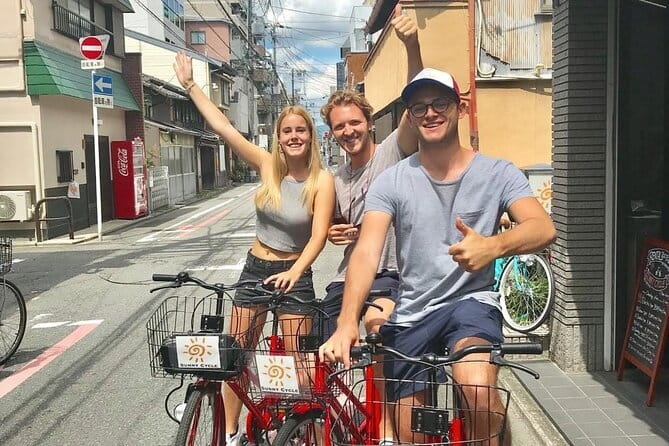
You start at Sunny CycleJapan in Shimogyo Ward, Ōhorichō, right by a spot you can reach using public transportation. The tour ends back at the same meeting point, so you do not have to rebuild your day afterward.
This matters more than it sounds. When your tour begins and ends in the same place, you keep control of the rest of your itinerary. You can keep lunch plans nearby, or pivot to a museum or shopping street without worrying about transit logistics.
You have an electric bike option, and a normal cycle is also available. If you are comparing modes, the e-bike is what turns this from a sightseeing day into a sightseeing day with enough energy left to actually enjoy the stops.
The Big Idea: Checking Off Kyoto Landmarks Without the Time Penalty
Kyoto is gorgeous, and it is also spread out. Walking between major sights can eat hours. This tour is designed to let you pedal to the next cluster of temples and shrines, so you get more Kyoto per day.
A private guide also changes the feel of the day. Instead of being herded through lines, you can linger when a scene catches your eye. Your guide can also tailor the route to what your group wants, including adding or swapping neighborhood stops for a better feel of everyday Kyoto.
Higashi Hongan-ji: Starting With a Major Temple Complex
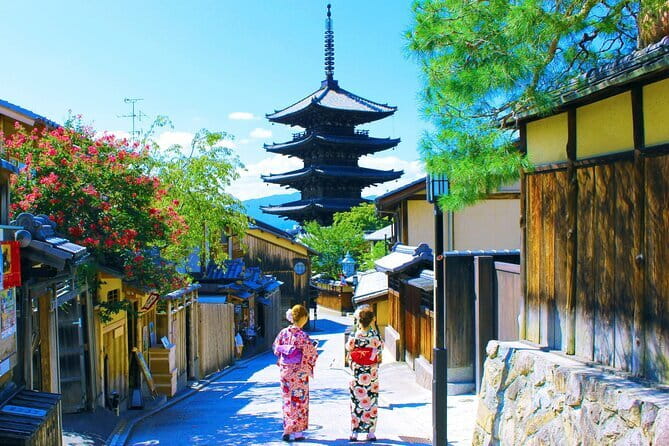
The route begins at Higashi Hongan-ji, a major Jodo Shinshu Buddhist temple established in 1602. It is in central Kyoto and is known for its vast grounds and impressive main hall, called the Goeido.
This is a strong opening stop because it sets the tone. Before you bounce into the flashy red gates of Fushimi Inari, you get grounded in Kyoto’s temple scale and religious architecture. The time here is built into the tour flow, and it is a good way to settle in before you start cycling longer stretches.
If you like big temple spaces and historic scale, you will feel the payoff right away.
Fushimi Inari-taisha Shrine: The Torii Tunnel, With Less Legs
Next up is Fushimi Inari-taisha Shrine, the head shrine for tens of thousands of Inari shrines across Japan. The famous look here is the thousands of bright red torii gates forming a tunnel along the mountain trails.
The biggest reason this works on e-bikes is simple: you are not burning all your time just getting there and moving between viewpoints. You still get the iconic experience, but you keep more daylight for the rest of the route.
Even if you do not plan to hike far up the trails, it is worth focusing on the viewpoints your guide directs you to. This is one of those places where the best experience is knowing where to stop and how to frame the gate lines.
Entry is marked free on the scheduled stop.
You can also read our reviews of more private tours in Kyoto

Komyo-in Temple and Tofuku-ji: Peaceful Gardens and Maple-Season Views
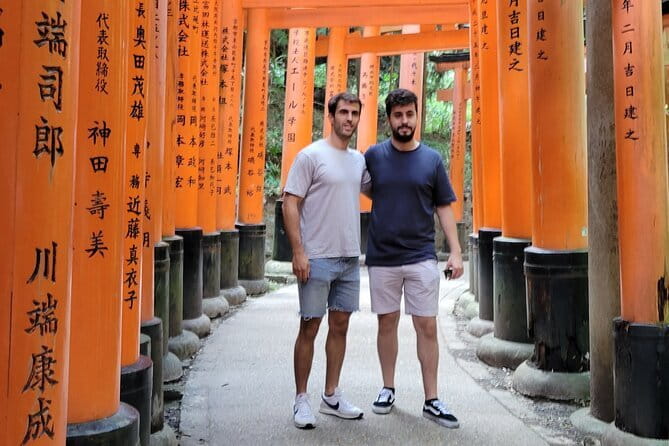
Then the tour shifts toward calmer, more contemplative temple spaces.
Komyo-in Temple
Komyo-in Temple is a sub-temple of Tofuku-ji, known for its tranquil garden. Autumn leaves are specifically noted as stunning, mixing with moss-covered grounds.
This stop is short, but it is designed for a reset. If your day has already started to feel like a checklist, Komyo-in gives you a slower rhythm and a quieter visual world.
The tradeoff: admission is not included for this stop. So check your expectations and budget accordingly.
Tofuku-ji Temple and Tsutenkyo Bridge
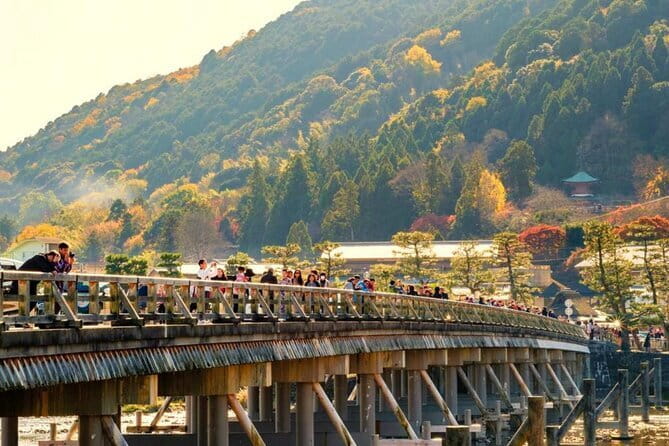
Next is Tofuku-ji Temple, where the star photo moment is Tsutenkyo Bridge. It spans a valley and offers panoramic views of red and orange maple trees in fall, which is why it is such a celebrated seasonal spot.
The time here is brief, but the view is the whole point. If you time your trip for fall color, this is the kind of scene where you will understand why the bridge gets attention year after year.
This stop is marked free on the schedule.
Hokan-ji (Yasaka Pagoda): A Kyoto Postcard From Higashiyama
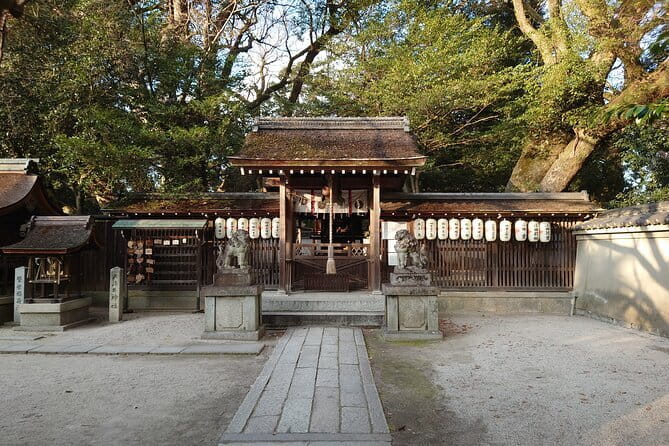
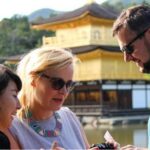
At Hokan-ji Temple, you will find the Yasaka Pagoda, one of those Kyoto silhouettes that looks good from multiple angles. The stop is timed to let you take in the view and get photos with the surrounding Higashiyama backdrop.
This is another stop where pacing matters. If you rush, you miss what makes it feel ancient and cinematic. With a private guide keeping the day moving at your speed, you can pause long enough to feel the moment.
Entry is marked free.
Yasui-Konpiragu: The Shrine With a Relationship Theme
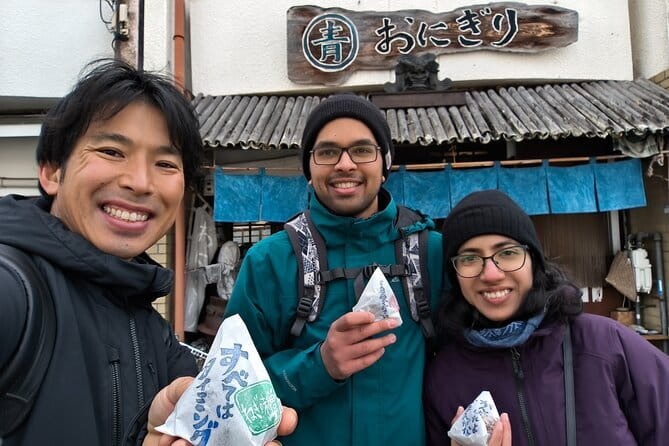
Then comes Yasui-Konpiragu, known for prayers connected to breaking bad relationship patterns and bringing good ones. Many people come to pray for cutting off bad ties or making new connections.
The interesting part here is how practical it feels. Kyoto has tons of sacred places, but this one has a theme you can relate to immediately. Even if you do not plan to pray, you will likely enjoy reading the symbolism and seeing how people connect their personal goals to the shrine.
Admission is marked free.
Hanamikoji Street: Gion Atmosphere Without the Need for a Schedule
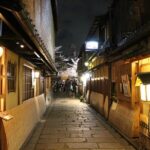
From there, the tour heads into Gion with a stop on Hanamikoji Street. This charming alley is lined with traditional tea houses and restaurants, and it gives you a clear sense of geisha-era Kyoto atmosphere.
The value here is that you see the vibe without needing reservations or chasing a specific performance. If you are staying in Kyoto only a few days, this stop helps you feel the city’s cultural texture quickly.
This stop is marked free on the schedule.
Shirakawa River Detours: Tatsumi Bridge, Canal Views, and Quiet Walkways
This section is where the tour often feels most Kyoto-like.
Tatsumi Bridge
You pause at Tatsumi Bridge, described as a small wooden bridge along the Shirakawa River. It is the kind of spot where you can slow down and let the scenery do the talking.
Shirakawa Canal and River Terrace
Then you move through Shirakawa Canal and nearby Shirakawa Shinsui Terrace, a riverside walkway in the Higashiyama area. The emphasis is on the setting: machiya-style houses nearby, willow-lined views, and the soothing sound of flowing water.
This is not just scenery. It is a contrast to the busier temple areas. If your legs are tired, these river pauses help reset your mood without demanding a long walk.
All of these listed stops are marked free.
Heian Jingu Otorii: The 24.2-Meter Gate Moment
Next, the route includes Heian Jingu Shrine’s huge torii gate. The Great Torii of Heian Shrine is noted as 24.2 meters tall and built in 1929 to commemorate Emperor Showa’s enthronement. It is made of reinforced concrete.
This is a “look up and react” moment. Even if you have seen torii before, the scale here changes your sense of how big shrine architecture can be.
Entry is marked free.
Nanzen-ji: Big Temple Grounds and the Brick Aqueduct Wow Factor
Then you hit Nanzen-ji, a prominent Rinzai sect temple established in 1291 by Emperor Kameyama. It is known for its history and gardens, and the tour uses a short stop to give you the sense of the grounds.
After that, you see the Nanzenji Suirokaku, the brick aqueduct completed in 1888. The structure is known for transporting water, and it has that classic Kyoto mix of old infrastructure and striking geometry.
These two stops are worth it because they show a different side of temple culture. It is not only incense and statues. It is also architecture, engineering, and the way historical sites were built to support daily life.
Both stops are marked free.
Philosopher’s Walk and Honen-in: A Walk With Meaning, Then Forest Quiet
Philosopher’s Walk
The tour includes Philosopher’s Path, a walkway around the Biwa Canal stretching about 2 kilometers. It is famous for being scenic, and your guide helps you get the most out of the time you have.
Because the path can involve some walking even on an e-bike tour, it is a good moment to use the bike strategically and let the route do the heavy lifting.
Honen-in Temple
Next is Honen-in, a Zen temple in a forest setting, said to have been founded by Honen Shonin in the 13th century. The point is calm and nature, not a hard itinerary sprint.
These are excellent stops if you like a quieter Kyoto side. If you prefer constant movement and never want a still moment, this is where you might wish for a little more time, not less.
Both are marked free.
Shimogamo Jinja to the River Edges: Old Shinto and Seasonal Fun
Then comes Shimogamo Jinja, officially known as Kamomioya Shrine. It is one of the oldest Shinto shrines in the region, with roots dating back to around 90 BC.
This is a good place to slow down conceptually. Big Kyoto sights can feel like scenes. Here, you get something closer to continuity.
Entry is marked free.
After that, you head to the Kamogawa Delta (Kyoto Prefectural Kamogawa Park). It is known for stepping stones shaped like turtles and birds, plus seasonal scenery.
The point of the stepping stone area is how it changes your experience. It turns a scenic stop into an interactive pause, especially if you are with kids or just want to lighten the mood for a minute.
Entry is marked free.
Kyoto Gyoen and Kojin Stepping Stones: Nature Near the Imperial Past
The route then shifts to Kyoto Gyoen, a large park area surrounding the old Imperial Palace. It is popular with locals for relaxing all year, with cherry blossoms called out as a famous seasonal feature.
After that, you stop at Ebisugawa Tobiishi, stepping stones across the Ebisugawa tributary of the Kamo River. It is a fun, casual activity where people hop for photos.
This is not a “temple visit” moment. It is a “Kyoto life outside the main sights” moment.
Both stops are marked free.
Teramachi-dori and Sanjo Street: Finish With Real City Energy
If you still have energy, the tour includes time near shopping and food streets, including Teramachi-dori and Sanjo Street.
- Teramachi-dori Street is described as a lively north-south shopping street with traditional goods, cafes, and fashion shops.
- Sanjo Street is an east-west main street lined with restaurants, cafes, and historic buildings, positioned near Kawaramachi and the Kamo River.
This ending makes the e-bike day feel complete. You go from shrine gate to river calm to regular Kyoto street life. You can also use this time to choose where to eat next, since you are already in the restaurant neighborhoods.
Both stops are marked free.
What the Guide Brings: History, Photo Help, and Safe Street Navigation
A big part of why this tour scores so high is the human factor. Guides called out by name include Yonnie, Yuhey, Yuichi, Mana, Polina, Takuma, Kento, and others.
Here is what that tends to mean in practice:
- The guide explains local history and culture along the way, not only at the monument.
- They help you with photo timing so you get shots that look like Kyoto, not like a moving bus window.
- They prioritize safe riding through crowded areas. One of the most repeated themes is how comfortable people felt while navigating Kyoto streets.
If you care about context, you will enjoy this part. If you only want the fastest possible sightseeing, you can still get plenty out of the landmarks, but you may want to tell your guide you prefer shorter story breaks.
Bikes, Comfort, and the Real Meaning of Moderate Fitness
The tour calls for moderate physical fitness and the ability to ride a bicycle. That means this is not a gentle “sit and glide” day for everyone.
Still, it is manageable for many people because e-bikes reduce the workload. The day is structured so you can pedal, stop, and enjoy. The main effort is the riding and the brief bursts of walking at select stops.
If you are worried, ask yourself one simple question: can you comfortably ride a bike for an hour while staying aware of traffic? If yes, you are likely fine.
If no, choose a shorter duration option if offered, or consider a non-cycling sightseeing day.
Price and Value: When $198.15 Actually Makes Sense
At $198.15 per person, you are paying for three things at once:
- the e-bike rental (so you avoid extra rental costs and time hunting gear)
- a private guided route
- access to a route that strings together a lot of famous and less-famous stops efficiently
For me, the value hinges on what you want from Kyoto. If your dream day is maximizing sights without turning your legs into noodles, this price can feel reasonable. You get saved transit time, and you do not waste energy figuring out logistics.
On the other hand, if you love wandering slowly and you already enjoy independently mapping out Kyoto neighborhoods, this will feel pricier. But even then, the safety and pacing from a guide can still be worth it when streets get busy.
Who This Kyoto E-Cycling Tour Suits Best
This tour fits best if you:
- want to see a lot without spending your whole day walking
- like a guided mix of temples, shrines, and scenic river stops
- prefer private pacing for families or couples
- want help with photo moments
It can also work well for families, since kids’ bikes are available (non-electric) but limited, and kids seats are available for children who cannot ride on their own, also limited. You will want to request these in advance.
Should You Book KIYOTO’s Kyoto Private E-Cycling Tour?
Yes, if you want a high-coverage Kyoto day with an included bike and a guide who helps you get context and good photos. The mix of icons like Fushimi Inari with calmer stops like the Shirakawa river walk is a nice balance, and the private format makes it feel less rushed.
I would not book it if you hate riding in city conditions or if you want a totally slow, off-bike day. This tour is built around cycling, so it is best when you are comfortable moving between stops.
If you are on the fence, think about your current Kyoto plan. If you already have time constraints, this is one of the most efficient ways to see the city while still enjoying it.
FAQ
What is included in the KIYOTO Kyoto private e-cycling tour?
The tour includes an electric bike (with normal cycling available as well) and a guide. A mobile ticket is used, and the guide provides history and culture stories plus photo help. Food and drink are not included.
Where do we meet, and where does the tour end?
You meet at Sunny CycleJapan at 600-8419 Kyoto, Shimogyo Ward, Ōhorichō, 477 1F. The tour ends back at the same meeting point.
How long is the tour?
The tour duration is listed as 4 to 8 hours (approx.), depending on the option you book.
Are temple and shrine admission fees included?
Paid entrance is not included in general. In the scheduled stops, Komyo-in Temple is marked as admission not included, while several other stops are marked admission free.
Do I need to be able to ride a bicycle?
Yes. The tour requires participants to be able to ride a bicycle, and it is for people with moderate physical fitness.
Can kids join, and are there kid bike options?
Yes. There are kids’ bikes (non-electric) available in limited quantity, and there are kids’ seats for children who cannot ride on their own. Both options require a request at booking.
Is free cancellation available?
Yes. You can cancel for a full refund with free cancellation up to 24 hours before the experience start time.
More Cycling Tours in Kyoto

More Tours in Kyoto
More Tour Reviews in Kyoto
Not for you? Here's more nearby things to do in Kyoto we have reviewed


Kyoto Bike & E-Bike Tours, compared.
 ★ 5.0Hidden Kyoto E-Biking tourFrom $1161,843 reviews
 ★ 5.0Bike Tour Exploring North Kyoto plus LunchFrom $1061,087 reviews
 ★ 5.0Arashiyama Bamboo Forest & Hidden Gems Bike Tour (Early Bird)From $106613 reviews
 ★ 5.05 Top Highlights of Kyoto Full Day Bike Tour (E-bike option)From $172511 reviews
 ★ 5.0Full Day Biking Tour Exploring the Best of KyotoFrom $119498 reviews
 ★ 5.0E-Bike Tours of the highlights of Kyoto!!!From $109291 reviews
 ★ 5.0Afternoon Kyoto Bike Tour: Bamboo Forest, Monkeys & Hidden SpotsFrom $106283 reviews
 ★ 5.0South Kyoto in a Nutshell: Gentle Backstreet Bike Tour!From $79225 reviews
Browse the lists this tour appears in