
Reviewed · GION & GEISHA DISTRICT TOURS
Kyomai Dance by Maiko Geiko and Visits of Gion Art Museum Kyoto
Kyomai is short, but it lands. This experience pairs a live Kyomai dance performance with entry to the Gion Kagai Art Museum, in Kyoto’s Kagai district, so you get both the show and the context behind it.
What I really like is the pacing and the access. You’re in and out in about 20 minutes, and the dance happens up close in an atmospheric room, with the museum time letting you see real kimono and personal items before the performance.
The main drawback is also the point. The dance is only about 15 minutes (two songs), so if you’re expecting a longer, big-production show, you may find it a bit too brief for the money.
Key things to know before you go
- The performance is built for close-up viewing in a room that puts you near the dancers
- You get museum admission included, not just the show, so you learn what you’re watching
- Kyomai runs about 15 minutes, and it’s performed as two songs in Inoue style
- No photos during the dance, but there is an optional photo session for an extra 2,000 yen per group (max 5 people)
- Shoe rules matter: you remove shoes before entering the building
- Max group size stays small, with up to 25 travelers, which helps the whole thing feel calm
A 20-minute Kyomai fix in Kyoto’s Kagai zone
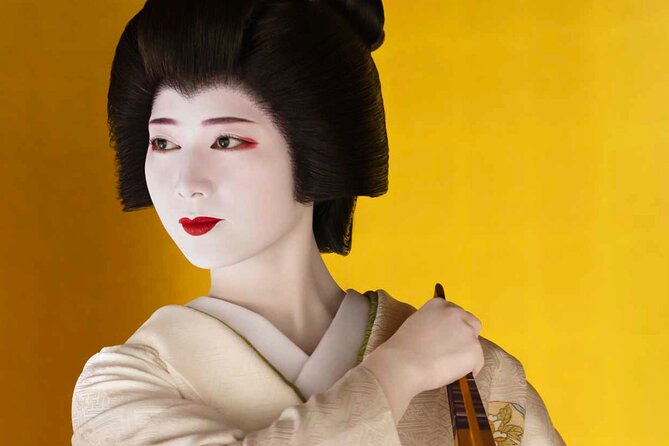
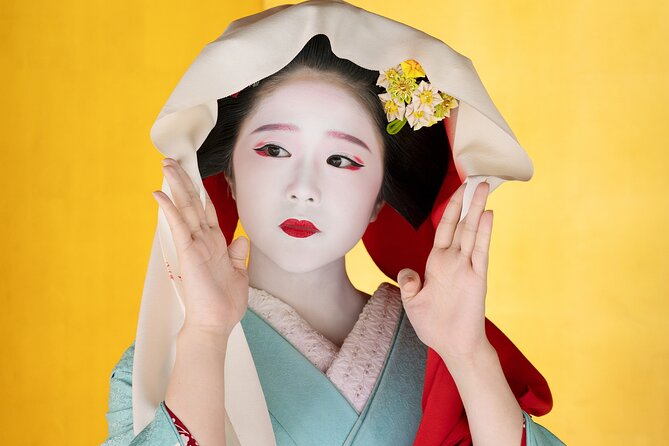
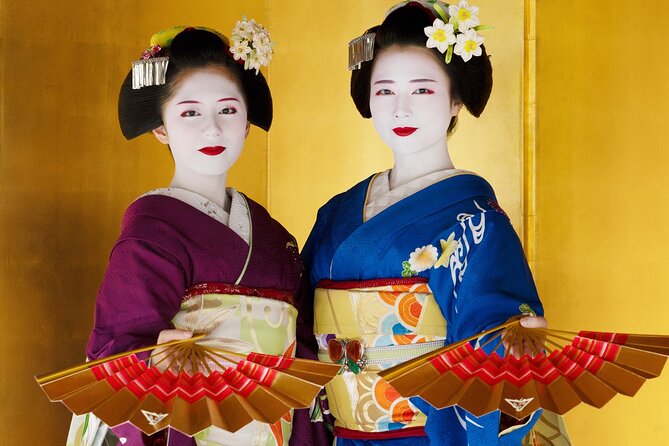
If Kyoto is your first stop in Japan, this is a smart way to get your bearings fast. You’re not wandering around hoping to spot geiko or maiko. Instead, you’re stepping into a dedicated space that explains the culture and then shows you a Kyomai dance by a geiko or maiko.
The value here is that the experience is compact. For $20, you’re paying for both admission and the performance, and you’re not burning time on long ticket lines elsewhere. The time commitment is small enough for your first night, yet it still feels like a real cultural moment, not a quick sales pitch.
You can also read our reviews of more museum experiences in Kyoto

Stop 1: Gion Kobu Kaburenjo Theater and the geiko-maiko atmosphere
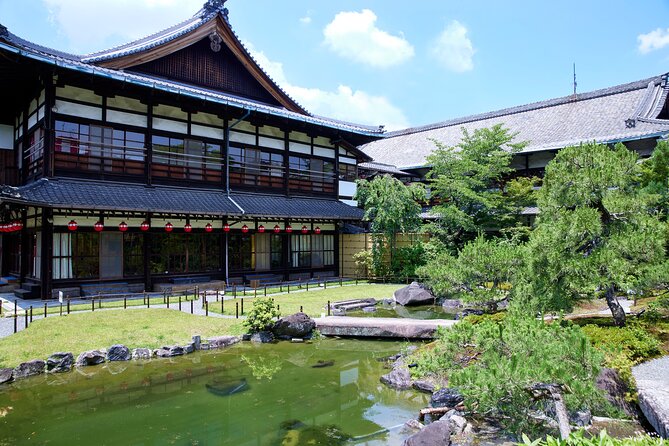
The experience begins at the Gion Kobu Kaburenjo Theater area linked with the Gion Kagai Art Museum. The setting is meant to frame the culture of geiko and maiko in Gion, with that sense of continuity, tradition, and careful ceremony.
A practical reason this first stop works: you’re not thrown into the performance cold. You arrive in a place that’s already oriented toward what you’re about to see. That helps you appreciate the details, even if you don’t know a lot going in.
There’s also a pacing benefit. From here, it transitions naturally into the museum and then the dance. Instead of sitting around for a long time, you flow through the experience while the cultural context stays fresh.
Stop 2: Gion Kagai Art Museum exhibits you can actually study
After you’re oriented, you spend time in the Gion Kagai Art Museum itself. This is the part that often surprises people. The show is the headline, but the museum is where you slow down and look.
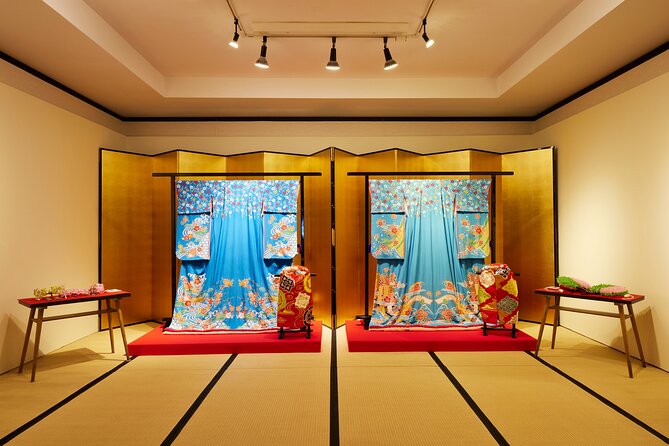
You’ll encounter exhibits tied to Kagai art culture and the world of geiko and maiko, including items that connect directly to daily appearance and seasonal style. Expect to see examples such as:
- hand-painted Yuzen kimono
- Nishijin brocade obi sashes
- personal belongings and makeup used by maiko
- kanzashi hair ornaments associated with the seasons
- formal kimono items, including a black crested formal kimono type that’s rarely seen in the Gion quarter
If you like museums that feel like they have something to teach, this one does. It’s not just decorative. It’s geared toward helping you understand what you’re seeing when a dancer performs.
One tip I’d give you: if you’re the type who likes reading before you watch, go earlier rather than later so you can take in more of the exhibits before the dance. There’s a lot more satisfaction when the performance follows your museum time, not competes with it.
Kyomai in the banquet room: what you’ll see and hear
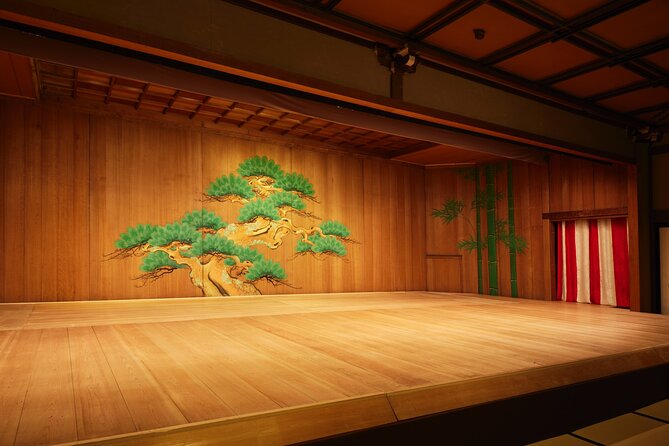
Now for the part you came for: the Kyomai dance performance by a geiko or maiko. The performance time is about 15 minutes, and it includes two songs.
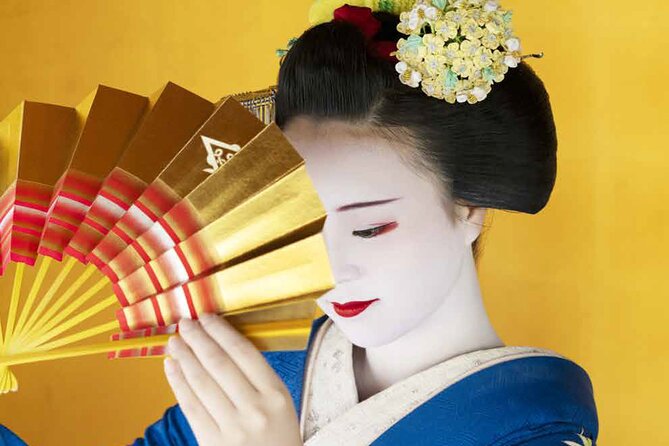
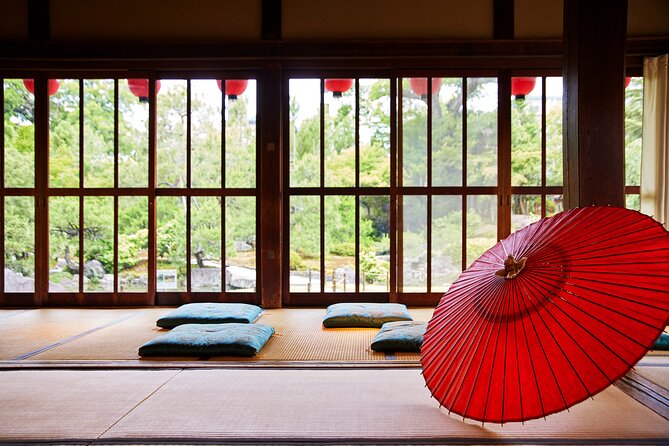
The dance is performed in Inoue style, and it happens close enough that you feel like you’re watching the craft, not just the spectacle. The setting is described as an atmospheric banquet room style space, which helps the whole thing feel intimate and focused.
This is a real cultural contrast for people used to modern stage performances. Kyomai tends to feel controlled, graceful, and deliberate. Movements are refined rather than flashy. If you’re expecting high-energy choreography, you might find the pacing quieter than you want. But if you appreciate precision and calm presence, that quiet focus is exactly what makes it memorable.
Also, you should plan around the photo rule. Photos are not allowed during the dance. If you want images, the museum offers an optional photo session after, for 2,000 yen per group, with a maximum of 5 people. That’s useful to know so you don’t get stuck trying to solve it at the worst possible moment.
Price and value: why $20 can be a good deal here
At about $20 for roughly 20 minutes total, this won’t feel like a long day’s worth of entertainment. But the value comes from the bundled components:
- museum admission included
- dance performance included
- all fees and taxes included
You’re paying for more than the show. You’re paying for context, and that makes your eyes work better during the performance. The museum’s kimono and personal-item displays are part of why the experience feels worth it, especially for first-time visitors.
The other value piece is efficiency. This is in a part of Kyoto where getting your bearings can take time. Here, you’re not hunting for the right venue and then queuing for separate tickets. The flow is designed so you don’t lose an evening to bureaucracy.
The performance is short. That’s true. But for the price, a short performance paired with a museum visit is often a better deal than paying for something longer that doesn’t teach you anything.


Timing that makes a difference in your Kyoto evening
This is the kind of cultural stop that fits into the rhythm of your day. It’s long enough to feel like an event, short enough not to wreck your schedule.
If you want the best experience, I’d aim to do it earlier in the day window available for performances. There are multiple performance time slots, so you can usually find something that matches your itinerary.
And if you’re coming as a family, think about attention span. The museum includes a garden area where kids can move around, which helps. During the performance itself, you’ll want everyone to keep quiet, because Kyomai is all about focus.
A practical scheduling idea: if this is your first Kyoto night, do it early enough that you still have energy for wandering nearby Gion streets afterward.
Practical etiquette: shoes, comfort, and group size
Small details matter with this kind of cultural setting, and this one has a few.
First, the shoe rule. You remove shoes before entering the building. Wear slip-on footwear if you can, or at least something easy to take on and off without turning it into a workout.
Second, seating closeness is part of the appeal. The dance shows are described as accommodating around 40 to 50 people, so you’re close to the performers. That closeness is great, but it also means you should be ready to respect space and follow staff guidance.
Third, keep the vibe calm. One helpful review note highlighted that kids should stay quiet. Even if you’re bringing children, plan for gentle behavior during the performance portion.
Finally, size stays manageable. The overall activity is capped at 25 travelers, which generally helps it feel organized rather than chaotic.
Who this is best for, and who might not love it
This works especially well if you’re:
- curious about geiko and maiko culture and want a focused introduction
- the type who enjoys museum exhibits with real items, not just photos
- short on time but want something authentic in Kyoto’s Kagai area
- traveling with kids who can handle quiet time for a short show, followed by garden time
You might not love it as much if you want:
- a long, extended performance with lots of action
- a photo-friendly experience during the dance itself
- a deep, hour-long immersion package
If you fall into the second group, you can still enjoy it, but go in with the right expectations: this is a short Kyomai moment plus a museum visit, not a multi-hour production.
Should you book Kyomai Dance and the Gion Kagai Art Museum?
Yes, I think you should book it if you want a concentrated dose of Kyoto culture with real teaching built in. The combination of museum exhibits and a live Kyomai performance is the magic formula here. For the price, admission included, and the compact timing, it’s a strong option for your first Kyoto night or a half-evening when you still want to wander Gion afterward.
Book it if you care about seeing the details behind geiko and maiko aesthetics, and if you can appreciate a calm, graceful performance that doesn’t try to out-shout you.
If you’re photo-driven and hate being told no during the dance, plan for the optional photo session. And if you’re expecting something long and theatrical, know the dance is only about 15 minutes.
FAQ
How long is the experience?
The activity is approximately 20 minutes, with the Kyomai dance performance taking about 15 minutes (two songs).
What is included in the price?
Admission and the dance performance are included, along with all fees and taxes.
Are photos allowed during the dance?
Photos are not included for the dance itself. If you want photos, there is an optional photo session available for an extra 2,000 yen per group (max 5 people).
How close can I see the dancers?
The show is designed so visitors can see the dancers from up close, with each show accommodating about 40 to 50 people.
Do I need to remove my shoes?
Yes. You need to remove your shoes before entering the building.
Can I get a free cancellation refund?
You can cancel for a full refund if you cancel at least 24 hours before the experience starts. If you cancel within 24 hours, the amount is not refunded.
More Museum Experiences in Kyoto



More Tour Reviews in Kyoto

Not for you? Here's more nearby things to do in Kyoto we have reviewed









Gion & Geisha District Tours, compared.
 ★ 4.7Kyoto Geisha Walking Tour: Gion District & Hidden GemsFrom $253,273 reviews
 ★ 4.9Gion Magical Night Walking Tour with Geisha TriviaFrom $242,393 reviews
 ★ 4.7Gion Geisha District Walking Tour – Stories of GeishaFrom $202,187 reviews
 ★ 4.9Best of Kyoto: Gion, Geisha, Pagodas & CobblestonesFrom $242,058 reviews
 ★ 4.5Night Walk in Gion: Kyoto’s Geisha DistrictFrom $212,003 reviews
 ★ 5.0Kyoto Night Foodie Tour in Gion (9+ dishes + 6 Sake tastings)From $1631,762 reviews
 ★ 5.0Kyoto Gion Geisha District Walking Tour – The Stories of GeishaFrom $251,441 reviews
 ★ 5.0Kyoto Gion: 2-Hour Geisha Culture & History Walking TourFrom $231,186 reviews
Browse the lists this tour appears in