

Reviewed · KYOTO KIMONO EXPERIENCES
Kyoto 6hr Private Guided Tour & Kimono Experience
A kimono and temple day, thoughtfully planned. This 6-hour Kyoto experience pairs a Wargo kimono rental with a licensed local guide who helps you see more than the postcard version of the shrines. You pick the exact 2 to 3 stops from a long list, so you can match the day to your interests instead of trying to sprint through Kyoto.
I love how the guide connects what you see to Japanese culture and the shrine or temple’s backstory, not just dates and directions. I also like that the experience is designed as small-group and private, so you are not lost in a crowd of strangers while someone points out the kinds of details most visitors miss.
One consideration: entrance fees and most meals are not included, so your total cost can rise depending on which temples you choose and whether any of them require paid admission.
Key things I’d circle before booking
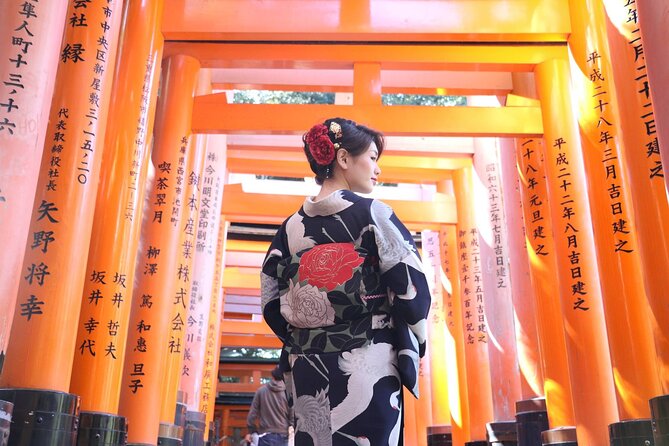
- Kimono first, photos second, with a straightforward Wargo standard plan so you can get comfortable quickly
- Choose 2 to 3 sites from a big list, which is the real value for a limited 6-hour day
- Guide-focused temple meaning, especially at stops like Fushimi Inari where shortcuts ruin the experience
- Short, efficient time blocks at each stop, great for seeing a lot without total exhaustion
- Crowd-smart pacing, so you spend less time stuck and more time looking closely
The Big Idea: Kyoto’s Best Sites, But With a Real Guide
Kyoto is famous for its temples, but it is easy to treat that as a checklist. This tour is built differently. The whole format nudges you toward fewer stops with a guide who explains why those places matter, including cultural connections and symbols that you might not notice on your own.
The biggest practical win for me is control. You decide which 2 to 3 sites you want from the provided options. That means you can combine a major landmark with one quieter place, or swap in something that fits the season you are traveling (for example, places noted for color in autumn).
If you want a “see it and understand it” day, this approach fits well. If you want to spend half the day sitting in one temple garden with zero structure, you might find the time blocks feel fast.
You can also read our reviews of more guided tours in Kyoto


Price and What $162.52 Covers (and What It Does Not)
At $162.52 per person for about 6 hours, the best way to judge value is to look at what is included: a licensed local English speaking guide, a kimono wearing experience using Wargo’s standard plan, and a guided route among your selected sites.
What is not included matters. Entrance fees, transportation fees, and lunch are not part of the price. Some of the stops on the list are noted as free to enter (like Fushimi Inari-taisha and the kimono shop ticket for the rental time). Others are not included. So your end total will depend on your choices.
Also, the tour does not include a private vehicle. Pickup is offered, but you will still be walking and using local transport as needed. In Kyoto, that can be a plus because walking is part of the charm, but it is something to plan for.
Wargo Kyoto Gion Kimono: Easy Start, Real Kyoto Feel
Your day begins at Kyoto Kimono Rental wargo Kyoto Gion Store. The standard plan is described as a budget-friendly intro to wearing kimono, with designs that mix cute and elegant styles.
Expect about 1 hour for this first stop. The kimono-related admission ticket is listed as free for this rental time, and the tour includes wearing the kimono (standard plan only). That is a big deal because kimono rental on your own can turn into a headache of timing and fitting.
A few practical details that help you plan:
- Kimono sizes are listed for women 150 to 170 cm, and men 165 to 200 cm.
- If you do not find a perfect fit, the professional staff will dress you as best as they can.
My advice: wear comfortable footwear under your outfit plan. You will likely do more walking than you expect once you factor in short guided visits at multiple temples. Also, keep what you need for the day simple, since you are moving around with rental clothing logistics.
How the Temple Time Blocks Work With Your Choices
The itinerary list includes many famous temples and sites, but your tour is described as customizable for 2 to 3 sites. The individual stops in the list are mostly around 10 to 15 minutes each, with a few longer blocks (Fushimi Inari at 1 hour, and Kiyomizu-dera noted for a 1-hour guided exploration in the description).
So think of this as a guided “hits and meaning” day. You will get enough time to see the highlights and learn the context, but it will not be a slow roam. If that sounds like you, great. If you need long, unstructured time at one place, consider choosing fewer sites and picking one that you really want to linger at.
Kinkakuji and Ginkakuji: Golden and Silver Pavilions With an Explanation
If you choose Kinkakuji Temple, you are going to see the Zen temple known as Golden Pavilion (formally Rokuonji). The top two floors are covered in gold leaf, and the place is tied to the retirement villa of shogun Ashikaga.
Ginkakuji Temple is the Silver Pavilion, also a Zen temple connected to shogun Ashikaga Yoshimasa and his retirement villa plans. These are both major Kyoto landmarks. The guide value here is in the connections: why the shoguns built what they built, and what that says about power and culture in the period when these sites took shape.
Time note: both are listed around 15 minutes each, and entrance tickets are not included. Translation: you can see a lot, but you should expect a brisk pace. If you are the type who likes to stand in one spot until your brain catches up, plan to choose only one of these.
You can also read our reviews of more private tours in Kyoto



Honen-in and Nanzen-ji: Moss, Gates, and Big Zen Grounds
Honen-in is described with a scenic approach ending at a moss-covered gate, and once inside, you walk past two sand mounds. Even without adding extra stops, the setting sounds like the kind of place you can feel in your feet and eyes right away.
Then Nanzen-ji is a head temple of one of Zen’s branches, with spacious grounds at the base of Kyoto’s Higashiyama mountains. This is the kind of place where the size and the temple layout can make you feel small in a good way, and a guide can help you notice what you are looking at instead of just reacting to buildings.
One practical tip I took from the experience descriptions: go early if you care about photos. A review praised going early because the midday crowds make photography difficult at Honen-in. Even if you are not obsessed with photos, early timing tends to mean you can actually enjoy the details instead of dodging people every ten seconds.
Both stops are listed around 15 minutes, and entrance fees are not included.
Tofuku-ji and Taizo-in: When You Want Gardens and Color Cues
Tofuku-ji Temple is noted for spectacular autumn colors, and it was founded in 1236 at the behest of the Fujiwara. If you are traveling in fall, this is a strong pick. Even outside autumn, it is worth selecting if you like temples where seasons change the feel of the whole property.
Taizo-in is a subtemple garden at Myoshin-ji Temple, and it is described as among Kyoto’s famous gardens. This is the kind of stop that pairs well with something more headline-famous. In a route day, Taizo-in can give you a calmer visual break.
Time note: each is listed around 15 minutes, with entrance fees not included.
Shugakuin Imperial Villa and Ryoan-ji: Emperors, Heian-Era Quiet, and That Rock Garden
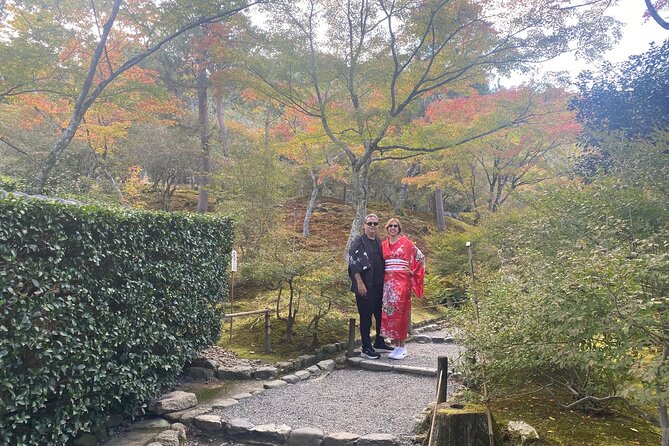
Shugakuin Imperial Villa (Shugakuin Rikyū) is built in the 17th century by Emperor Gomizuno, and it is managed by the Imperial Household Agency. The place includes upper, middle, and lower villa areas. This is not “just another temple.” It feels like a historical residence that happens to sit within Kyoto’s temple landscape.
Ryoan-ji is the star for people who came for the famous rock garden. The description calls it Japan’s most famous rock garden. It started as an aristocrat’s villa in the Heian Period and later became a Zen rock garden site.
Both stops are listed around 15 minutes, with entrance fees not included. That might sound short for Ryoan-ji, but the guide context is what helps: the meaning behind the design, why it is arranged the way it is, and what viewers are meant to do with their eyes.
Fushimi Inari-taisha: More Than Torii Gates, With Crowd-Smart Guidance
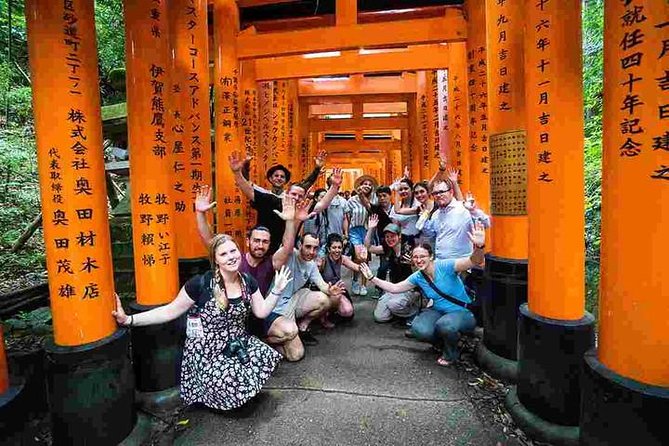
Fushimi Inari-taisha is the stop most people recognize, but the tour framing is smart: it is not just the red torii tunnels. The guide will show deeper layers, including how politics changes what happens around the site and the shrine’s connection to local culture.
This stop is listed as 1 hour, with admission ticket free. That gives you time to do more than just walk in, point, and leave.
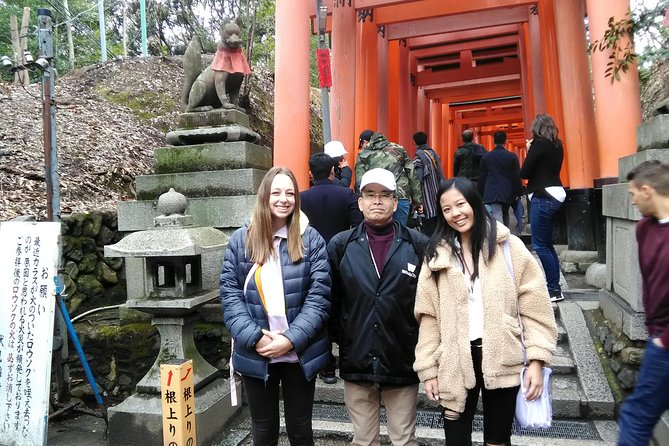
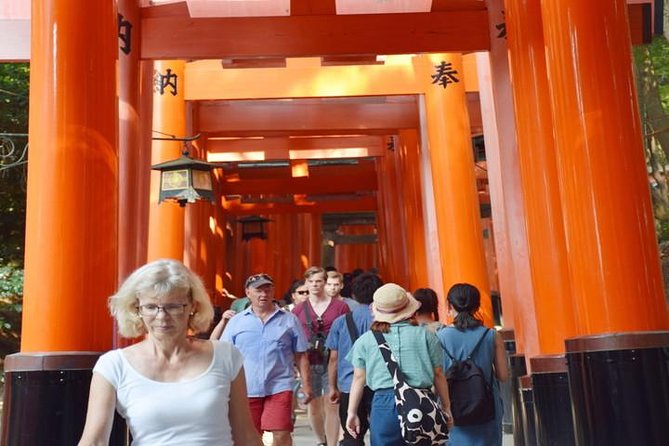
A review highlighted that with the guide’s help, a short window felt unhurried, explanations were careful, and the group moved smoothly through crowds. That is exactly what you want at Fushimi Inari, because the line of people can make even a famous place feel chaotic if you are figuring it out alone.
My practical tip: wear shoes you trust. Fushimi Inari can mean more stair and slope walking than you expect, especially if you follow the route deeper than the first photo area.
Kyoto Imperial Palace, Daitoku-ji, and Kokedera: Less Common, More Meaning
Kyoto Imperial Palace is described as the residence of Japan’s Imperial Family until 1868, when the emperor and capital moved to Tokyo. If you want a historical counterweight to temple scenes, this is a solid choice. It is listed as 15 minutes, and admission tickets are not included.
Daitoku-ji Temple is a Zen complex where you find temples within temples, and it includes meditative gardens. Importantly, the description names Michael Lambe as the guide for the stop. If you like when a guide has a specific way of interpreting gardens, this is a clue to pick Daitoku-ji when you are choosing your 2 to 3 sites.
Then there is Kokedera Temple, also known as Saihoji, described as one of Kyoto’s UNESCO World Heritage Sites. It is known for its moss. This type of stop is perfect if you want something that feels different from the headline crowds.
Time note: Kyoto Imperial Palace and Daitoku-ji and Kokedera are listed around 15 minutes, and entrance fees are not included.
Kiyomizu-dera, Nishiki Market, and Pontocho for Atmosphere and Easy Pairing
If you choose Kiyomizu-dera, the description says you can do a comprehensive 1-hour guided tour of the temple grounds. It is one of Kyoto’s most popular temples, and the guided portion matters because popular temples can feel like information overload if you are not sure what to look for first.
Nishiki Market is listed as a narrow shopping street, about five blocks long, lined with more than one hundred shops and restaurants. It is known as Kyoto’s kitchen. This is a great “on your feet” break between temples. Admission is listed as free for the market itself, and the time listed is 10 minutes.
Pontocho is an atmospheric dining area. It is described as a narrow alley running from Shijo-dori to Sanjo-dori, one block west of the Kamogawa River, with lots of restaurants along the way. This is a good place to end your day because it gives you a Kyoto evening vibe without requiring a big change of plans.
Time note: Kiyomizu-dera is 10 minutes listed in the itinerary section, but the description says 1 hour guided tour. Since your final route is your selection, treat that as a hint that this stop can take more time than the short label suggests, depending on how your guide schedules it.
Gion Without Getting Lost, Plus Kennin-ji’s Dry Garden Touch
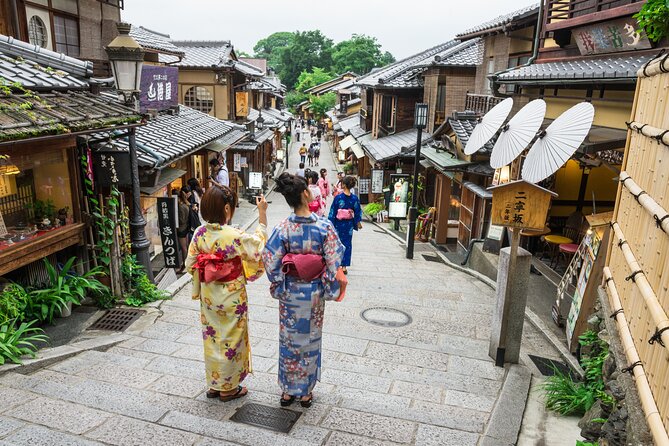
Gion can be intimidating to navigate if it is your first time. The tour description is honest about that: a guided walk helps you avoid getting lost and find smaller places you might miss.
Kennin-ji Temple is close to the bustle around Hanamikoji and Shijo streets, and it has expansive grounds you can walk, including two karesansui dry landscape gardens. The itinerary time shows 1 minute, but I would read that as a quick stop on the walk, not your entire visit. If dry garden design is your thing, you might want to pair it with another site where you have time to slow down.
Nijo Castle, Togetsukyo, Arashiyama, and Byodoin: Where Travel Time Needs Respect
Nijo Castle is listed as a UNESCO World Heritage site built in 1603 as the Kyoto residence of Tokugawa Ieyasu, the first shogun of the Edo Period. It is listed around 10 minutes.
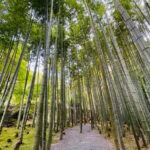
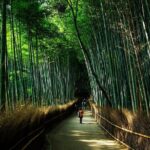
Togetsukyo Bridge is Arashiyama’s iconic landmark. It was originally built during the Heian Period (794 to 1185) and reconstructed in the 1930s. The bamboo groves nearby are described as great for walking paths, and they are particularly attractive when there is a light wind and the bamboo stalks sway.
Byodoin Temple is in Uji city, and the description warns that extra travel time is expected. If you want Byodoin plus other Kyoto city stops, you might want to choose fewer Kyoto sites overall so you are not burning half your day commuting.
How to Choose Your 2-3 Stops for the Best 6-Hour Day
Here are a few combinations that tend to work well with the tour’s structure, and with how Kyoto actually feels in real life:
- If it is your first Kyoto trip and you want the “I get it now” feeling: pick Fushimi Inari-taisha plus one major pavilion (Kinkakuji or Ginkakuji) plus a short, atmosphere stop like Nishiki Market.
- If you prefer calm, quiet mood: pick Honen-in plus Ryoan-ji plus Kokedera for moss garden energy.
- If you like historical power centers: pick Kyoto Imperial Palace plus Nijo Castle plus one Zen site that matches your taste.
- If you want traditional scene plus evening plans: pick Kiyomizu-dera plus Nishiki Market plus Pontocho to make your meal plans easier.
If you are unsure, choose your top “must see,” then add one contrast stop. That is how you avoid the feeling of doing the same kind of scene three times in a row.
Timing Tips for a 6-Hour Private Day
Your start time may vary, and the estimated kimono time is about 1 hour from the tour start. That means you often start the day already dressed, then move into temple time.
Because many temple stops are short (often 10 to 15 minutes), your success comes down to two things:
- Keep your footwear and bag setup simple.
- Decide in advance what you care about most, so your guide can aim your route.
Also, admission tickets for many temples are not included. If you budget ahead, you will feel less stress when the guide confirms which stops you chose.
Should You Book This Kyoto Private Guided Tour With Kimono?
Book it if you want a Kyoto day that feels guided in the best way, with a kimono start and explanations that focus on meaning and context. The guide-led approach helps at crowded places, and the “choose 2 to 3 sites” structure keeps your day from turning into a sprint.
Skip it if you mainly want free time to wander on your own, or if you are traveling with a tight budget for paid temple admissions and prefer not to add those costs. Also, if you want to spend long hours at a single temple garden without timeboxing, this format may feel a bit fast.
Overall, this is a strong pick for people who want Kyoto to make sense, not just look beautiful in photos.
FAQ
What is the duration of the Kyoto tour?
The tour duration is about 6 hours.
Is this tour private?
Yes, it is described as a private tour/activity where only your group participates. The tour is also described as small-group with a maximum of 15.
Do I get picked up?
Pickup is offered.
Which parts are included, besides the guide?
You get a licensed local English speaking guide and a kimono wearing experience using Wargo’s standard plan. The tour also uses mobile ticket delivery. Entrance tickets and other expenses are not included.
Are temple entrance fees included?
No. Entrance fees are listed as not included, except that some stops are noted with free admission, like Fushimi Inari-taisha and the kimono rental ticket for that first stop.
Can I choose which sites I visit?
Yes. Your tour is customizable, and you can choose 2 to 3 sites from the listed options with your guide.
What if the kimono size does not fit me perfectly?
Kimono sizes are listed for women (150 to 170 cm) and men (165 to 200 cm). If you cannot find a perfect fit, the professional staff will dress you as best as they can.
What is the cancellation window?
You can cancel up to 24 hours in advance for a full refund, with local time cutoffs.
More Guided Tours in Kyoto

More Tours in Kyoto

More Tour Reviews in Kyoto
Not for you? Here's more nearby things to do in Kyoto we have reviewed


Kyoto Kimono Experiences, compared.
 ★ 5.0Kimono Tea Ceremony at Kyoto Maikoya, NISHIKIFrom $65911 reviews
 ★ 4.8Kimono Rental with Hairstyling and AccessoriesFrom $21653 reviews
 ★ 4.9Kimono Tea Ceremony at Orizuruya GionFrom $49618 reviews
 ★ 5.0KYOTO Tea Ceremony with kimono near by Imamiya Jinjya ShrineFrom $99343 reviews
 ★ 4.3Kimono and Tea Ceremony Experience at Cultural AssetFrom $222306 reviews
 ★ 4.7Traditional Kimono RentalFrom $25265 reviews
 ★ 4.9Kimono Tea Ceremony with Matcha and SweetFrom $66249 reviews
 ★ 5.0Family-Friendly Kimono & Yukata Experience at WARGOFrom $31147 reviews
Browse the lists this tour appears in