
Reviewed · ARASHIYAMA & BAMBOO GROVE TOURS
Kyoto Arashiyama & Sagano Bamboo Private Tour with Government-Licensed Guide
Spring to bamboo. Kyoto delivered its best walk.
This private Kyoto day focuses on Arashiyama and Sagano, with a government-licensed English guide to handle route flow and explain what you’re seeing, from Togetsukyo Bridge to temple gardens.
What I really like is (1) the flexibility to pick 3 to 4 sites that match your interests, and (2) the chance to ask questions face to face, not just read plaques and guess. You also get practical crowd-avoidance guidance, so the day feels smoother than doing it alone.
One consideration: it is a walking day on temple steps, hills, and riverside paths, so if you’re sensitive to heat, rain, or slippery ground, you’ll want to plan smart and pack for it. Also, entrance fees and lunch are on you.
Key points to know before you go
- Government-licensed English guide who keeps the day moving and answers questions in real time
- Pick 3 to 4 sites from bamboo, temples, imperial villas, stone statue temples, and mountain options
- Time is managed with short stop windows, so you see variety without dragging all day
- Crowd-smart routing is a big theme in how guides lead this area
- Classic sights plus quieter temples give you more than just postcard Arashiyama
Private Kyoto walking tour through Arashiyama and Sagano, what it feels like
Kyoto can be a lot on your feet. That’s why this kind of private walking tour works so well in Arashiyama and Sagano, where the “must sees” cluster together but the real joy often comes from knowing which alley to take next.
I like the structure here: you meet in Kyoto, and your guide plans a walking day around 3 to 4 chosen stops. Most of the sites are built for strolling, with short visit windows, so you get a lot of variety in a single half-day without turning it into a long endurance hike.
The day also makes sense because Arashiyama and Sagano are not one single attraction. You have bamboo groves, riverside scenery near Togetsukyo Bridge, major Zen temple gardens like Tenryuji, and then all the smaller hillside temples tucked into the mountains. A good guide helps you read the area instead of just checking boxes.
You can also read our reviews of more guided tours in Kyoto
What a government-licensed guide changes in real life
A licensed local English guide is not just a translator. It changes how the day feels.
First, you get context as you walk. Instead of arriving at a temple and wondering what you’re looking at, you get the story behind it: why it sits where it sits, what kind of Buddhism it follows, and how the area developed across centuries. For example, Tenryuji is tied to major Zen traditions and its garden paths are part of the experience, not an afterthought.
Second, you can ask your guide to adapt. In past days, guides like Ken and Kazuo have been singled out for being very responsive, including giving simple handouts on Kyoto history and slowing down when guests need it. Guides such as Tomo and Shoji have also been credited with pacing and crowd avoidance, steering people toward calmer moments instead of just marching with everyone else.
Even if you know a bit about Kyoto already, this kind of guide makes the day feel efficient: you spend less time figuring out logistics and more time actually looking.
How the 6-hour format keeps your day from turning into a stampede
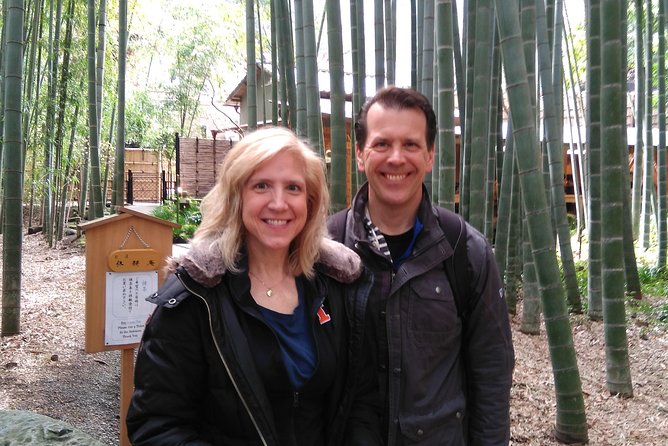
This tour is about 6 hours (approx.), and the planning is clearly built around short, focused site visits. Many stops are timed around 15 to 30 minutes, with several around 20 minutes.
That matters because Arashiyama can get jammed during peak seasons. The bamboo area and Togetsukyo Bridge zone are famous for a reason, but fame creates crowds. If you’re on your own, you tend to lose time shuffling through lines, re-checking directions, and fighting for space in narrow lanes.
With a private guide, you can treat the day like a guided circuit:
- you arrive, see the key views,
- you get the right context,
- you move on before the worst congestion hits.
If you want a quieter feel, you’ll also want to choose temple-heavy stops like Jojakkoji, Nisonin, and Gioji, or statue temples like Adashino and Otagi Nenbutsu-ji. Those places are not “headline” sites for most first-timers, but they can feel calm and reflective compared to the bamboo hub.
Arashiyama essentials: Togetsukyo Bridge, bamboo paths, and the Okochi Sanso vibe
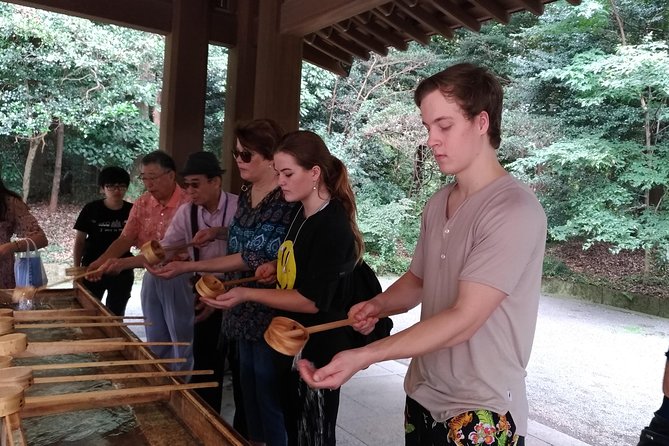
If your Kyoto trip has one headline moment, it’s usually bamboo. Here, you’re in the heart of it.
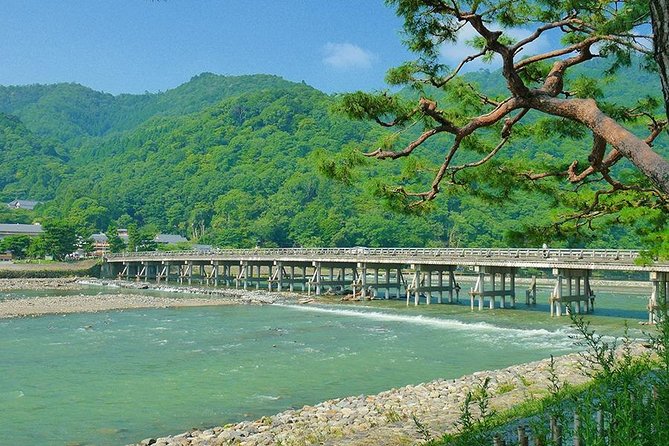
Togetsukyo Bridge is the central landmark for Arashiyama. It’s known as the moon crossing bridge, rebuilt most recently in the 1930s, and it sits with mountains behind it and a riverside park nearby. That park includes cherry trees, so the bridge area becomes extra seasonal in spring and fall. Even when it’s not peak season, the combination of forest and river keeps it visually satisfying.
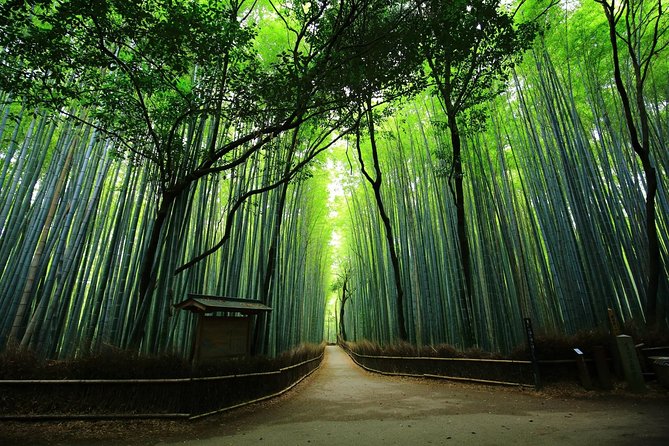
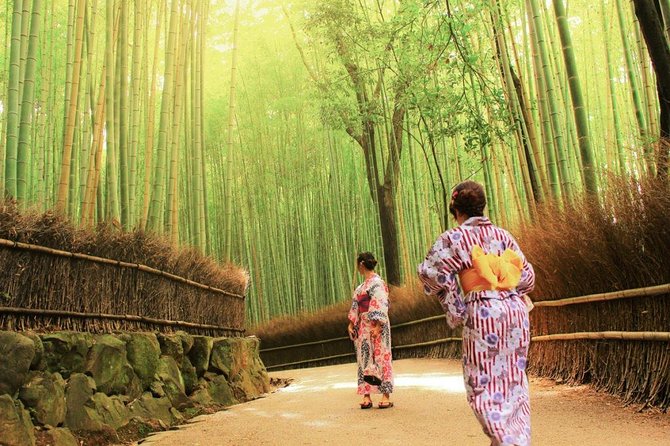
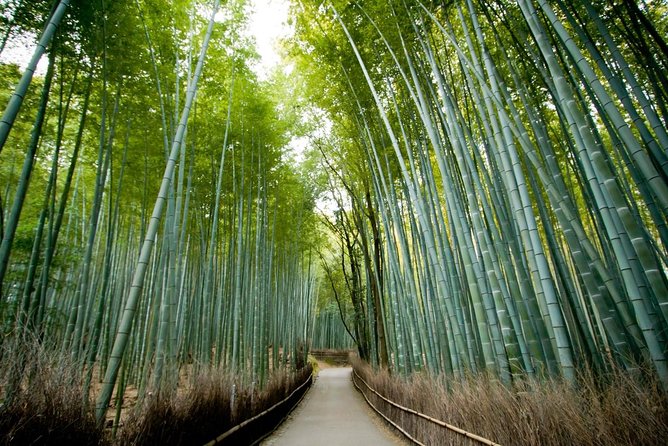
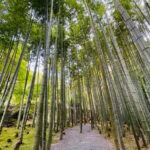
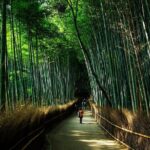
Then you hit bamboo forest street, where the walkways slice through the groves. Bamboo is at its best when the light breeze shifts the stalks and turns it into moving texture rather than a static photo. The bamboo tradition here goes back for centuries, used for everyday crafts like baskets and mats, not just souvenirs.
One especially memorable add-on in this zone is Okochi Sanso Garden, the former villa of actor Okochi Denjiro. The grounds include multiple gardens and tea houses, but the buildings can only be viewed from the outside. That limitation actually helps you slow down and focus on the gardens and the layout rather than rushing into a photo sprint.
Tenryu-ji and Arashiyama temple gardens: Zen calm when crowds surge nearby
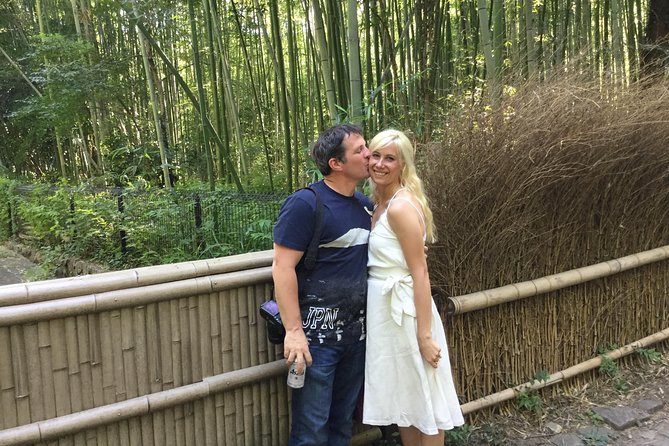
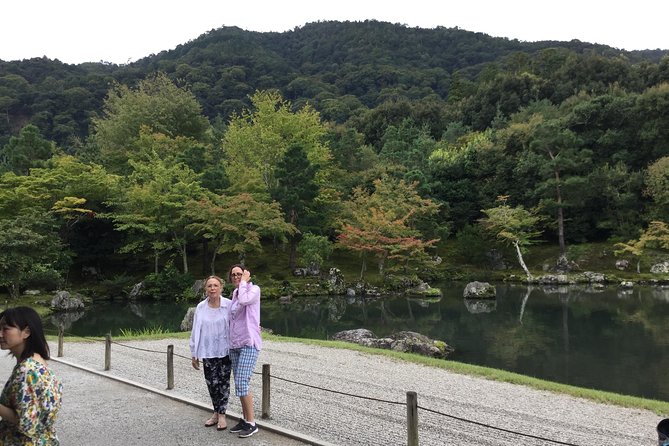
Tenryu-ji is one of Arashiyama’s big Zen temple anchors. It’s ranked among Kyoto’s five great Zen temples, and it’s tied to UNESCO status. The core idea for your visit is simple: gardens and walking paths are a major part of the experience.
You’ll get more out of Tenryu-ji if your guide points out what you’re looking for. Zen gardens are designed to be read as you move, not just stared at from one angle. If you’ve done Kyoto temples before, you’ll recognize the pattern, but a guide makes it feel more intentional.
This is also one of the best places to take a breathing moment. Even when the bamboo streets feel packed, temple grounds often allow you to reset your pace. In some seasons, the path design and plant rhythm make the garden feel different hour to hour.
You can also read our reviews of more private tours in Kyoto
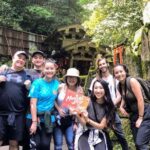

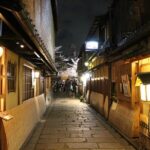
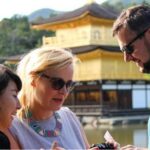
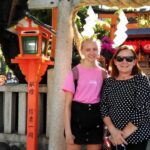
Temple hillside rhythm: Jojakkoji, Nisonin, and Gioji for moss and city views
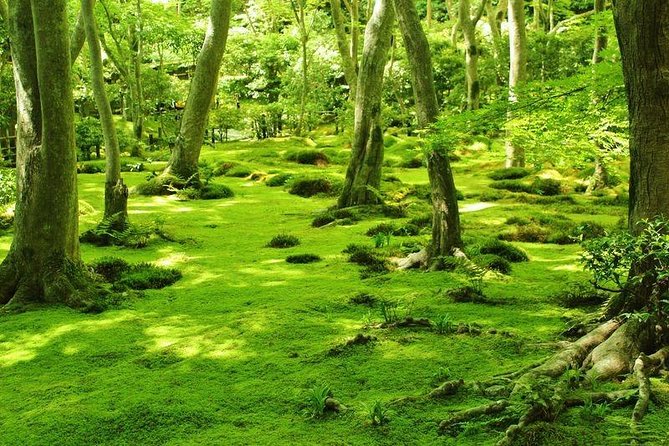
Not all Kyoto temples are equally “touristy.” That’s where this route helps you if you choose the right stops.
Jojakkoji is a smaller mountainside temple with quiet gates and understated buildings. It sits with maple and moss beside the paths and stairs, and it offers views over Kyoto from some spots. If your feet are getting tired from the main Arashiyama crowd zones, this kind of stop feels like a reward: a gradual climb, a slower pace, and then a view that justifies the effort.
Nisonin is similar in style but tends to feel a bit more imposing, with a hillside approach that is partly framed by overhanging trees. It also provides city views from the upper grounds. Think of it as a “step up” in atmosphere from Jojakkoji, without becoming a large, high-traffic complex.
Gioji goes even further into the forest. It’s known for its moss garden, and the entrance gate and small main hall have thatched roofs. A round window looking into the gardens is a nice detail to look for if you get the chance to linger. If you want a temple stop that feels more tactile and quiet, Gioji is often the one you’ll remember after the bamboo photos fade.
Imperial villa options: Shugakuin and Katsura for architecture lovers
If you like gardens and design, don’t skip the imperial villa options. They’re not “temple walkthroughs” so much as planned landscapes shaped by architecture and view lines.
Shugakuin Imperial Villa is managed by the Imperial Household Agency and is made up of Upper, Middle, and Lower Villa areas, each with traditional-style buildings and gardens. It was built in the 17th century, and the site’s name ties to an earlier temple that stood there in the 10th century. The villa’s history includes land purchases for farmland that are leased out to local farmers, which gives you a sense that this is not just a sightseeing set piece.
Katsura Imperial Villa is another standout for Japanese architecture and garden design. It’s completed in its current form in the mid 1600s as a residence tied to Japan’s imperial family. But here’s the practical catch: visiting Katsura requires joining a tour. Palace buildings can be viewed only from the outside, and photography is limited to designated spots. If you’re the type who wants to take a lot of pictures, you should know ahead of time that this one has rules. Your guide can help you follow them without feeling like a bummer.
If your goal is maximum variety in one half day, I’d treat the imperial villa choice as a “do we want refined design today” decision. Bamboo and temples are the headline, imperial villas are the brainy bonus.
Sagano’s emperor-temple energy: Daikaku-ji in the calm north
Sagano has a different vibe from central Arashiyama. It feels more spread out, more spacious.
Daikaku-ji is a large Shingon temple that began as an imperial detached palace in the early 800s, used by Emperor Saga. Later, it became a temple and stayed tied to high-status Buddhist roles, including retired emperors who reigned from here. It’s also associated with historical peace talks that reunited the Northern and Southern Imperial Courts after a long period of civil war. On the ground, you’ll feel the scale in the buildings and the presence of a large pond and pagoda.
Why it’s worth including: it’s a strong “history through setting” stop. You can understand why the emperor’s retreat made sense when you’re standing there in the quieter Sagano context, with space around you and water nearby.
Sagano statue temples: Adashino and Otagi Nenbutsu-ji for a surreal walk
If you’re looking for something different from bamboo and mainstream shrines, Nenbutsu-ji temples are a great pivot.
Adashino Nenbutsu-ji is known for hundreds of stone statues placed for the souls of the dead. These statues were placed starting long ago with Kobo Daishi, and today the grounds feel like a stone forest. There’s also a short path through a bamboo forest in the back, which means you get bamboo again, but in a more contemplative, less “show” way.
Otagi Nenbutsu-ji is famous for its 1200 rakan statues, each with different facial expressions. They were created relatively recently, starting in the 1980s and early 1990s. When you walk among them, you get a weird, wonderful feeling: it doesn’t feel like a single statue garden, it feels like a whole crowd frozen in time.
This is a stop you choose if you like odd details. If you only want the top three Kyoto photos, you can skip it. If you like places that feel human and a little strange, this is where the day gets memorable.
Mountain and water add-ons: Kurama, Yoshiminedera, and Kibune River
Not every plan has to stay inside Arashiyama-Sagano proper. The tour’s site list includes mountain town options that can change your day dramatically.
Kurama is a rural town in the northern mountains of Kyoto City, less than an hour from the city center. It’s known for Kurama-dera and Kurama Onsen. If you choose this stop, you should know it’s built around walking through a mountain town atmosphere, then ending with the idea of soaking in hot springs. Daytrippers can use the baths for fees, with outdoor bath pricing lower than full access for baths.
Yoshiminedera is another hillside temple in Kyoto’s western mountains. It’s built along the mountain side with grounds spread up the slope, looking out onto Kyoto. It’s associated with Tendai Buddhism, and it had a history of destruction and rebuilding tied to the Onin War and later restoration. This one is a “views and temple grounds” stop, not a quick photo stop.
Kibune River is a forested valley town developed around Kifune Shrine. The shrine is dedicated to the god of water and rain, and it’s linked to a legend about a goddess traveling by boat into the mountains north of Kyoto. A unique practical detail: you can get omikuji fortunes written on paper slips that reveal your message when dipped into water. That makes the experience feel more hands-on than typical shrine fortune traditions. Okunomiya is about one kilometer further up the valley, and there’s a boat stone associated with the legend.
These add-ons are best when you want a break from the main temple crowd energy and you’re okay with a more “Kyoto outskirts” feel. If you only have time for the Arashiyama headlines, you can keep your choices closer to the bamboo core.
Pacing and weather: what to do on a hot, rainy, or slippery day
Arashiyama and Sagano can be tough weather-wise, and you’ll feel it because it’s a walking route.
One common theme from real days is hot, humid summer conditions. People can get tired fast, especially if you add hill climbs. If you go mid-summer, plan hydration seriously and consider choosing at least one calmer temple garden stop to avoid spending the whole day in sun exposure.
Rain is another factor. Paths can become slippery on hillside routes. Autumn scenery is stunning, but that same fall damp can make steps treacherous. If it’s raining, I’d prioritize temple grounds with more stable walkways and take your time on stair sections.
The good news: the tour operator builds this for “a day that adapts.” If weather causes issues, the experience can be rescheduled or refunded. Still, your best day comes when you plan for feet, weather, and pace from the start.
Price and value: what you get for about $157.82 per person
At $157.82 per person for a private, government-licensed guide, you’re paying for time, planning, and local interpretation. This is not a bargain bus tour, but it can be good value if you want:
- real explanations at each stop,
- flexibility to choose exactly 3 to 4 sites,
- a guide who can adjust pacing for you.
Important cost reality check: entrance fees, lunch, and transportation for you and the guide are not included. That means your total cost will depend on which paid sites you pick and whether you add something that needs tickets. For example, Katsura Imperial Villa requires a tour, and that comes with constraints like outside-only views and photo limits.
Still, the guide portion is where you’re getting value. If you’ve ever felt lost in Arashiyama without knowing which turns matter, this is the fix. You also get a mobile ticket and group discounts, which helps if you’re traveling as a small group.
Who should book this Kyoto Arashiyama and Sagano private tour
I’d book it if you want a stress-reduced Kyoto day in a high-fame area, while still getting quieter temple experiences. This is also a smart pick if you’re traveling with kids who might enjoy a temple plus a bamboo moment, or if your group likes a mix of classic sights and off-the-main-path stops.
I’d be cautious if you have very limited mobility or if your group wants a long list of “everything I can see” sights. The plan is built for 3 to 4 choices, and most stops are short windows. That can feel perfect or it can feel too short, depending on your pace.
If you want the best results, decide your top two priorities before you book:
- If it’s bamboo and iconic Arashiyama views, center your picks near Togetsukyo Bridge and Tenryuji.
- If it’s calm and mood, add Gioji, Jojakkoji, Nisonin, and one Nenbutsu-ji.
- If it’s design and culture, pick Shugakuin or Katsura, but go in ready for the photo and entry rules at Katsura.
FAQ
FAQ
How long is the Kyoto Arashiyama and Sagano private tour?
The tour duration is about 6 hours.
Is this tour private or shared with other groups?
It is private. Only your group will participate.
Can I choose which sites to visit during the tour?
Yes. You can customize a walking tour of your choice of 3 to 4 sites from the provided options.
Does the tour include pickup and drop-off?
Pickup is offered, and the pick up and drop off for this tour is on foot.
Are entrance fees included for temples and gardens?
No. Entrance fee is not included for you.
Is lunch included?
No. Lunch is not included.
Is transportation included?
No. Transportation fee is not included for you and your guide, and private vehicle is not included.
What happens if weather is poor?
This experience requires good weather. If it is canceled due to poor weather, you will be offered a different date or a full refund.
More Guided Tours in Kyoto

More Tours in Kyoto
More Tour Reviews in Kyoto
Not for you? Here's more nearby things to do in Kyoto we have reviewed

Arashiyama & Bamboo Grove Tours, compared.
 ★ 4.8Fushimi Inari, Kinkakuji, Bamboo Grove 1 Day Bus TourFrom $1224,316 reviews
 ★ 4.1Osaka/Kyoto:Kinkakuji,Arashiyama,FushimiInariShrine,NaraParkFrom $661,596 reviews
 ★ 4.7Kyoto/Osaka: Nara, Fushimi Inari Taisha, Arashiyama Bus TourFrom $521,275 reviews
 ★ 5.0Kyoto Arashiyama Walking Tour: Bamboo, Monkeys, Gardens & SecretsFrom $651,216 reviews
 ★ 4.8Arashiyama Bamboo, Temple, Monkeys, or Secret Sake BreweryFrom $87886 reviews
 ★ 5.0Arashiyama Bamboo Forest, Monkeys, Matcha & Temple TourFrom $53759 reviews
 ★ 4.4Osaka/Kyoto: Arashiyama, Nara & Fushimi Inari Shrine w/LunchFrom $61754 reviews
 ★ 5.0Nijo, Kinkaku-ji, Arashiyama, Kiyomizu & Fushimi InariFrom $51699 reviews
Browse the lists this tour appears in