
Reviewed · WORKSHOPS
Kyoto: Beginner Knife Sharpening & Handle Fitting Workshop
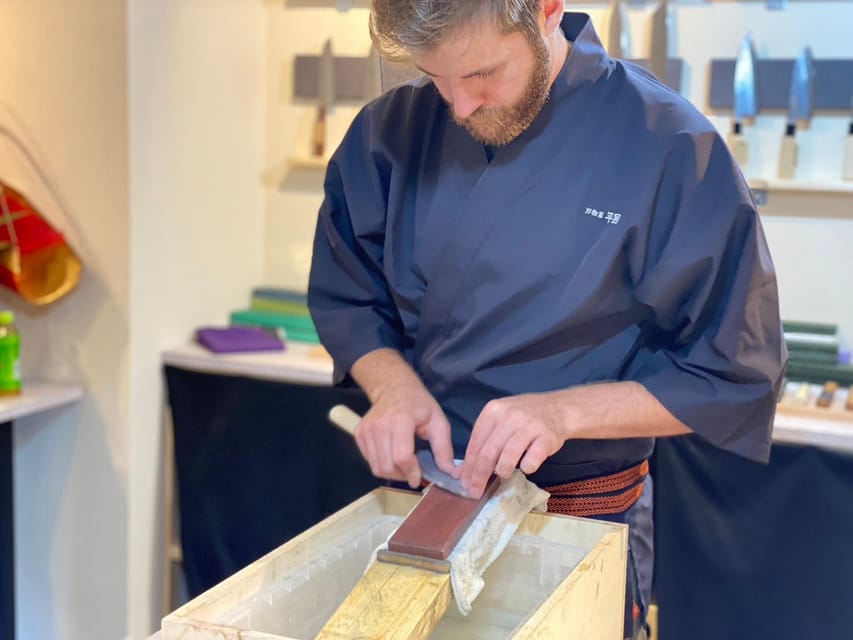
Your knife deserves better than random YouTube guesses. In this Kyoto class at HIRAI, I like that you get real hands-on practice sharpening and then fitting the handle, with clear English support for a beginner-friendly path. You also get a memorable craft souvenir, because after the workshop you can take your knife home ready to use. One thing to consider: the handle fitting uses fire, so plan to wear clothes you do not mind smelling a little smoky.
I love the small group size, limited to just 3 participants, because you get corrections instead of general tips. I also like that there is no heavy sales vibe, since the workshop’s standard knife choices are already strong, and upgrades are optional. If you want something other than the included magnolia handle, there is an additional fee that depends on the handle type.
The workshop is short at 2 hours, but it covers both the practical skill (sharpening on provided whetstones) and the satisfying final step (handle fitting and optional engraving). Based on instructor experiences that include names like Julio, Tim, and Tatsu, the teaching style tends to be patient, step-by-step, and focused on getting your technique to match what the experts expect.
Key things that make this workshop worth your time
- Hands-on sharpening you can repeat: you practice your technique, get feedback, and leave with confidence.
- You choose the blade type: Santoku, Deba, or Yanagi, so you start with a knife that fits your plan.
- Fire-based handle fitting: you actually do the handle work, not just watch.
- Magnolia handle included: plus optional upgrades if you pay the additional handle fee.
- Engraving you can plan ahead: up to 4 letters, arranged in advance with the shop.
Why this Kyoto knife class feels like craft, not a sales stop
This workshop is built around a Japanese knife shop experience at HIRAI, and the structure stays focused on skill. You start with an explanation that includes the history of Japanese knives, then move quickly into technique: sharpening first, handle fitting second.
That split matters. Sharpening is the part most people feel nervous about, especially if they have only tried quick methods at home. Handle fitting is the part that feels like a real transformation, because you leave with a knife that is personally assembled, not just purchased off a shelf.
I also like that the class format keeps you in the driver’s seat. You pick one knife for the workshop, you fit your own magnolia handle, and you can request engraving. Even if you love shopping for knives, the workshop gives you a skill story to carry home, not just a bag of stuff.
More Kyoto temple visits, food tours, tea experiences, and day trips to compare

Price and value: what $161 includes and where extra costs can appear
The listed price is $161 per person, and it is not just paying for instructions. The workshop includes a knife you sharpen, plus the handle you attach, specifically a magnolia tree handle.
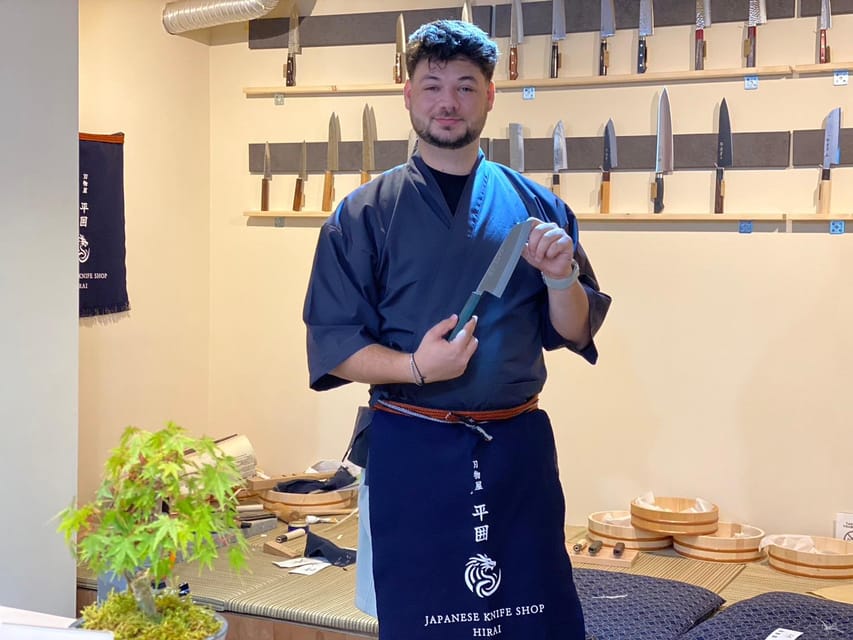
It also includes the workshop equipment and experience basics: a Japanese working uniform and apron, the experience fee, and the engraving fee if you arrange engraving in advance. Whetstones are provided by the shop, so you are not expected to buy anything just to participate.
Where costs can change is mostly optional. If you want a handle type other than magnolia, you can choose those with an additional fee that varies by handle type. Also, while the shop has other knives available, any extra knife purchase is not included in the workshop price.
If you are deciding between buying a Japanese knife and taking this class, I think the value comes from two things. First, you get the technique you need to maintain your edge instead of hoping it stays perfect. Second, you get the confidence that you can sharpen again later, because the class is built to show what to do and then check that you did it right.
Getting there: the meeting point and the best way to stay stress-free
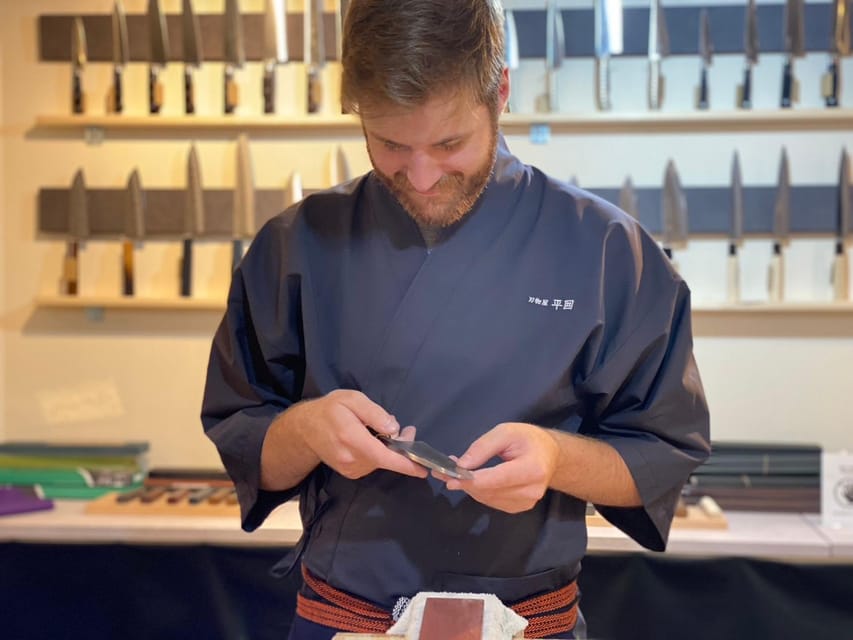
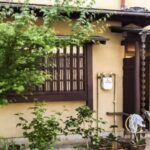
This one is straightforward: you come directly to the shop before class. The meeting guidance is clear that you should look for the white storefront curtain at the building where the shop is located.
Timing also matters more than you might think. The instructions ask you to arrive about 5 minutes early so the workshop starts smoothly. With a skill-based class, being late can throw off the flow, and the whole point is hands-on practice that moves at the right pace.
If you are planning your day around the Nishiki Market area or other central stops in Kyoto, give yourself a little extra buffer. The shop is a specific storefront, so aim to find it first, then relax.
Choosing your blade before you start
Before sharpening begins, you select which knife you will work with. The workshop choices are Santoku, Deba, and Yanagi.
That decision can change how excited you feel during the class. Pick the knife you are most likely to use in your own kitchen routine after you get home. The knife becomes part of your souvenir, but it also becomes your daily tool, so choosing what you genuinely want is worth the minute it takes.
The workshop also includes a handle plan that is easy to understand. You will fit the magnolia tree handle in the class, and if you want something else, you can pay the additional handle fee.
Sharpening the edge: what the 2-hour format actually teaches
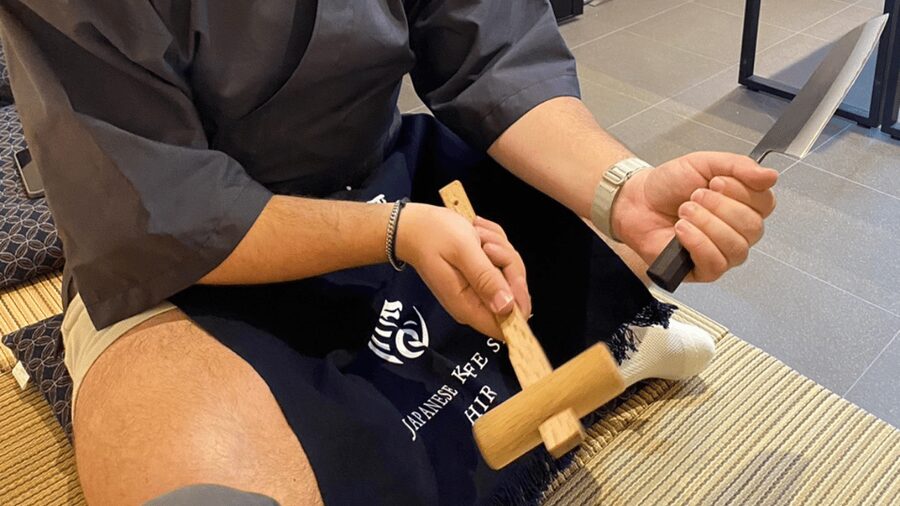
Sharpening is the heart of this experience, and the format is designed for beginners. You are not left with a pile of gear and guesswork.
You can expect a quick setup plus explanations that walk you through the method. There is typically a demonstration first, then you get hands-on with your own chosen knife. Then comes the part that makes beginners relax: the instructor checks your progress and gives corrections, so you learn what proper technique looks and feels like.
In the feedback people share, a common theme is that the English support helps you understand the steps clearly, and the expert corrections help you avoid the common mistakes that come from copying videos. If you have ever sharpened at home and wondered why the results felt inconsistent, this workshop is set up to answer that.
Because the class uses whetstones provided by the shop, you can focus on the technique instead of shopping for supplies. That also makes it easier to try the skill without committing time or money upfront.




Handle fitting with fire: smoky reality and how to prep
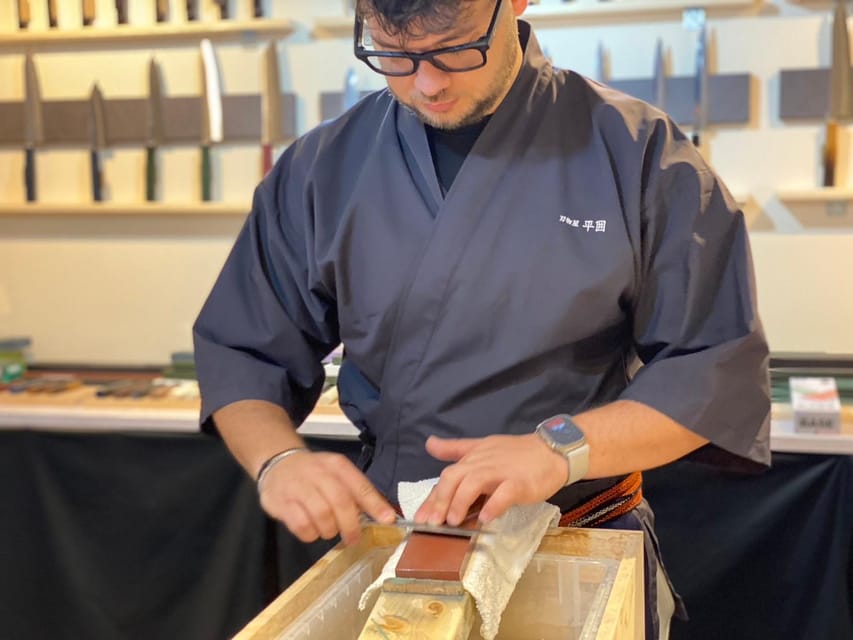
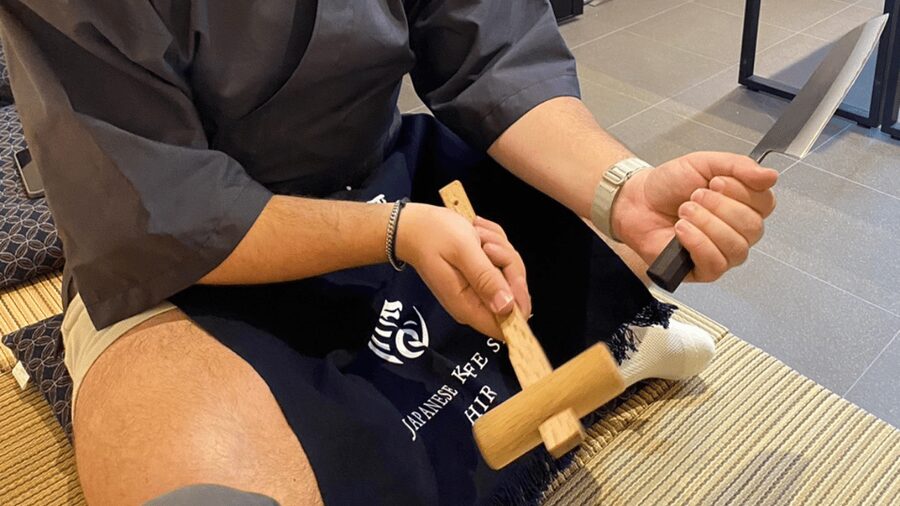
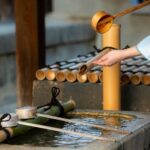
The handle-fitting section is where the workshop gets hands-on in a different way. You attach the handle yourself with expert help, and this step uses fire.
Because of that, smoke may come out, and that is worth planning for. If you do not want your clothes to smell smoky, wear something you do not mind getting that scent.
It is a small detail, but it is the kind that can affect your day after the workshop. You may still want to walk around Kyoto afterward, so think about what you wear and how easy it will be to change later.
The good part is the payoff. Once your magnolia handle is fitted, the knife feels complete. In many people’s comments, the handle work is described as fun, and it helps the whole experience feel like you made something, not just learned a class.
Engraving: personalize it, but plan ahead
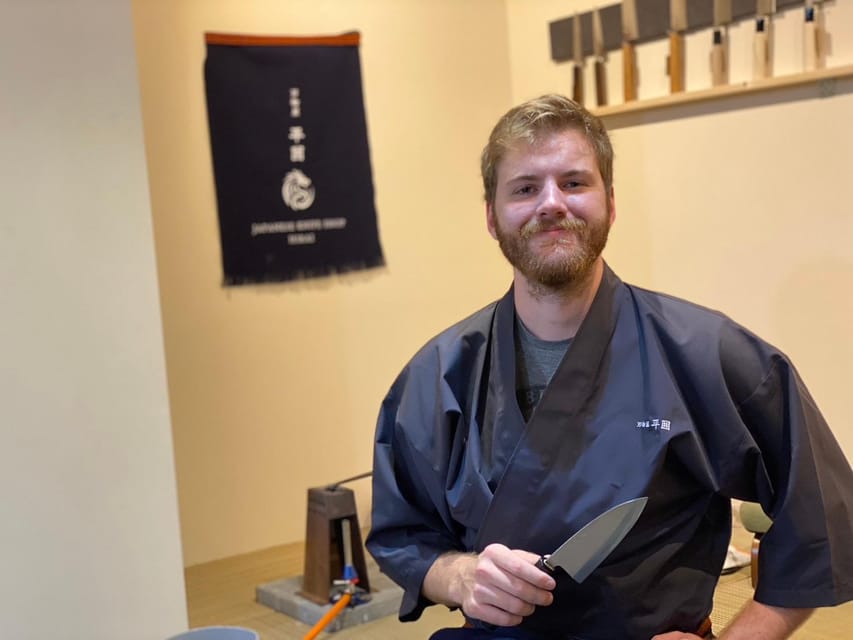
Engraving is available, and you should tell the shop in advance if you want it. The workshop info says you can request characters up to 4 letters.
This is not something you should wait to decide on at the last minute. If you want the engraving ready in time, send the request ahead so the shop can arrange it before you package the knife and take it home.
One nice detail for value is that the included items list includes an engraving fee, so the cost of engraving is not treated as a surprise add-on at the counter. You still need to request it correctly and on time.
What you actually take home (and why it matters)
At the end, the shop packages your knife so you can take it home. That is not just a souvenir gesture. It turns your lesson into a usable tool in your kitchen.
This is a big difference from many classes that end with a certificate and a vague memory. Here, the main object of the workshop is the object you will maintain.
You also get the uniform and apron during the experience, which is a fun touch and helps you feel like you are stepping into the workshop atmosphere.
And because the class covers both sharpening and handle fitting, you leave with a more complete understanding of knife care. People describe it as relaxing, but also as concentrated. That combination is exactly what I want from a hands-on skill session.
The group size advantage: why small beats busy in this workshop
This workshop is limited to 3 participants, which changes how fast you learn.
In a big group class, instructors often focus on keeping time. In a small group, there is room for targeted feedback, so you can correct your angle, pressure, or technique before it becomes muscle memory in the wrong direction.
Many people highlight that the balance is good, meaning you get both instruction and practice without feeling rushed. You also get a calmer environment for concentration, which helps if sharpening is new to you.
Who should book this knife workshop in Kyoto
This is a great fit for beginners who want a practical skill, not just a “look but don’t touch” experience.
It also suits you if you like the idea of a personal souvenir. Choosing between Santoku, Deba, and Yanagi, fitting a magnolia handle, and adding optional engraving makes the knife feel like something you earned.
It may not be the best fit if you are looking for a kid-friendly activity. The workshop is not suitable for children under 15. It also notes that it is not suitable for wheelchair users and for people over 80.
If you are sensitive to smoke smells, plan your outfit carefully for the handle-fitting section. If you are bringing a group of friends, remember the workshop rules include no smoking, no alcohol or drugs, and no noisy behavior.
Also, no pets and no baby strollers are allowed, so plan accordingly if you are traveling with family gear.
Quick practical tips so you enjoy every minute
- Arrive on time, about 5 minutes early, so your workshop flow stays smooth.
- Wear clothes you can tolerate with smoke, since fire is used during handle fitting.
- Choose your knife in advance if you can, and stick with the one you want to work on.
- If you want engraving, send your character request ahead of time and keep it within 4 letters.
- Expect focus time during sharpening. This is skill work, so build in a little patience with your concentration.
One more tip: treat this as a maintenance lesson. When you get home, do not just start cooking right away without trying the technique you learned. The value comes from being able to maintain your edge long after Kyoto.
Should you book this Kyoto beginner knife workshop
I think you should book it if you want a true hands-on skill in a short time, and if you like the idea of leaving with a knife that is yours because you sharpened and assembled it. The price of $161 makes more sense when you consider what is included: a chosen knife, a magnolia handle fitted during the class, uniform and apron, engraving fee when requested, and whetstones provided.
I would skip or reconsider if smoke smell could ruin your day, or if you are not comfortable with a focused skill session. Also, because it is not suitable for wheelchair users and has age limits, double-check that it works for your group before you book.
If you are the kind of person who likes learning how to do something correctly instead of relying on shortcuts, this is a Kyoto experience you will use for years.
FAQ
What knives can I choose for the workshop?
You can choose one knife for the workshop from Santoku, Deba, and Yanagi.
How long is the Kyoto knife sharpening and handle fitting workshop?
The duration is 2 hours.
What is the price per person?
The price is $161 per person.
Will I be able to take the knife home after the workshop?
Yes. After the workshop, the shop packages your knife so you can take it home.
Is there an English guide available?
Yes. The instructor provides English and Japanese support.
Are whetstones included, or do I need to buy them?
You do not need to purchase whetstones, because customers use the whetstones provided by the shop.
Can I get my knife engraved?
Yes. Engraving is available if you let the shop know in advance. You can request up to 4 letters.
Is the magnolia handle included?
Yes. The workshop includes a magnolia tree handle that you attach during the class.
Are other handle types available?
You can choose other handle types if you pay an additional fee. The fee changes depending on the handle type you choose.
Who is the workshop not suitable for?
It is not suitable for children under 15, wheelchair users, and people over 80 years.
More Workshops & Classes in Kyoto

More Tour Reviews in Kyoto


Not for you? Here's more nearby things to do in Kyoto we have reviewed








Workshops, compared.
 ★ 4.345-Minute Tea Ceremony Lesson ExperienceFrom $222,378 reviews
 ★ 5.0Ramen Cooking Class at Ramen Factory in KyotoFrom $1311,937 reviews
 ★ 5.0Chopsticks Making Workshop in Gion with Engraving OptionFrom $15958 reviews
 ★ 4.9Samurai Sword Class by Experts in Traditional ArtsFrom $64657 reviews
 ★ 4.9Ramen Cooking Class at a Ramen Factory with SouvenirFrom $127532 reviews
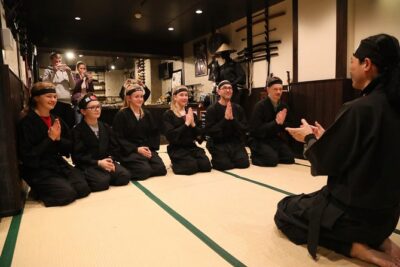 ★ 5.0Ninja 1-hour Hands-on Lesson by Japanese master in Kyoto -EntryFrom $80489 reviews
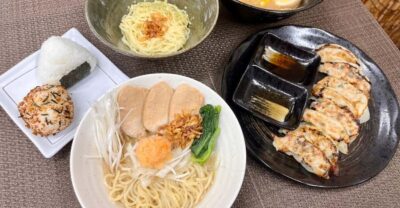 ★ 5.0Ramen, Gyoza, and Onigiri Cooking ClassFrom $90445 reviews
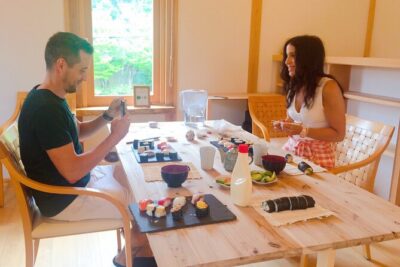 ★ 5.0The Original Small-Group Sushi Making Class in KyotoFrom $69436 reviews
Browse the lists this tour appears in