
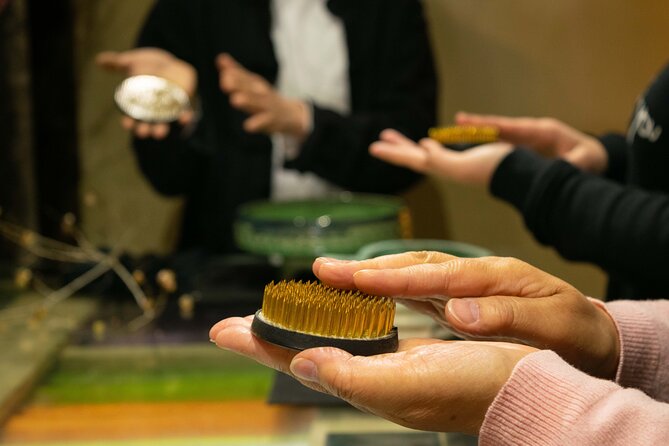
Reviewed · KYOTO CRAFT & CALLIGRAPHY WORKSHOPS
Kyoto Cultural IKEBANA Experience@SEKKA FLOWERS
Kyoto gets quiet for 40 minutes. In a renovated townhouse near Kinkaku-ji, you’ll make your own ikebana arrangement with an instructor and learn why Japanese flower arranging is so much more than putting stems in a vase.
I especially loved the welcoming, hands-on coaching from instructors like Taro-san and Chiaki-san, and the fact your finished work is shown in a tokonoma alcove in a traditional Japanese room. One thing to consider: at around 40 minutes, you’ll leave with a single masterpiece, not a long, multi-session deep dive into many styles.
Key things to know before you go
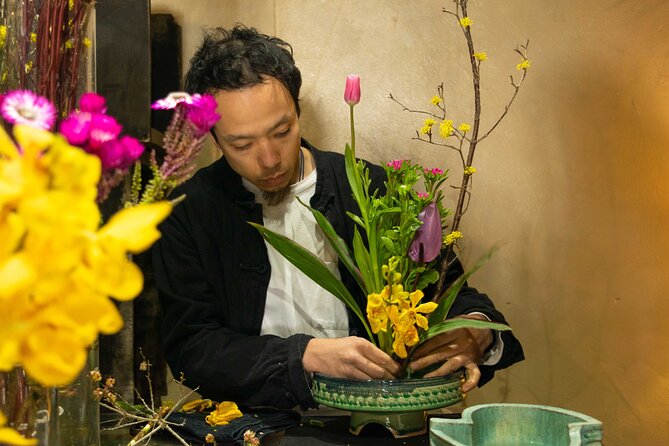
- Small group, up to 6 people keeps the class calm and lets you get real attention when you need it.
- Classical forms plus wabi-sabi gives you a structure, then permission to let the flowers look like themselves.
- A traditional townhouse setting puts you in the right mood, close to Kinkaku-ji and Daitoku-ji.
- Your arrangement gets shown in a tokonoma so the end result feels ceremonial, not just practical.
- Delivery to your accommodation has been offered in past experiences, so you may not have to carry everything through Kyoto.
A Small-Group Ikebana Workshop in Kyoto’s Old Townhouse
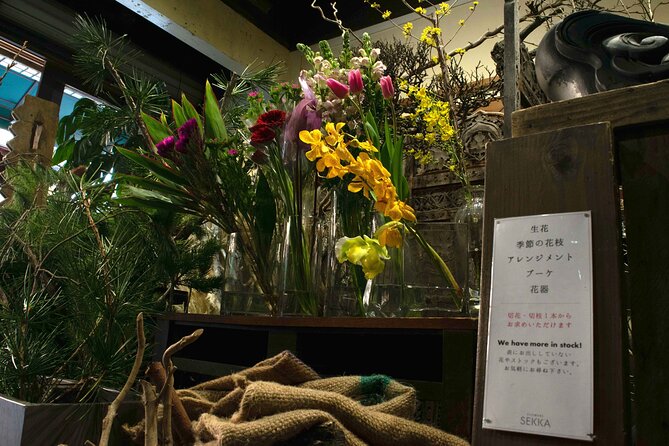
If you’re doing Kyoto for temples, crowds, and camera-ready streets, this class is a useful reset. The experience happens in a flower shop inside a renovated traditional townhouse, about 100 years old. That matters more than you might think. The room and the materials set expectations: you’re not rushing through a craft, you’re practicing a quiet art form in a space built for slowing down.
The class is designed for a small group, max 6 travelers. In a big tour, you can end up watching. Here, the small size means you can actually shape your arrangement while the instructor adjusts what you’re doing. I like that because ikebana is visual and hands-on. Tiny changes to angle and spacing are the whole game.
The other practical win is the location. You’ll be near the Kinkaku-ji and Daitoku-ji area, so it fits naturally between temple visits. If your Kyoto day is already heavy on walking, this class gives you a seated activity with a clear finish line.
You can also read our reviews of more tours and experiences in Kyoto.

Learn Wabi-Sabi and Classical Forms, Then Place Your Work in the Tokonoma
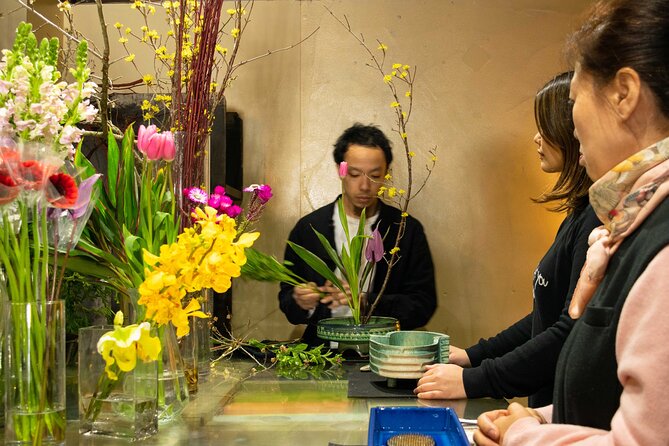
Ikebana can sound fancy until you understand what you’re actually learning. This workshop teaches classical approaches, with an emphasis on beauty in both flowers and branches, while respecting the natural state of the materials. Translation: you’re not trying to force everything into one look. You’re shaping a composition that still feels honest to what the plant wants to be.
A big theme is wabi-sabi, the Japanese aesthetic of valuing imperfection and quiet simplicity. In practice, that means your instructor guides you to notice texture, line, and negative space, instead of chasing symmetry or trying to make it look like a commercial photo. The goal is to bring out the natural character of the stems.
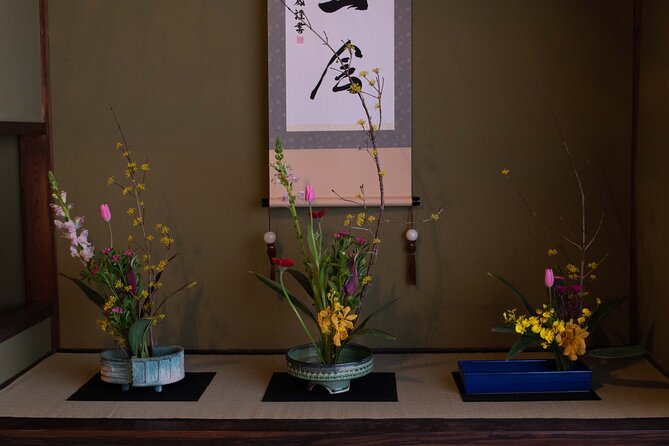
And then there’s the tokonoma. After you finish, your arrangement is displayed in a traditional Japanese room alcove. That’s not just a nice photo moment. The tokonoma is how Japanese rooms frame art and objects with respect. It turns your effort into something the room recognizes, not something you just take away in a bag.
If you’re a beginner, you’re welcome. The class is built so you can join without prior training. One of the best parts is the atmosphere: instructors encourage you to learn through doing, and there’s no pressure to produce a perfect result on the first try.
The 40-Minute Flow: From Flower Intro to Your Final Arrangement
The whole experience runs about 40 minutes. That length is intentional. You get enough time to understand the basics, handle the materials, and make a complete arrangement. You also get to keep it simple. You’re not being pushed through a long lecture series or multiple projects.
Here’s what the flow feels like based on how the workshop is described and what people highlight afterward:
- Welcome and setup in the townhouse shop
You’ll be in a flower shop environment that makes the session feel grounded in real materials. Expect an instructor-led start, with time to get oriented before you touch anything.
- A short lesson on the history and art of ikebana
You’ll learn about the purpose and background of ikebana, not just the mechanics. Knowing the why helps your hands work better. It also keeps the lesson from feeling like a random DIY class.
- Guided composition using classical forms
You’ll build your arrangement using established principles. Beginners still benefit because the structure gives you something to hold onto. Instead of wondering what to do next, you’re being guided step by step.
- Wabi-sabi focus, through the feeling of the materials
This is where the session shifts from technique to awareness. The description mentions awakening your primal senses, and that fits the practical reality of ikebana: you notice line, placement, and how the arrangement feels when it’s held at the right height and angle.
- Completion and tokonoma display
Once your arrangement is finished, it’s presented in a tokonoma in a traditional room. This is where the class earns its calm, ceremonial mood.
- Wrap-up and return
The activity ends back at the meeting point, so you’re not dealing with a long, unclear goodbye or a confusing handoff to another part of your day.
Because the time window is compact, I suggest you treat it like a single Kyoto “chapter.” Don’t book an extra tight activity right before it. Give yourself a buffer so you can arrive calm and ready to focus.
What Makes This Workshop Feel Like a Break From Busy Kyoto
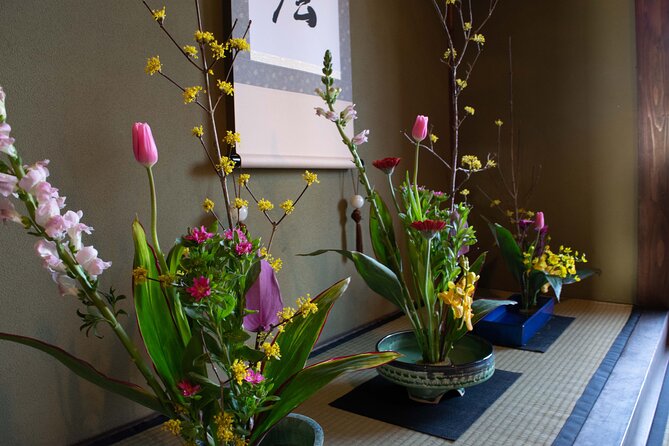
Kyoto can be loud. Even when you’re in beautiful places, the energy can be fast. This class intentionally shifts you away from the crowds and into a quiet room where the pacing matches the art.
People also tend to highlight the welcome and encouragement from the instructors. Names that come up include Taro-san and Chiaki-san. That’s a good sign for you as a reader, because it suggests the teaching style is warm and approachable, not stiff or intimidating. When you’re making something with your hands, that kind of guidance is worth its weight in blooms.
Another thing I like: the instruction is described as hands-on and supportive, with an emphasis on respecting the flowers’ natural state. That approach usually makes the experience more forgiving. Instead of feeling like you have to invent beauty, you learn how to reveal what’s already there.
Getting There Near Kinkaku-ji and Daitoku-ji
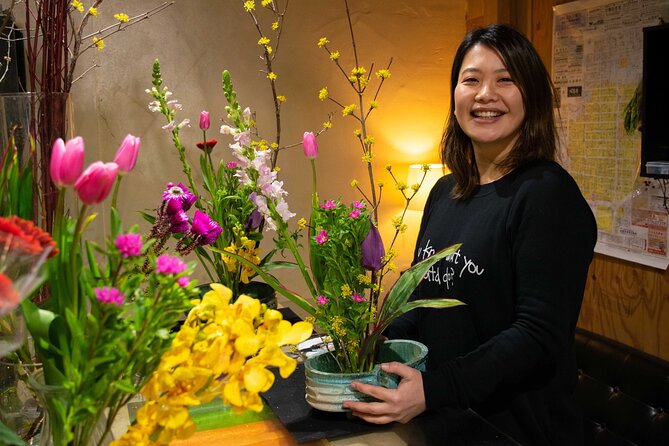
Meeting point details are straightforward, and you’ll end back where you start.
Start address: 44-4 Murasakino Kamimonzenchō, Kita Ward, Kyoto, 603-8217, Japan.
End: This activity ends back at the meeting point.
It’s near public transportation, which is a relief in Kyoto where walking and transfers can add up fast. Also, because it’s located in the Kinkaku-ji and Daitoku-ji area, it fits well when you’re already working your day around temples on the northwestern side of the city.
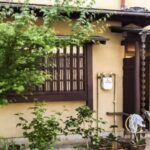
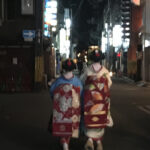
A small practical tip: bring a little extra time to find the townhouse. In Kyoto, “near” can still mean a few side streets and quiet lanes. Once you’re there, you’re stepping into a renovated traditional setting, so look for the flower shop presence rather than expecting a big modern storefront.
Price and Value: What $65.15 Buys You
The price is $65.15 per person, with an approximate duration of 40 minutes. On paper, it might look like a short session for that cost. In practice, the value comes from a few specific things you can’t easily replicate on your own:
- Personal instruction in a small group
Max 6 travelers means you’re not competing for the instructor’s attention.
- A guided framework (classical forms)
You get principles to follow, which saves you time and trial and error compared to self-learning.
- A real cultural setting
A renovated 100-year-old townhouse plus tokonoma presentation turns it into more than a quick souvenir craft.
- Your finished arrangement is treated as an artwork
Being displayed in a tokonoma signals that you’re making something meant to be seen properly.
If you’re trying to get one meaningful cultural activity that doesn’t require a half day of planning, this is a strong contender. I also like that you can join as a beginner, which usually improves value because you’re not paying for something you can easily get wrong.
One more scheduling note: on average, this tends to be booked about 35 days in advance. If your Kyoto dates are fixed, I’d treat that as a hint to lock it in early.
What to Expect After Class, Including Delivery to Your Lodging
Here’s one of the most practical perks. Multiple experiences mention that the completed ikebana was delivered to their accommodation afterward. That is a big deal in Kyoto. Carrying flowers through crowded streets can be messy, and you may not want to worry about temperature, bags, or accidental damage right after you create something delicate.
Even if you’re an experienced packer, it’s smart to plan around the reality of fragile items. Delivery support means you can keep enjoying your day right away, instead of switching to logistics mode.
Also, because the end of the experience is back at the meeting point, your class doesn’t strand you somewhere else. You can build the rest of your day around your next temple walk, meal, or rest stop.
Who Should Book This Ikebana Experience (and Who Might Skip It)
This workshop is a great fit if you want:
- A calm cultural activity inside your Kyoto itinerary
- A beginner-friendly introduction to ikebana without feeling overwhelmed
- A hands-on craft where your result is shown in a tokonoma
- Small-group attention instead of a crowd-and-queue experience
It might be less ideal if you want:
- A long, multi-session program to explore many styles deeply
- A class that turns into a long photo shoot or performance spectacle
- A freeform craft where you do totally random arrangements with no guiding structure
That said, the short duration is not automatically a drawback. If you want one meaningful creative moment in Kyoto, 40 minutes can be perfect. You walk out with something finished, framed by tradition, and ready to be enjoyed.
Should You Book This Kyoto Cultural Ikebana Class?
I think you should book it if you’re looking for one authentic Kyoto experience that doesn’t require you to be an expert. The combination of classical forms, wabi-sabi guidance, and the tokonoma display gives you a real sense of how ikebana is understood in Japanese culture.
Book it especially if your schedule is tight but you still want something hands-on and personal. Also, because the group is capped at 6, you’ll get more attention, and that’s where learning actually happens.
One last thing to consider before you commit: the class is short. If you crave a very long educational experience, you may want something more extended. If you want a focused, peaceful session with a finished result, this is a very solid choice.
FAQ
What is the duration of the ikebana workshop?
It lasts about 40 minutes.
How much does the Kyoto Cultural Ikebana Experience cost?
The price is $65.15 per person.
Where does the workshop meet, and where do I end?
You meet at 44-4 Murasakino Kamimonzenchō, Kita Ward, Kyoto, 603-8217, Japan, and the activity ends back at the meeting point.
Is this class suitable for beginners?
Yes, beginners are welcome, and most travelers can participate.
How big is the group?
The workshop has a maximum of 6 travelers.
Do I get a ticket on my phone?
Yes, you receive a mobile ticket.
What is the cancellation policy?
Free cancellation is available up to 24 hours in advance for a full refund. Changes made less than 24 hours before the start time are not accepted, and cancellations within 24 hours are not refunded.
More Tour Reviews in Kyoto
Not for you? Here's more nearby things to do in Kyoto we have reviewed



Kyoto Craft & Calligraphy Workshops, compared.
 ★ 5.0Chopsticks Making Workshop in Gion with Engraving OptionFrom $15958 reviews
 ★ 4.8Authentic knife making experience at a blacksmith in KyotoFrom $154350 reviews
 ★ 5.0Calligraphy class at Buddhist temple in city centerFrom $55167 reviews
 ★ 5.0Roketsu dyeing experience: M course Roketsu Dyeing ExperienceFrom $25163 reviews
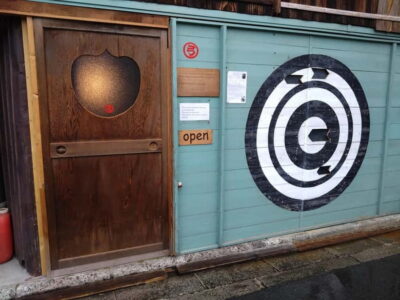 ★ 4.9Japanese Archery Workshop with Experienced InstructorFrom $38132 reviews
 ★ 4.8Japanese Calligraphy ClassFrom $5189 reviews
 ★ 5.0TAIKO, Japanese Drum Experience from KyotoFrom $11586 reviews
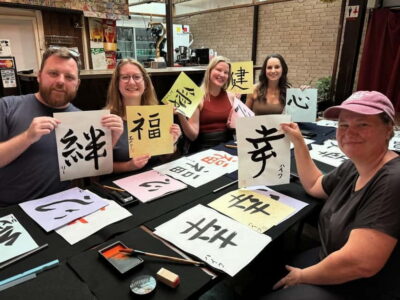 ★ 4.7Japanese Calligraphy WorkshopFrom $3284 reviews
Browse the lists this tour appears in