
Reviewed · WALKING TOURS
Kyoto Early Riser Golden One-Day Walking Tour
Early Kyoto feels different, and this tour is built for that. You start at Kyoto Station and roll into top sights in a relaxed private format, with a guide who helps you connect what you see to why it matters. My favorite part is the mix of iconic stops plus a local-feeling stroll at Nishiki Market, where you can snack as you go.
I also like how the stops are paced for walking, not dragged by a rigid group schedule. Yes, you will move around a lot, and the day is about “see, savor, walk, repeat.” One thing to keep in mind: key temple entry fees are not included, so you will want extra yen for Ryoan-ji and Kinkakuji, plus whatever you spend for lunch.
Key things to know before you go
- Private, early-day pacing that helps you dodge some of the worst crowd crush
- Five major hits in one day: Fushimi Inari, Arashiyama Bamboo Forest, Ryoan-ji, Kinkakuji, Nishiki Market
- Guide-led interpretation that helps you understand what you’re looking at, especially at Ryoan-ji
- Free time to taste at Nishiki Market during the final stretch
- Temple and transit costs on top of the base price (Ryoan-ji fee is listed, other entries are not)
Why this Kyoto early-day walking loop works
This is the kind of Kyoto day that makes sense when you only have one full day. You are not trying to stitch together five neighborhoods yourself. Instead, you get a guided route that links three “wow” landscapes and two cultural stops into one coherent day.
The tour’s name says early riser, and that matters. Fushimi Inari-taisha and Arashiyama both have serious crowd energy later in the day. Starting earlier gives you a better shot at calmer walking and more comfortable photo time. Not empty, but more workable.
The private format is the other big win. In a group tour, you often spend time waiting for people, or you feel rushed because the schedule is fixed. Here, you move with your group only, and a good guide can flex timing based on how you’re doing, whether that means slowing down for stairs or adjusting your pace on longer stretches.
You can also read our reviews of more walking tours in Kyoto
Price and logistics: what you pay, what you still need to budget
The tour price is $119.30 per person, and it includes a professional guide. That’s the core value: you’re paying for someone who can translate the “what” into “why,” and keep the whole day running smoothly on foot and by transit.
What is not included is important for your total budget:
- Public transportation fare: ¥1,670 per person
- Entrance fees: Ryoan-ji is ¥1,100 per person, and Kinkakuji Temple entry is also not included (the exact yen amount is not listed here)
- Meals: not included
So what does that mean in real terms? You are getting a guided itinerary that hits major sights efficiently. But you should plan for extra spending on top of the base price, especially if you want more than just snacks at Nishiki Market.
Also note: the itinerary includes several free-admission stops, including Fushimi Inari-taisha and Arashiyama, which helps balance the paid temple time.
Stop 1: Fushimi Inari-taisha and its torii tunnel
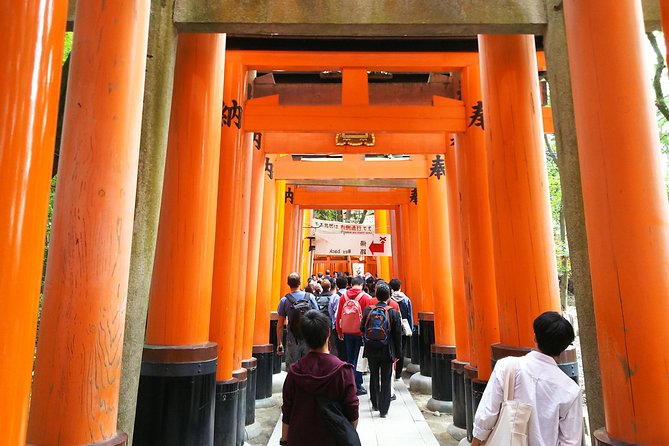
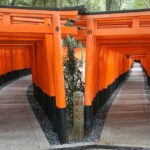
Fushimi Inari-taisha is a Kyoto must-see, and the tour gives you about 1 hour there. Admission is free, so you’re really paying for the guide time: learning how the shrine works, why the torii look the way they do, and what the space is for beyond the photos.
What I love about this stop is how instantly immersive it is. You walk into a tunnel of vermilion torii gates, thousands of them, and the scale changes how you experience the shrine. A guide helps you notice details that you’d otherwise miss, like the shrine’s purpose and the symbolism behind what you’re seeing.
Practical reality check: the path inside can involve steady walking and turning corners, and there are stairs and uneven spots in places. Wear shoes you trust, because you’ll want to move at a comfortable pace rather than hop around.
Stop 2: Arashiyama Bamboo Forest with real morning light
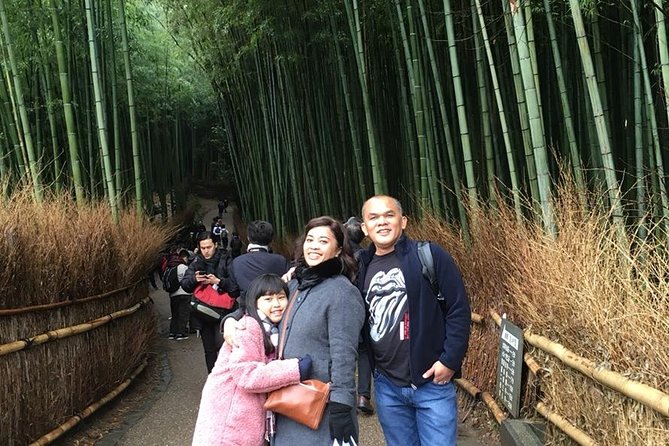
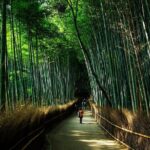
Next up is Arashiyama, with about 1 hour 10 minutes on the ground. Admission is free here too. The bamboo forest is famous, but the experience changes based on time of day and weather. In the morning, light can slant through the stalks and make the whole area feel calmer.
This is the kind of stop where you’ll get the most out of it by doing less. Don’t rush to “complete” the bamboo photos. Instead, slow down and watch how the light moves through the grove, listen for the rustle of leaves, and notice how the breeze affects the sound. The tour gives you a window long enough to do that without feeling like the guide is rushing you back out.
One consideration: Arashiyama is popular. Even early, you may encounter crowds, especially at chokepoints. If your group likes photos, ask your guide to help you find a moment to step aside and reset your position before you take a burst of pictures.
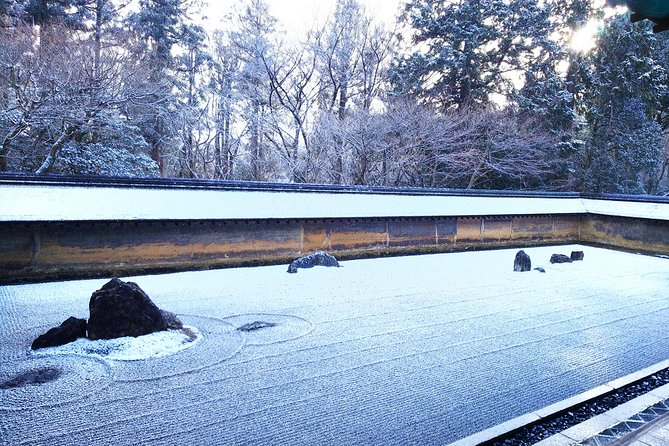
Stop 3: Ryoan-ji Rock Garden, UNESCO, and why it feels small
Ryoan-ji is next, with about 50 minutes. This is the UNESCO-listed stop, and you’ll pay an entrance fee here: ¥1,100 per person, since it is not included in the tour price.
Here’s the big expectation-setting point: the rock garden is famous, but it’s also intentionally simple and compact. The beauty is in what you’re meant to notice and how the layout nudges your attention. If you think it’s going to feel like a huge spectacle, you might miss what it’s doing.
A good guide changes this stop. Instead of just looking at rocks, you get the context that helps you understand how the garden is read and why it’s so talked about. It’s a short visit by design, and that’s okay. Fifty minutes gives you time to look, absorb, and ask questions without turning it into a marathon.
Stop 4: Kinkakuji Golden Pavilion and the photo pressure
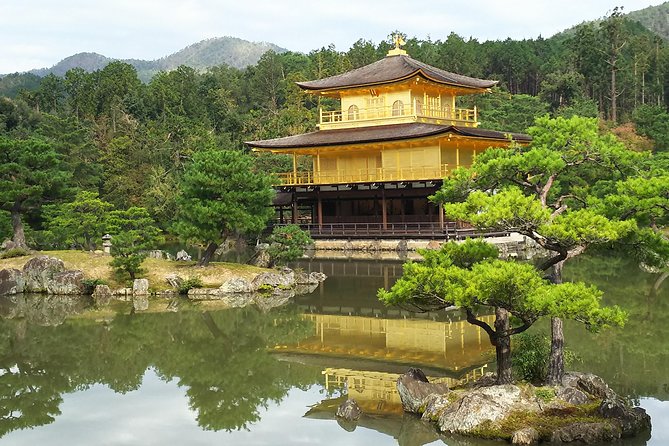
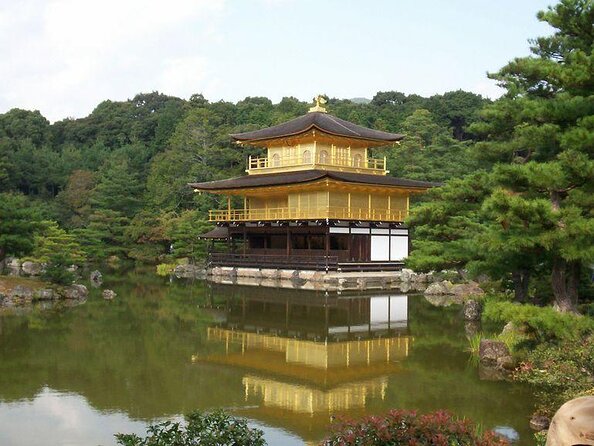
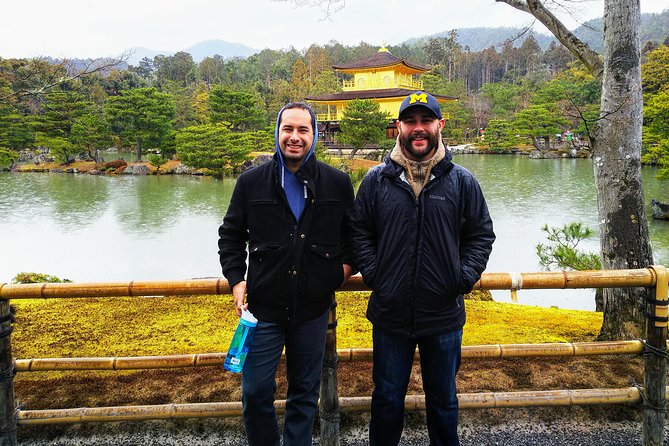
Kinkakuji Temple is the “golden” payoff of the day. You get about 50 minutes here, and entry is not included in your tour price.
This is one of Kyoto’s iconic views. The Golden Pavilion (Kinkakuji) is tied to Japan’s samurai-era cultural story, and the gilded building gives you that instant wow factor. You’ll also see why it’s a magnet for photographers. Even when crowds are present, the pavilion itself gives you plenty to work with: angles across the pond, sightlines from different paths, and the way gold catches changing light.
A realistic note: because this is a high-demand site, the most desirable viewpoints can feel competitive. The advantage of the private format is that your guide can help you time things so you’re not stuck waiting in the worst position.
If you’re the type who likes calm, consider using the first part of your time to look without taking too many shots. Then take photos after you understand where you are standing and what angle you actually like.
Stop 5: Nishiki Market, snacks, and how to make 40 minutes count
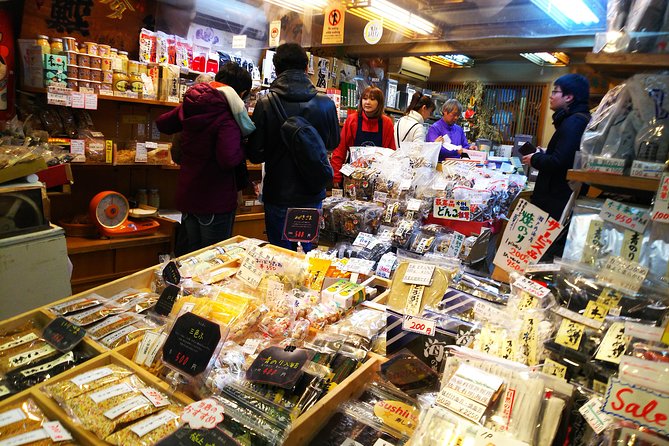
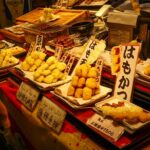
Your day ends with Nishiki Market Shopping District, with about 40 minutes. Admission is free, and this is the stop built for food browsing and casual tasting.
Nishiki is known for the sheer density of shops and the variety. You’re looking at around 126 shops in a roughly 390-meter stretch, which is a lot to take in for a short window. That’s exactly why a guide helps: you don’t just wander randomly for 40 minutes, you get pointed toward what’s worth your yen.
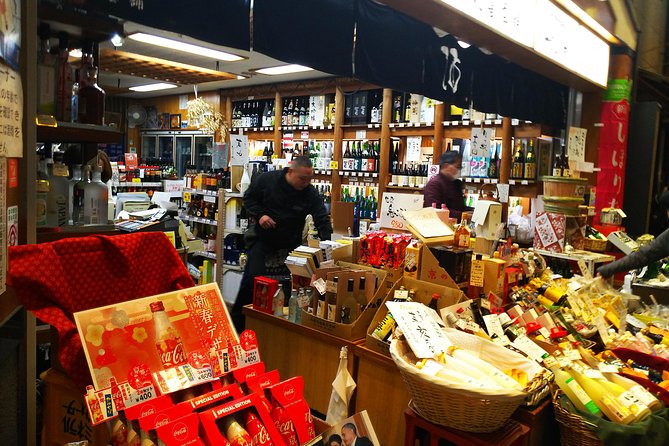
This is also your best chance to try Kyoto flavors on foot. The market is associated with regional produce and pickles, plus all the usual snack-culture around street food. The goal here is not to eat a full meal. It’s to sample, learn, and leave with a few items you’ll actually want later.
Practical tip: have small bills or coins ready if you plan to snack. And keep your energy for the final walk back to your meeting point after you finish.
How the guide affects the whole day (and why it shows up in the details)
Across the many guides associated with this tour, one pattern comes through: the best days come down to how smoothly the guide handles movement and context. You are visiting multiple areas, and you’re doing it on foot plus public transit, with a set total time budget of about eight hours.
That means good guide skills are not just about history facts. It’s about:
- timing your arrival at each stop,
- keeping the pace comfortable,
- helping you interpret what you’re seeing,
- and giving smart, practical advice when you’re shopping.
You may also get helpful support with language gaps. In past experiences connected to this tour, guides have been credited with helping people communicate while shopping and navigating transit like locals. Even if you don’t need translation, the value is that you spend less time figuring out what to do next.
Getting around Kyoto: transit plus walking without the stress
The meeting point is Kyoto Station Building 901, and the tour ends back at the meeting point. That loop is handy when you want a simple starting and finishing plan, especially on a first Kyoto visit.
Because public transit fare is not included, you should be ready with the extra cost of ¥1,670 per person. The payoff is that you’re using Kyoto’s normal transport options, which tends to be faster and more straightforward than trying to walk the distances between far-apart districts.
One more real-world note: “quite a bit of walking” is part of the deal. The tour is labeled for moderate physical fitness. That usually means you should plan for a full day on your feet, with some stairs and uneven ground depending on the temple paths.
So yes, the itinerary is efficient. But you’ll enjoy it more with comfortable shoes, a water plan, and a calm attitude about moving through crowds.
Timing, pacing, and lunch: what to do with the free time reality
Meals are not included, so you’ll need to handle lunch on your own or follow your guide’s suggestions at the moment. This matters because the day includes five major areas and temple time, and you don’t want lunch to become a side quest.
In practice, many guides approach lunch like part of the itinerary value, not an afterthought. You’ll often end up with better choices when you let a local guide point you toward a place that fits your day and dietary needs.
As for pacing, the itinerary stop times help prevent the typical “we covered everything but you barely saw it” problem. You get:
- 1 hour at Fushimi Inari,
- 1 hour 10 minutes at Arashiyama,
- 50 minutes at Ryoan-ji,
- 50 minutes at Kinkakuji,
- 40 minutes at Nishiki Market.
That’s a packed day, but it’s structured. If you want time to linger, tell your guide early. A private format is for adapting.
Who this tour suits best, and who should think twice
This tour is a strong match if:
- you have one full day in Kyoto and want the highlights,
- you’d rather have a guide manage transit and timing,
- you like mixing big landmarks with local food browsing at Nishiki Market,
- you want a more comfortable pace than a full group bus schedule.
It may be less ideal if:
- you dislike walking and stairs,
- you want meals included in the price,
- you don’t want to handle extra costs for temple entry and transit.
If you’re traveling with someone who has mobility limits, you might want to reconsider based on the “quite a bit of walking” note. For everyone else, the moderate fitness requirement is manageable if you plan for the day.
Should you book this Kyoto Early Riser Golden One-Day Walking Tour?
If your priority is hitting Fushimi Inari, Arashiyama, Ryoan-ji, Kinkakuji, and Nishiki Market in one organized day, this tour is an efficient way to do it without micromanaging routes. The strongest value is the professional guide plus the private pacing that keeps the day from feeling like a sprint.
My call: book it if you want a classic Kyoto highlight day with a human who can explain what you’re looking at. Skip it if you want a low-cost, totally self-guided itinerary with meals included, or if walking a full day sounds unpleasant.
FAQ
How long is the Kyoto Early Riser Golden One-Day Walking Tour?
The tour lasts about 8 hours.
Is this tour private?
Yes. It is a private tour/activity, so only your group participates.
Where does the tour start and end?
The tour starts at Kyoto Station Building 901, Higashishiokōjichō, Shimogyo Ward, Kyoto, 600-8216, Japan and ends back at the meeting point.
What does the tour price include?
The tour includes a professional guide. Public transportation fare, entrance fees (for some sites), and meals are not included.
Are entrance fees included for Fushimi Inari-taisha and Arashiyama?
Yes. Admission is listed as free for Fushimi Inari-taisha and for Arashiyama.
Which temple entrance fees are not included?
Ryoan-ji Temple entrance is not included and is listed as ¥1,100 per person. Kinkakuji Temple admission is also not included, though the fee amount is not listed here.
Is public transportation included?
No. Public transportation fare is listed as ¥1,670 per person and is not included.
Are meals included?
No. Meals are not included.
What if the weather is poor or I need to cancel?
The experience requires good weather. If it is canceled due to poor weather, you will be offered a different date or a full refund. You can also cancel for a full refund up to 24 hours before the experience start time.
More Walking Tours in Kyoto
More Tours in Kyoto
More Tour Reviews in Kyoto
Not for you? Here's more nearby things to do in Kyoto we have reviewed

Walking Tours, compared.
 ★ 4.7Kyoto Geisha Walking Tour: Gion District & Hidden GemsFrom $253,273 reviews
 ★ 4.9Gion Magical Night Walking Tour with Geisha TriviaFrom $242,393 reviews
 ★ 4.7Gion Geisha District Walking Tour – Stories of GeishaFrom $202,187 reviews
 ★ 4.5Night Walk in Gion: Kyoto’s Geisha DistrictFrom $212,003 reviews
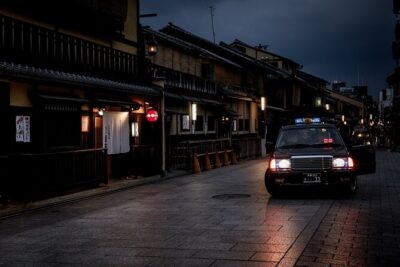 ★ 5.0Kyoto Gion Geisha District Walking Tour – The Stories of GeishaFrom $251,441 reviews
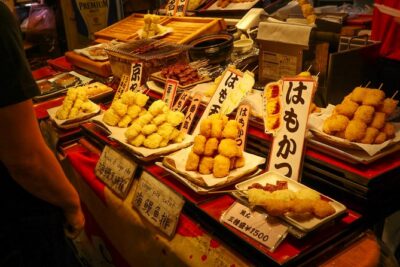 ★ 5.0Nishiki Market Brunch Walking Tour (7 Tastings + Brunch)From $681,355 reviews
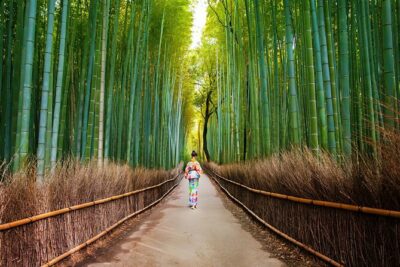 ★ 5.0Kyoto Arashiyama Walking Tour: Bamboo, Monkeys, Gardens & SecretsFrom $651,216 reviews
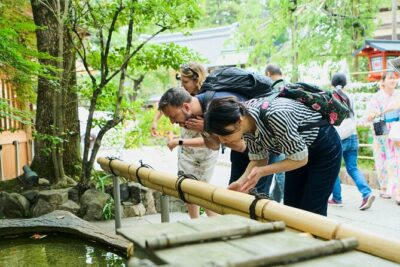 ★ 5.0Kyoto Gion: 2-Hour Geisha Culture & History Walking TourFrom $231,186 reviews
Browse the lists this tour appears in