
Reviewed · NISHIKI MARKET FOOD TOURS
Kyoto: Local Food Tasting Tour at the Nishiki Market
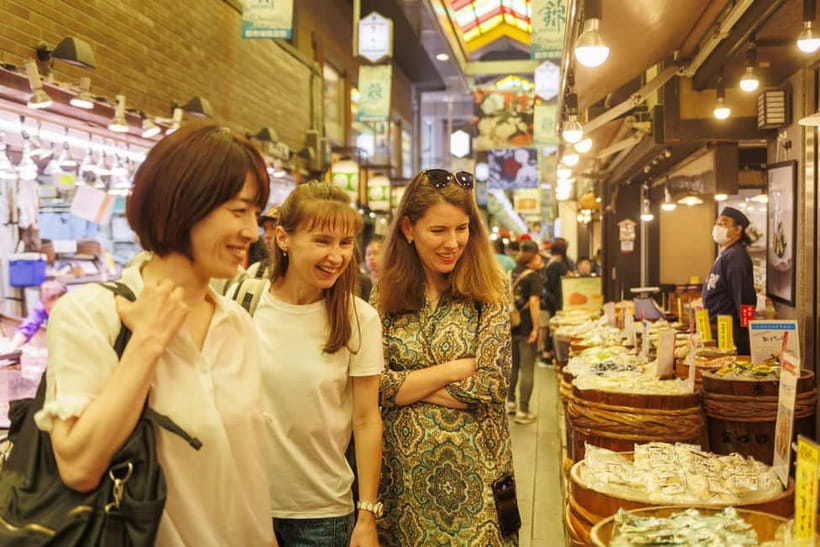
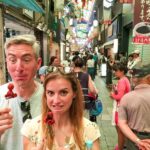
Kyoto food without the guesswork is a win. This small-group Nishiki Market tasting walks you through a 400-year-old market (about 130 stalls) while a local English-speaking guide connects the bites to Kyoto tradition and everyday life. I love that you get 5 carefully chosen specialties instead of random sampling, and I like how the pace mixes eating with light sightseeing.
The main watch-out is dietary limits. The tour does not accommodate requests like vegetarian, halal, kosher, gluten-free, or allergy-related needs, so if you have strict requirements, you will need a different plan.
Quick Takeaways Before You Go
- Nishiki Market, but with a guide: You do not have to decode every stall while crowds swirl.
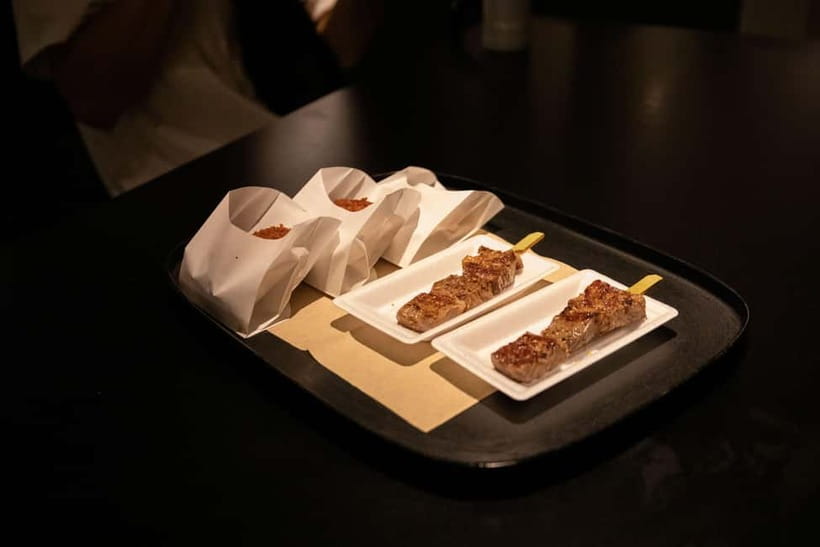
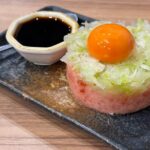
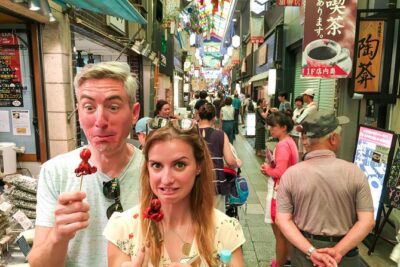
- 5 Kyoto specialties included: Expect tastings such as yuba, obanzai, hamo tempura, and wagyu steak skewers.
- Short shrine stop, then more streets: A brief visit to Nishiki-Tenmangu Shrine and time in nearby shopping areas.
- Small group size (up to 6): Easier questions, easier pacing, less chaos than self-guided wandering.
- Tea ceremony add-on (90 minutes): Kimono dressing and a seated tea lesson starting at 2:00 PM if you choose the option.
- Good shoes matter: This is a walking tour, and you should bring rain gear.
Why Nishiki Market Works So Well for First-Time Kyoto Foodies
Nishiki Market is often called Kyoto’s kitchen, and that nickname makes sense because the place is built for sampling. You get the feeling that the market exists to answer a simple question: what tastes right here, today? A walking tasting tour turns that question into a clear path.
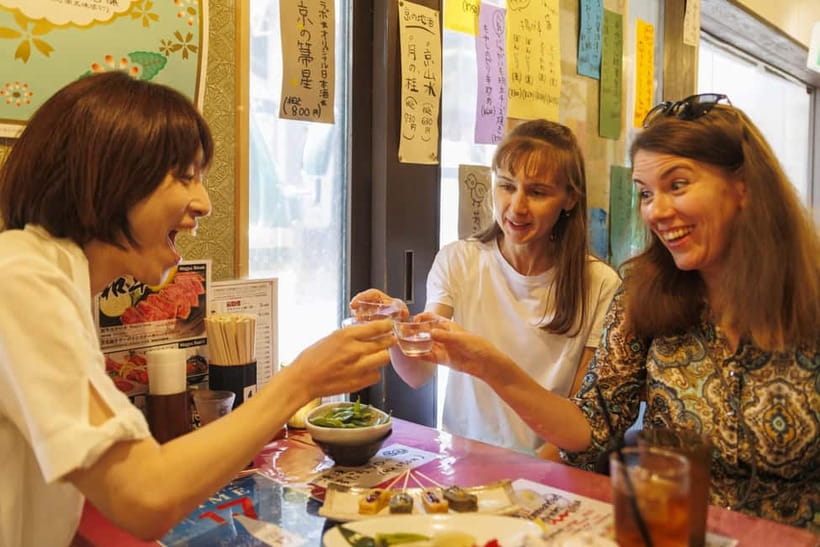
I like that the tour is not structured like a formal meal. Instead, you taste in small amounts across several shops, which is the best way to explore a place like Nishiki without getting stuffed too early.
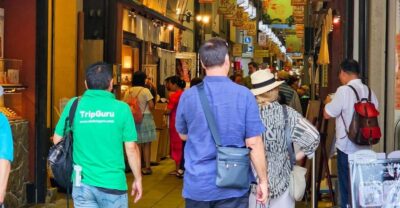
The other big win is the crowd factor. Nishiki can be hard to navigate on your own, even if you speak a little Japanese. With a guide and a small group, you spend more time eating and less time backtracking.
You can also read our reviews of more food & drink experiences in Kyoto

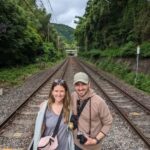
How the 3-Hour Walk Fits Together (270 Minutes Total)
This is a 3-hour, 270-minute experience with a tight but friendly rhythm. About half the time is inside Nishiki Market itself, then you move outward for a quick shrine visit and additional shopping-area wandering.
Here is the flow in plain terms:
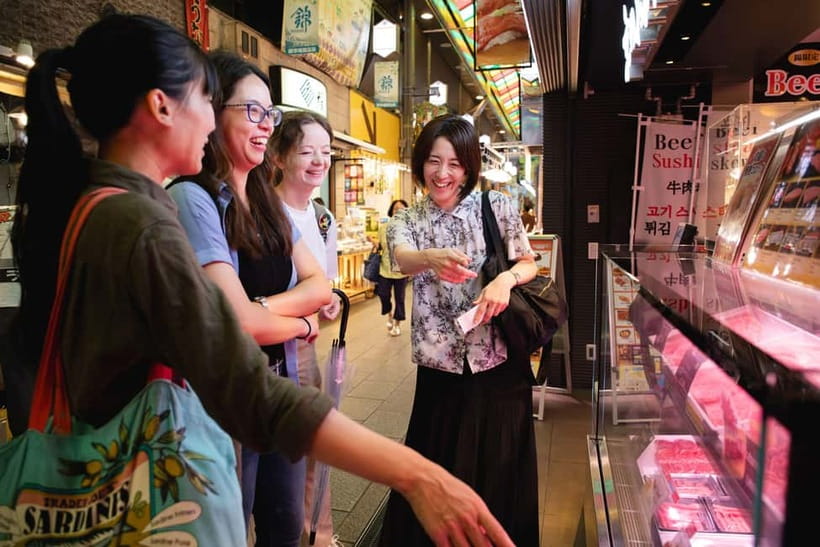
- Nishiki Market is the core food block, with guided tastings for about 1.5 hours.
- Then you do a short stop at Nishiki-Tenmangu Shrine (about 10 minutes).
- Next comes time in Shinkyogoku Shopping Arcade (about 45 minutes).
- A short hidden gem segment (about 10 minutes) breaks up the shopping time.
- Finally, you visit Teramachi Street Shopping District (about 30 minutes).
That structure matters because it keeps your energy stable. You are not stuck eating for the entire time, and you also do not leave the market after 20 minutes with a few crumbs to show for it.
Nishiki Market Tastings: What You’ll Actually Eat
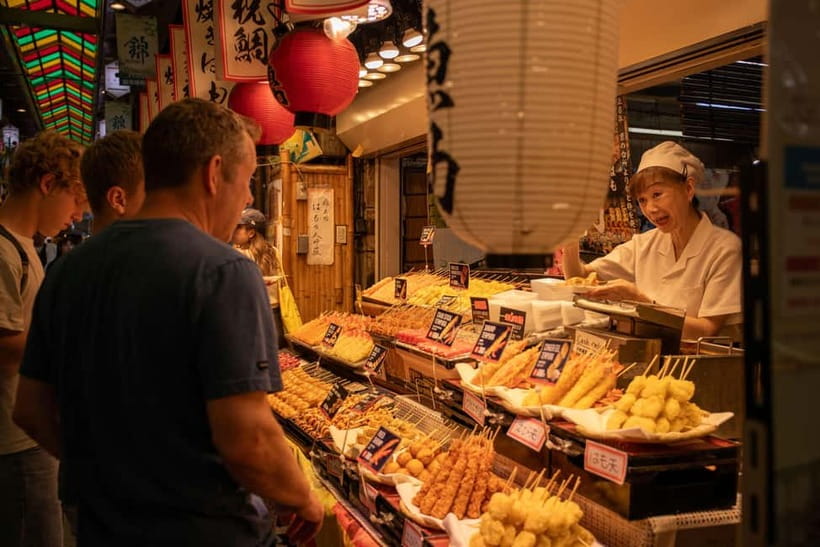
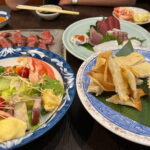
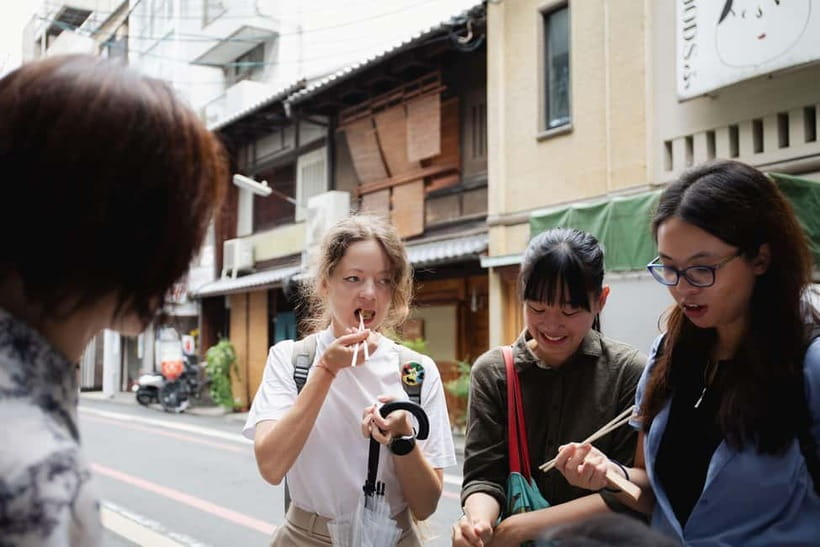
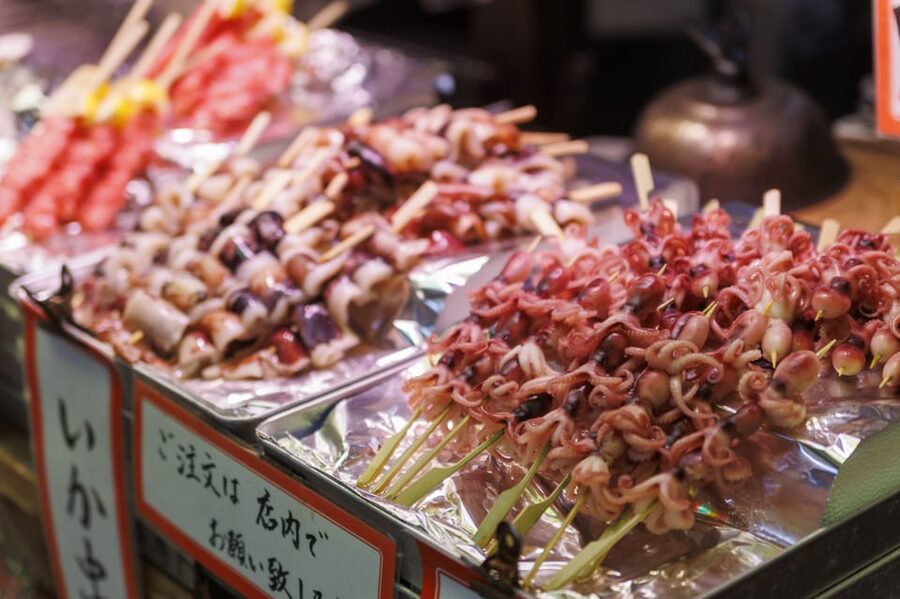
Nishiki Market is the point, so the tour puts your food stops where they count. You get 5 special foods included, plus additional small tastings like seasonings and snack items.
The core included items listed for this experience include:
- Yuba (often described as tofu skin)
- Obanzai (Kyoto home cooking)
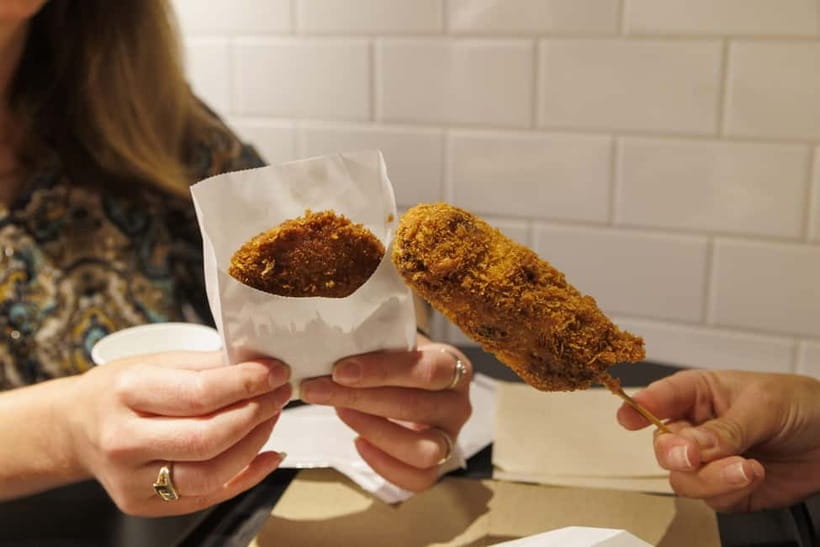
- Hamo tempura
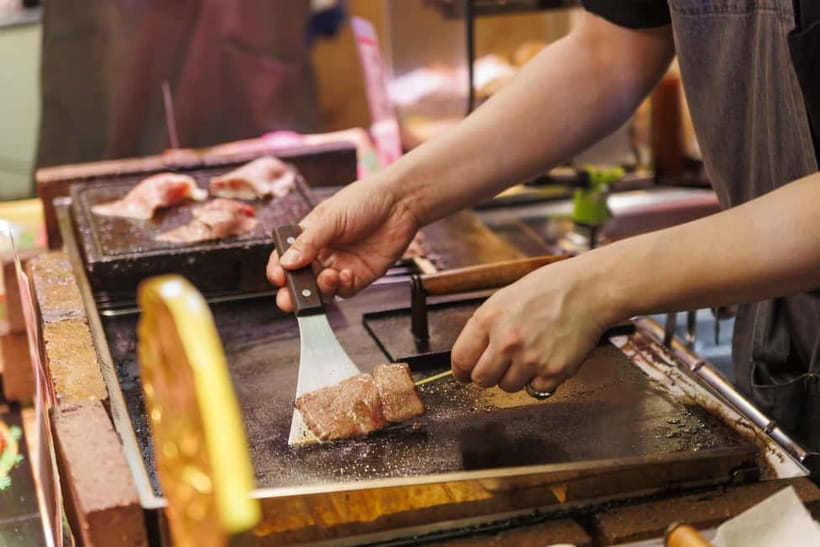
- Wagyu steak skewers
- Additional specialties and tastings, including items such as Kyoto seasonings, cracker, and Japanese flavored honey
What makes this approach valuable is balance. Hamo and wagyu skewers are a couple of the flashier Kyoto flavors that you may not confidently choose in a line of unfamiliar menus. Yuba and obanzai keep things grounded and local, so the tour covers both “wow” and “this is what people actually eat.”
Pacing is usually the difference between a food tour that feels fun and one that turns into a snack sprint. The included 1.5 hours in Nishiki Market is long enough to taste widely, but short enough that you can still enjoy the surrounding streets and shops.
One practical note: this is a tasting tour, not a sit-down meal. If you tend to get full fast, I would eat a light breakfast or plan for these bites to replace part of a meal. If you love trying everything, good shoes will help because you’ll be walking between stops.
The Nishiki-Tenmangu Shrine Detour (A 10-Minute Reset)
Right after Nishiki Market, the tour includes a quick visit to Nishiki-Tenmangu Shrine. It is only about 10 minutes, so this is not a full shrine outing. It is more like a reset button that gives your eyes a break from food signage and packaging.
Why I like this kind of stop: it changes the tone. You go from shopping energy into a calmer, more reflective pocket of Kyoto. It also helps you understand that this area is not only a marketplace. It is layered with local culture and daily rhythms.
In reviews, people have specifically appreciated that guides weave meaning into what you see, not just what you eat. Even a short shrine stop becomes a quick lesson in how Kyoto traditions show up alongside food.
Shinkyogoku and Teramachi: Shopping Streets With Purpose
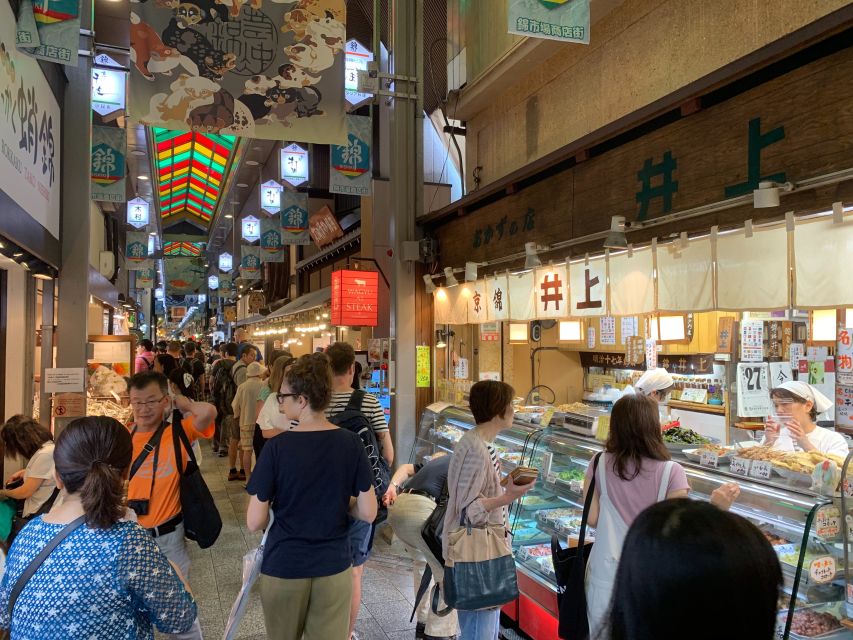
After the shrine, the tour shifts into two shopping zones:
- Shinkyogoku Shopping Arcade (about 45 minutes)
- Teramachi Street Shopping District (about 30 minutes)
These segments can sound like filler if you expect more food. But the way this tour uses them is practical: they are there to keep your exploration going without repeating Nishiki Market endlessly.
The key value is context. Kyoto food culture lives in small details, like how streets are laid out, what kinds of items stores focus on, and what locals browse while passing through. Your guide turns that into short, readable stories as you walk.
If you like souvenirs, this portion gives you a chance to pick things up while still staying connected to the theme of the day. Just keep in mind this is a walking tour, and luggage or large bags are not allowed.
More Kyoto temple visits, food tours, tea experiences, and day trips to compare

The “Hidden Gem” Stop: Why One Small Segment Matters
There is also a brief hidden gem stop of about 10 minutes. That may sound minor, but small stand-alone stops often make tours feel memorable because they break routine.
I treat “hidden gem” moments as flexibility. In a good food tour, you want at least one stop that is not just more of the same. In this itinerary, that stop helps you see a little extra without turning the day into an all-day marathon.
Tea Ceremony Option: A 90-Minute Kyoto Mood Shift
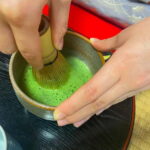
If you choose the add-on, the tea ceremony happens after the market tour. The tea ceremony begins at 2:00 PM and runs about 90 minutes, and you make your own way to the venue near Nishiki Market after the tour.
This is not a casual tea tasting. The experience includes:
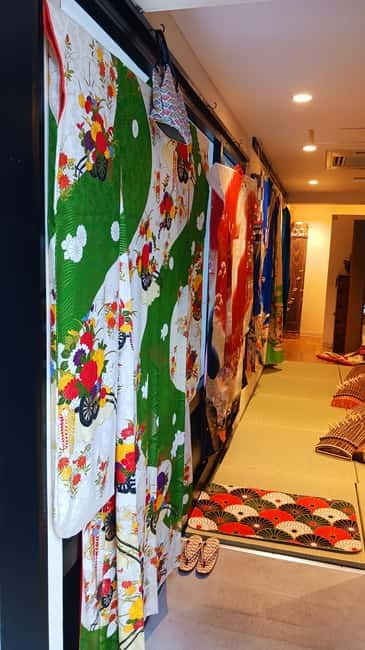
- Professional kimono dressing
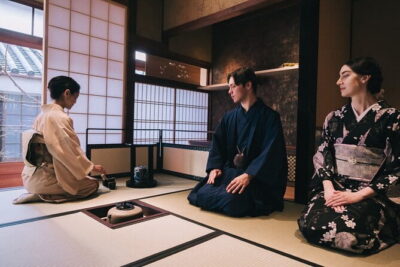
- A guided ceremony led by a seasoned tea master
- Learning the meaning behind movements and gestures
- Time for commemorative photos in a traditional setting
Why it works well on the same day: you eat, you learn, then you slow down. Tea ceremony is a different kind of Kyoto learning, one focused on gestures and attention rather than flavors and crowds.
If you plan to add this option, wear shoes you can stand in for a while. Even though the ceremony itself is seated, the lead-in dressing and moving around the venue can still require patience.
Meeting Points and the One Thing You Should Double-Check
The meeting point can vary depending on which starting option you booked. There are multiple possible starting locations listed, including spots around Shijo Street and the Shijo Street Sidewalk Expansion Project Memorial area.
This is where I suggest you use the simplest safety move: check your exact address the night before. Reviews mention that finding the right spot can be confusing, even for people who were ready on time.
The good news is that guides have been reported to help. For example, one review notes that Hide was kind enough to wait after confusion about the meeting spot. Still, you do not want to test luck.
What the Local Guides Do Best (And Why It Shows in Reviews)
The strongest repeat theme in reviews is guide quality, especially English clarity and calm confidence in a crowded market. People mention guides like Takuna, Hide, Yume, Toshi, Ayu, Iku, Satomi, Aki, Noa, Ellie, Miho, Kentaro, Saki, and Taku.
What ties these good reviews together is more than friendliness. Guides explain what you are eating, but they also explain how Kyoto food fits into daily life. One review praises guides for answering questions about Japan beyond the tour itself. Another mentions guides helping guests navigate the market crowds with a calm pace.
I also like that guides adjust the experience to the group mood. Some reviews mention the pace felt perfect, and others mention extra patience when guests wanted to pause longer at certain stalls.
That matters for you because the purpose of a food tour is not just to eat. It is to reduce decision stress and turn unfamiliar menus into understandable choices.
Price and Value: Is $78 for 270 Minutes Reasonable?
At $78 per person for a 3-hour walking tour, you should judge value by what is included, not by how long it sounds. Here is what you get in return:
- A local guide
- A small group limited to 6 participants
- 5 included special foods
- Additional tastings like seasonings and snack items
- Short sightseeing stops around the market area
- Optional tea ceremony if you select that add-on
In a market like Nishiki, shopping can get expensive fast if you start buying full items one by one. A tasting format often gives you better variety for the price because you try more categories of food in smaller portions.
I also think the small-group size is part of the value equation. With fewer people, you get more time for questions and less waiting in long lines. That makes a difference when you are trying things you have never ordered before.
And if your plans are uncertain, the experience lists free cancellation up to 24 hours in advance and a reserve now, pay later option.
Who This Tour Suits Best (And Who Should Rethink It)
This is a great fit for:
- First-time Kyoto visitors who want a guided entry into local food
- Curious eaters who like tasting lots of different things instead of committing to one big meal
- People who prefer a walk-and-learn day over a formal sit-down restaurant experience
- Families, since reviews mention enjoying the tour with tweens and learning without it feeling too rigid
It may not be ideal if:
- You need dietary accommodations. The tour states it cannot accommodate dietary restrictions, including vegetarian, halal, kosher, gluten-free, or allergy-related requests.
- You use a wheelchair or have mobility impairments. The tour is not suitable for wheelchair users or people with mobility impairments.
- You hate walking. Comfortable shoes and rain gear are strongly advised, and pets and luggage or large bags are not allowed.
If you fall into the dietary or mobility categories, do not force it. Look for a different tour style that can handle your needs.
Should You Book This Kyoto Nishiki Market Food Tour?
Book it if you want a confident, local-led way to experience Nishiki Market without drowning in choices. The included set of specialties, like yuba, obanzai, hamo tempura, and wagyu steak skewers, gives you a good spread across Kyoto flavors, not just one or two favorites.
Also book it if you care about the how and why, not only the what. Reviews repeatedly praise guides for explaining food and culture clearly, and for keeping the mood relaxed even in a busy environment.
Skip it if you have dietary restrictions that cannot be accommodated, or if walking time is a problem for you. In those cases, the tour can be a mismatch even if the food sounds amazing.
If you want one memorable way to start your Kyoto food education, this is a strong pick.
FAQ
How long is the Kyoto Nishiki Market food tasting tour?
The tour lasts about 3 hours, or 270 minutes.
How many people are in the group?
The tour is a small group limited to 6 participants.
What food do you sample during the tour?
The tour includes tastings of 5 special foods such as yuba, obanzai, hamo tempura, and wagyu steak skewers, plus additional Kyoto seasonings and snack items like cracker and Japanese flavored honey.
Is an English-speaking guide included?
Yes. The tour includes a live English-speaking local guide.
Can I add a tea ceremony to this experience?
Yes. There is an optional tea ceremony add-on that starts at 2:00 PM and lasts about 90 minutes, with kimono dressing and guidance by a tea master.
Are dietary restrictions accommodated?
No. The tour cannot accommodate dietary restrictions, including vegetarian, halal, kosher, gluten-free, or allergy-related requests.
What should I wear or bring?
Wear comfortable shoes and bring rain gear. Pets and luggage or large bags are not allowed.
More Food & Drink Experiences in Kyoto
More Tours in Kyoto
More Tour Reviews in Kyoto
Not for you? Here's more nearby things to do in Kyoto we have reviewed
Nishiki Market Food Tours, compared.
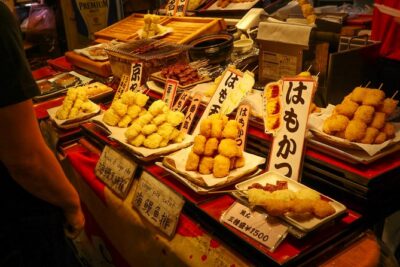 ★ 5.0Nishiki Market Brunch Walking Tour (7 Tastings + Brunch)From $681,355 reviews
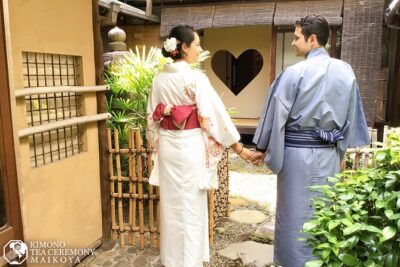 ★ 5.0Kimono Tea Ceremony at Kyoto Maikoya, NISHIKIFrom $65911 reviews
 ★ 5.0Kyoto Nishiki Market Food and Culture Walking TourFrom $80412 reviews
 ★ 4.8Nishiki Market Tea Ceremony with Koto PerformanceFrom $56294 reviews
 ★ 4.8Nishiki Market Brunch Walking Tour-7 Tastings+BrunchFrom $66197 reviews
 ★ 5.0Kimono Tea Ceremony Experience at Kyoto Oritzuruya, NishikiFrom $50116 reviews
 ★ 4.7Nishiki Market and Depachika Food Tour with a LocalFrom $4276 reviews
 ★ 4.5Nishiki Market Tour with a Local Foodie & TastingsFrom $6767 reviews
Browse the lists this tour appears in