
Reviewed · KYOTO BUS & SIGHTSEEING TOURS
Kyoto Full Course Tour: Explore 10 Must-See Sights & Hidden Gems
Kyoto in one day is a focused sprint. This full-day route strings together Arashiyama bamboo, blockbuster temples, and a classic walk through Gion, with a local guide helping you move through confusing public transport. I like that it feels like sightseeing with a plan, not sightseeing with guesswork.
I especially like the small group size (max 10) and the way the guide keeps the day flowing from west Kyoto to eastern neighborhoods. Guides such as Megumi and Masako get praised for clear explanations and good communication, which matters when you are crisscrossing Kyoto in one long day.
The main consideration is pace. Expect a serious walking day, reported as 20,000+ steps, plus a strict start time, so comfortable shoes and a steady rhythm are non-negotiable.
Key takeaways before you go
- Small group cap of 10: easier pace control and more time to ask questions.
- One-day focus on Kyoto’s icons: Arashiyama, Kinkakuji, Ryoanji, Fushimi Inari, Kiyomizudera, and Gion in one sweep.
- Temple admissions are mixed: some stops are free, others cost extra on site.
- Lunch is a conveyor-belt sushi stop: fun and fast, but vegetarian options may be limited.
- Local transit know-how: you will use buses and IC cards like a local, guided step by step.
- Strict timing and staying with the group: if you drift, you do it at your own risk.
Why This One-Day Kyoto Route Starts in Arashiyama
If Kyoto is your first big Japan city stop, this tour makes sense because it tackles the hardest part first, logistics. Kyoto’s bus and rail web can feel like a puzzle, especially when you are trying to hit multiple temple areas in one day. The tour’s big win is that you do not spend hours figuring out which train to take, which bus stop matches, or how long you should buffer between spots.
I also like the direction this day travels. You begin in the west at Saga-Arashiyama and end in Gion in the east. That west-to-east flow cuts down on backtracking, so you feel less like you are zigzagging across town just to stand in another line.
You can also read our reviews of more tours and experiences in Kyoto.

Transport Help in Kyoto That Actually Saves Time
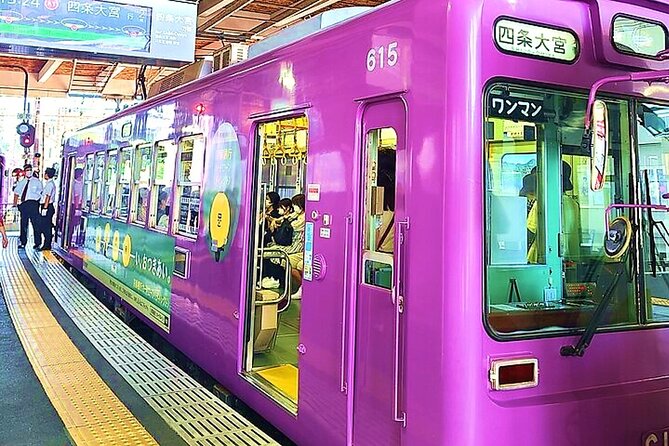
Kyoto is compact, but movement is not simple. The tour tackles that by having you walk some segments, then connect with public transport, all with a born-and-raised local guide. You also get practical advice on etiquette and everyday life, including how to use public transportation and how to behave like you belong in small spaces.
One smart detail: they recommend you prepare an IC card like SUICA or PASMO. That matters because Kyoto’s transit system tends to work smoothly once you are tapped in and out. Bring the card, keep it topped up, and you will save yourself the hassle of buying individual tickets over and over.
The First Stop: Arashiyama Bamboo and Forest Views
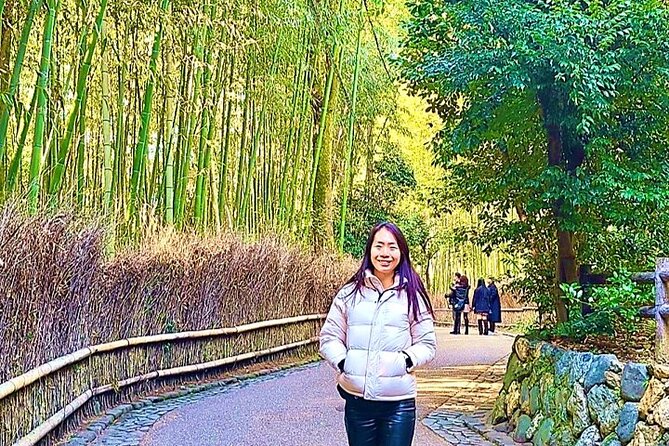
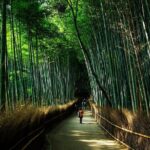
Your morning starts at JR Saga-Arashiyama Station, with Arashiyama as the first hit. The star here is the bamboo forest and the surrounding wooded mountain feel. It is a simple start, which is great because you are not already tired from a long day yet.
The itinerary also keeps this stop to about 30 minutes, and the admission ticket for this stop is listed as free. That is a good setup. You get a classic Arashiyama moment early, before the crowd pattern fully ramps up.
Practical tip: this area is outdoors, so dress for wind and weather. Even if the crowd is manageable when you arrive, Kyoto’s mornings can still feel cooler than you expect.
Kinkaku-ji at Temple-Pace Speed (The Golden Pavilion Moment)
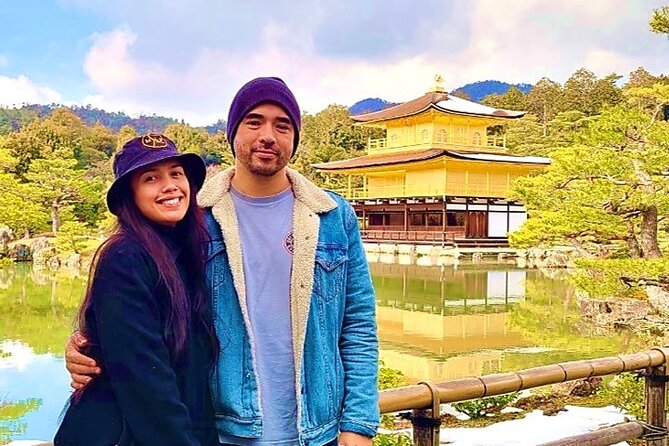
Next comes Kinkakuji, the Golden Pavilion. This is one of those places you recognize instantly in photos, and seeing it in person still has impact. Expect a 30-minute window. Admission is not included here, so budget extra and keep your cash or payment method handy.
Why this stop works on a full-course tour: Kinkakuji is visually loud in the best way. You do not need long planning to enjoy it, so the time allocation feels reasonable. You get the big sight without turning your whole day into a single queue-and-stand marathon.
A small caution: because the day is packed, your best experience comes from staying focused. Enjoy what’s in front of you, then move on. In a one-day plan, lingering is a luxury you often cannot afford.
Ryoan-ji Stone Garden, and the Queen Elizabeth Detail
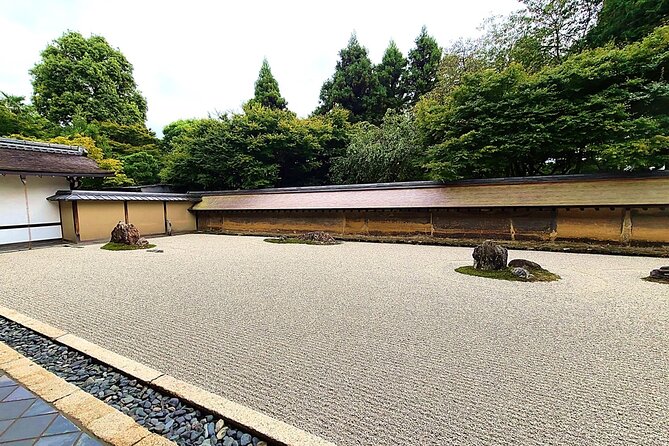
Ryoan-ji is where the tour adds a layer of meaning. The stone garden is famous, and there’s a specific story attached to it: Queen Elizabeth visited and praised it. It is a tidy way to make the garden more than scenery, and it gives you a hook for what to look for as you sit and take in the arrangement.
Admission is not included for this stop, and you still get about 30 minutes. That is enough time to understand the basic layout and absorb the quiet atmosphere without feeling rushed, as long as you do not stop to read every single sign for 20 minutes.
If you like gardens and symbolism, this is one of the more memorable stops in the list because it slows you down mentally, even though the day itself stays fast.
Fushimi Inari-Taisha: 1,000 Torii Gates and a Real Walk
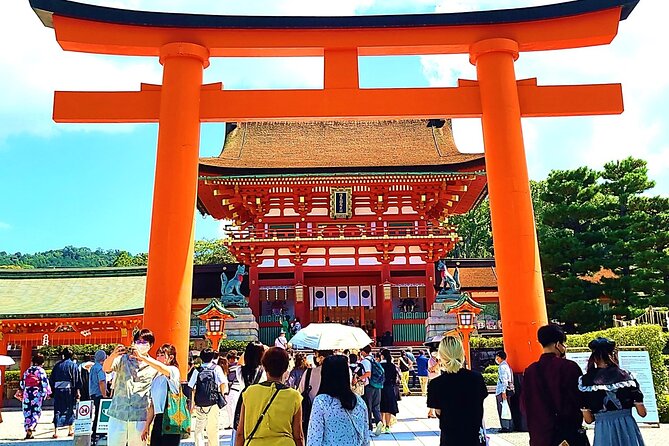
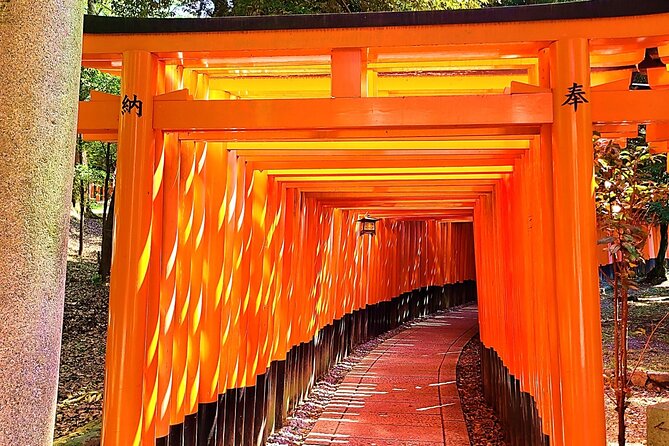
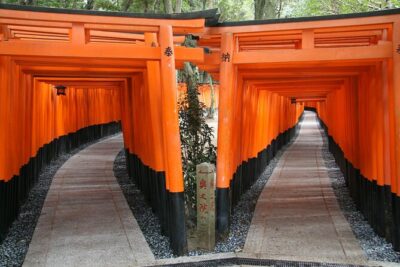
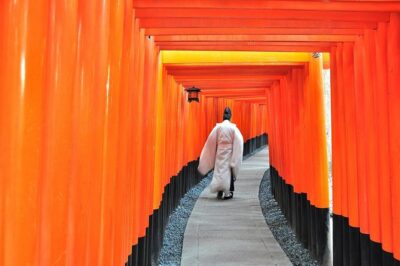
Then you hit Fushimi Inari-taisha, the No. 1 sightseeing spot in Kyoto for many international visitors. The headline feature is the long corridor of red torii gates, listed as more than 1,000. That alone makes it worth the time, because it looks like you’re walking into a different world.
Admission is listed as not included here, and you again get about 30 minutes. For me, that time box is just enough to capture the best photo angles and experience the tunnel effect, without turning the hike into a whole second day. The trade-off is that you will not be trekking all the way to the far points, but that is also true of many day plans in Kyoto.
Practical tip: go with the flow and avoid getting stuck at bottlenecks. Torii crowds move in waves. If you wait for the perfect empty frame, you’ll run out of time.
Kiyomizu-zaka Street: Shopping Energy Without the Long Detour
After the shrine and gates, the tour moves to Kiyomizu-zaka Street, about 30 minutes. This is the famous slope lined with souvenir shops and local eateries. Admission is free for this segment, so you are not paying for the experience, you are paying with time and walking.
This kind of stop matters because it’s where Kyoto feels everyday, not just ceremonial. Even if you do not buy anything, you get a sense of how visitors and locals blend in the same streets.
A good strategy: do not plan a full meal here. Use it as a reset, grab water, and notice what streets lead uphill and which stalls look busiest if you pass by again later on your own trip.
Kiyomizu-dera: The Nail-Less Wooden Stage
Kiyomizu-dera is one of the most popular temple areas, especially for Japanese tourists. The standout detail is the wooden stage, which is described as not using a single nail. That fact gives the building a practical kind of wonder, like the craft behind it is the story.
Admission is not included, and again the stop is about 30 minutes. On a full-day route, you are not there long, but Kiyomizu-dera is a place where you can appreciate a lot quickly because the views, structures, and viewpoints do the work for you.
If you want photos, decide your priority fast. Pick either the main stage view or the best angle for the setting. Otherwise you end up photographing everything equally and loving nothing as much.
Sanneizaka Slope: A Photogenic Walk That Feels Local
Sanneizaka is another 30-minute stop, free of listed admission. This pedestrian slope has shops along the way and a Kyoto-in-the-flesh feel. Compared with the big-name temples, this part is more about atmosphere, pace, and textures.
This is also the kind of street where you can spot small differences in style from shop to shop. Even if you do not buy, wandering here for a half hour can make the whole day feel less like a checklist.
My advice: this is where you keep moving. It’s easy to get tempted into one shop, then another, then suddenly your group is already at the next stop.
Hokan-ji and Yasaka Pagoda: A Sharp Kyoto Icon
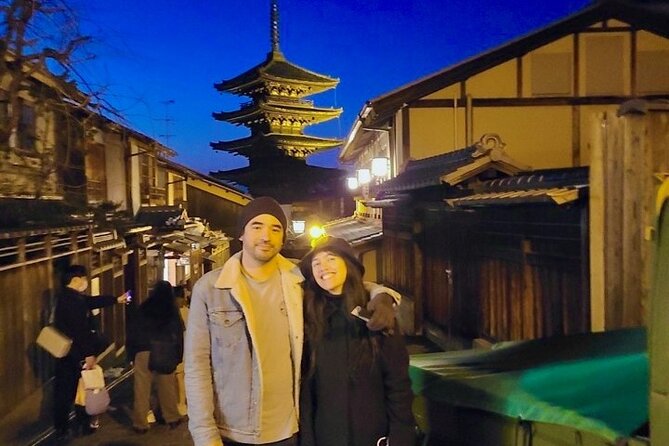
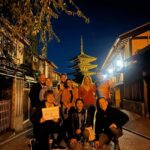
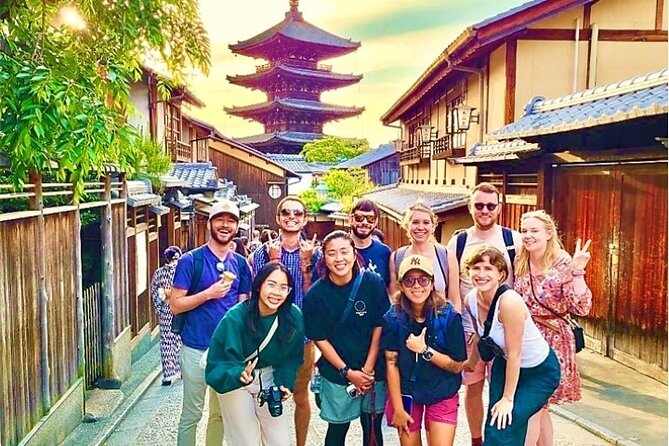
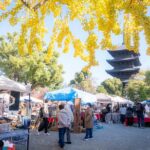
Hokan-ji is where you see the Yasaka Pagoda, called one of Kyoto’s major symbols. This is a great example of what a one-day tour can do well. You get the visual icon without needing to hunt it down across neighborhoods.
Admission for this stop is listed as free, and the time is about 30 minutes. That makes it efficient and satisfying, especially if your brain is starting to feel full after multiple temple stops.
Take a moment here even if you are tired. Icons like the Yasaka Pagoda hit differently when you’ve seen enough temples to know what’s unique about this one.
Gion Area Finish: The Historic Streets That Close the Loop
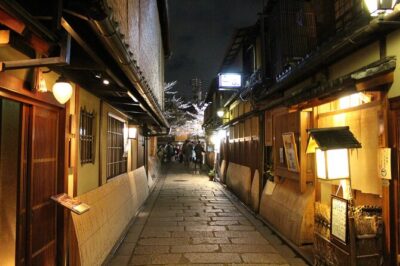
The day ends in the Gion area, about 30 minutes. This is where Kyoto shifts from temple gravity to neighborhood mood. It’s a historic-feeling district, and it gives your trip an emotional landing place after big sights.
The itinerary lists the admission ticket as free here. That’s fitting because Gion is more about street life and atmosphere. You’re not chasing a ticket counter, you’re walking the lanes and soaking in the vibe.
If you have extra energy, you can use this as your starting point for a self-guided wander later. If you are done, you still get something valuable: a sense of where Kyoto’s character lives after dark, and why people come back.
Lunch at a Conveyor-Belt Sushi Stop, Fast and Fun but Plan Ahead
Lunch is a conveyor-belt sushi experience. The menus mentioned include sushi, vegetable sushi, ramen, kara-age, beer, and mochi. That gives you a lot of choices in a quick sitting, which is crucial on a packed day.
But here’s the balanced note to take seriously: the tour fee does not include food, and vegetarian options can be hit-or-miss depending on what is available on the conveyor at that time. One participant noted that the sushi-go-round lunch did not fully cater to vegetarians.
If you eat vegetarian, I’d treat lunch as a menu scavenger hunt. Have a backup mindset for something not on the conveyor, or be ready to adjust your order. If you eat fish and dairy, lunch will likely feel easy and quick.
Also, plan for cash. The tour notes that the fee does not include food and transport, and you should have cash ready.
Pricing and Value: What You Really Pay for a 9.5-Hour Knockout Day
The tour price is $98.83 per person. That includes the tour fee and consumption tax. It does not include transportation, food and beverage, or entrance fees.
Here is the realistic add-on cost picture based on the provided estimates:
- Transportation: about $10 USD (¥1,340) per person
- Food and beverage: roughly $6.8 to $14 USD (¥1,500) per person
- Entrance fees: about $11 USD (¥1,600) per person
So you’re likely looking at about $126 to $134 total per person for a full-day run when you add the expected extras.
Is it worth it? For short stays, yes. You’re paying to avoid planning headaches and time loss. For longer stays, it becomes more of a choice: if you can handle Kyoto transit and you want a slower pace, you might recreate parts of this route yourself. But if you only have a single full day, this is a practical way to get Kyoto’s major hits without building a schedule from scratch.
The Pacing Reality: 20,000+ Steps Means Plan Your Body
This is the biggest factor in whether you enjoy the day. You should have moderate physical fitness, and the day is described as intense, with reports of over 20,000+ steps. That’s not casual walking. It’s a full-day walking and transit rhythm.
So bring:
- comfortable shoes you can walk in for hours
- water and a light layer for weather shifts
- a mindset that says, this is a sprint day, not a linger day
Also note the tour starts on time. The meeting is at JR Saga-Arashiyama Station, and the start time is listed as 8:50. If you arrive late, you may not be able to join.
If you are the kind of person who always needs to “see one more street,” this might test you. The best experience comes from staying close to the group and letting the guide manage the flow.
Who This Tour Fits Best (And Who Might Hate It)
This tour fits best if:
- you have limited time in Kyoto
- you want a tight route from Arashiyama to Gion
- you like learning city etiquette and practical transit tips along the way
- you’re okay with lots of walking
It might not fit if:
- you want slow, café-heavy sightseeing
- your group has limited mobility concerns, since the walking and temple access can be challenging
- you have strict dietary needs and need fully vegetarian meals at every stop
The structure is designed to maximize major sights in one day. That’s the point. If you want maximum comfort and maximum spontaneity, you’ll likely feel squeezed.
Should You Book This Kyoto Full Course Tour?
I’d book it if you want an efficient first taste of Kyoto and you value not thinking about transport. This is the kind of day tour that helps you get your bearings fast, so your remaining days feel easier.
I would hesitate if you are sensitive to long walking days or you need guaranteed vegetarian meals. The sushi-go-round lunch can work, but it may not be consistent for everyone.
If you book, do it with the right expectations: this is a guided route built for momentum. Plan comfortable shoes, bring cash for food and entrances, and stick with the group. Do that, and you’ll come away feeling like you actually saw Kyoto, not just passed by it.
FAQ
How long is the Kyoto full-course tour?
It runs for about 9 hours 30 minutes.
Where do I meet the tour, and where does it end?
You meet at JR Saga-Arashiyama Station (11-1 Sagatenryūji Kurumamichichō, Ukyo Ward, Kyoto) and the tour ends at Gion Shopping Street Promotion Associates (567-6 Gionmachi Minamigawa, Higashiyama Ward, Kyoto).
What time does the tour start?
The program starts at 8:50 am, and it starts just on time.
Is the tour price $98.83 all-inclusive?
No. The tour fee and consumption tax are included, but transportation, food and beverage, and entrance fees are not included.
Are entrance fees included for the temples and shrines?
Not always. Some stops are listed as free, while others are listed as not included (for example Kinkakuji, Ryoan-ji, Fushimi Inari-taisha, and Kiyomizu-dera).
Is lunch included?
There is a lunch stop at a conveyor-belt sushi restaurant, but food and beverage costs depend on what you order and are not included in the tour fee.
What should I bring for getting around Kyoto?
Bring an IC card such as SUICA or PASMO in advance, and have cash ready since the tour fee does not cover food and transportation.
Is the booking refundable?
No. This experience is non-refundable and cannot be changed for any reason.
More Tours in Kyoto
More Tour Reviews in Kyoto
Not for you? Here's more nearby things to do in Kyoto we have reviewed


Kyoto Bus & Sightseeing Tours, compared.
 ★ 5.0PERFECT KYOTO 1-Day Bus TourFrom $12913,518 reviews
 ★ 4.8Fushimi Inari, Kinkakuji, Bamboo Grove 1 Day Bus TourFrom $1224,316 reviews
 ★ 4.9Best of Kyoto: Gion, Geisha, Pagodas & CobblestonesFrom $242,058 reviews
 ★ 3.9Hop-on Hop-off Sightseeing Bus TicketFrom $272,034 reviews
 ★ 5.0Private Kyoto Tour with a Local, Highlights & Hidden Gems, PersonalisedFrom $1021,543 reviews
 ★ 4.7Kyoto/Osaka: Nara, Fushimi Inari Taisha, Arashiyama Bus TourFrom $521,275 reviews
 ★ 5.010 Must-see Spots in Kyoto One Day Private Tour (up to 7 people)From $1791,108 reviews
 ★ 4.5One-Day Tour of Kyoto’s Highlights from Osaka/KyotoFrom $661,092 reviews
Browse the lists this tour appears in