
Reviewed · GION & GEISHA DISTRICT TOURS
Kyoto Geisha District Walking Tour in Gion
Gion can be confusing, fast, and that is exactly why this walk works. You get a guided route through Gion’s lanes and shrines with commentary on geisha culture, plus photo-friendly stops around lanterns, waterways, and classic machiya houses. My favorite part is how the guide explains what you are seeing, not just where to stand for a picture, so the district feels understandable and alive. One watch-out: guide quality can vary by person, and your enjoyment may depend on how clearly the guide speaks your language.
You also get a real sense of timing in Gion, especially later in the day when lanterns and street corners start to feel cinematic. The tour runs about two hours, stays small with a maximum group size of 10, and uses a mobile ticket, so you are not wasting time on paperwork. The other consideration is physical comfort: it is a walking tour with stairs, and it is not suitable for people who cannot manage going up and down steps.
Key Highlights You’ll Actually Care About
- Small group size (max 10): easier questions, less waiting, and a calmer walk through narrow streets.
- Guide-led commentary: you hear stories tying together Shinto shrines and geisha traditions, not just stop names.
- High photo odds: lanterns, shrines, bridges, and the Shirakawa Canal give you natural framing.
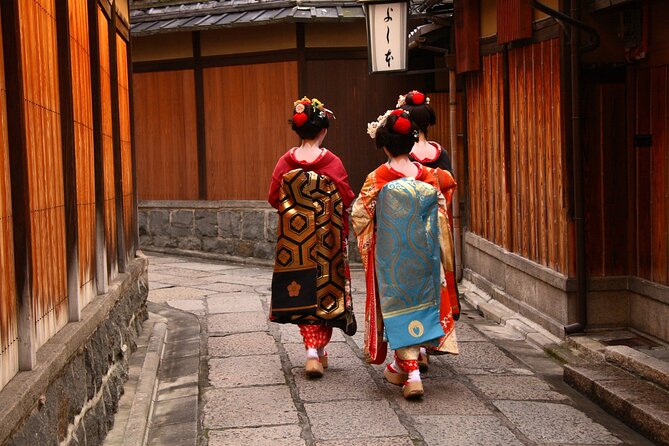
- Chance to spot geiko or maiko: timing can matter, and some guides seem to know where to look.
- Free shrine stops: you spend money on the tour only, while admission tickets for the listed stops are free.
Why a Gion Geisha Walk Makes Sense (Even If You Think You Can DIY)
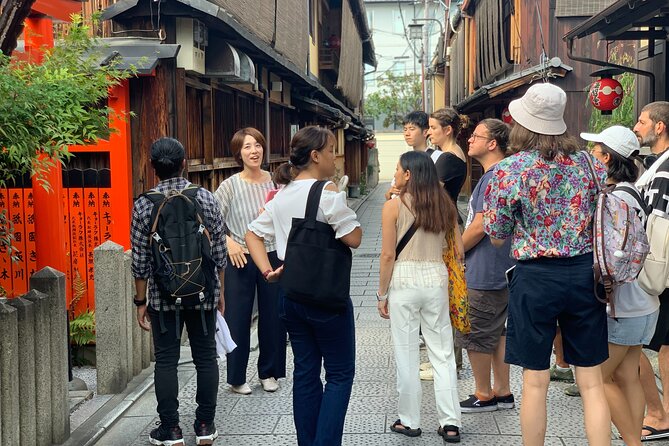
Gion is pretty on postcards, but on foot it is also easy to get turned around. Streets are narrow, turns come quickly, and the important sights are not always obvious from the main roads. This tour solves that with a guide who keeps you moving and explains what is behind the walls and gates.
I like that the focus is not only geisha lore, but the spiritual setting around it. You visit famous Shinto places, hear what they are connected to, and connect the religious side to the everyday culture of the district. That is what makes the walk feel more than a generic photo loop.
You can also read our reviews of more walking tours in Kyoto
Meeting Point at Gion Kōbu Kaburenjō, Then a Two-Hour Route You Can Handle
The tour starts and ends at Gion Kōbu Kaburenjō, at 570-2 Gionmachi Minamigawa, Higashiyama Ward. You will be near public transportation, which matters because Kyoto mornings and evenings can be a timing puzzle.
Duration is about two hours, and the itinerary is designed to fit that pace. You get multiple stops without feeling like you are sprinting across town, but you will want comfortable walking shoes because it is a true walking tour. The tour also runs rain or shine, so plan for damp pavement and keep your camera protected.
Small group size is more than a nice-to-have. With a cap of 10 people, guides can slow down for questions and for photo moments without turning it into traffic control. In reviews, guides like Takuma, Yuko, Hide, Tom, Yuji, and Eric are repeatedly described as friendly, organized, and helpful when people ask questions.
Yasaka Shrine: The Shinto Anchor of the Gion Story
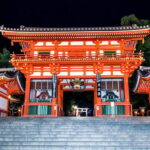
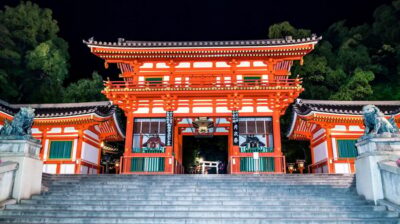
Stop 1 is Yasaka Shrine, right in the Gion area. This is one of Kyoto’s best-known Shinto shrines, and it gives you a strong “before you chase nightlife, understand the roots” start.
You spend about 40 minutes here, and the key things to notice are the architecture and the lanterns, plus the quieter feel of the surrounding area. If you only rush through shrines when you travel, slow down here. The point is to understand why this part of Kyoto matters to people, not just what looks photogenic.
A drawback to consider: the shrine time is fixed, so you should come ready to focus. If you are hoping for lots of extra shopping or a long detour for photos, you might feel slightly boxed in by the schedule.
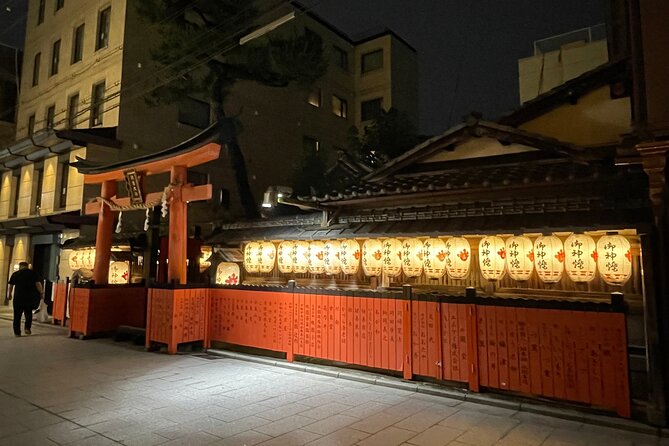
Gion’s Main Area and the Feeling of Paper Lantern Time
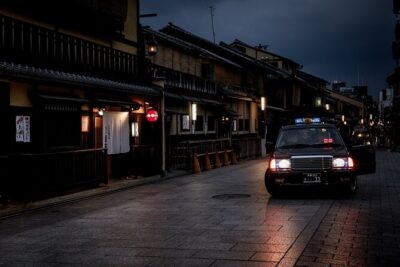
From Yasaka Shrine, you move into Gion, the city’s most famous geisha district. The route takes about 20 minutes at this stage, and it is set up to help you recognize the shapes of the neighborhood: wooden houses, narrow lanes, and the kind of atmosphere that changes as the day shifts.
This is where you start seeing how the guide’s storytelling changes your experience. Instead of treating the streets like scenery, you understand what traditions are connected to certain spots and why the district has the look it does.
Photo lovers usually like this segment because you are near areas with classic Kyoto textures. You also get a calmer pace compared with trying to navigate crowded main streets on your own.
Tatsumi Daimyojin Shrine: Protection and Good Fortune for Travelers
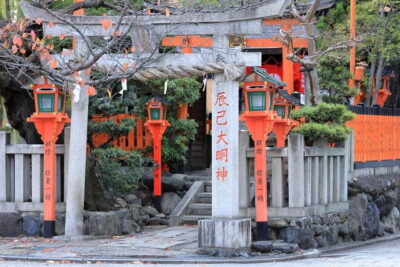
Stop 3 is Tatsumi Daimyojin Shrine, a small Shinto shrine tied to protection, good fortune, and safety. The tour highlights that it is especially connected to travelers and warriors, and it dates back to the Heian period (794 to 1185).
This stop is short, about 5 minutes, but that is actually a good thing. It gives you a mental “marker” in the middle of the walk, a place where the guide can explain the meaning behind a tradition before you move back into the streets.
If you dislike short stops, you may want to bring extra curiosity here. Even a few minutes is enough if you focus on the theme the guide is giving you, not just the visuals.
Tatsumi Bridge: The Movie Corner of Old Kyoto
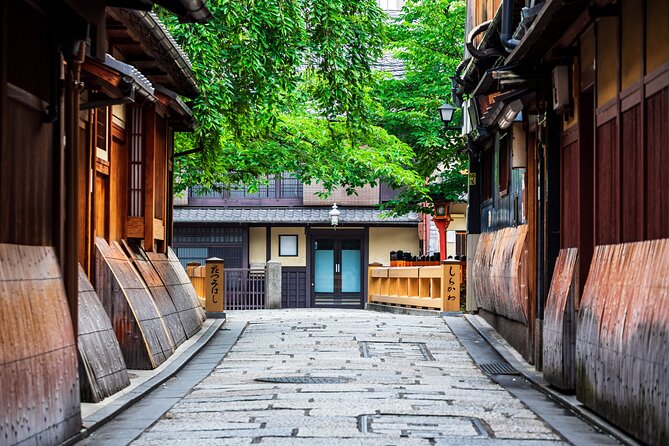
Stop 4 is Tatsumi Bridge, described as a small traditional bridge in a corner of Gion that feels like stepping into a scene. You get about 10 minutes around this area, which is just enough time to take photos and feel the quiet.
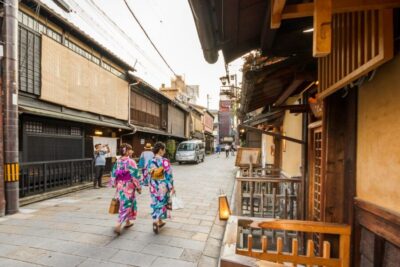
The neighborhood around Tatsumi Bridge is part of the effect. You see traditional machiya houses, and the tight streets make it feel like you have slipped away from the busier parts of town.
Potential downside: this is a photo moment. If your goal is deep cultural immersion every second, keep your expectations flexible. The best way to enjoy it is to pair photos with quick questions for the guide.
Gion Shirakawa and the Canal Walk: Quiet Water, Wooden Houses, and Cherry Trees
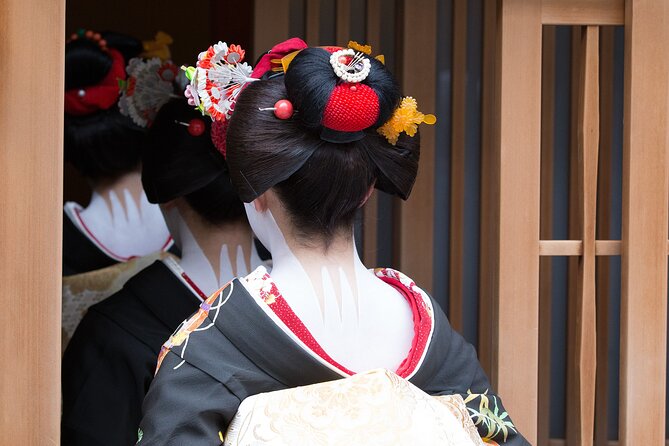
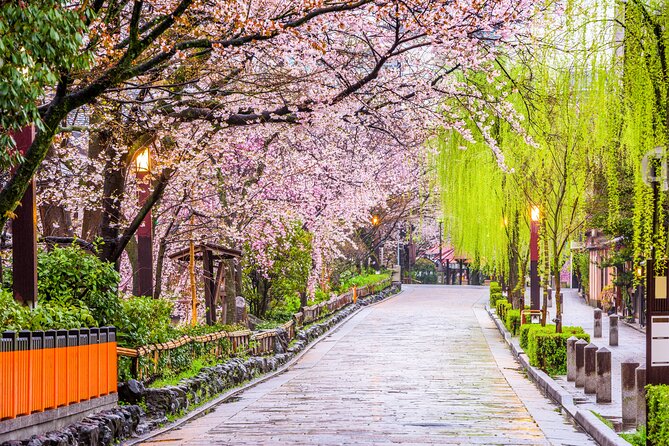
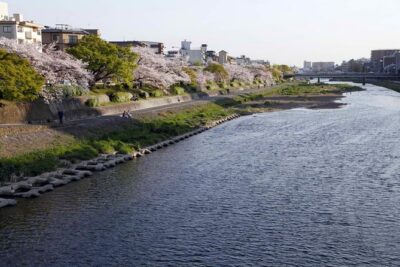
One of the most relaxing parts of the route is Gion Shirakawa, also called Shirakawa Canal. The tour emphasizes it as a picturesque, tranquil waterway lined with well-preserved machiya houses and weeping cherry trees.
Even though the itinerary does not list a specific time for this segment, it is clearly part of the walk designed to slow you down. This is where Gion starts feeling less like a sightseeing mission and more like a lived-in neighborhood.
You might notice that the route alternates between structured stops (shrines, main streets) and softer pauses (canal areas). That rhythm is valuable because Kyoto can tire you out quickly, especially if you are bouncing between multiple places in one day.
Back to the Streets: Another Gion Segment Before Hanamikoji
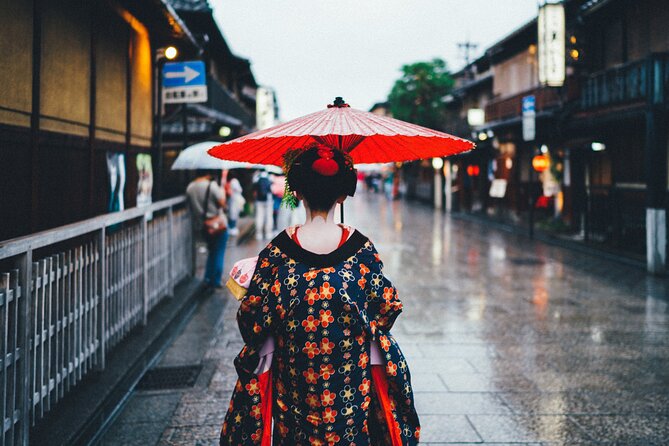
The itinerary includes another Gion stop after the canal segment, about 20 minutes. Think of it as a second look at the district from a slightly different angle, so you are not just passing through.
This part helps you compare what you already noticed. You start to recognize how the architecture repeats in patterns, how the lanes open into small squares, and where the neighborhood looks more domestic and less commercial.
Hanamikoji Street: The Classic Gion Main Line
Stop 6 is Hanamikoji Street, the main street in Gion. The tour frames it as charming and old-world, lined with traditional machiya houses, tea houses, and shops and restaurants.
You get about 10 minutes here. That short window is enough for a first-time visitor to absorb the vibe without getting stuck in slow-moving crowd knots.
The trade-off is that main streets are popular for a reason. If you want wide, empty photo compositions, this is not where you will find them. I’d treat Hanamikoji as your “feel it, understand it, move on” stop.
Gion Corner: Traditional Art Performances Along the Way
The route also includes Gion Corner, described as a cultural venue that showcases traditional art performances highlighting Kyoto’s heritage. The itinerary listing does not specify a time length for this stop, but it is clearly included as a cultural punctuation point.
This matters because it connects everything you heard earlier. You arrive thinking you know what Gion is about, then you get a place that shows how traditional arts fit into the broader Kyoto story.
If you prefer hands-on experiences over watching, plan to stay attentive anyway. Even if you only catch the highlights, the goal is to give your brain a second channel beyond walking and photographing.
How This Walk Helps You Spot Geiko or Maiko (When Luck Is On Your Side)
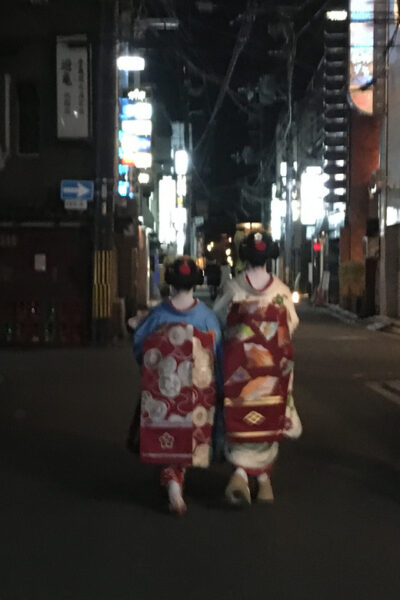
The tour description makes one promise in spirit, not in certainty: if you are lucky, you might spot geisha while walking. In the reviews, people describe actually seeing geiko or maiko during their walk, including moments where guides seemed to time the route around when artists were heading out to engagements.
That is where having a guide with local timing can matter. Instead of spending the whole walk staring at doors and hoping, you learn where to look and when to pause. You are still relying on chance, but the chance feels higher because you are moving strategically rather than randomly.
One review also described the calmer back-alley sections as a relief from the busiest parts of the city. That is a practical benefit: you can keep your eyes up and focused on people-watching, not just dodging foot traffic.
Price and Value: What $29.85 Buys in Kyoto
At $29.85 per person for about two hours, the value is not in paid attractions. Most listed stops have free admission tickets, so you are paying mainly for the guide and the route design.
The big question is whether the commentary justifies the cost, especially for a district you can physically walk without a ticket. For me, the answer is yes when the guide does two things well: keeps you on a clean, efficient path and explains what you are seeing in plain terms. Multiple guides, including Takuma and Yuko, are praised for friendly, informative explanations and for making the district feel alive.
One small caution based on mixed feedback: if your personal preference is a very structured, in-depth lecture style, you might want to have flexible expectations. Some experiences described guides who focused more on photos or were less organized. The upside is that the overall rating is extremely high, and many people specifically call out how much they learned and how smoothly the walk ran.
Who Should Book This Gion Walking Tour, and Who Might Skip It
This is a great fit if you want a first-time introduction to Gion that does not require guessing. I especially like it for people who want both sides of Kyoto culture, shrines and the human traditions tied to them.
It is also a solid choice for families in the right setting. Reviews include a family doing it with daughters around 11 and 10, and the guide was described as making it enjoyable for younger participants. That said, kids still must be accompanied by an adult.
It is not the best option if mobility is limited. The tour is not suitable for people who cannot go up and down stairs, and it is rain or shine.
Kimono Plan Note: One Extra Step If You Rent a Costume
If you book a kimono plan, the instructions are simple but easy to miss. After you change into kimono, you go on your own to the Japan Kanji Museum & Library, about a 5-minute walk from the kimono rental store.
After the tour, you need to return the kimono by 5:30pm. This is one of those details that can quietly derail your evening if you plan dinner without leaving a buffer.
Should You Book This Kyoto Geisha District Walk?
Yes, if you want a small-group, guide-led way to understand Gion in about two hours. The price is reasonable because shrine admissions on the route are free, and the real value is the commentary and the efficient path through key corners like Yasaka Shrine, Tatsumi Daimyojin, Tatsumi Bridge, Shirakawa Canal, Hanamikoji Street, and Gion Corner.
Skip it or think twice if you have very high expectations for flawless organization and clear English every time. Even with an overall strong rating, a minority of experiences complained about disorganization and hard-to-follow English. Your best move is to read your own priorities: if you are flexible and mainly want a good walk with stories and photo stops, this fits. If you need a very formal, lecture-style guide, you may want to compare other options.
If you do book, wear comfy shoes, bring your camera, and be ready to pause. Gion rewards people who look up, listen for the meaning behind the sights, and accept that spotting geiko or maiko depends on timing and luck.
More Walking Tours in Kyoto

More Tours in Kyoto

More Tour Reviews in Kyoto
Not for you? Here's more nearby things to do in Kyoto we have reviewed






Gion & Geisha District Tours, compared.
 ★ 4.7Kyoto Geisha Walking Tour: Gion District & Hidden GemsFrom $253,273 reviews
 ★ 4.9Gion Magical Night Walking Tour with Geisha TriviaFrom $242,393 reviews
 ★ 4.7Gion Geisha District Walking Tour – Stories of GeishaFrom $202,187 reviews
 ★ 4.9Best of Kyoto: Gion, Geisha, Pagodas & CobblestonesFrom $242,058 reviews
 ★ 4.5Night Walk in Gion: Kyoto’s Geisha DistrictFrom $212,003 reviews
 ★ 5.0Kyoto Night Foodie Tour in Gion (9+ dishes + 6 Sake tastings)From $1631,762 reviews
 ★ 5.0Kyoto Gion Geisha District Walking Tour – The Stories of GeishaFrom $251,441 reviews
 ★ 5.0Kyoto Gion: 2-Hour Geisha Culture & History Walking TourFrom $231,186 reviews
Browse the lists this tour appears in