
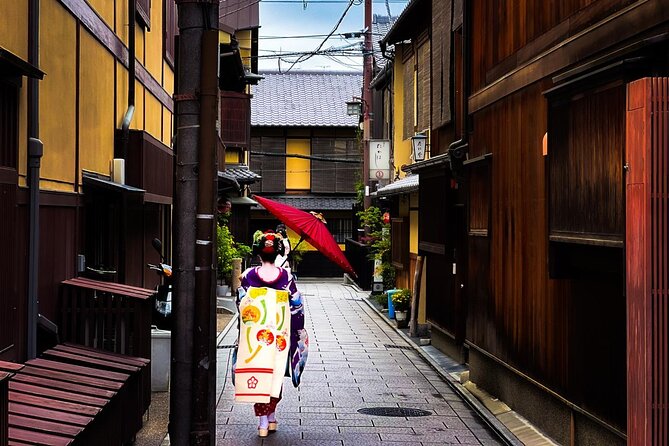
Reviewed · GION & GEISHA DISTRICT TOURS
Kyoto: Gion and Geisha District Walking Tour
Gion’s secrets get explained on foot. This small-group walk keeps you in one pocket of Kyoto and shows you what to look for, starting at Yasaka Shrine and ending on Hanamikoji Street. I like how focused the route is for a short 2 hours, and I like the practical geisha-culture tips you can use the moment you step off the tour. The main drawback to plan for is that Gion can get crowded and narrow streets can feel tight, especially around the Hanamikoji area.
What makes this experience work is the shape of the day: a set sequence of historic spots, short stop times, and an English-speaking guide to translate the meaning behind each place. You also get a mobile ticket, and the group size is capped at 10, so you are not lost in a big crowd.
If you want Kyoto context without running from place to place, this is a strong fit. It is also a good pick for first-timers who want a respectful introduction to geisha culture, not just photos.
Key things I’d prioritize on this Gion walk

- Small group, capped at 10 so questions and photo stops feel manageable
- English-speaking guide with strong storytelling and clear explanations (names like Sam, Shin, Amy, Tim, Maria, and Naoya show up often in guide praise)
- Geisha district focus that helps you understand what you are seeing on Hanamikoji Street
- Shrines and old streets in one loop so you get both spirituality and street-level Kyoto
- Practical spotting tips for where geisha and related traditions appear in the Gion area
Why Gion is best experienced as a focused walking tour
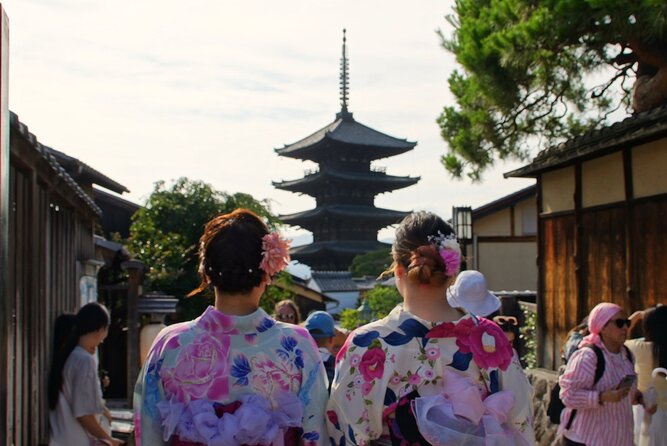
Gion is one of those Kyoto areas where the details matter. If you explore it alone, it can turn into a photo mission, with little sense of what the buildings, shrines, and street names are actually saying. This tour gives you a guided map of meaning, walking one compact route in about 2 hours.
Another reason I like it: the group size is max 10 travelers. That matters in Kyoto, because narrow lanes and popular streets do not reward big groups. With fewer people, you are more likely to hear your guide’s explanations and less likely to get swept along without context.
You also have a simple ticket format. A mobile ticket means you can keep everything in your phone instead of juggling paper. And since it starts and ends back at the meeting point, it is easy to build into your day without guesswork.
One more practical win is that the tour is designed for most people to participate. The route is walking-focused, so if you have very limited mobility, you may want to think twice, but the experience is not presented as a strenuous hike.
You can also read our reviews of more walking tours in Kyoto
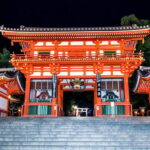
Starting at Yasaka Shrine, you learn how the neighborhood “feels”
The walk begins at Yasaka Shrine, a major Shinto sanctuary that sits right between Gion and Higashiyama. The shrine is famous for its dramatic vermilion gate and lantern-lit paths, so even before you hear much explanation, you are already in Kyoto’s mood. This first stop is about 20 minutes, which is enough time to get your bearings.
What I find valuable here is that your guide frames Yasaka Shrine as more than a scenic landmark. You are learning how religious spaces connect to everyday life in Kyoto, including the rhythms of ceremonies and seasonal events you might notice later in Gion.
It also sets expectations for your camera. Lantern lighting, shrine gates, and wooden townhouses nearby create a look that photographs well, but only if you slow down. Starting with a shrine helps you slow down early, not at the most crowded part of the tour.
Maruyama Park is a calm reset near the action
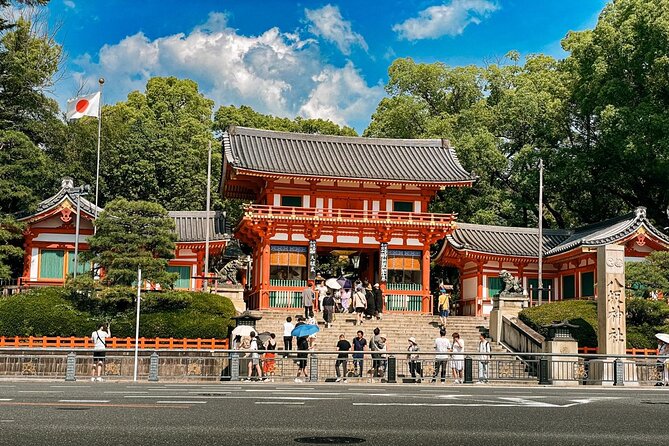
Next comes Maruyama Park, Kyoto’s oldest public park, with seasonal beauty and the iconic weeping cherry trees. This stop is shorter at about 10 minutes, so it works like a breather. You step out of the shrine intensity and get a moment of quiet, which helps when you head back into the more human, lane-like streets later.
The park also gives your guide room to talk about how Kyoto’s traditions track seasons. Even if you visit in a season without cherry blossoms, the park still helps you understand why people pay attention to timing in Japan. Kyoto is not one mood, it changes across the year.
If you are the type who gets overwhelmed by busy neighborhoods, this stop matters. It is a chance to breathe, refocus, and remember you are walking through a real living area, not a museum set.
Nene-no-Michi and the samurai stories that explain street names
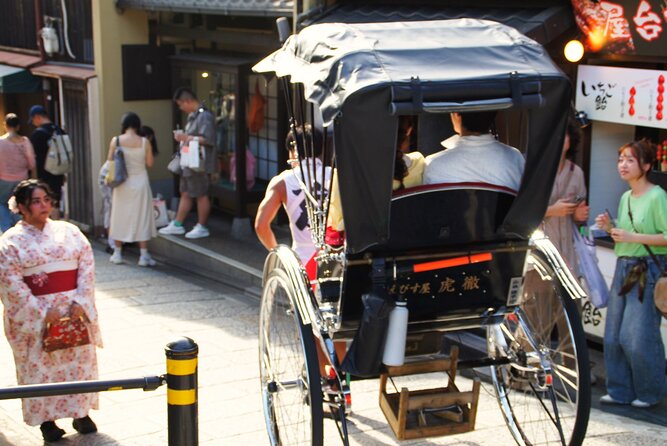
Then you move to Nene-no-Michi, a picturesque lane named after the wife of samurai warlord Toyotomi Hideyoshi. This is another about 10 minutes, but it is the kind of stop that makes the whole tour stick in your mind. Street names in Kyoto are often shortcuts to history, and this lane is one of those clues.
What I like about this part is that it adds narrative logic. You are no longer just seeing old buildings. You are learning why they matter and how power and relationships shaped what people built and where they moved.
You also tend to catch small details here: preserved traditional architecture, small shops, and the sense that people live alongside history. It is not just a corridor for tourists. It feels like a place with a past that is still part of daily life.
Sannenzaka and Ninenzaka: the old-street slope you should walk slowly
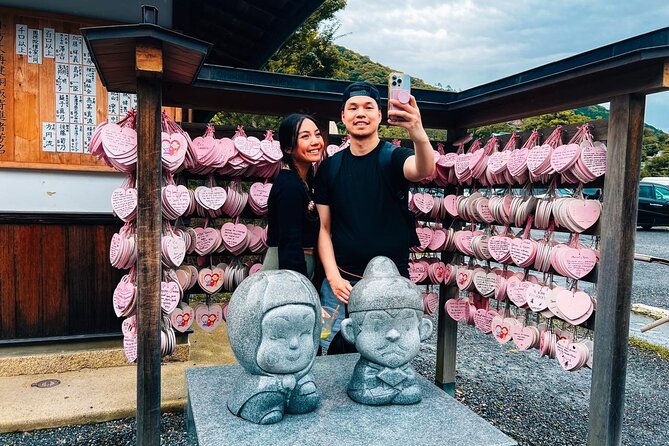
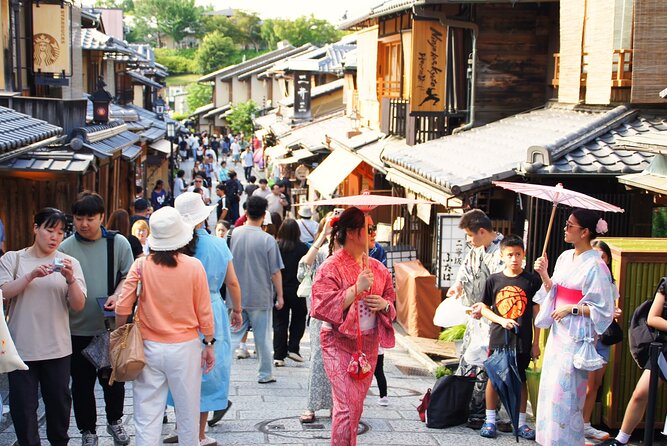
The tour continues down into Sannenzaka and Ninenzaka, the stone-paved approach famous for historic wooden buildings and artisan boutiques. Expect about 15 minutes here. These streets are where many visitors slow down naturally, because the stone steps and the shopfronts create that time-warp effect.
This stop is valuable for two reasons. First, it gives you a hands-on sense of old Kyoto street design, not just a view from the street level. Second, it connects the “Kyoto look” to a timeline, so it feels less like a theme park and more like a place that has been shaped by generations.
The main consideration: stairs and slopes. This is still a walking tour, not a long hike, but your shoes matter. If you have fragile feet or do not enjoy steps, plan for careful pacing and do not rush for photos.
Yasui-Konpiragu and the “Power Stone” tradition
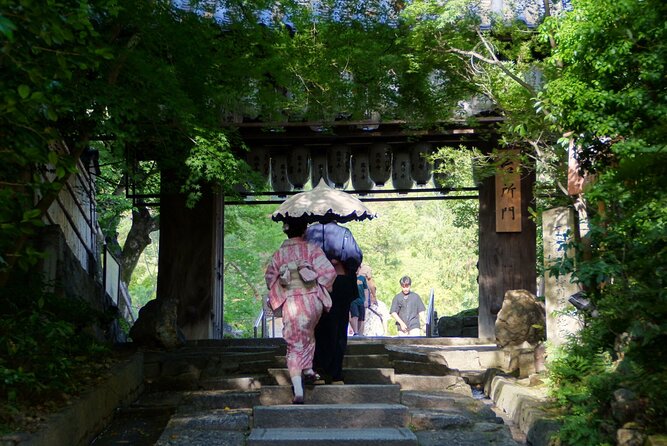
Next is Yasui-Konpiragu, a shrine known for its “Power Stone” archway, also described as an area people crawl through while praying for strong relationships or for breaking ties with the past. This stop takes about 10 minutes, and it is one of the most memorable, because the story is oddly human.
From a practical perspective, it helps you understand shrine customs as rituals with meaning, not just sightseeing. A guide explanation can turn a strange tradition into something you actually get. And because the archway is visually distinctive, you will recognize what your guide is referring to when you approach it.
There can also be a bit of comedy in the way people describe this practice, and guides tend to explain it with a light touch. That is good. It makes the shrine feel approachable instead of intimidating.
If you are visiting during a time when the shrine area is busy, be patient. The point is not to speed through it. Look, listen, then take your photos when the flow gives you a chance.
Hanamikoji Street is where Gion clicks into place
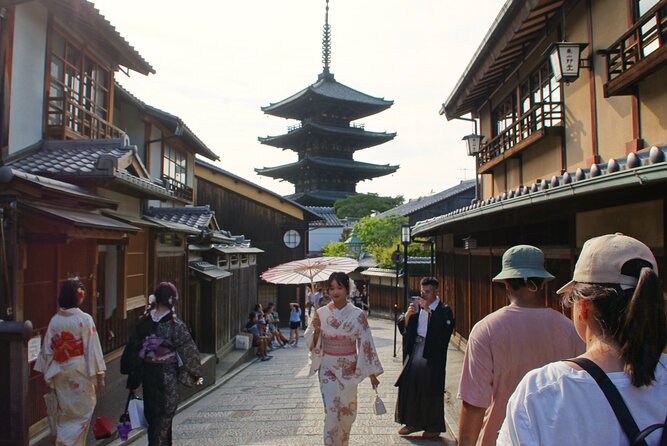
The tour finishes at Hanamikoji Street, the heart of the Gion district, with preserved machiya townhouses, teahouses, and softly glowing lanterns. This stop is about 15 minutes, and it is where all your earlier context pays off.
If you have never learned anything about geisha culture before, Hanamikoji can feel like a pretty street with a lot of locked doors. A good guide changes that. You learn what the architecture suggests, how entertainment traditions relate to place, and where you might reasonably see activity. The tour’s emphasis includes tips on places to spot geisha, plus explanations you might not find quickly on your own.
This is also the point where group size matters again. Hanamikoji can be crowded, and narrow sightlines can make it hard to stop and look. With a max of 10 people, you are more likely to hold your position for a moment to take in the details your guide points out.
One thing to plan for: late in the day, you may get stronger lantern light. That can make the atmosphere feel extra special, but timing is always variable. So focus on the walking order and the explanations, not a guaranteed lighting effect.
Price and time: does $22.55 feel fair?
At $22.55 per person for about 2 hours, the value is mostly about what you get bundled in. You are paying for an English-speaking guide plus admission to Gion and Hanamikoji Street included. For a short walking tour, that can be a good trade if you want structure and cultural context without paying for a private guide.
The fact that this is a small-group tour is also part of the equation. If you were to hire an individual guide for a similar timeline, costs are usually higher. Here, the tour is designed so you benefit from storytelling while staying budget-friendly.
One note on cost mindset: tips are optional. In other words, the base price stands on its own. If your guide does a great job, you can decide what feels appropriate.
Also, because it is two hours, it is easy to use as an orientation walk. I think that is one of the best “value moves” you can make in Kyoto. If you understand Gion’s layout and cultural cues after this, you will get more out of your remaining time in the neighborhood.
Practical tips to make the walk feel smooth
This tour is short, but Kyoto walking can still be tricky. Here is how to set yourself up for a good experience based on the route you will cover:
- Wear comfortable shoes for stone and slopes, especially around the Sannenzaka and Ninenzaka portion.
- Bring water. Even if weather is mild, you will be walking in the open air between stops.
- Come with a question or two about geisha culture. With a max of 10 people, your guide can actually answer you.
- If you care about photos, be flexible. Narrow lanes and lantern moments can make you stop and wait a bit.
The guides also seem to bring strong English and a friendly approach. People have praised guides such as Sam for accommodating explanations and Maria for helpful, organized guidance. Other names come up like Shin, Amy, Tim, and Naoya, often for clear storytelling and making the architecture feel readable.
The real win is that you are not just hearing dates. You are learning how traditions show up in street life, shrine practices, and the overall Gion atmosphere.
Should you book the Kyoto Gion and Geisha District walking tour?
Book it if you want a compact, first-timer-friendly way to understand Gion instead of wandering without context. The route hits major Kyoto anchors like Yasaka Shrine and Hanamikoji Street, and the guide focus on geisha culture plus practical spotting tips makes it easier to enjoy the neighborhood after the tour ends.
Skip it or reconsider if you hate crowds or want total control over pacing. Hanamikoji can be busy, and this is a guided walking format, not a private, slow stroll.
If you like learning through walking and you want a respectful introduction to geisha district life, this is an easy yes. Two hours is the sweet spot, short enough to fit any day, long enough to feel like you actually understand what you are seeing.
FAQ
How long is the Kyoto Gion and Geisha District walking tour?
It lasts about 2 hours.
How much does the tour cost?
The price is $22.55 per person.
What is included in the price?
You get an English speaking guide and entry or admission connected to Gion and Hanamikoji Street.
Where does the tour start and end?
It starts at Starbucks Coffee – Kyoto Gion Hotel (Kyoto, Higashiyama Ward, Gionmachi Minamigawa, 555 祇園ホテル 1F) and ends back at the meeting point.
What is the group size?
The tour has a maximum of 10 travelers.
Do I need to buy a ticket in advance?
You receive a mobile ticket, and confirmation is received at the time of booking.
What is the cancellation policy if I need to change plans?
You can cancel for free up to 24 hours in advance for a full refund. If you cancel within 24 hours, the amount paid is not refunded.
More Walking Tours in Kyoto


More Tours in Kyoto

More Tour Reviews in Kyoto
Not for you? Here's more nearby things to do in Kyoto we have reviewed





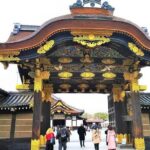
Gion & Geisha District Tours, compared.
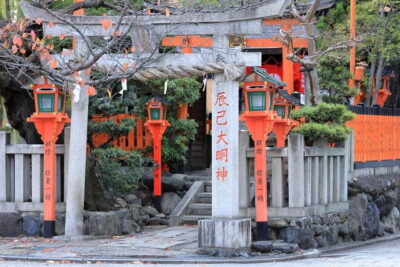 ★ 4.7Kyoto Geisha Walking Tour: Gion District & Hidden GemsFrom $253,273 reviews
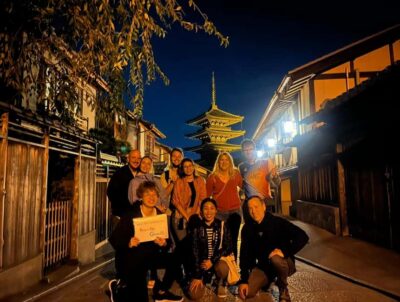 ★ 4.9Gion Magical Night Walking Tour with Geisha TriviaFrom $242,393 reviews
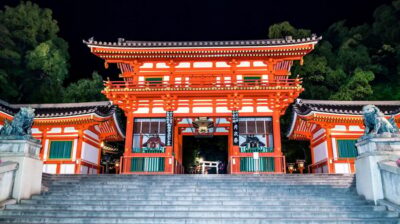 ★ 4.7Gion Geisha District Walking Tour – Stories of GeishaFrom $202,187 reviews
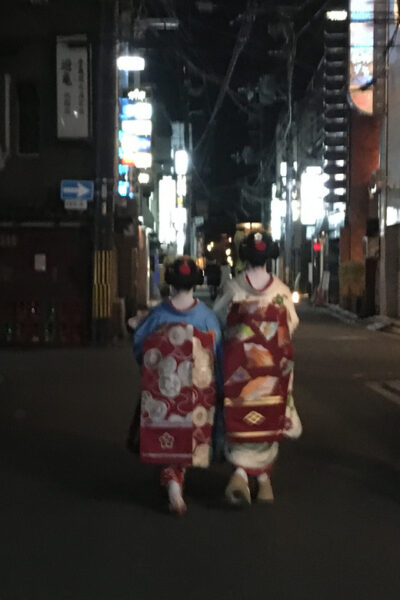 ★ 4.9Best of Kyoto: Gion, Geisha, Pagodas & CobblestonesFrom $242,058 reviews
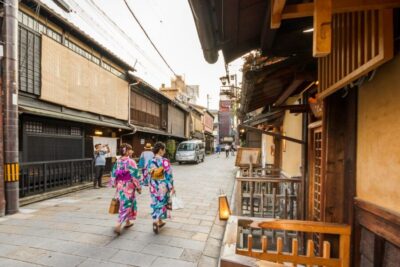 ★ 4.5Night Walk in Gion: Kyoto’s Geisha DistrictFrom $212,003 reviews
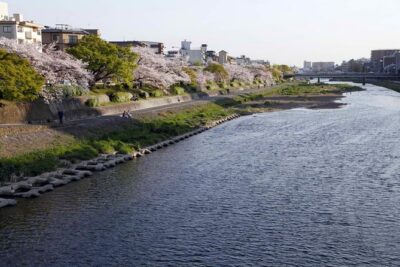 ★ 5.0Kyoto Night Foodie Tour in Gion (9+ dishes + 6 Sake tastings)From $1631,762 reviews
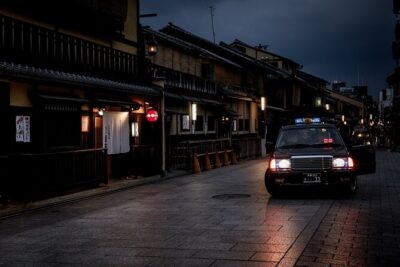 ★ 5.0Kyoto Gion Geisha District Walking Tour – The Stories of GeishaFrom $251,441 reviews
 ★ 5.0Kyoto Gion: 2-Hour Geisha Culture & History Walking TourFrom $231,186 reviews
Browse the lists this tour appears in