
Reviewed · GION & GEISHA DISTRICT TOURS
Kyoto Gion Night Tour: Discover Geisha District and Hidden Gems
Lantern light turns Gion into a different world. This Kyoto Gion Night Tour takes you through the geisha district after dark, with photo moments along the way. You also get professional photos during the tour, which makes it easy to remember the evening without fiddling with your camera.
I especially like the mix of scenes: the chance to see geisha or maiko around Hanamikoji Street, plus a calm shift to shrine and temple stops. One thing to consider, though, is that this is a walking tour, so comfortable shoes matter, and geisha sightings are never guaranteed.
Key highlights you should know
- Small group pace (max 20) that keeps things friendly during night walking
- Hanamikoji Street at night, a classic place where you might spot geisha and maiko
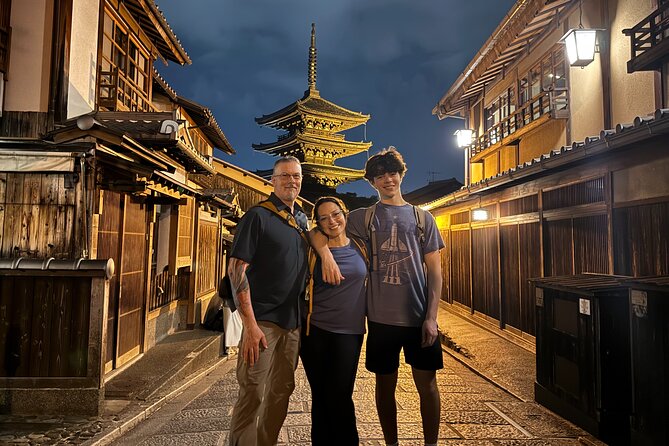
- Shrine and temple variety, including a nail-free wooden structure at Yasaka Pagoda
- Professional photos included, so you can enjoy the streets instead of tracking angles
- 1.5-hour schedule, built around easy evening viewing without dragging on
Walking Kyoto at 6:30 pm, why the night timing works
Kyoto feels different after dark. The streets you usually see in daylight become softer and more atmospheric, with lantern light giving Gion that old-Kyoto mood. This tour is built for that timing, starting at 6:30 pm, so you are seeing the area when it turns from sightseeing mode into evening rhythm.
The format is also practical. You are not trying to do everything. You are doing a focused evening walk that layers different experiences on one route: street life in Gion, a shrine stop for a meaningful prayer theme, then more iconic Kyoto views as the night goes on.
This is exactly the kind of evening plan that helps you understand the neighborhood, not just check it off.
You can also read our reviews of more evening experiences in Kyoto
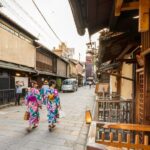

Price and value for a $26.06 evening walk
At $26.06 per person, this tour is in the budget-friendly range for Kyoto guided experiences, especially because you get a few things that usually add up fast on your own.
Here is what stands out for value:
- Admission fees for all temples and shrines are included, so you are not stopping to figure out ticket costs mid-walk.
- A local English-speaking guide comes with you, which matters in Kyoto, where small details can change the meaning of what you are looking at.
- Professional photos are taken during the tour, and that is a big deal if you want nice images without spending your whole evening shooting selfies.
What is not included is also clear: food and drinks are on you, plus personal expenses. That is normal, but it does affect how you should plan your evening. If you get hungry, you will need to handle it yourself, since the tour is primarily about walking and sights.
At 1 hour 30 minutes, the schedule fits well if you want a single evening activity that still leaves you time to keep exploring afterward.
Meeting point at Izumo-no-Okuni, and how to plan your evening
You start at the Statue of Izumo-no-Okuni, in Kawabatacho, Higashiyama Ward, Kyoto. The tour ends back at the meeting point, so it is a loop that keeps logistics simple.
A couple of practical notes that will help the tour go smoothly:
- This is a walking experience, and it lasts about 1 hour 30 minutes.
- The tour has a maximum of 20 travelers, so you are not stuck in a huge crowd shuffle.
- If you are late, you cannot join the tour and there is no refund. Kyoto timing matters, so build in buffer time.
One more smart move: since it ends back near where you start, you can plan your dinner or second stop after the tour finishes without needing a new transfer.
Stop 1: Hanamikoji Street, the lantern-lit chance for geisha and maiko
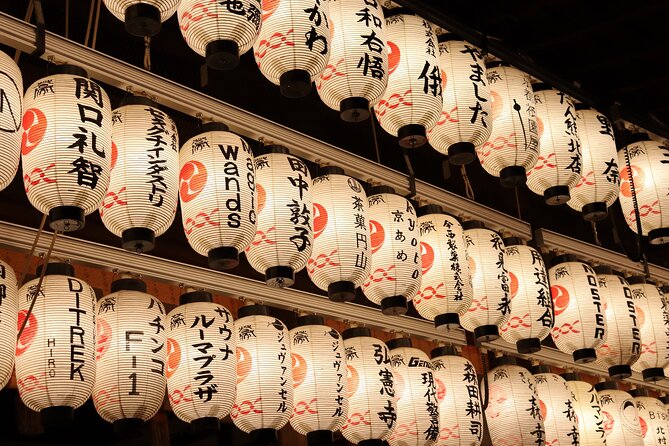
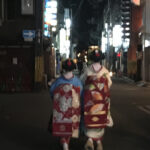
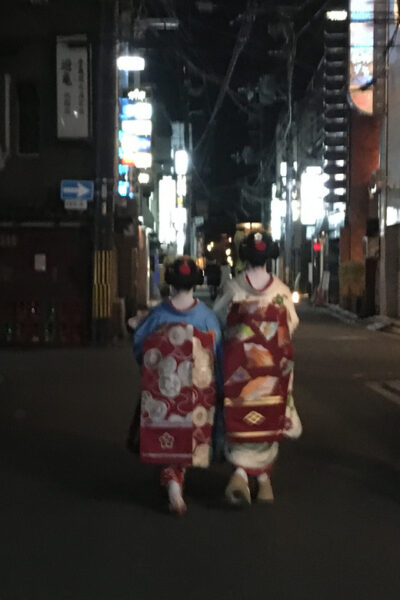
Your first main stop is Hanamikoji Street, in the Gion area. This is a famous name for a reason: it is associated with traditional teahouses and historic streetscapes, and you may have the chance to encounter geisha and maiko.
What I like about starting here is that it sets the tone instantly. You are in the right visual world early, when the night atmosphere is still fresh and the streets are easier to take in without rushing.
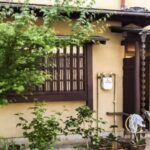
Also, Hanamikoji is described as having historic ambiance and wooden machiya houses. That detail matters because the street is not just a walkway. It is part of the old architecture you came to Kyoto to see.
Possible drawback: if you are expecting a guaranteed sighting, you may feel disappointed. The tour frames encounters as a maybe, so keep expectations flexible. Even without a sighting, the street itself is the point.
Stop 2: Gion district walking, where old Kyoto feeling takes over
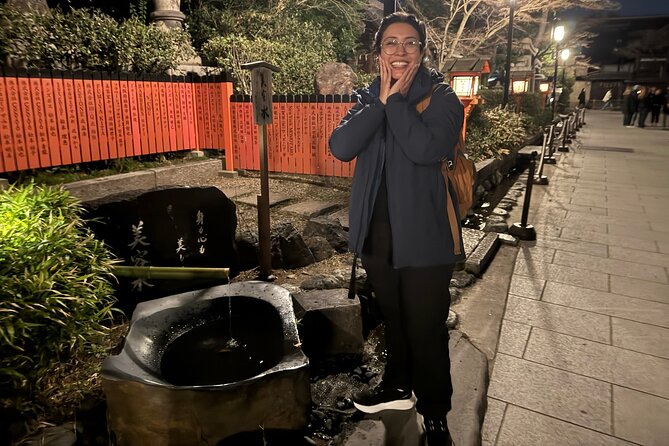
Next you spend about 20 minutes in Gion, Kyoto’s best-known geisha district. This stop keeps you in the same neighborhood mood, with wooden machiya houses, teahouses, and preserved historic streets.
This is the part where the tour shifts from one famous street to the wider district. If Hanamikoji gives you the immediate postcard scene, Gion walking helps you feel the broader layout and the way these streets connect.
A practical advantage here is that it is relatively easy to follow. You are moving through one concentrated area, guided by someone who can keep you oriented as you go from street to street.
What to watch for: look beyond the headline views. The tour description emphasizes preserved streets, so your best experience comes from slowing your attention a bit and noticing the architectural style as you pass.
Stop 3: Yasui-Konpiragu, a shrine stop with a relationship theme
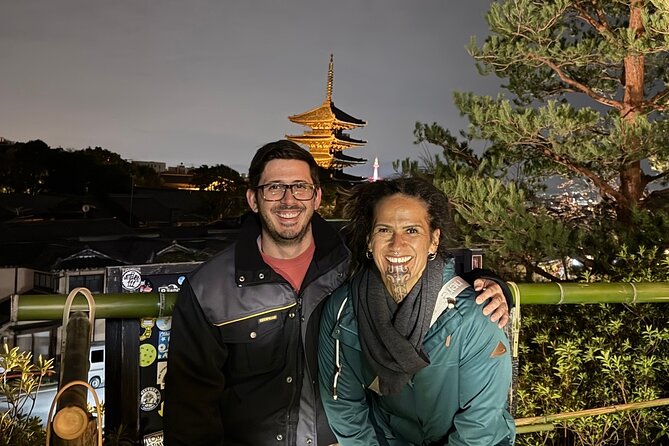
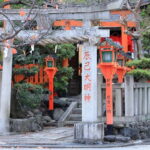
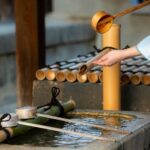
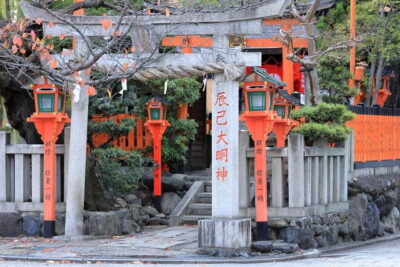
Then the tour takes a meaningful turn to Yasui-Konpiragu, a shrine known for severing bad relationships. People come to pray for the end of negative ties and to find new, positive connections.
Even if you are not religious, this kind of stop adds depth to a night out. You are not only looking at scenery. You are also seeing how this district holds beliefs and everyday hopes.
The time here is about 10 minutes, which is enough to pause and read the vibe without feeling like the evening stalls.
One consideration: if you prefer strictly scenic walking and zero spiritual stops, this is the part that may feel different. But it is also one of the most memorable, because it adds intent to the night.
Stop 4: Yasaka Pagoda at Hokanji, nail-free wooden wonder at night
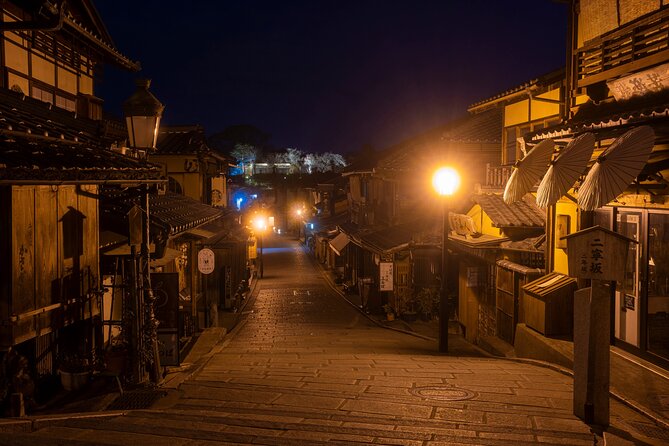
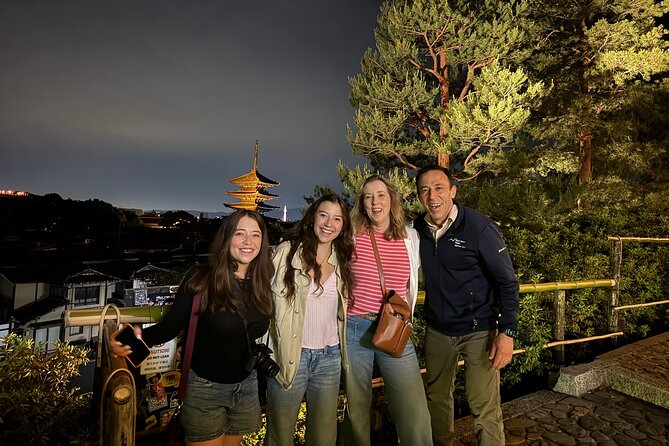
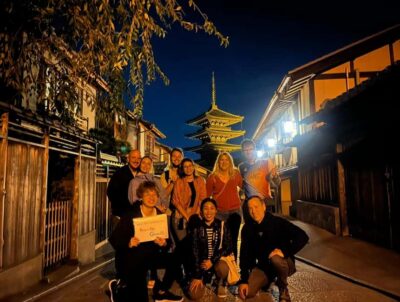
The next highlight is Yasakanoto, the Yasaka Pagoda (Hokanji temple). It is described as one of the oldest wooden structures in Japan, and the tour notes that it was built without nails.
This is a great contrast stop. Earlier you were in street life and district atmosphere. Here you get a large scale landmark that is hard to process at first glance, especially at night when scale feels more dramatic against darker surroundings.
The tour gives you about 15 minutes for this stop, so the aim is to absorb the structure and the surrounding views rather than rush through.
Possible drawback: if the area is crowded, you may not get the exact angle you want. But that is true of most famous Kyoto nighttime viewpoints. The best strategy is to let the guide position you, then take a moment for one calm look before moving on.
Stop 5: Sannenzaka and Ninenzaka, stone steps and old wooden shops
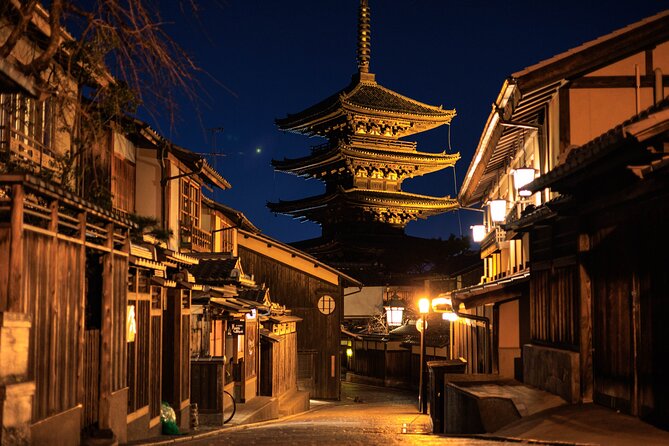
After the big landmark moment, the tour continues to Sannenzaka Ninenzaka, a traditional stone-paved path lined with souvenir shops and restaurants housed in historic wooden buildings.
The key word in the tour description is how it feels: walking along this path is like stepping back in time. That is exactly the type of experience that works well after dark, because the street textures and building shapes can feel more cohesive than they do in bright daylight.
The stop is about 20 minutes, long enough to enjoy the walking rhythm and to pick out a few storefront scenes without rushing.
One thing to consider: these are shopping streets, so it can be easy to lose time if you stop constantly. If you want photos, keep your timing in mind so you do not miss the later shrine finish.
Stop 6: Yasaka Shrine, prosperity and protection with 2,300 related shrines
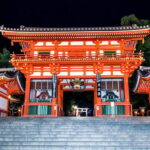
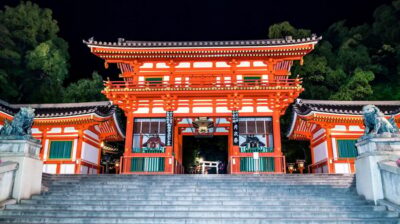
Your final stop is Yasaka Shrine, described as the headquarters of 2,300 related shrines throughout Japan. It is dedicated to gods of prosperity and protection, and the tour notes it has been an important part of Kyoto’s cultural life.
This ending makes sense. After Gion street scenes and architectural stops, you close on a major shrine that gives the evening a grounded finish. It also lets you reflect, because you started with the geisha district mood and ended in a space tied to protection and prosperity.
You get about 15 minutes here. It is enough time to look around and absorb the atmosphere without feeling like you need to do everything you might do in daytime.
The guide and the photos: what you gain from having someone lead
This tour includes a passionate local English-speaking guide, and that is more important than it sounds. In Kyoto, a guide helps you connect what you see with why it matters, especially around places tied to tradition and specific meanings.
From the guide experience that stood out, conversation felt easy and learning came through naturally, including cultural context in simple, talkable ways. One guide name you may encounter is Ikki, and the impression is that he is easy to talk to while explaining Japanese culture.
Then there are the professional photos. That is a practical inclusion. Night streets are not always easy for camera settings, and if you are walking, holding a phone up all the time gets tiring. Having someone take the photos helps you focus on the area and still leave with images you actually want.
Who this Kyoto Gion night tour suits best
This tour is a strong match if you want:
- A focused evening plan in Kyoto, not a full day commitment
- Gion at night with the chance to see geisha or maiko around Hanamikoji
- A mix of street atmosphere plus shrine and temple stops
- A guided experience where entrance fees are handled for you
- Professional photos included in the package
It may not be ideal if you want:
- A long, unhurried wandering day with lots of free time to shop or eat
- A fully guaranteed geisha sighting (the tour description sets this as a maybe)
- Zero walking, since it is designed around moving on foot
Practical tips to make the most of the 1.5-hour walk
A few small moves will improve your night a lot:
- Wear comfortable shoes, because the tour is designed as a walking experience with multiple stops.
- Plan your expectations around a chance to see geisha or maiko, not a promise.
- Bring your plan for food and drinks, since nothing is included and the tour is primarily sightseeing.
- Arrive early enough to start at the exact meeting spot near the Statue of Izumo-no-Okuni, since late arrivals can mean you cannot join.
If you do those things, the tour becomes an easy win: guided, efficient, and atmospheric.
Should you book this Kyoto Gion Night Tour?
Book it if you want a high value evening that combines Gion street scenes, shrine moments like Yasui-Konpiragu, and major landmarks such as Yasaka Pagoda. The price is reasonable for what is included, especially the entrance fees and the professional photos.
Skip it or think twice if you dislike walking, need meals built into your schedule, or you are only interested in one type of experience. This tour is a balanced route, and the best outcome comes when you enjoy switching gears from lantern-lit streets to shrine atmosphere.
If you are going to do just one organized night walk in the Gion area, this is a solid way to get your bearings fast and see Kyoto after dark.
FAQ
How long is the Kyoto Gion Night Tour?
It runs for about 1 hour 30 minutes.
What time does the tour start?
The start time is 6:30 pm.
Where do I meet the guide?
You meet at the Statue of Izumo-no-Okuni, Kawabatacho, Higashiyama Ward, Kyoto, 605-0076, Japan.
Is the tour walking-based?
Yes, it is designed as a walking experience with plenty of time on foot.
How many stops are included?
There are 6 stops, including Hanamikoji Street, Gion, Yasui-Konpiragu, Yasaka Pagoda (Hokanji temple), Sannenzaka Ninenzaka, and Yasaka Shrine.
Are admission fees included?
Yes, admission fees for all temples and shrines are included.
Are photos included?
Yes, professional photos are taken during the tour.
Is food or drinks included?
No. Food and drinks are not included.
How much does the tour cost?
The price is $26.06 per person.
What is the cancellation policy?
Free cancellation is available up to 24 hours in advance for a full refund. If you cancel less than 24 hours before the experience starts, you do not get a refund.
More Evening Experiences in Kyoto

More Tours in Kyoto

More Tour Reviews in Kyoto
Not for you? Here's more nearby things to do in Kyoto we have reviewed




Gion & Geisha District Tours, compared.
 ★ 4.7Kyoto Geisha Walking Tour: Gion District & Hidden GemsFrom $253,273 reviews
 ★ 4.9Gion Magical Night Walking Tour with Geisha TriviaFrom $242,393 reviews
 ★ 4.7Gion Geisha District Walking Tour – Stories of GeishaFrom $202,187 reviews
 ★ 4.9Best of Kyoto: Gion, Geisha, Pagodas & CobblestonesFrom $242,058 reviews
 ★ 4.5Night Walk in Gion: Kyoto’s Geisha DistrictFrom $212,003 reviews
 ★ 5.0Kyoto Night Foodie Tour in Gion (9+ dishes + 6 Sake tastings)From $1631,762 reviews
 ★ 5.0Kyoto Gion Geisha District Walking Tour – The Stories of GeishaFrom $251,441 reviews
 ★ 5.0Kyoto Gion: 2-Hour Geisha Culture & History Walking TourFrom $231,186 reviews
Browse the lists this tour appears in