
Reviewed · GION & GEISHA DISTRICT TOURS
Kyoto Gion Walking Tour for First Time Visitors
Gion makes sense fast with a good guide, and this one does it with small-group pacing plus map-free navigation as you move through the lanes. You will see the big names like Yasaka Shrine and Kennin-ji, but also the in-between streets that are easy to miss when you wander on your own.
This is a focused, about 2 hours route, so if you want to linger for long photo sessions or deep temple time, you may feel a bit rushed at the end.
Key things to know before you go
- Small-group size (max 15) keeps the streets comfortable and helps you hear the guide.
- Mobile ticket means less fuss right at the start.
- Free admission at the stops lets your money go mostly to guiding and context.
- Kennin-ji and Zen tea origins show a side of Gion beyond geisha-district photos.
- Yasaka Shrine, Hōkan-ji (Yasaka Pagoda), and Ninenzaka give you a well-rounded mix of Shinto, Zen, and classic Higashiyama streets.
- Good weather matters, since the tour runs as a walking experience.
Why this Gion walk works so well for first-time visitors
If it is your first day in Kyoto, you want two things: direction and perspective. This tour delivers both by threading together the landmarks in Gion and nearby Higashiyama so you understand how the neighborhood connects, not just what you are looking at.
The real win is the small-group format. In a big crowd, you spend your time dodging people and guessing where the guide went. Here, the pacing stays human, and you can actually follow along as you move from street to street. And because you are walking with an in-person guide, you are not stuck trying to decode Kyoto street names while buildings slide past at “one glance per block” speed.
I also like that the guide keeps offering context, not just directions. The best moment is when the “pretty street” turns into a “now I get why this is here” street. That kind of explanation makes later solo wandering much easier because you start recognizing the patterns: shrine locations near busy paths, temple calm tucked away from the main lanes, and the way Higashiyama streets feed into famous viewpoints.
One note to consider: this is a compact loop. You get a smart sampler, not an all-day sit-down. Think of it as orientation you can build on, not the final word on Gion.
You can also read our reviews of more walking tours in Kyoto
Price and value: what $20 buys you (and what it does not)
At $20 per person for an in-person guided walk, the value comes from what you cannot reliably DIY on day one: interpretation and route logic. The ticket is not paying for paid entrances. The stops are listed with free admission, so most of what you are buying is time with the guide, plus the ability to ask questions on the spot.
The tour also includes all fees and taxes, which matters because Kyoto can feel like a patchwork of “free until you hit the next door.” Here, your cost stays simple and predictable.
The one downside on the value side is that snacks are not included. This matters because you will be walking for about 2 hours, and shrine-temple afternoons can stretch depending on the exact pace of the group. If you have a low snack tolerance, I suggest bringing a small water bottle and something easy to eat before or after.
Meeting in Gion, then letting someone else do the navigation
You start at Kyoto Tourist Lounge Gion, listed at 557-4 Komatsu Cho, Pare Gion, 101, Higashiyama Ward, Kyoto. The finish is at Yasaka Shrine, 625 Gionmachi Kitagawa, Higashiyama Ward, Kyoto.
Because the tour ends at Yasaka Shrine, it is a convenient way to keep your day organized: you finish in one of the most central places for continued exploring. Also, the tour is marked as being near public transportation, which helps if you are juggling buses or trains that do not always arrive right when your map says they should.
You will use a mobile ticket, so have it ready on your phone. And since confirmation is received at booking, you can plan your first-day schedule without last-minute guessing.
One more practical note: the experience requires good weather. If conditions are poor, it can be canceled, and the operator will offer a different date or a full refund. That is a comfort for planning, because walking tours are always weather-sensitive in Kyoto.
The route, stop by stop, and how to get the most out of each one
Stop 1: Gion, where Kyoto’s classic streets do the talking
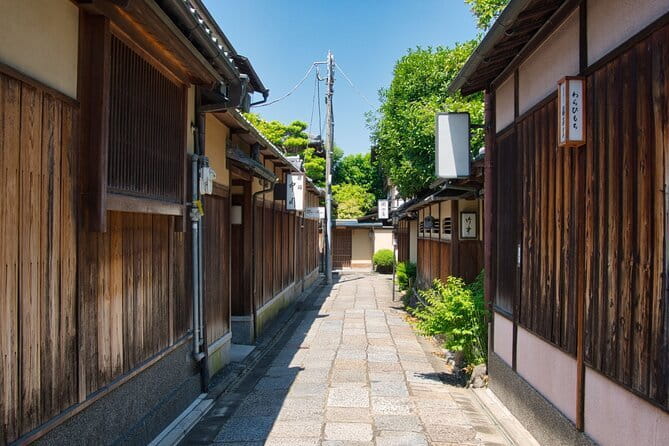
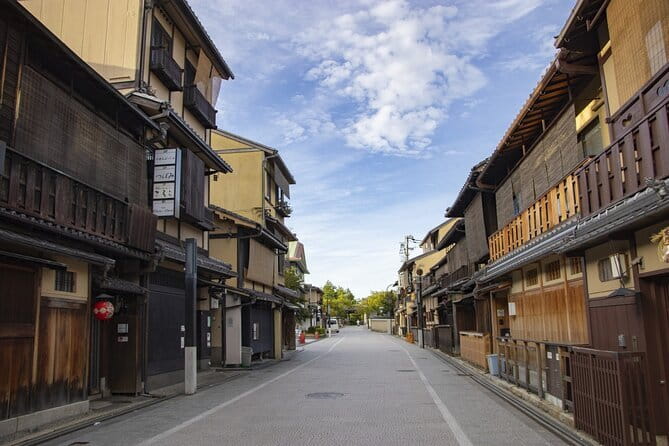
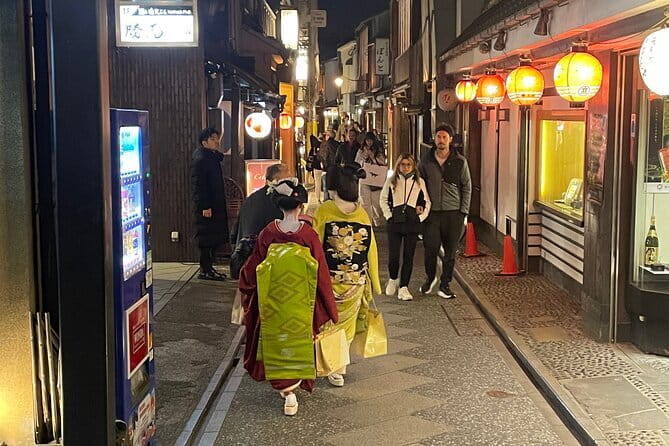
Gion is Kyoto’s best-known geisha district, famous for its preserved wooden machiya townhouses, traditional teahouses, and classic street texture underfoot. This stop is less about one single building and more about learning the “layout feel” of the area.
I like starting here because you get a foundation immediately. When you understand what a machiya looks like and how teahouse-lined lanes often sit off the main routes, the rest of the walk becomes clearer. Instead of seeing separate sights, you start seeing a neighborhood.
A practical consideration: Gion can get crowded. The good news is that your group is capped (up to 15 people), so you can usually stay oriented without getting squeezed into a human bottleneck.
Stop 2: Kennin-ji Temple, Zen calm plus tea culture roots
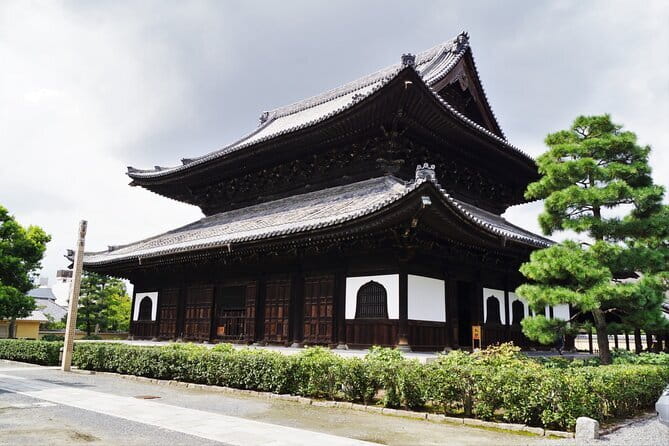
Kennin-ji is one of Kyoto’s oldest Zen Buddhist temples, founded in 1202 by the monk Eisai. The guide ties that history to Zen Buddhism and to the introduction of tea culture in Japan, which gives you a meaningful connection between “temple visit” and “everyday Kyoto.”
This stop is valuable because it balances the more theatrical reputation of the Gion district. You step from street-level Kyoto into a more contemplative space. And because Kennin-ji is near Gion, it feels like a contrast right inside the same neighborhood zone.
What to watch for: when you arrive, slow your eyes down. Temples reward the second look, not just the first postcard angle. Even if you only have a short window, you can still pick up the quiet rhythm of a Zen space.
Stop 3: Yasui-Konpiragu Shrine and the story behind its stones
Yasui-Konpiragu Shrine is a smaller Shinto shrine tucked near the energy of Gion. It is especially known for its enkiri/enmusubi stones, described as stones tied to themes of cutting ties and forming connections.
I appreciate this stop because it reminds you that Kyoto spirituality is not just “one big shrine to photograph.” It is also a set of small, specific practices tied to belief, symbolism, and local meaning.
Time here is short at about 15 minutes, so come with an intention. If you are the type who likes to read the visuals carefully, you will probably want to arrive with a bit of patience. If you rush, you may miss what makes the stones significant.
Stop 4: Hōkan-ji (Yasaka Pagoda), Kyoto’s five-story skyline marker
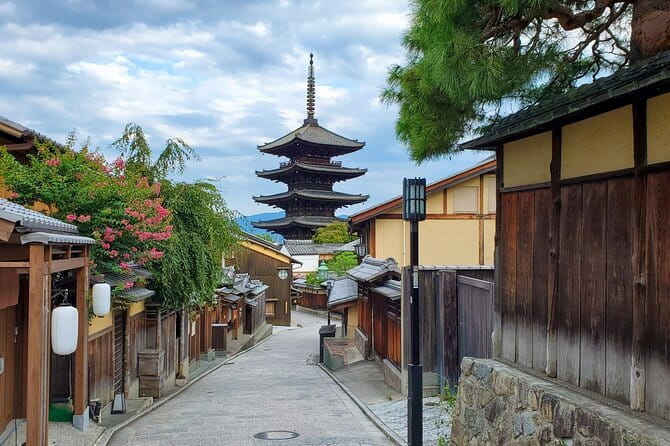
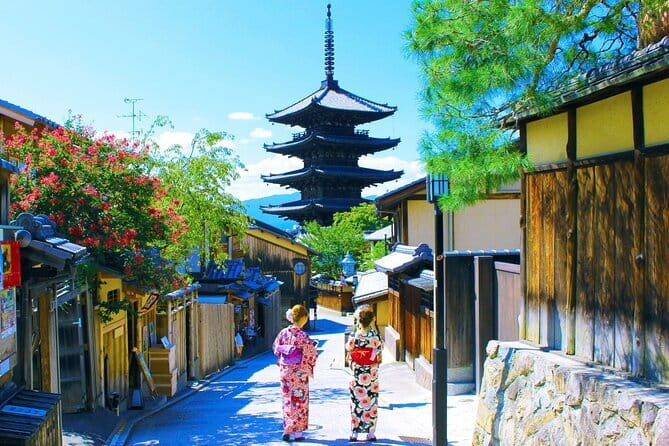
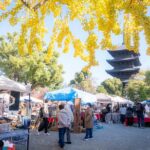
Hōkan-ji Temple is home to Yasaka Pagoda, one of Kyoto’s iconic landmarks. The pagoda is a graceful five-story structure, rising above the traditional streets around it.
This is a great photo and orientation moment. Even if you do not know Kyoto’s temple ranking systems, you usually recognize a pagoda instantly. It acts like a landmark pin in the Higashiyama district, so after you see it from street level, it is easier to imagine where you are in the broader area.
The only drawback: you are there for about 10 minutes, so it is “see it, notice it, move on.” If you want a long, careful look at architectural details, you may want to come back after the tour.
Stop 5: Ninenzaka, the preserved slope you can feel in your legs
Ninenzaka is a historic slope in the Higashiyama area, known for traditional architecture and a classic stone-paved climb. Even if you are not thinking about history, your body will notice the street texture and the gentle grade.
This stop matters because it is part street, part stage. When you walk slopes like this, you get a sense of how Kyoto’s older neighborhoods were built around movement between areas, not just around main roads. It is also the kind of street where tiny details reward slow walking, like the way buildings meet the street line.
You might find this portion more interesting if you like wandering with purpose. It is short, so it is easy to fit in, but it still gives you that “I see why this place is famous” moment.
Stop 6: Yasaka Shrine to close the loop in the heart of Gion
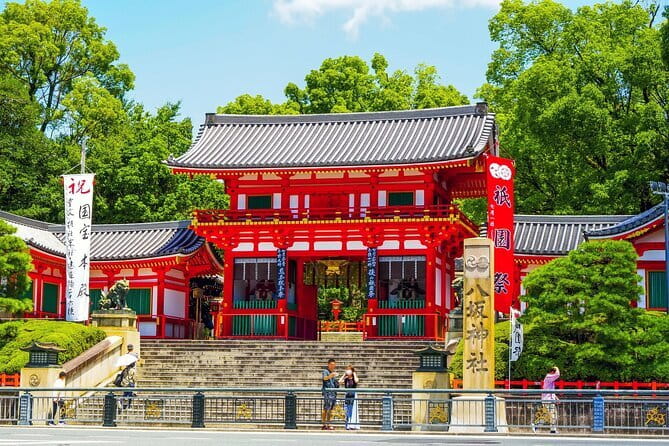
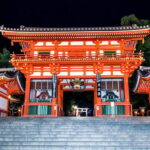
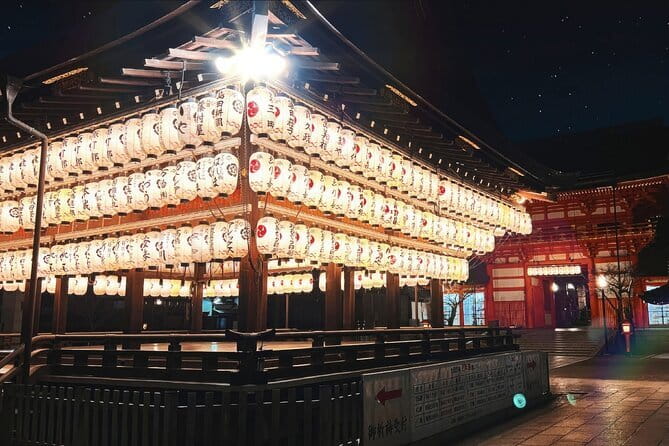
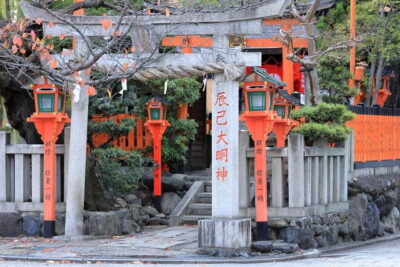
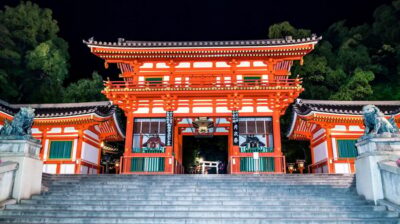
Yasaka Shrine, also called Gion Shrine, is one of Kyoto’s most important Shinto shrines. It is known for its vermilion gates and lanterns. Finishing here is smart, because it is a natural hub for continuing your day.
This final stop also helps you connect the dots. By the time you reach Yasaka Shrine, you have already seen Shinto symbolism at Yasui-Konpiragu, Zen calm at Kennin-ji, and the architectural landmark of Yasaka Pagoda. So the shrine does not feel random at the end. It feels like the anchor that ties the rest of the walk to Gion’s center.
Practical tip: give yourself a minute to look up and notice how lanterns and gates shape the street rhythm. When you catch that, Yasaka Shrine becomes more than a background for photos.
What the guide adds, especially if you love learning on the move
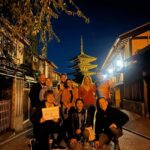
One reason this tour earns such strong feedback is the guide style. In particular, the guide named Jay is described as very informative, with interesting pictures that help the history click while you are walking. There is also mention of excellent English, plus a habit of using maps in a way that makes streets feel less confusing afterward.
I like guides who bring visuals. Kyoto is full of repeating styles and overlapping eras, so having a picture or a clear explanation prevents you from collecting random facts that do not connect. When the guide keeps pointing out what you are looking at, you finish the tour with a stronger mental map of Gion and Higashiyama.
If you have questions, this kind of guide also makes a difference. The tour’s structure gives you short stops and quick transitions, but it still leaves space to ask. That is what turns a walk into actual learning.
Comfort, timing, and who should book this
This is an easy-to-join experience for most travelers, and it is listed as allowing service animals. You should expect steady walking for about 2 hours, with brief stops at each location.
Who it fits best:
- First-time Kyoto visitors who want a confident starting point
- People who prefer small-group experiences over large bus crowds
- Travelers who like history explained as you go, not in a classroom setting
Who might want a different option:
- If you want a long, slow temple experience with lots of downtime
- If you are hoping for food as part of the tour, since snacks are not included
- If weather is unpredictable during your dates, because the tour needs good conditions
Should you book this Kyoto Gion Walking Tour?
Yes, if you want to turn your first look at Gion into a real understanding of what you are seeing. The combination of small-group pacing, free-entry stops, and a guide who explains what matters makes the $20 feel like money well spent, especially when it saves you from wandering in circles your first day.
Book it if you like your Kyoto with structure but still want freedom right after the tour, since you end at Yasaka Shrine and can keep going on your own. Skip it only if you hate short stops, want a food-focused itinerary, or you know you will need long time sitting inside temples.
If you are planning day one, this is the kind of tour that helps your Kyoto clicks faster.
FAQ

How long is the Kyoto Gion Walking Tour?
The tour lasts about 2 hours (approx.).
What is the price per person?
It costs $20.00 per person.
Do I need to buy separate tickets for the stops?
No. The tour includes all fees and taxes, and the listed stops have free admission.
Is there a mobile ticket?
Yes, the tour uses a mobile ticket.
What is the group size limit?
The maximum group size is 15 travelers.
Where does the tour start and end?
It starts at Kyoto Tourist Lounge Gion at 557-4 Komatsu Cho, Pare Gion 101, 605-0811. It ends at Yasaka Shrine, 625 Gionmachi Kitagawa, Higashiyama Ward, 605-0073.
What is included in the price?
Included are all fees and taxes, plus an in-person guide.
Are snacks included?
No, snacks are not included.
Is there free cancellation?
Yes. You can cancel up to 24 hours in advance for a full refund.
Is the tour affected by weather?
Yes. The tour requires good weather. If it is canceled due to poor weather, you will be offered a different date or a full refund.
More Walking Tours in Kyoto

More Tours in Kyoto

More Tour Reviews in Kyoto
Not for you? Here's more nearby things to do in Kyoto we have reviewed




Gion & Geisha District Tours, compared.
 ★ 4.7Kyoto Geisha Walking Tour: Gion District & Hidden GemsFrom $253,273 reviews
 ★ 4.9Gion Magical Night Walking Tour with Geisha TriviaFrom $242,393 reviews
 ★ 4.7Gion Geisha District Walking Tour – Stories of GeishaFrom $202,187 reviews
 ★ 4.9Best of Kyoto: Gion, Geisha, Pagodas & CobblestonesFrom $242,058 reviews
 ★ 4.5Night Walk in Gion: Kyoto’s Geisha DistrictFrom $212,003 reviews
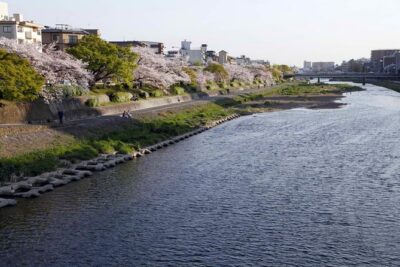 ★ 5.0Kyoto Night Foodie Tour in Gion (9+ dishes + 6 Sake tastings)From $1631,762 reviews
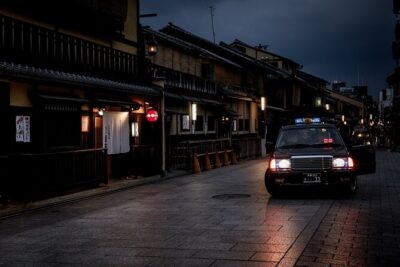 ★ 5.0Kyoto Gion Geisha District Walking Tour – The Stories of GeishaFrom $251,441 reviews
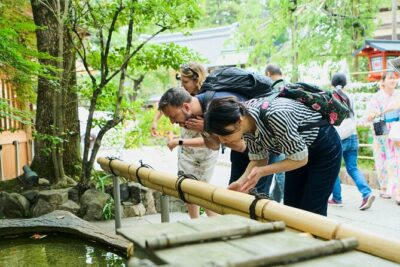 ★ 5.0Kyoto Gion: 2-Hour Geisha Culture & History Walking TourFrom $231,186 reviews
Browse the lists this tour appears in