
Reviewed · GION & GEISHA DISTRICT TOURS
Kyoto: Gion Walking Tour
Gion can feel like a movie set, but the story is real. I like this tour because it turns a famous neighborhood into an easy, human walkthrough of daily life, architecture, and Japanese traditions. You cover three hanamachi areas in just 2 hours, with time for questions that actually matter.
What I love most is the focus on the details you’d miss on your own, like machiya house features and the rhythms of geiko and maiko life. I also like the personal feel created by a group of up to 6, and the way guides such as Jose and Saskia stay energetic, answer repeats without rolling their eyes, and use an iPad for extra visuals.
One possible drawback to plan for: a maiko or geiko sighting cannot be guaranteed, and one popular street, Hanamikoji-dori, is not part of the walk.
Key points to know before you go
- Three hanamachi areas in 2 hours: Pontocho, Gion-Kobu, and Gion-Higashi
- A “questions welcome” tour: expect lots of back-and-forth conversation
- Historical neighborhoods you’d skip on your own: not just the postcard streets
- Architecture and daily-life explanations: machiya houses, routines, and cultural context
- No promise of sightings: you might see performers, but it is not guaranteed
- Cherry blossom timing changes the route: late March to early April gets an alternate path
Gion in 2 hours, and why the small group changes everything
Kyoto’s Gion is famous, but it is also easy to experience the “same photo, same street, same crowd” version of it. This tour helps you avoid that by using a tight route and a guide who keeps the pace steady and interactive. The walk clocks in at about 3.3 km (roughly 2 miles), so you get movement without turning it into a marathon.
The small group limit of 6 is a big deal here. You do not have to crane your neck over other people, and your guide can slow down when someone asks a question about something they see, not just something the schedule expects. In the feedback, people repeatedly mention the guides staying upbeat and making space for questions, including guides like Jose and Saskia who are known for answering the same curiosities patiently.
If you enjoy history as something you can point at, this format fits your style. You’re not stuck in one long lecture. You stop, look, talk, and connect what you see to why it developed the way it did.
You can also read our reviews of more walking tours in Kyoto
Your walk route: Pontocho to Gion-Kobu to Gion-Higashi
The route is designed to cover more than one “face” of Gion. In total, you visit 3 of the 5 hanamachi districts: Pontocho, Gion-Kobu, and Gion-Higashi. That matters because Gion isn’t one single vibe. Each area has its own street layout, sight lines, and relationship to landmarks like bridges and shrines.
Even better, the tour doesn’t confine itself to one famous corridor. It adds national historical preserved neighborhood streets and quieter stretches that people often walk past without knowing what they are looking at. If you like the feeling of getting your bearings fast in a new city, this route does that.
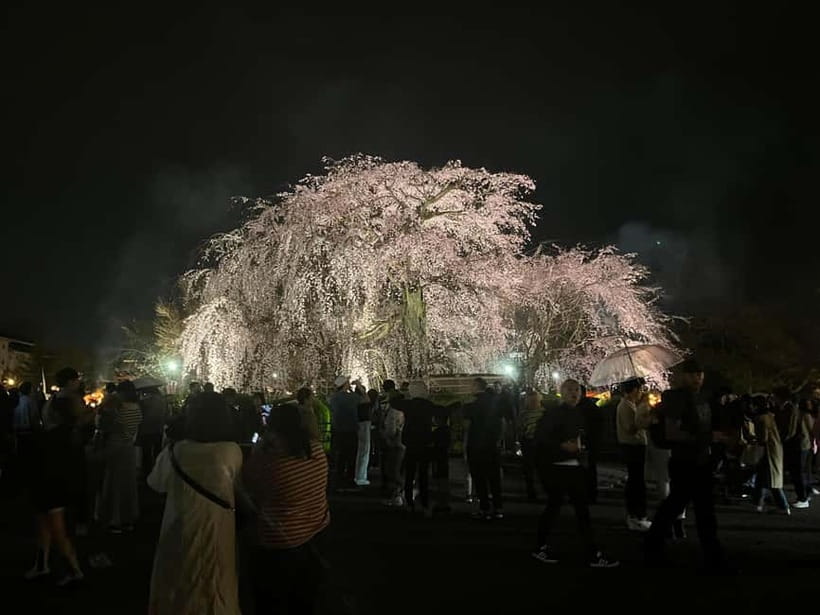
The tour also has a seasonal option. During late March to early April cherry blossom season, the route is adjusted to show blossoms around Gion. So you’re not stuck following the same path in every season.
Pontocho alleys and Kaburenjo: the Kamo River area comes alive
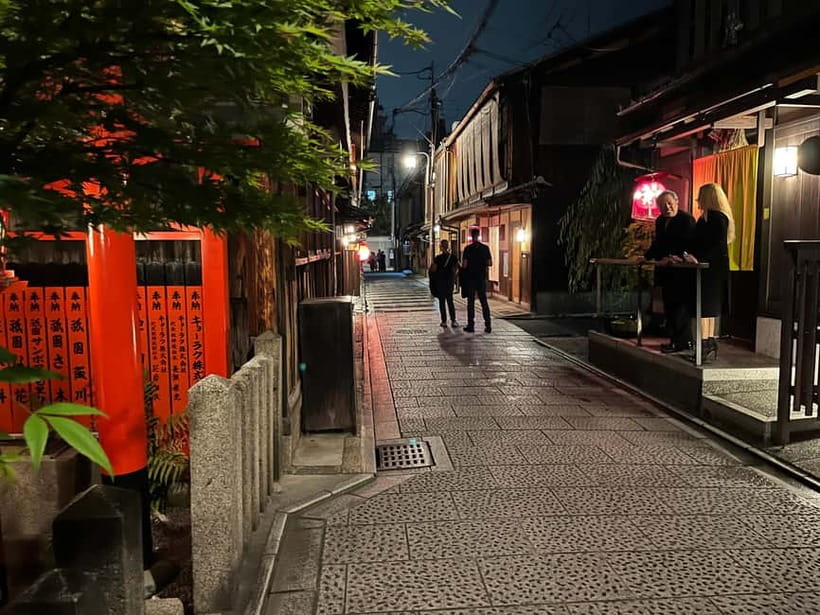
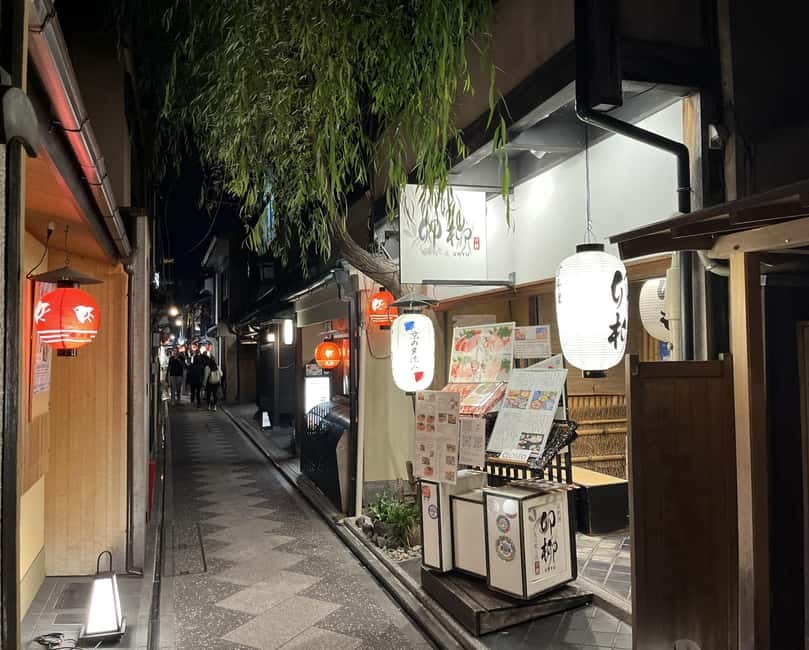
The walk typically begins with Pontocho Alley and Kaburenjo. This is where you get a sense of how Gion connects to water and evening life. The streets around Pontocho have that classic Kyoto look, but the value here is in the guide’s explanations of what you’re seeing and how it fits into the district.
This is also where you start picking up the “language” of Gion. You learn how to notice building shapes, the way lanes funnel pedestrians, and how the neighborhood layout supports traditional routines. Even if you’ve seen Gion in photos, this part helps you translate what the images are hinting at.
If you care about street-level atmosphere, you’ll likely enjoy this segment most. It’s sensory without being chaotic. And because it’s early in the route, it sets you up to understand the next turns.
Sanjo Ohashi, Kamo River landmarks, and the statues with stories
Next comes Sanjo Ohashi (the bridge) and the shift toward major lanes like Yamato-dori. Bridges matter in Kyoto because they are movement hubs and viewpoints, and guides often use them as natural “story checkpoints.”
You’ll also pass Kamo River areas and stop for Yagi-san and Kita-san statues (as listed on the route). Statues can feel like random decoration if you don’t know why they are there. Here, you should expect explanations that tie those markers into the district’s long timeline and local identity.
After that, the tour moves toward Gion-Kobu via Gion-Shinbashi-dori. This is where you begin seeing the neighborhood as a living system, not a themed display. The pacing keeps things from turning into a checklist. Your guide points out features and explains the meaning, then you get to watch the street work in real time.
Gion-Kobu and Shiragawa: machiya houses and hanamachi routine
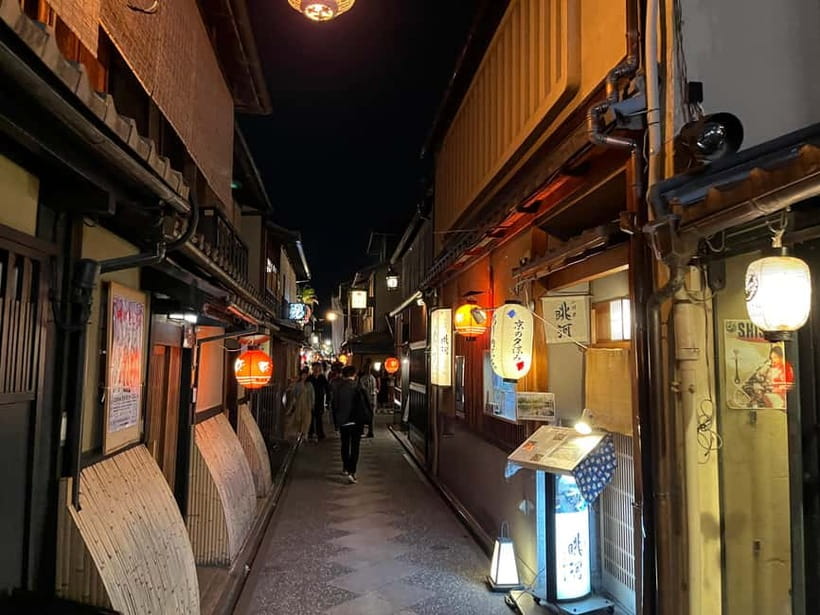
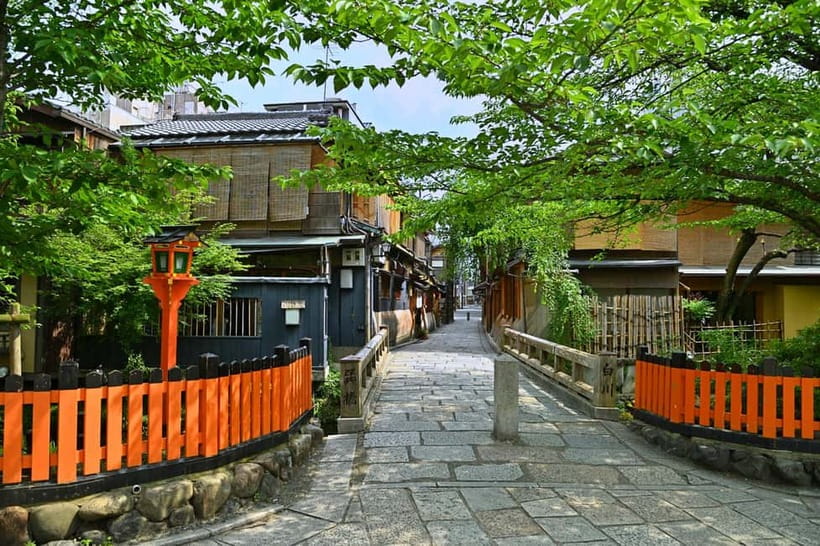
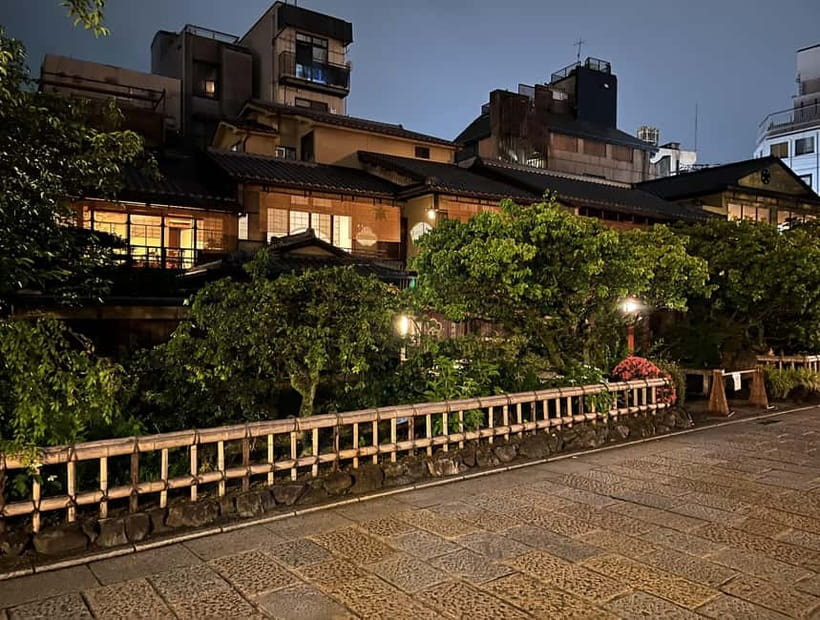
Gion-Kobu is often the heart of the “traditional Kyoto look.” On this tour, you spend time on Gion-Shinbashi-dori and then around Gion-Shiragawa. This is where the walk becomes more than scenery.
You’ll learn about the history of the area and the hanamachi concept, plus the practical side of maiko and geiko life style. The goal is not just to name roles. It’s to understand practices, activities, and routines that shaped the district over more than a millennium.
Machiya houses show up repeatedly here, and that’s the sweet spot for architecture lovers. Even without going inside buildings, you can learn to read details from the street: the shapes, materials, and how the streetfronts relate to privacy and daily use.
A key note: while the tour helps you understand the culture, it does not promise sightings. The instructions are clear that a maiko-san and/or geiko-san sighting cannot be guaranteed. So I recommend you go in for the stories and the streets, not just the hunt for a performer.
Tatsumi Jinja and the Tatsumi Hashi bridge stop
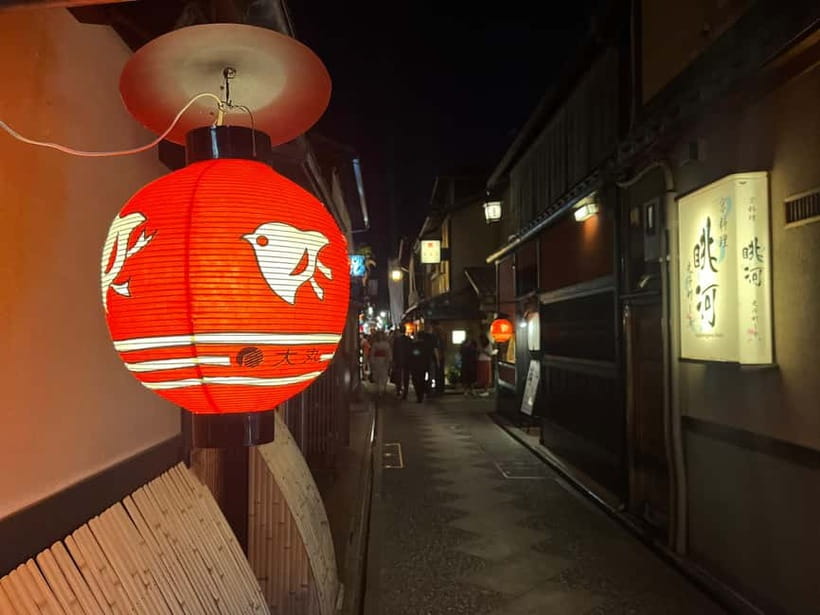
Midway through, you reach Tatsumi Jinja, then Tatsumi Hashi (bridge). This pair works well because shrines and bridges naturally slow people down. It’s a practical break from straight line walking, but it’s also a meaning stop.
Shrines in Kyoto often connect the human side of the city to its longer timeline, and your guide uses these stops to connect what you’re seeing to why Gion developed as it did. If you like culture that feels tied to everyday life, this section gives it context without turning too abstract.
Pay attention to small visual cues here, like how people move near the shrine space and the way the bridge changes the sight lines. Those are often the moments where the tour’s “look closer” style really shows up.
Gion-Higashi and Yasaka Shrine: where the name connects
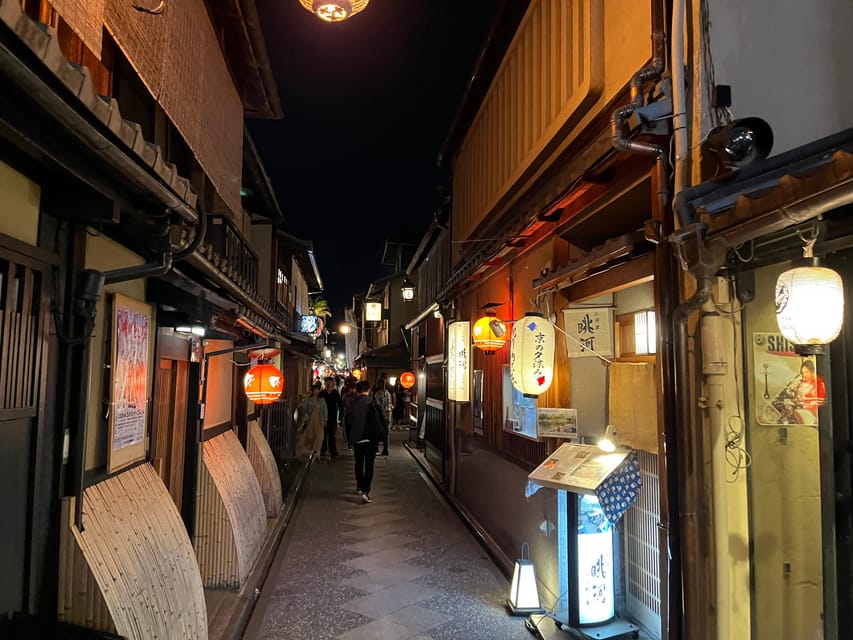
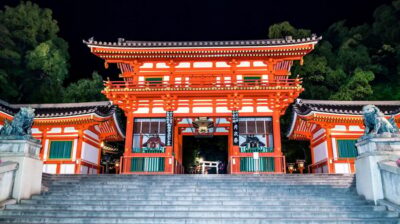
Toward the end, the route brings you to Gion-Higashi and Yasaka Jinja. The tour includes a visit to the formerly named Gion Shrine, which is now Yasaka Shrine. According to the tour notes, this is tied to the origin of the district name.
That origin detail is one of the reasons this walk feels more substantial than a basic stroll. A lot of city tours point at a shrine and move on. Here, the goal is to help you connect the geography to the name and the story.
If there is time, you may also get an explanation of the Gion Festival, described as one of Japan’s three most famous and important festivals. Since the tour states that the festival’s origins tie back to the Gion district more than 1100 years ago, this adds depth to what could otherwise be a quick look from the outside.
You should plan to enjoy this final stretch by slowing your pace. The last stop often turns into the part where your questions start getting more personal, like how traditions survive while the city around them keeps changing.
What the guide experience feels like in real life
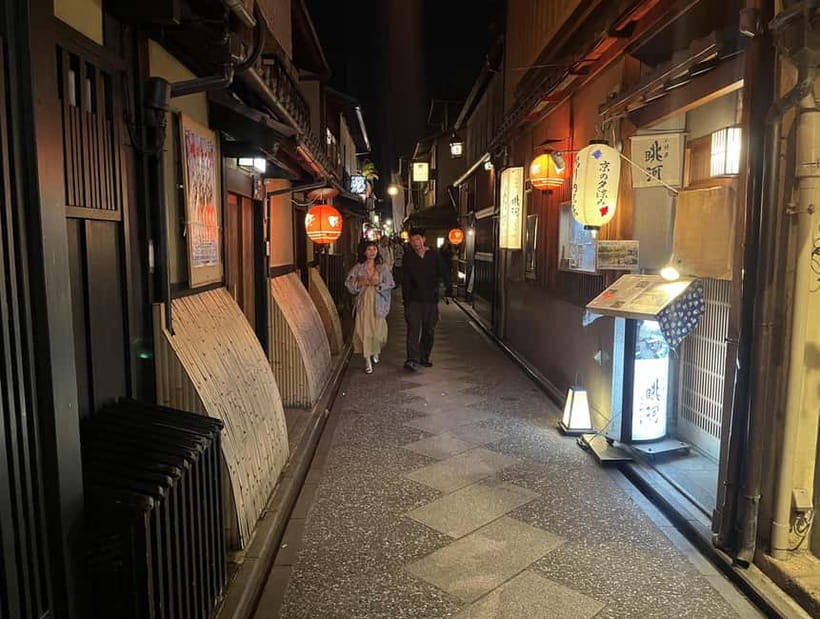
One thing that comes through strongly is how much space you get for questions. The tour description encourages you to ask a lot about anything you see or care about, and the reviews reflect that the guides keep answering, staying passionate, and adjusting their explanations to match your interests.
Guides also use tech in a way that supports the walk. Multiple reviews mention the guide using an iPad for videos and photos. That helps when you are looking at something that is hard to fully understand at street level. It can also help with historical comparisons, like how the city area changes over time.
Languages offered are Spanish, Dutch, French, and English. That means you can pick a guide who can keep the conversation flowing naturally, not just read off a script.
And while you’re not guaranteed to see maiko or geiko, a good guide still helps you recognize what you’re looking for if you do spot something. Even if you miss the performers, you leave with a better sense of what the district is designed to support.
Price and value: $35 for a focused, guided “Kyoto context” walk
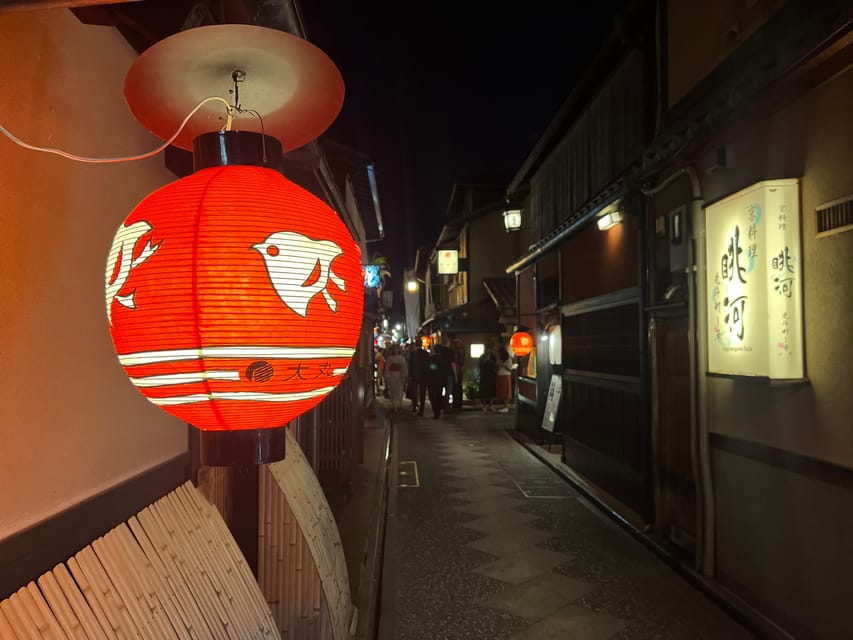
At $35 per person for 2 hours, this isn’t a bargain tour, but it also isn’t padded. You’re paying for a guide, a small group, and an itinerary that hits multiple hanamachi areas plus shrine context in one compact walk.
What makes it feel like good value is the way the time is spent. Stops happen often enough that you get frequent explanations, and you do not waste the walk time repeating basics that you can read on a sign. The distance stays reasonable, so you’re not paying for transportation you never needed.
Another value point: the tour is private in feel even when it is not fully private. With a maximum group size of 6, you are far more likely to feel like the guide can shape the pace around your questions. Several reviews mention cases where the group got even smaller and the tour felt like a close chat with someone who lives and loves Kyoto.
The only “value watch” item is that there are no amenities provided. That means you should bring your own water and plan your comfort. But that’s normal for a city walking tour, and it is easy to handle with a good prep list.
Small practical tips so you enjoy the whole route
Here’s how to make the walk smoother. First, bring comfortable shoes. The route is only 3.3 km, but you’ll want grip and cushioning, especially if you hit slick pavement.
Second, pack a sun hat and sunscreen, and don’t forget an umbrella. Kyoto weather can change fast, and the itinerary is outdoors most of the time.
Third, bring water. The pace includes stops, but you still walk for two hours.
Finally, set your expectations about what you will not get. Hanamikoji-dori is not included. If that street is your top photo target, you’ll need another plan in addition to this tour.
Who this Kyoto Gion walking tour is best for
This is a strong fit if you want:
- A guided way to understand hanamachi and the difference between districts
- A culture-first walk where architecture and routines get explained
- A small group experience where you can ask questions in real time
- A short, efficient introduction that works even if you only have part of a day in Kyoto
It may be less ideal if you’re looking for a checklist of Instagram stops only, or if you want food included. The tour provides no amenities, so you’ll need to plan meals separately.
And if your main goal is to guarantee a maiko or geiko sighting, keep it flexible. The tour explicitly says sightings can’t be guaranteed, even with the best guide.
Should you book this Gion walking tour?
Book it if you like being guided through street-level details and you want context fast. For $35, you get a compact route that covers Pontocho, Gion-Kobu, and Gion-Higashi, plus shrine context at Yasaka Shrine. The format also rewards curiosity. If you tend to ask why things are there and how traditions work, you’ll likely feel in good hands with guides such as Jose or Saskia who are praised for energy and patient answering.
Skip it or pair it with something else if your top priority is specifically Hanamikoji-dori, or if you’re expecting amenities or guided shopping. This is a walk that teaches you to see, not a walk that hands you everything on a plate.
If you want Kyoto to click in your head, this is a solid way to do it.
FAQ
How long is the Kyoto Gion Walking Tour?
The tour lasts about 2 hours.
What areas of Gion will I visit?
You will visit three hanamachi areas: Pontocho, Gion-Kobu, and Gion-Higashi.
Which stops are included during the walk?
The route includes Pontocho Alley, the Kaburenjo area, points around the Kamo River, Sanjo Ohashi, Yamato-dori, Gion-Kobu stops (including Gion-Shinbashi-dori and Gion-Shiragawa), Tatsumi Jinja, Tatsumi Hashi, then Gion-Higashi and Yasaka Jinja.
Is Hanamikoji-dori included?
No. Hanamikoji-dori is not included in the itinerary.
Will I see a maiko or geiko?
A maiko and/or geiko sighting cannot be guaranteed.
How big is the group?
The tour is limited to a small group size of up to 6 participants.
Where do I meet the guide?
Meet the guide in front of the Disney Store – Kyoto Shijo-Kawaramachi. The guide will be sitting and holding an iPad with a Get Your Guide and Kyoto Gion Guided Walking Tour image.
More Walking Tours in Kyoto

More Tours in Kyoto

More Tour Reviews in Kyoto
Not for you? Here's more nearby things to do in Kyoto we have reviewed



Gion & Geisha District Tours, compared.
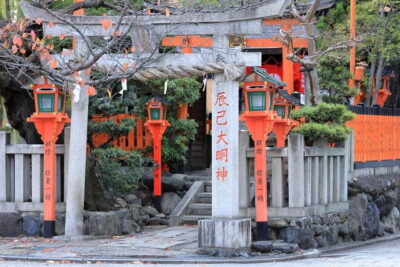 ★ 4.7Kyoto Geisha Walking Tour: Gion District & Hidden GemsFrom $253,273 reviews
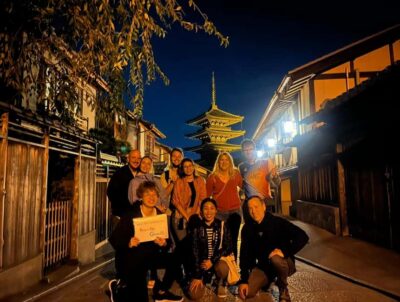 ★ 4.9Gion Magical Night Walking Tour with Geisha TriviaFrom $242,393 reviews
 ★ 4.7Gion Geisha District Walking Tour – Stories of GeishaFrom $202,187 reviews
 ★ 4.9Best of Kyoto: Gion, Geisha, Pagodas & CobblestonesFrom $242,058 reviews
 ★ 4.5Night Walk in Gion: Kyoto’s Geisha DistrictFrom $212,003 reviews
 ★ 5.0Kyoto Night Foodie Tour in Gion (9+ dishes + 6 Sake tastings)From $1631,762 reviews
 ★ 5.0Kyoto Gion Geisha District Walking Tour – The Stories of GeishaFrom $251,441 reviews
 ★ 5.0Kyoto Gion: 2-Hour Geisha Culture & History Walking TourFrom $231,186 reviews
Browse the lists this tour appears in