
Reviewed · KYOTO CRAFT & CALLIGRAPHY WORKSHOPS
Kyoto: Ikebana (Japanese Flower Arrangement)
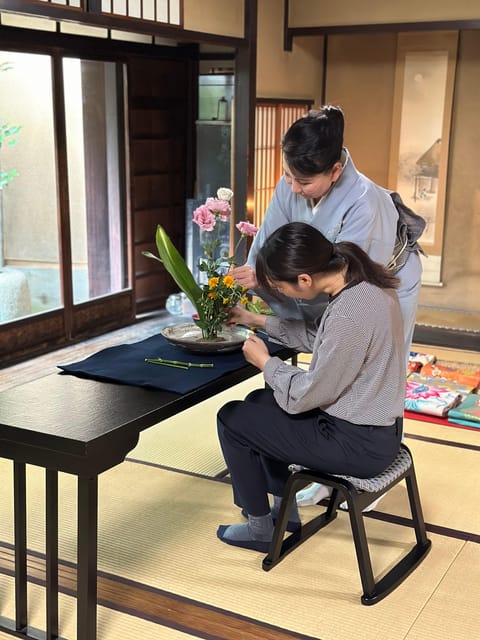
Your hands learn quiet Kyoto art. In a 90-minute ikebana lesson at Tondaya, you turn seasonal stems into a photo-ready arrangement, then step into a 140-year-old machiya with stories of daily Kyoto life.
I love that you get help from an ikebana master through the basics, including how the style aims for harmony between nature and the space humans create. I also like that your finished work gets displayed in front of the garden, so you can slow down and take pictures without rushing out the door.
One possible drawback is value for time: at $122 per person for 90 minutes, you should expect a focused, efficient lesson, not a long lecture. If you are craving a lot of rules, theory, and a slower demonstration, keep your expectations realistic and ask questions early.
Key things to know before you go
- Beginner-friendly ikebana with seasonal flowers and all the tools provided
- An ikebana master guides you step by step (English and Japanese supported)
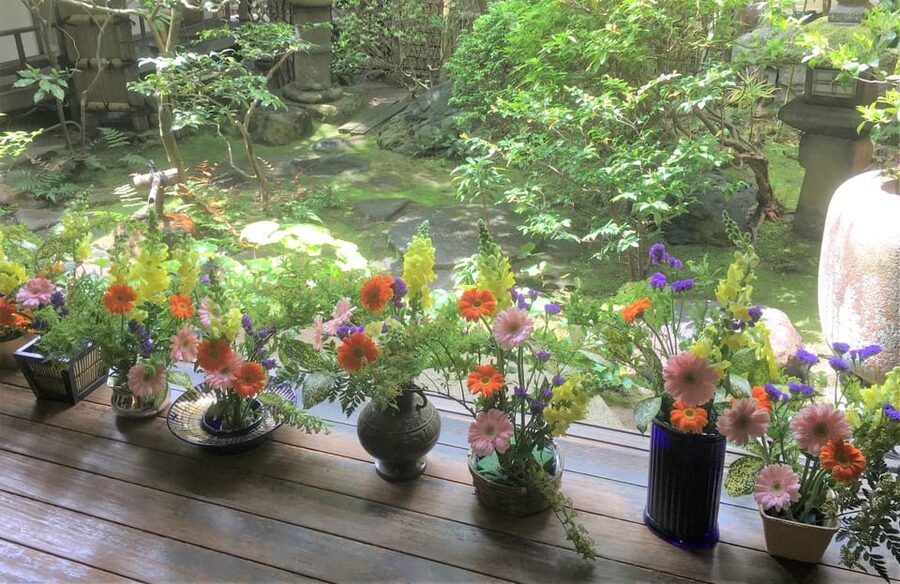
- Your arrangement is displayed in front of the garden for easy photo moments
- A machiya experience at Tondaya in Nishijin, a 140-year-old Kyoto townhouse
- Socks are mandatory and bare feet are not allowed inside
- Private group format, which usually means less waiting and more attention
Kyoto Ikebana at Tondaya: what this class really feels like
Kyoto has a way of making simple things feel precise. This ikebana lesson does that. You start with stems and tools, but the goal is not just making something pretty. You’re learning a way of arranging that treats nature as a partner to the human space around it.
The experience takes place at Tondaya, the Nishijin Japanese Cultural Experience Museum. It is in a traditional machiya, a type of Kyoto townhouse. That matters. You are not studying flowers in a sterile workshop. You are surrounded by the textures and rhythms of an older Kyoto setting, which makes the lesson feel grounded, not staged.
You also get a clear cultural storyline. Ikebana is traced back to a 15th-century moment in Kyoto, when a flower arrangement was admired for its beauty and elegance. It was different from religious offerings, because it was designed to express harmony between nature and the human space. That framing is what the workshop leans on while you make your own arrangement.
You can also read our reviews of more tours and experiences in Kyoto Prefecture.

The 90-minute flow: how the time is used
This is a tight, 90-minute experience, so the structure tends to be efficient. Here is how the day usually unfolds based on how the session is designed.
First, you meet at Tondaya, located at 697 Ishiyakushichō in Kamigyo Ward. When you arrive, plan to settle in quickly. You will be expected to stay on the schedule, and being on time helps you avoid cutting into the hands-on part.
Then you get the lesson. The instructor introduces ikebana, including the basic ideas behind the arrangement style. After that comes the practical section. You work with seasonal flowers and use the tools provided, with guidance from an ikebana master. The goal is a completed arrangement that reflects what you learned, not a partially started project you abandon at the end.
Once your piece is done, your arrangement is displayed in front of the garden. This is one of the best parts for most people, because it creates a real viewing moment. It also makes photos easier than trying to shoot in a cramped room while you hold your work. You get a visually pleasing setup right there.
After the ikebana portion, you move into the cultural side of the visit: a guided walkthrough of Nishijin Lifestyle Museum Tondaya. This machiya is about 140 years old, and it is designated as a culturally significant landmark by Kyoto City Government. The staff share historically valuable artifacts and stories, which turns the visit into more than just a craft class.
Meeting the ikebana master: instruction you can actually use
What makes this class worth your time is the way the teaching is structured for beginners. You are not expected to arrive knowing terminology or having previous arranging experience. The format is built for learning the basics and then applying them right away.
You will work with seasonal flowers. That choice is practical and artistic. Seasonal stems behave differently, and part of learning ikebana is understanding how materials change the shape you can create. The instructor’s guidance helps you avoid the common beginner trap: forcing flowers into a design instead of letting the stems guide the composition.
The master also helps you interpret the core idea, harmony between nature and human space. Even if you do not memorize the full theory, you start to understand it physically. Your arrangement becomes less about height for height’s sake, and more about balance, spacing, and flow.
One note from the reality check side: the reviews show that quality can vary by how the session is run. Some people felt they got clear explanations and step-by-step help. Others wanted more rules, more theory, and more instructor demonstration. If you are someone who learns best by watching a full example before touching tools, you may want to ask for an extra explanation early in the lesson. You can also ask how the instructor is deciding the structure as they guide you.
Nishijin machiya tour at Tondaya: why this stop matters
The ikenbana lesson is the headline. The machiya visit is what makes the whole afternoon feel distinctly Kyoto.
Tondaya, in Nishijin, is a 140-year-old traditional Kyoto townhouse. That age matters. Machiya spaces were built for daily life, with layouts and materials that shape how people move through the home. Walking through a preserved setting makes the ikebana concept easier to grasp, because you start seeing harmony as something tied to real architecture, not just a design term.
The museum portion focuses on historically valuable artifacts and stories. Even if you are not into museum details, you will probably appreciate the atmosphere. It gives your flower arrangement lesson context, turning your finished work into part of a broader living heritage rather than an isolated souvenir.
Staff members are experienced across multiple traditional arts, including kimono, tea ceremony, calligraphy, and ikebana. Not every element may be taught in your specific session, but it helps explain the care in the experience. It also means that if you have questions about Japanese arts and etiquette, you might get helpful answers.
Some groups may also have an optional kimono add-on at an extra cost, with a short extra tour. If this is offered during your time slot, it can be a fun way to connect clothing and craft traditions. Just keep in mind it is optional, so do not count on it.
Price and value: what $122 buys you, and what to watch for
The price is $122 per person for about 90 minutes. On paper, that can look steep, and it can be. Whether it feels fair comes down to how hands-on and explanatory the lesson is for your group.
Here is the value logic I use:
- You are paying for a true instructor-led lesson with an ikebana master. That is not the same as watching a video and arranging on your own.
- Materials are included, including seasonal flowers and tools. That helps justify part of the cost.
- The entrance fee is included, and you also get the machiya museum experience with guided stories.
- You get a completed arrangement displayed in front of the garden, which adds to the experience beyond just going home with supplies.
So when the instruction is clear, and you get genuine coaching through the structure of the arrangement, the class feels worth it. When the session feels too brief, or when explanations are thin, the same price can feel painful.
If you want to protect your value, go in with the right expectations: this is a guided craft lesson, not a multi-hour art course. Ask questions early. If you want more theory, tell the instructor you would like the basic rules explained clearly. In a short format, clarity beats length.


What to bring: the socks rule and comfort tips
This is one of those details that can make or break your comfort level. You should bring socks. Bare feet are not allowed. You are also asked not to wear stockings or tights.
That means you want socks that are clean, comfortable, and not too thin. You will likely be seated or standing briefly while working on your arrangement, so pick something that feels good for the full 90 minutes. If you are traveling and forgot socks, you might end up scrambling at the last minute, and that is avoidable stress.
For photos, you will want to be ready to stand and move a bit when your arrangement is displayed in front of the garden. Bring a camera grip or steady phone stance if you tend to shake when you shoot.
Best fit: who will enjoy this most in Kyoto
This experience tends to fit travelers who want a hands-on Kyoto memory with a real skill component.
You will probably love it if:
- You are a beginner and want guided instruction, not guesswork
- You like traditional crafts and want to understand the idea behind the look
- You enjoy photo-friendly moments, especially when the setting is authentic
- You want something calmer than big-sightbook sightseeing
It may be less ideal if:
- You want an extremely long, theory-heavy class with lots of demonstration time
- You are someone who needs very detailed rules before you start arranging
- You are sensitive to sessions that feel fast or tightly scheduled
The private group format can be a big plus here. Less crowd pressure usually means you can ask a question without feeling rushed, and you get more direct attention while you arrange.
Should you book Kyoto Ikebana at Tondaya?
If you want a beginner-friendly ikebana lesson in a real machiya setting, I think this is a strong choice. The combination of a guided arrangement, included materials, and a cultural museum tour gives you more than just a quick craft activity. The garden display for photos is also genuinely useful, because it creates a finished, scenic moment.
I would book it with one mindset: you are buying a focused lesson and a cultural stop, not a full art school course. If you arrive ready to learn in a short time and you ask questions while you work, you are likely to leave with both a beautiful arrangement and a better understanding of what ikebana is trying to express.
If you are very theory-driven and want long demonstrations and lots of rules, consider reaching out before you go or arriving with a list of questions. With the tight timing, the clarity you receive early on is what will determine whether the experience feels like a great value or a frustrating one.
FAQ
Where do I meet for the Kyoto Ikebana experience?
Meet at Tondaya – Nishijin Japanese Cultural Experience Museum, 697 Ishiyakushichō, Kamigyo Ward, Kyoto, Japan.
How long is the ikebana lesson and tour?
The experience duration is 90 minutes.
How much does it cost?
The price is $122 per person.
Is this a private group or shared activity?
It is listed as a private group.
Is the lesson designed for beginners?
Yes, it is positioned as an ikebana experience for beginners.
What languages are available for the instructor?
The instructor provides English and Japanese.
Are materials included?
Yes. Materials, including flowers and tools, are included, along with the entrance fee.
What should I bring?
You should bring socks.
Are bare feet allowed?
No. Bare feet are not allowed, and you should wear socks during your visit.
Is there a minimum number of participants?
Yes. Reservations must be made for a minimum of two participants.
More Tour Reviews in Kyoto Prefecture
Not for you? Here's more nearby things to do in Kyoto Prefecture we have reviewed

Kyoto Craft & Calligraphy Workshops, compared.
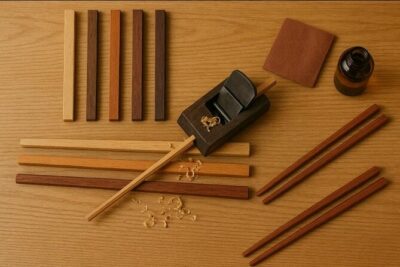 ★ 5.0Chopsticks Making Workshop in Gion with Engraving OptionFrom $15958 reviews
 ★ 4.8Authentic knife making experience at a blacksmith in KyotoFrom $154350 reviews
 ★ 5.0Calligraphy class at Buddhist temple in city centerFrom $55167 reviews
 ★ 5.0Roketsu dyeing experience: M course Roketsu Dyeing ExperienceFrom $25163 reviews
 ★ 4.9Japanese Archery Workshop with Experienced InstructorFrom $38132 reviews
 ★ 4.8Japanese Calligraphy ClassFrom $5189 reviews
 ★ 5.0TAIKO, Japanese Drum Experience from KyotoFrom $11586 reviews
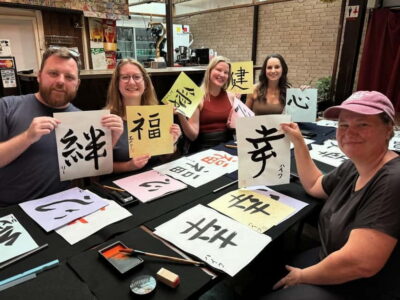 ★ 4.7Japanese Calligraphy WorkshopFrom $3284 reviews
Browse the lists this tour appears in