
Reviewed · KINKAKU-JI & GOLDEN PAVILION TOURS
Kyoto: Kinkaku-ji Temple & Serene Garden Guided Tour with Tickets
Gold and chanting in one Kyoto loop. This guided tour strings together two UNESCO World Heritage temples, balancing the showpiece Kinkaku-ji with the quieter Ninna-ji in about three hours. I like the tight focus, because you get the meaning behind what you’re seeing, not just the postcard version.
I also love the small-group feel and the human moments, especially the monk-led time inside Ninna-ji’s rarely opened space and the Q and A. One thing to consider: parts of the Ninna-ji visit can shift due to temple circumstances, so it is not always a perfectly identical lineup every day.
Key things to know before you go
- Two UNESCO temples in a short window: Kinkaku-ji first, then Ninna-ji, both with admission tickets included.
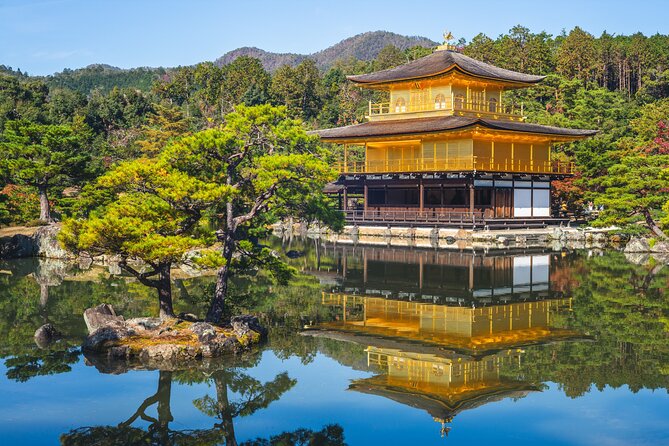
- Golden Pavilion details beyond the main view: You see key spots like the Shariden and Karamon Gate, plus several named halls and structures.
- Rare access at Ninna-ji: You can enter the Main Hall (often called Kondo Hall in temple context) and join a sacred chanting session led by a monk.
- A ritual you can actually watch: At the Sutra Hall, you get to see and interact with the rotating sutra shelf.
- Guides can really steer the day: Reviews mention guides like Ellie and Eriko as friendly, fun, and strong at explaining Buddhist practice in clear English.
- Small group size: Maximum of 7 travelers, which helps you move smoothly and ask questions.
Why this Kyoto pairing works so well
Kyoto can feel endless if you try to do everything alone. This tour is designed like a smart sampler: Kinkaku-ji gives you the dramatic wow factor, and Ninna-ji shifts the mood into something calmer and more spiritual. You are not just hopping between famous sites, either. Your guide connects the temples to bigger themes, like how religious spaces reflect power, prestige, and devotion.
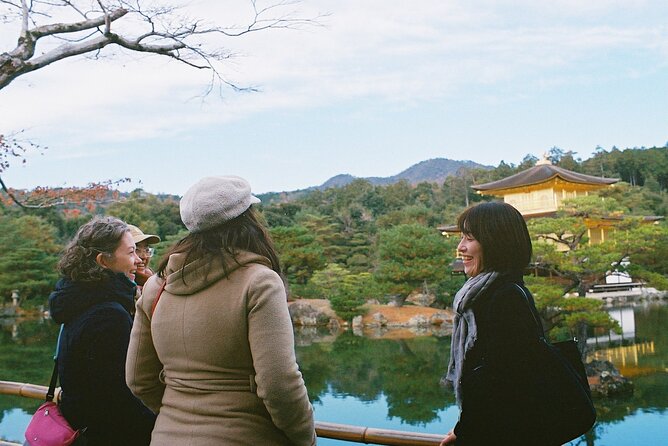
The structure also helps your brain. Kinkaku-ji is full of striking visuals, including the gold-covered upper floors and their reflection in the pond. Then Ninna-ji slows the pace. Instead of hunting for your own context, you step into a guided flow, so the second half lands harder.
And yes, the pacing is short enough that you can keep your energy for the rest of Kyoto that day. That is a big deal when you are trying to plan around walking, lines, and mental fatigue.
More Kyoto temple visits, food tours, tea experiences, and day trips to compare

Kinkaku-ji Temple: gold leaf, classic Zen spaces, and named stops
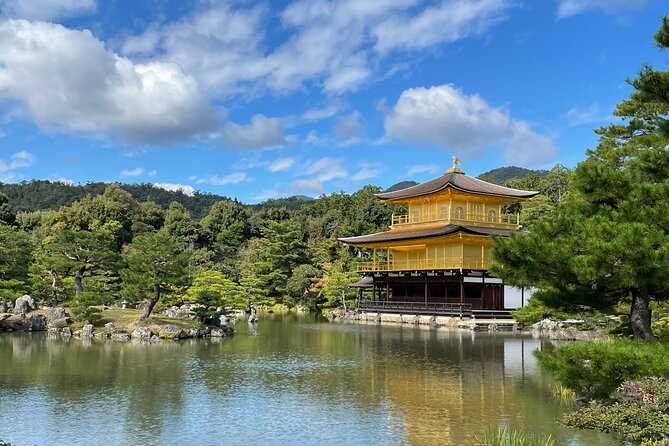
Kinkaku-ji, the Golden Pavilion, is a Zen Buddhist temple and a UNESCO World Heritage site. The core story is that it began life as a retirement villa connected to Shogun Ashikaga Yoshimitsu, then later became a temple. That matters because it helps you understand why the building is so showy in the first place.
On this tour, you do not just orbit the main view. You visit a set of specific areas that make the visit feel more complete:
- Shariden, the pavilion area tied to the most iconic gold look
- Karamon Gate, a key entrance moment
- Rikushu-no-taki
- Anmintaku
- Hakujanotsuka
- Yukatei Teahouse
- Fudo Hall
What I like about this approach is that the gold facade is not treated as a one-shot photo. Your guide’s explanations give the visual pieces a theme. You start to see the pavilion as part of a designed experience, not just a shiny building in a garden.
Practical value for you: if you have limited time in Kyoto, this stop lets you tick the big Kinkaku-ji boxes while still feeling guided. You also get time to notice the reflection effect, which is often the reason people fall in love with this place.
One note for expectations: Kinkaku-ji is famous. Even with a guided route, you should still plan for general crowd energy. The good news is the tour keeps you focused, so you spend less time wondering what you are looking at and more time understanding why it was built this way.
Ninna-ji: rare Main Hall access and a monk-led experience
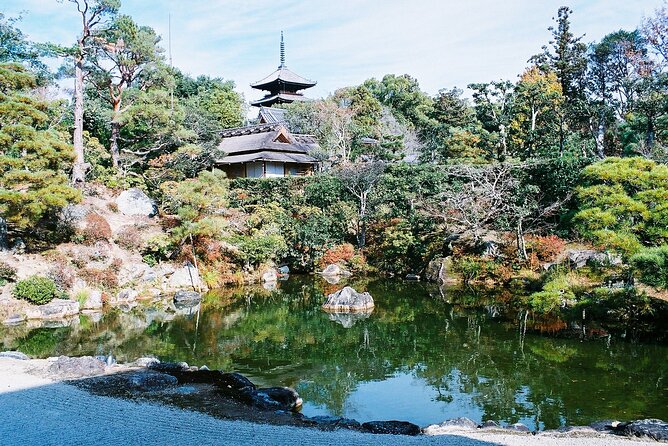
After Kinkaku-ji, the day turns quietly toward Ninna-ji. Ninna-ji is a Buddhist temple founded in 888 by Emperor Uda and another UNESCO World Heritage site. It is known for its five-story pagoda, gardens, and Omuro cherry trees, and it has a long reputation as a spiritual center.
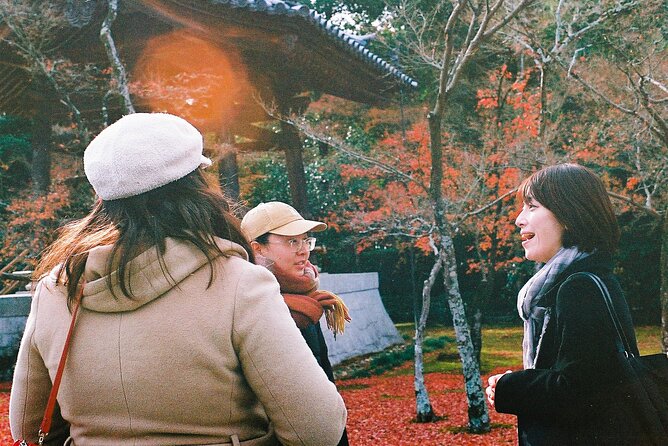
The best part here, at least in the way the tour is designed, is that you get access that most people do not get on their own. The tour includes time in the rarely opened Main Hall, with a sacred chanting session led by a monk. You also get a Q and A session, which changes the whole tone of the visit. Instead of passively watching, you get to ask questions and translate what you are feeling into something you understand.
There is also a very specific ritual element built into the itinerary. You visit the Sutra Hall, where you can see and interact with the rotating sutra shelf. This is the kind of detail that makes a guided tour worth it, because it turns a site into a living practice. It is not just architecture anymore.
If you care about how religion shows up in daily ritual, this stop is the payoff. The explanations about Buddhist traditions make the chanting and temple spaces feel connected, not random.
A practical consideration: Ninna-ji itinerary details may change due to temple circumstances. That is not unusual for temple schedules, but it is worth keeping in mind. If your must-do is the exact form of the chanting or the access timing, stay flexible and let the guide adapt.
Also, location can be inconvenient compared with other Kyoto hotspots. One review highlighted that the tour used a taxi transfer from Kinkaku-ji to Ninna-ji, making the move more comfortable. You should still expect the day to include some walking, but the transfer part is handled with comfort in mind.
Sutra Hall ritual and Q and A: why the timing matters
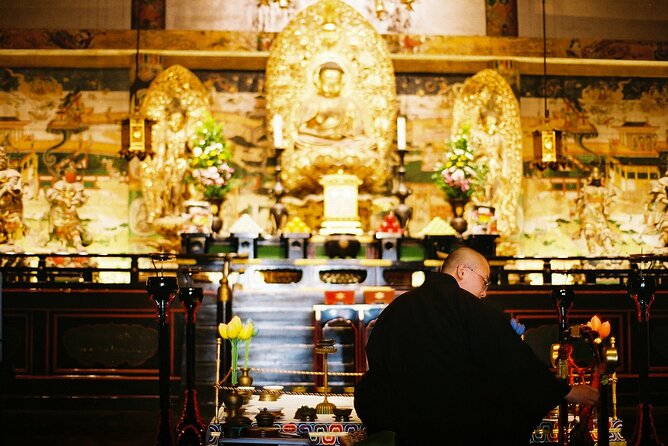
A lot of temple tours dump you at a site and send you in with instructions like good luck. This one builds time around the most meaningful parts. You enter the space for chanting and the monk talk, then you get Q and A. That order matters because it gives you context before you ask questions.
Here is what that means for you: during the chanting session, you can listen for meaning, not just sound. Then the Q and A gives you a way to process what you noticed. Finally, the Sutra Hall ritual is a hands-on moment where your understanding can catch up to what your eyes saw.
This is also why the small group format helps. With a maximum of 7 travelers, there is more room for real questions, not just one person asking while everyone else waits.
And if you like photography, do not skip the next section. The tour sets up a photo moment with the monk after the ritual experiences.
The photo moment and the Imperial Residence calm
One of the standout “human” elements of this tour is the chance to capture a memorable photo with the monk. That is not just a souvenir. It is a reminder that you are meeting people, not consuming sights.
After that, you visit the Imperial Residence. This is where the tour slows down again. The atmosphere shifts from ritual focus to refined calm, and it gives your day a softer landing.
For many people, this final section is the perfect contrast to Kinkaku-ji. You get the gold drama at the start, then you move into spiritual practice, then you finish in an elegant imperial space. It feels like Kyoto in three moods rather than one.
You can also read our reviews of more guided tours in Kyoto



How the guide shapes the experience (and why it shows)
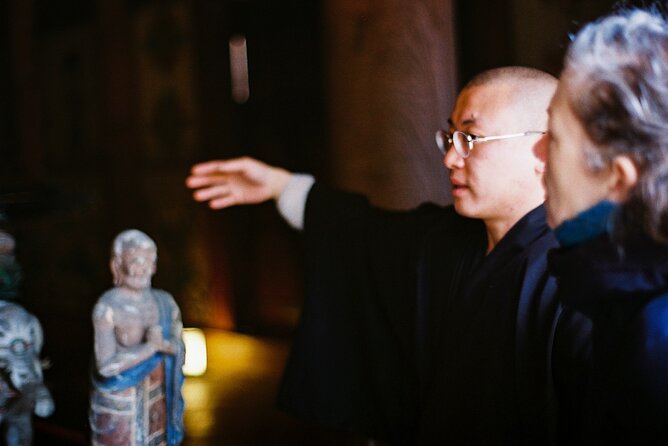
Guides make or break short tours. When time is tight, you need clear storytelling and good pacing. In the reviews, the guides mentioned by name are Ellie and Eriko, and both came through as friendly and passionate, with strong English explanations.
What I think is most valuable is the balance. Buddhist temples can sound complicated if you treat them as facts to memorize. A good guide turns that into something usable. You start to understand:
- why certain spaces matter
- how devotion shows up in architecture and rituals
- how religious institutions connected to power and prestige in historical Kyoto
That is why this tour feels “more than a ticket.” The admission is included, yes. But the value comes from the guided connections. You are not just walking through halls. You are learning how to see.
Tickets, route flow, and what to expect in practice
This is a 3-hour tour with admission tickets included at both stops. You also get a mobile ticket, which helps reduce the hassle of paper tickets and lines.
The tour starts at Yamazaki-an25 Kinugasa Babachō in Kita Ward, and it ends at Ninna-ji Temple at 33 Omuroōuchi in Ukyo Ward. Both meeting and end points are listed as near public transportation, which matters if you want to plan your next move afterward.
Group size is small, up to 7 travelers. That is a sweet spot for a temple day. You are not stuck behind a huge stream of people, and you are not in a private bubble either. It feels manageable.
Timing is also part of the design:
- about 1 hour at Kinkaku-ji
- about 1 hour 45 minutes at Ninna-ji
That means you are not spending half your tour standing in one place. You get to see the main Kinkaku-ji landmarks and still have time for Ninna-ji rituals, including the Main Hall and Sutra Hall experience.
Who should book this tour, and who might not love it
This tour is best for you if:
- you want two UNESCO sites without building a whole day plan
- you like guided explanations that connect temples to history and practice
- you are interested in Buddhist rituals and would like structured time for a monk-led moment
- you prefer small-group pacing over crowded walking marathons
You might choose something else if:
- you prefer fully independent temple wandering with no scheduled chanting or Q and A
- you need lots of free time to linger far beyond what fits into about 3 hours
- you have strict expectations about the exact Ninna-ji sequence, since the tour notes that details may change due to temple circumstances
Value check: is $48.86 worth it?
For $48.86 per person, you are paying for more than entry fees. You get a guided route through both sites, admission tickets included, and access moments that are harder to arrange alone, like the Main Hall experience and the Sutra Hall ritual time.
Is it “cheap”? No. But it is not priced like a private chauffeur plan either. With a max group size of 7 and a focused 3-hour duration, the cost starts to make sense because you are buying time, context, and smoother logistics in one package.
Also, the tour includes time with a monk and a Q and A. Those human moments tend to be where guided experiences earn their keep. If your goal is to understand what you are looking at, not just photograph it, this price feels more fair.
Should you book this Kyoto guided tour?
Yes, if you want a smart, guided way to see Kinkaku-ji and Ninna-ji in one short plan and you care about the meaning behind temple rituals. The biggest reasons to book are the built-in access at Ninna-ji, the monk-led chanting and Q and A, and the hands-on Sutra Hall moment. Add in the guided visit to multiple Kinkaku-ji landmarks, and you get a day that feels intentional without eating your whole schedule.
If you want maximum independence, long unstructured wandering, and zero scheduled ritual moments, then you might prefer a self-guided approach. But for many first-time Kyoto visitors, this tour is a strong way to get the best contrast the city offers, gold brilliance in the morning mood, then calmer spiritual practice to close the loop.
FAQ
What are the two temples included?
The tour includes Kinkaku-ji Temple (Golden Pavilion) and Ninna-ji Temple.
Is admission covered?
Yes. Admission tickets for both Kinkaku-ji and Ninna-ji are included.
How long does the guided tour last?
The duration is approximately 3 hours.
Is this a small group tour?
Yes. The tour has a maximum of 7 travelers.
Do I receive a mobile ticket?
Yes. The tour provides a mobile ticket.
Where does the tour start and where does it end?
It starts at Yamazaki-an25 Kinugasa Babachō, Kita Ward, Kyoto, and ends at Ninna-ji Temple at 33 Omuroōuchi, Ukyo Ward, Kyoto.
Is free cancellation available?
Yes. You can cancel for free up to 24 hours before the experience start time for a full refund.
More Tickets in Kyoto


More Tours in Kyoto

More Tour Reviews in Kyoto
Not for you? Here's more nearby things to do in Kyoto we have reviewed


Kinkaku-ji & Golden Pavilion Tours, compared.
 ★ 4.8Fushimi Inari, Kinkakuji, Bamboo Grove 1 Day Bus TourFrom $1224,316 reviews
 ★ 4.1Osaka/Kyoto:Kinkakuji,Arashiyama,FushimiInariShrine,NaraParkFrom $661,596 reviews
 ★ 5.0Nijo, Kinkaku-ji, Arashiyama, Kiyomizu & Fushimi InariFrom $51699 reviews
 ★ 4.4Kyoto/Osaka: Kinkakuji, Bamboo Forest, and Nara Deer ParkFrom $69265 reviews
 ★ 4.9Best of Kyoto: Ginkakuji & Path of Philosophy E-Bike TourFrom $6979 reviews
 ★ 4.7Kinkakuji, Golden Pavilion Guided TourFrom $6471 reviews
 ★ 5.0Kyoto top must-see Golden pavilion and Bamboo forest half-day Private tourFrom $12252 reviews
 ★ 5.0Kyoto Bamboo Forest & Golden Pavilion E-Bike TourFrom $9950 reviews
Browse the lists this tour appears in