
Reviewed · WALKING TOURS
Kyoto Lazy Bird Walking Tour
Afternoon Kyoto without the scramble. The Kyoto Lazy Bird Walking Tour strings together three major sights, Arashiyama Bamboo Grove, Kinkaku-ji, and Fushimi Inari, with a private guide so you spend less time figuring out directions. I like the afternoon start at 12:45 pm, and I like the smart, not-rushed pacing for first-time Kyoto. One drawback to plan for: the tour price excludes transport and Kinkaku-ji’s admission, so your total spend will be higher at checkout.
What makes it feel different is how the guide approach shows up in the details. Names like Mitsue, Noriko, Keiko, Saori San, Michiko, and Nick alias Satoshi Nonake come up in guide feedback for staying organized, sharing practical local tips, and adjusting when conditions get messy (cold weather, rain, or travel with kids). If you prefer to move at your own pace without turning Kyoto into a navigation puzzle, this kind of afternoon plan is a good match.
Key points before you go
- Afternoon timing at 12:45 pm, built for jet lag and a calmer start
- Three top sights in about 5h 45m, with a predetermined flow
- Free entries for Arashiyama Bamboo Grove and Fushimi Inari-taisha, plus a paid UNESCO stop
- Private group experience, meaning only your party is on the schedule
- Guide-led navigation, so you do not lose time between locations
- Extra value for photos, with guides pointing out better spots for pictures and timing
The lazy-bird timing, start at 12:45 pm from Kyoto Station
This tour is scheduled to begin at 12:45 pm at Kyoto Station, and it ends back at the same meeting point. That matters more than it sounds. If you are arriving from overseas, mornings can feel like a blur. An afternoon start helps you take Kyoto in after you have eaten, rested, and found your footing in the city.
The tour runs about 5 hours 45 minutes. That is long enough to feel like a real day plan, but short enough that you still have room for dinner, a stroll, or a second neighborhood explore afterward. You can also structure your day more realistically. If you already have an earlier plan, this afternoon slot is a convenient way to add the big highlights without eating your whole day.
You should also expect walking, because it is a walking tour between major sights. Wear comfortable shoes you trust on uneven sidewalks and temple grounds. The tour recommends comfortable clothes and shoes, and that is not just polite advice.
You can also read our reviews of more walking tours in Kyoto
Stop 1: Arashiyama Bamboo Grove, your free hour to slow down
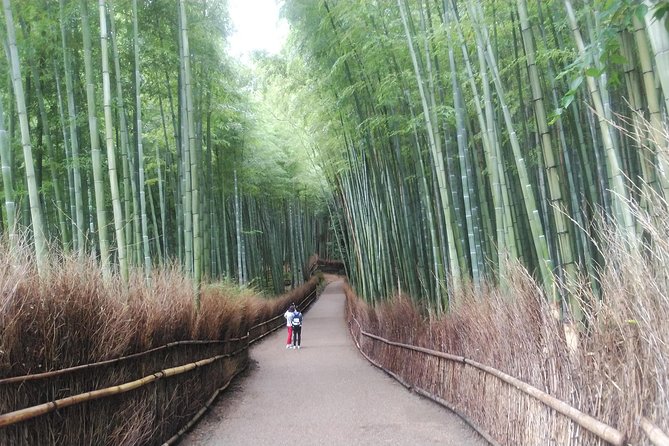
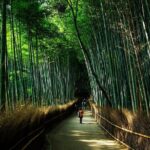
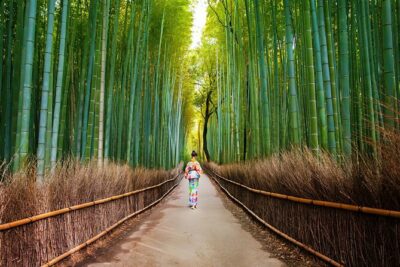
The first stop is Arashiyama Bamboo Grove. Admission here is listed as free, and you get about 1 hour. The bamboo is famous for a reason, but the key with Arashiyama is pacing. A one-hour window is enough to see the main section, take photos, and soak in the quiet feel, but you do not want to burn the whole hour standing in one spot.
What makes this stop feel worth it in a guided format is that your guide can help you move efficiently through the area. In places like this, the biggest time-waster is hesitation, backtracking, and crowd detours. With a private guide, you can usually keep things tidy and avoid the lost-in-the-maps feeling.
It is also a great early anchor for the tour. You start with a visual payoff that does not require ticket lines. Then you have time and momentum to shift into the temple and shrine intensity later.
Practical tip: because weather matters for this experience, plan for changing conditions. If Kyoto is cold or rainy, bamboo areas can feel chilly. Bring layers you can manage during short changes in light and temperature.
Stop 2: Kinkaku-ji Golden Pavilion, UNESCO and the one extra ticket
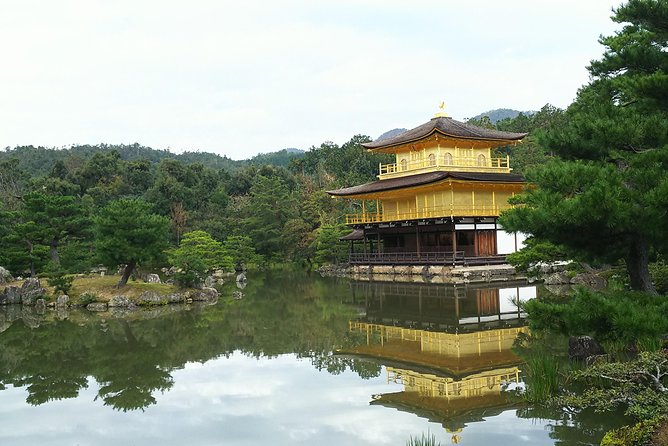
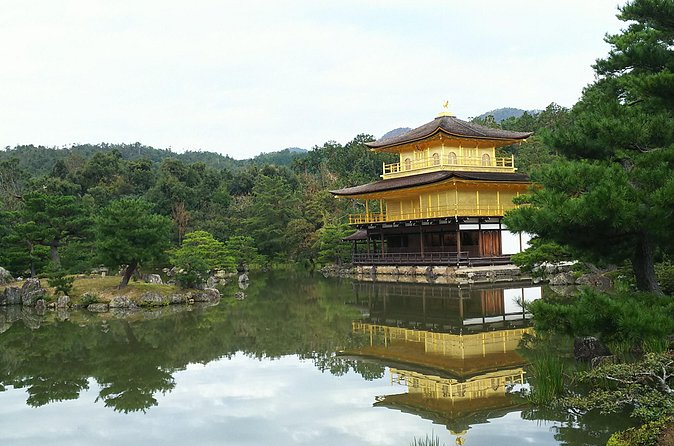
Next up is Kinkaku-ji Temple, and this is the UNESCO World Heritage Site on the route. You have about 1 hour here. Admission for Kinkaku-ji is not included, and the listed entry fee is ¥500 per person, so budget for it when you price the full experience.
This is the stop where you will feel the classic Kyoto wow factor. The Golden Pavilion is the headline, but the real value comes from understanding what you are looking at while you are there. With a private guide, you are not just snapping pictures. You learn what the temple represents and why the place is so iconic in Kyoto culture and beyond.
There is also a simple practical benefit: Kinkaku-ji is popular. Even if you get there during a calmer time of day, you will still want good timing for photos and viewing angles. Guides mentioned in feedback include people who make extra effort to find good photo spots and help you avoid wasting time. That can be the difference between leaving with a handful of decent photos and leaving with photos you actually like.
The main consideration for Kinkaku-ji is cost and time planning. You are paying for the entry yourself, and you have only one hour on-site. If you are the type who likes to sit and read every sign, you might want to return later. If you like seeing the essentials with time for the rest of Kyoto, one hour is a solid fit.
Stop 3: Fushimi Inari-taisha, torii tunnel without the navigation stress
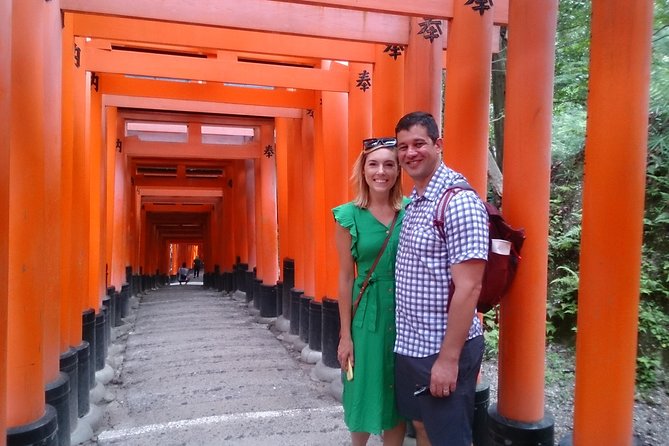
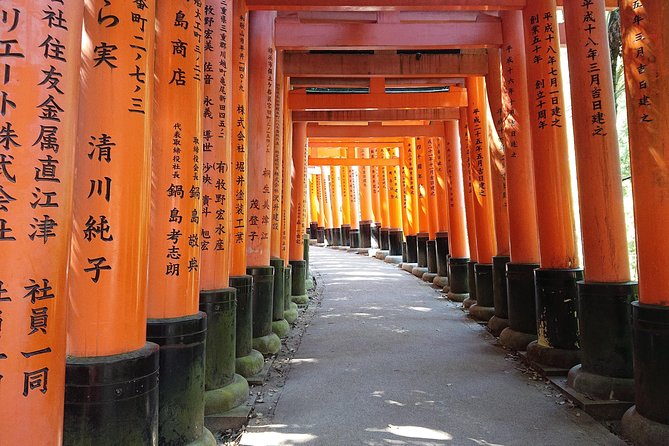
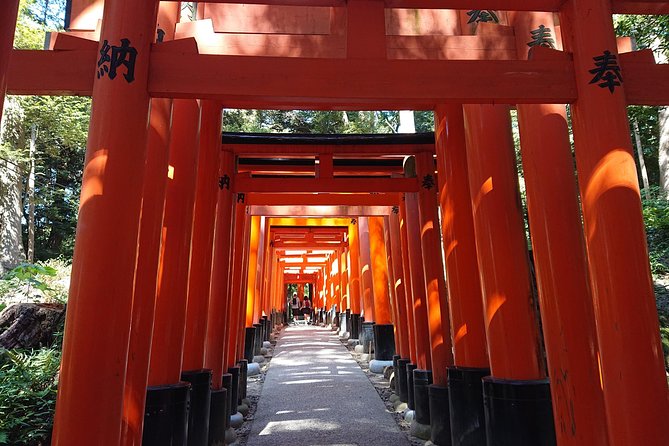
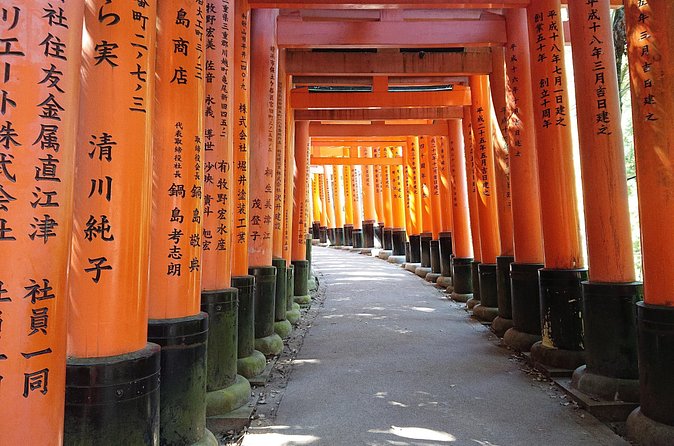
The final major stop is Fushimi Inari-taisha Shrine. Admission is listed as free, and you get about 1 hour. This is the place with the famous tunnel of thousands of vermillion torii gates, the kind of scene that looks unreal even after you see the photos.
The big challenge at Fushimi Inari is not ticketing. It is flow. The torii trail tempts you to keep going because each turn looks like another photo moment. In a guided half-day plan, your best move is to treat the hour like a curated experience: see the signature torii section, capture what you want, and keep the momentum so you still get value from the whole route.
A good guide helps with the tempo. You are not just walking the path, you are also learning how to frame the experience, where to pause, and how to manage crowds. It also keeps you from accidentally heading into areas you did not plan for when you only have a limited block of time.
This stop also fits the lazy-bird theme nicely. After Arashiyama and Kinkaku-ji, Fushimi Inari adds energy and color. You end with one of Kyoto’s most recognizable visuals before returning to Kyoto Station.
Price and value math for $111.05 per person
The tour price is $111.05 per person, and it includes guide fare. That is the core value: you pay for a private guide to handle navigation, timing, and on-the-ground interpretation across three major sights.
The catch is what is not included. You should add:
- Public transportation fare: ¥1,220 per person
- Kinkaku-ji admission: ¥500 per person
- Food and drink are not included
So your real cost depends on transport and the Kinkaku-ji ticket, but the structure is clear. You are not paying for mystery extras. You are also not paying entrance fees for every stop, because Arashiyama Bamboo Grove and Fushimi Inari are free for admission on this plan.
Is it worth it? For most people, yes, if you value three things:
- Time savings from not planning routes between distant highlights
- Less stress when navigating Kyoto streets and station connections
- Better context at Kinkaku-ji and the shrines, so the day feels more meaningful than just sightseeing
If you are a super confident train rider and you love building your own schedules, you could DIY. But you would still need to manage crowd timing, transit timing, and the mental load of figuring out the best walking order. Here, the tour removes the guesswork, which is the real luxury.
Also note the booking rhythm. The average booking lead time is listed at 106 days, which usually means people secure popular guide dates early. If your trip window is tight, book sooner rather than later.
Your private guide experience, from Mitsue to Noriko
This is described as a private tour/activity, meaning only your group participates. That matters because it changes how the day feels. You are not negotiating for space in a big crowd group plan. You can ask small practical questions, move with less friction, and keep the tour aligned with what your party wants to see.
The guide feedback you can use for your decision is strongly about personality plus logistics. Guides like Mitsue and Noriko show up in feedback for being welcoming and sharing clear context, not just reciting facts. Keiko is highlighted for being warm and helpful when a meetup mix-up happened, which tells you the service is meant to be responsive rather than rigid. Nick alias Satoshi Nonake is praised for staying organized and using pre-tour communication like WhatsApp to keep the plan tight. Saori San is specifically mentioned as an English-speaking guide and as friendly and responsible. Michiko is noted for flexibility, including adapting to travel with a young child.
I like that mix because it points to two strengths:
- the guide helps you understand what you are seeing
- the guide helps you get from A to B without wasting the limited time you have
That is the heart of why a private, afternoon-format tour like this works so well for first-timers.
How the timing affects what you see, and what you might skip
One of the smartest features of this route is its structure: three major sights in one block. That sounds simple, but it changes your choices. Instead of deciding between Arashiyama, Kinkaku-ji, and Fushimi Inari each day, you make one decision upfront and then you follow a plan.
The tradeoff is obvious. You do not get the entire Arashiyama area, you do not get all of Fushimi Inari’s longer climbs, and you do not get to linger at every corner of Kinkaku-ji. The day is designed for the big hits, not for wandering indefinitely.
So I recommend this tour if you fit one of these profiles:
- you want the highlights without turning Kyoto into a full-time project
- you are short on days and want a clear hit list
- you are dealing with jet lag or an inflexible schedule
- you prefer a guide to handle navigation and timing so you can focus on photos and atmosphere
It may be less ideal if you want a slow, open-ended walk where you decide on the fly every 10 minutes. For that style, you might prefer a lighter route and more free time between stops.
Getting around, weather, and small comfort details that prevent headaches
The tour notes that it is near public transportation, which is helpful. That means you are not relying on a complicated private car transfer plan. You are also told public transport costs separately, so you should carry enough cash or plan card use for transit.
Weather is also part of the deal. The experience requires good weather, and if it is canceled due to poor weather, you are offered a different date or a full refund. Kyoto can change fast, so check forecasts before you go. If you travel in rainy seasons, pack a rain layer and shoes that handle damp ground.
Comfort is not optional. You are walking in three sightseeing zones. The tour recommends comfortable clothes and shoes, and that is the right call for temple steps, shrine paths, and longer-than-expected stroll segments.
It is also listed as accessible for people with limited eye sight and limited mobility. If you fall into that category, bring any assistive items you usually use. It is also noted that animals or pets are allowed, which can matter for certain travelers planning around their own needs.
Should you book the Kyoto Lazy Bird Walking Tour?
Book it if you want an afternoon Kyoto plan that covers Arashiyama Bamboo Grove, Kinkaku-ji, and Fushimi Inari-taisha without spending your precious time on navigation stress. At $111.05 per person, it is a strong value when you count the guide support, the private pacing, and the fact that two stops have free admission while only one paid ticket (Kinkaku-ji ¥500) is required.
Skip it or look for another option if you want long, free-form exploring at each site or you have a tight budget and do not want to add transport and entrance fees on top. Also consider that it depends on good weather, so keep your schedule flexible enough to handle a reschedule if needed.
If you want Kyoto’s biggest visual hits with less planning effort, this lazy-bird format is the kind of practical luxury that makes the day feel smooth.
FAQ
Where does the Kyoto Lazy Bird Walking Tour start?
The tour starts at Kyoto Station in Kyoto, Japan.
What time does the tour begin?
The start time is 12:45 pm.
How long is the tour?
The duration is approximately 5 hours 45 minutes.
What is included in the tour price?
The tour includes the guide fare.
What extra costs should I budget for?
You should budget for public transportation fare (¥1,220 per person) and Kinkaku-ji Temple admission (¥500 per person). Food and drink are not included.
Is there an admission fee for Arashiyama Bamboo Grove and Fushimi Inari-taisha?
The listed admission for Arashiyama Bamboo Grove and Fushimi Inari-taisha Shrine is free. Kinkaku-ji Temple is not free.
Is this tour private?
Yes. It is listed as a private tour/activity, so only your group participates.
More Walking Tours in Kyoto

More Tours in Kyoto

More Tour Reviews in Kyoto
Not for you? Here's more nearby things to do in Kyoto we have reviewed


Walking Tours, compared.
 ★ 4.7Kyoto Geisha Walking Tour: Gion District & Hidden GemsFrom $253,273 reviews
 ★ 4.9Gion Magical Night Walking Tour with Geisha TriviaFrom $242,393 reviews
 ★ 4.7Gion Geisha District Walking Tour – Stories of GeishaFrom $202,187 reviews
 ★ 4.5Night Walk in Gion: Kyoto’s Geisha DistrictFrom $212,003 reviews
 ★ 5.0Kyoto Gion Geisha District Walking Tour – The Stories of GeishaFrom $251,441 reviews
 ★ 5.0Nishiki Market Brunch Walking Tour (7 Tastings + Brunch)From $681,355 reviews
 ★ 5.0Kyoto Arashiyama Walking Tour: Bamboo, Monkeys, Gardens & SecretsFrom $651,216 reviews
 ★ 5.0Kyoto Gion: 2-Hour Geisha Culture & History Walking TourFrom $231,186 reviews
Browse the lists this tour appears in