
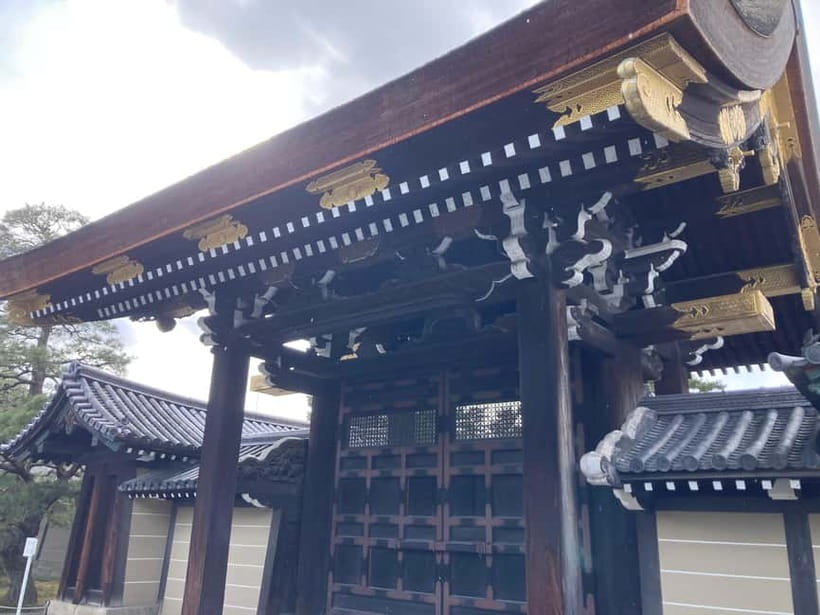
Reviewed · NIJO CASTLE TOURS
Kyoto: Nijo Castle and Kyoto Imperial Palace Guided Tour
Kyoto can feel like a quiet museum until someone points out the power games. This small-group walking tour connects Nijo Castle and the Kyoto Imperial Palace so you understand what you are looking at, not just that it is pretty. You’ll hear how the former capital shaped Japan’s rule, through architecture, courtly life, and the political mood of the time.
What I especially like is the mix of big-ticket sights with an explanation style that stays clear and human. I love that the tour includes time inside Nijo Castle plus a visit to the Imperial Palace grounds, so the story has two angles, shogun authority and imperial culture. I also love the guide factor, from Kayo’s humor to Goku’s focus on details, which turns questions into part of the fun.
One possible drawback to keep in mind: the Imperial Palace visit may not be ideal for everyone because you might only see certain exteriors depending on how access is running. If that would bug you, plan to treat the gardens and surrounding experience as the main win, not a full interior walkthrough.
Key points to know
- Small group size capped at 9, so your guide can actually answer questions.
- Tickets included for Nijo Castle, Ninomaru Palace, and the Art Gallery.
- Meeting point at Nakadachiuri Gate of the Kyoto Imperial Palace, with guide identification arranged in advance.
- Three hours is a tight, efficient window for two major sites on foot.
- Seasonal garden views matter here, including a cherry blossom spot on the route.
Starting at Nakadachiuri Gate: how to make the meeting smooth
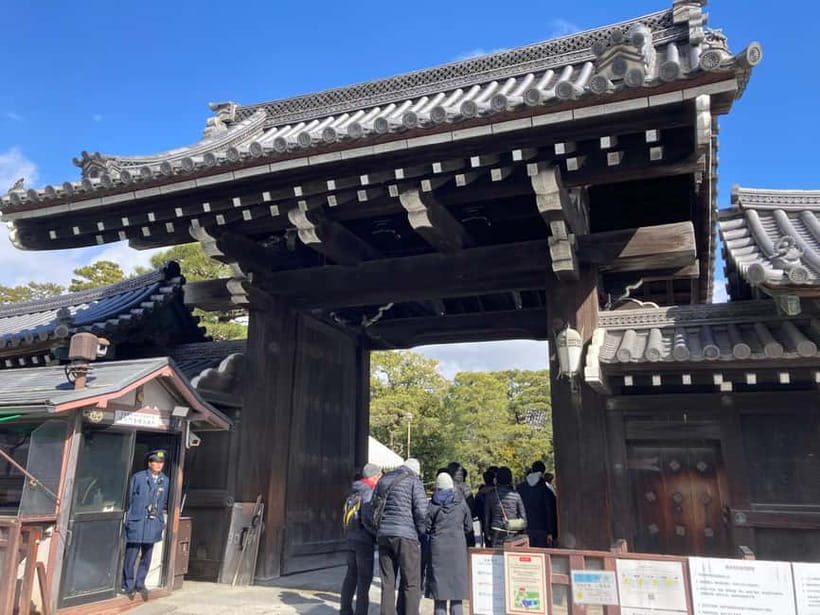
The tour meets at the Nakadachiuri Gate of the Kyoto Imperial Palace. Before you go, you should get a heads-up on what your guide looks like and what they’ll be wearing. That little bit of pre-work matters in Kyoto, where crowds and gate names can turn your “easy start” into a small scavenger hunt.
Once you find your guide, the pace is set for walking. This is not a sit-and-listen bus tour. You’ll spend most of your time moving between viewpoints and entrances, which is great because Kyoto’s best atmosphere often shows up while you’re in motion, not when you stop for a photo.
Also, keep the clothing rule in mind early. Shorts are not allowed, so dress like you expect to be out for a while, mostly on foot. Comfortable shoes are more important than you think, because if your feet hurt, you stop noticing the details your guide is pointing out.
If you’re picky about access, know that one review mentioned the Imperial Palace portion being limited to exteriors. That does not mean it will happen for you, but it is a fair consideration.
You can also read our reviews of more guided tours in Kyoto


Kyoto Imperial Palace gardens: where the seasonal beauty shows up
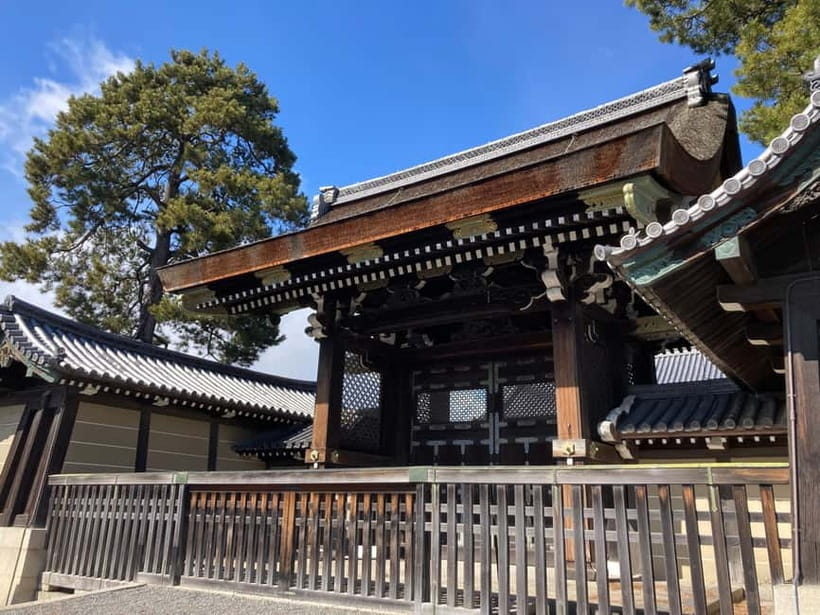
The Kyoto Imperial Palace is the “heart” angle of this tour. Even if you’ve seen other palace complexes in Japan, this one hits differently because it is framed as the residence of Japan’s emperors. You are not just looking at gates and buildings. You’re learning how the design supports refined Japanese tradition and how the gardens are meant to look good across seasons.
Your guide will point you toward what to notice. Expect commentary on the architectural style and how it fits the political and cultural climate of the time. One of the best parts is that this is not only history lecture. It is also a visual experience tied to mood and timing, especially with seasonal garden beauty. In spring, you get that extra layer when a route spot is known for cherry blossoms.
I like tours like this because they help you stop treating the palace as a backdrop. Instead, you start reading it as a statement. Even when you only see certain structures, the setting communicates formality and control, the same way a government building does anywhere.
One small practical note: because access can vary, focus on what is reliably there. The gardens, the grounds, and the guided walk itself are the core value here.
Nijo Castle and Ninomaru Palace: power you can feel in the details
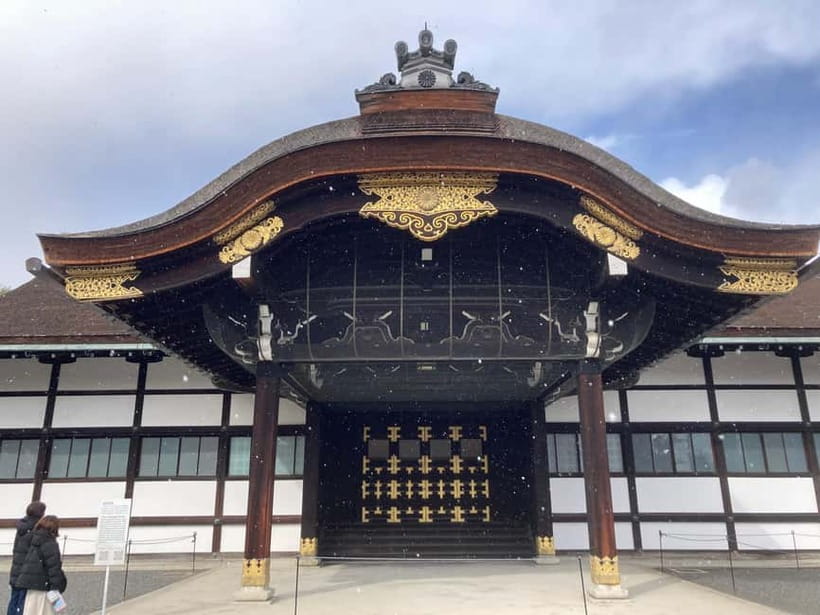
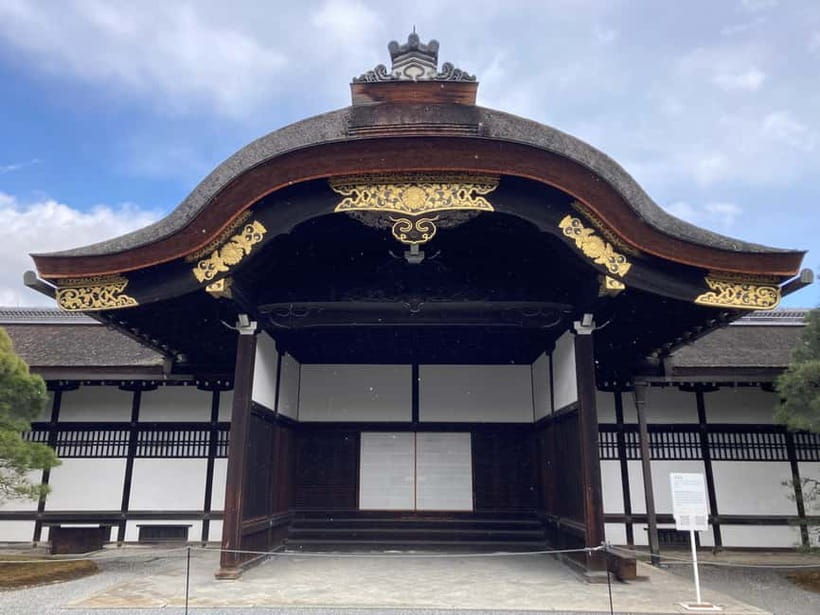
Then you switch to Nijo Castle, built by Tokugawa Ieyasu, and the tone changes fast. The emphasis becomes authority, power, and the role of the shogunate. If you’ve ever wondered why certain rooms in historic sites feel staged for control, this stop gives you language for that.
You’ll see lavish interiors and intricate details, and your guide will connect those design choices to the political climate of the time. That connection is where this tour earns its money. It is not just, “Look at this.” It is, “Here is why it looks like this.”
You also get admission that includes Ninomaru Palace and an Art Gallery ticket. Those included entries help you avoid the most annoying part of sightseeing in Kyoto, paying separately and losing momentum while you figure out what is worth it.
One theme that comes up strongly in the guide stories is how much time they spend explaining the “why.” For example, one guide experience shared that the explanation covered history, architecture, art, and politics without turning into a dry timeline. That matters because Nijo Castle can otherwise feel like a set of pretty rooms with no context. With context, it starts to read like a power document written in wood, layout, and decoration.
The guide makes the difference: from Kayo to Goku
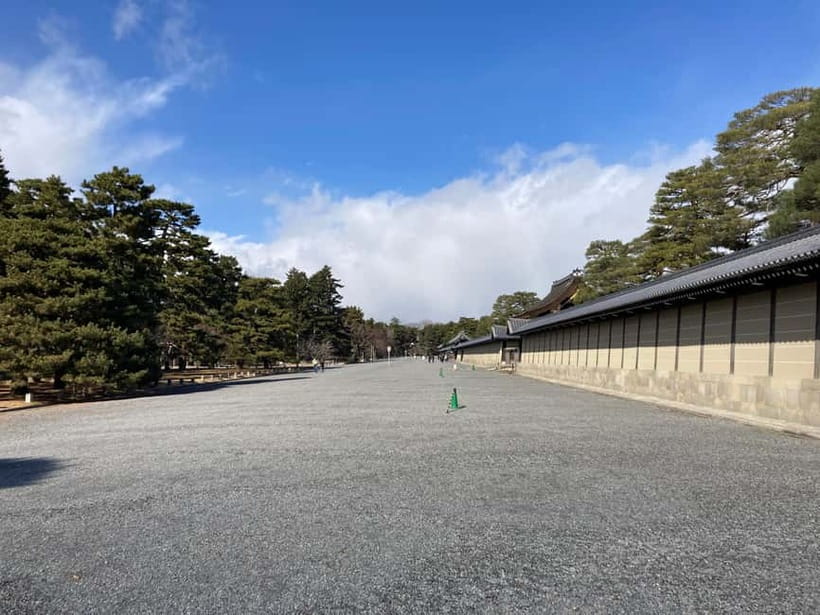
A walking tour lives or dies on the guide’s rhythm. This one uses professional English-speaking guides, and the language list is wide: English, French, Spanish, Japanese, Portuguese, and Russian. Small group size helps too, because you are not shouting over a crowd.
From the tour notes, several guides were specifically praised. Kayo stood out for being both informative and funny, and the whole experience reportedly passed quickly because the tone stayed light while the facts kept coming. Nene was described as clear and engaging when explaining both the Imperial Palace and Nijo Castle. Taku was praised for adding local tips and for taking extra effort to answer questions. Goku was repeatedly noted for strong detail, friendly pacing, and even helping a solo traveler with taking pictures.
I take those comments seriously because they point to a pattern: you are likely to get more than a script. You get a guide who can handle curiosity. One tour note even mentions discussion during the walking segments about western and Japanese culture, and that kind of back-and-forth is exactly what makes a guided walk feel personal.
That said, the one-off access limitation for the Imperial Palace is real enough to mention. A great guide can do a lot, but they cannot always change where you are allowed to go.
Walking time, what to wear, and how to plan your day
This tour is built around a 3-hour window. That means you should treat it as a “core sight” block, not something to squeeze between long train connections. If you arrive frazzled, you will spend your energy finding gates instead of absorbing the story.
Expect a walking-focused format, including short stretches between the main sites. One guide experience referenced an about 20-minute walk segment, with conversation flowing during the movement. Even if your exact timing differs, the structure is consistent: you keep going, you keep learning, and you do not stall for long.
For what to wear, the no shorts rule is the big one. Dress for Japanese temple and palace etiquette: covered legs if possible, layers if you’re dealing with seasonal weather, and comfortable shoes. You’ll likely want to stand, move slowly through crowds, and pause for explanations.
Bring a camera. One solo-traveler note mentioned their guide helped with photos, but you should still be ready to shoot yourself. And bring cash, since some day-to-day purchases can be easier that way.
If you’re pregnant, this is noted as not suitable. That is not a judgment on you. It is a practical call based on a walking format and palace grounds.
Is it worth $63? Value check on tickets, time, and small-group pacing
At $63 per person for a 3-hour guided experience, the value comes from three things working together: time, group size, and included entry.
First, you get a tightly packed block that combines two major Kyoto landmarks. If you were to do them on your own, you would still spend time figuring out where to go and what to prioritize. Here, you get a guided narrative that helps you see connections between the shogunate era power messaging at Nijo Castle and the imperial cultural symbolism at Kyoto Imperial Palace.
Second, you get tickets included for Nijo Castle, Ninomaru Palace, and the Art Gallery. That matters because those admissions are part of the “you are in the right place” value. You are not paying separately and then waiting while tickets get checked.
Third, the small group cap of 9 is a real quality lever. It usually translates into more Q and A time and less rushing. If you like history explanations that still make room for your questions, small groups are where you feel it.
So, is it worth $63? For me, it is a good deal if you want context. If you only want photos and you already know the political storyline, you might not need a guide. But if you want the “why” behind what you are seeing, this is priced in a reasonable zone for Kyoto and the time you get.
Should you book this Kyoto Nijo Castle and Imperial Palace tour?
Book it if you want a guided walk that connects politics, architecture, and seasonal garden beauty in a way that stays understandable. You’ll likely get the most value if you enjoy asking questions or if you want your visit to feel like more than a checklist. The repeated praise for guides like Kayo, Nene, Taku, and Goku is a strong hint that the explanation style is a core part of the experience.
Skip it or approach with extra expectations if you know you need a full interior palace experience. One note mentioned the Imperial Palace portion being limited to exteriors, and access can affect what you see.
Finally, do not plan this one if you are pregnant. And if you hate walking or you show up dressed against the rules (shorts), you’ll make your day harder than it needs to be.
FAQ
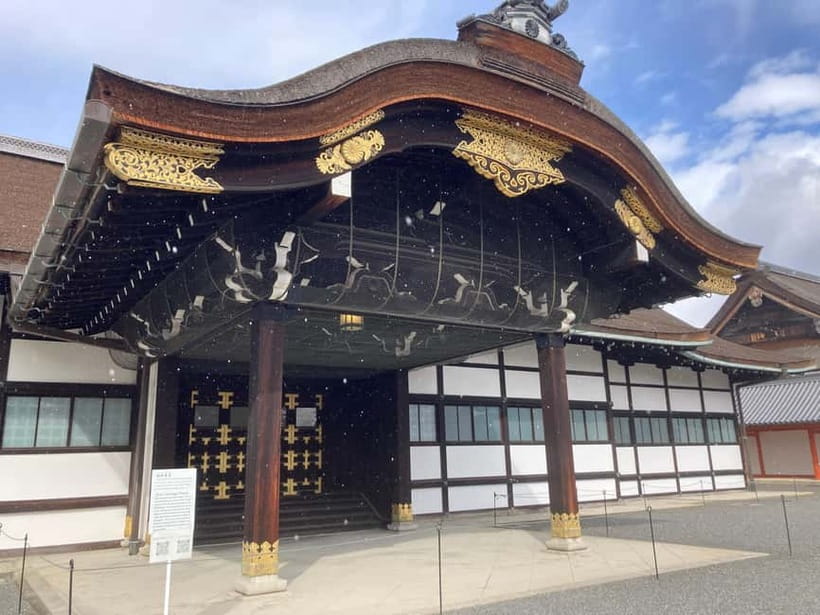
Where does the tour meet?
The meeting point is at the Nakadachiuri Gate of the Kyoto Imperial Palace.
How long is the Kyoto Nijo Castle and Imperial Palace tour?
The tour duration is 3 hours.
How big is the group?
This is a small group experience limited to 9 participants.
What is included in the admission tickets?
Admission tickets are included for Nijo Castle, Ninomaru Palace, and the Art Gallery.
What languages are available for the guide?
The guide is available in English, French, Spanish, Japanese, Portuguese, and Russian.
What should I bring?
Bring a camera and cash.
Are shorts allowed?
No, shorts are not allowed.
Can I cancel, and can I pay later?
Yes, you can cancel up to 24 hours in advance for a full refund. You can also reserve now and pay later.
More Guided Tours in Kyoto


More Tours in Kyoto

More Tour Reviews in Kyoto
Not for you? Here's more nearby things to do in Kyoto we have reviewed




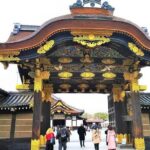
Nijo Castle Tours, compared.
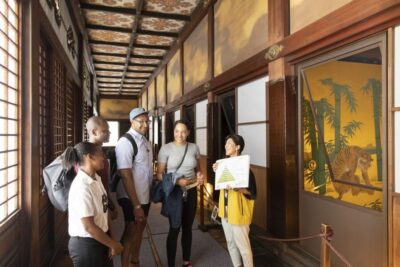 ★ 4.7Nijo-jo Castle and Ninomaru Palace Guided TourFrom $161,020 reviews
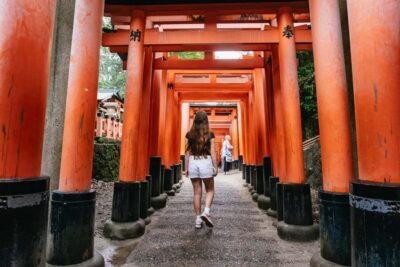 ★ 4.7Nijo Castle, Kiyomizu & Fushimi Inari Guided TourFrom $54700 reviews
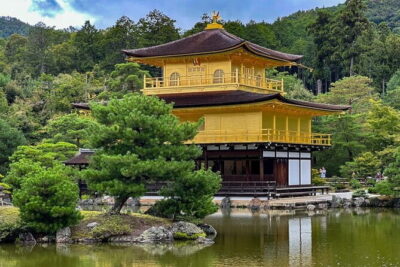 ★ 5.0Nijo, Kinkaku-ji, Arashiyama, Kiyomizu & Fushimi InariFrom $51699 reviews
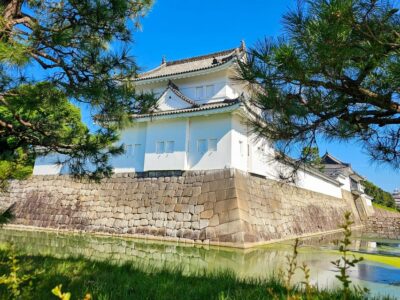 ★ 4.7Imperial Palace & Nijo Castle Guided Walking TourFrom $49453 reviews
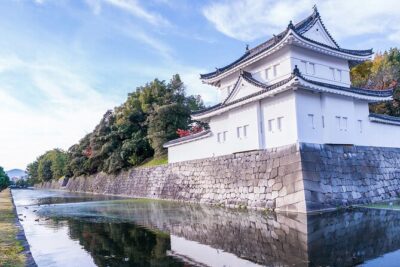 ★ 5.0Nijo Castle World Heritage Guided Tour with AdmissionFrom $39128 reviews
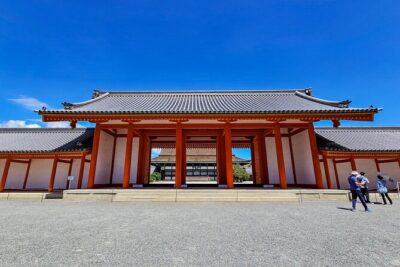 ★ 4.5Kyoto Imperial Palace & Nijo Castle Guided Walking Tour – 3 HoursFrom $55106 reviews
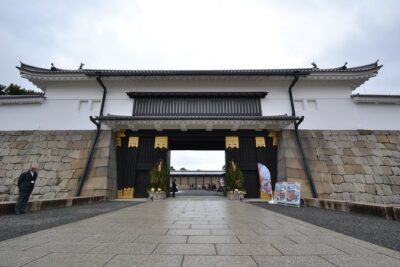 ★ 5.0Nijo Castle and Imperial Palace Visit with GuideFrom $7953 reviews
 ★ 5.0Golden Pavilion, Nijo Castle, & Nishiki Market Half day tourFrom $9029 reviews
Browse the lists this tour appears in