
Reviewed · KYOTO TEMPLE & SHRINE TOURS
Kyoto Philosophy Walk with Philosopher (Private/6.5 hour)
Kyoto gets loud fast. This tour slows it down with thought.
This private Kyoto Philosophy Walk with Philosopher (Hiroki) uses real conversation to connect Zen Buddhism and other Japanese intellectual and spiritual traditions to the places you see. You are not just collecting stamps, you are asking questions along the walk and getting answers from a guide trained in philosophy research.
I especially like the way the stops are framed as specific ideas to explore, from Pure Land Buddhism to Zen concepts of awakening. I also like the balance of major temple spaces plus quieter corners you can miss on a standard route, which is where the day starts to feel personal.
One possible drawback: you are walking about one mile and you may encounter a two-story building with only stairs, so come prepared with comfortable shoes and a willingness to climb.
Key things to know before you go
- Conversation-led route: Each stop comes with a guiding question you can actually talk through
- A philosophy researcher guiding the walk: Hiroki’s background shapes how you understand what you see
- Private experience: It’s just your group, so the pace and focus can match your interests
- Cash needed for temple entries: The tour suggests ¥1,600 per person for entrances, since not everything is included
- Built around a long Philosopher’s Path day: You get time for backstreet walking and local transit, not just photo stops
- Comfort with stairs helps: One part of the itinerary includes a two-story structure with only stairs
A 6.5-hour philosophy walk, not a temple checklist
If your Kyoto plan is temples, gardens, and a few iconic photos, this is a different way to travel. The core idea is simple: you walk through Kyoto’s religious and cultural landmarks while your guide helps you think about what those landmarks meant and still mean.
The tour runs about 6 hours 30 minutes, with a lunch break built in. That longer stretch matters. It gives you time to ask follow-up questions, not just hear a quick explanation and move on.
This is also a smart format for a private tour. When you are paying for one guide, you want your time to feel like it’s about your curiosity, not about someone else’s schedule. The conversation style fits that goal well.
You can also read our reviews of more walking tours in Kyoto
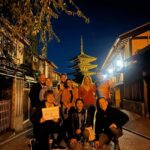
Meet Hiroki: the guide who turns questions into a route
Hiroki is not just a general temple guide. He is a nationally licensed guide and also a trained philosophy researcher, which shows in how the day is structured.
You’ll notice it in the way the itinerary is built around questions. For example, at the start you look at Pure Land ideas. Later you discuss Shintoism and how Japanese thinkers connect spirituality to everyday experience. Then, at the Philosopher’s Walk segment, you get the angle of how Japanese philosophers interacted with Western philosophy.
The feedback connected to this tour also consistently highlights three qualities:
- Time management: the day flows without feeling rushed
- Flexibility: the guide can adjust as your interests shift
- Real dialogue: discussions go beyond facts and into viewpoints
That combination is rare. In a place like Kyoto, where you can get overwhelmed by the number of sights, having someone steer your attention helps you remember what mattered.
Stop by stop on the Kyoto philosophy route
This tour is paced for walking and thinking, not marathon sightseeing. Some stops are around 30 to 45 minutes, and a couple are shorter. You’ll also have a chunk of time reserved for backstreet strolling and moving by public transport.
Higashi Hongan-ji Temple: Pure Land ideas in your first 30 minutes
Your day starts at Higashi Hongan-ji Temple. The conversation prompt here is: what is the Pure Land, one of the most significant ideas in Japanese Buddhism tradition?
This is a good opening stop for two reasons. First, it sets the religious vocabulary before you move into Shinto and Zen spaces later. Second, temple architecture and atmosphere do not explain themselves, so having an early interpretive framework makes the rest of the walk easier to follow.
Admission for this stop is free based on the tour details, so you can focus on the discussion without adding extra costs here.
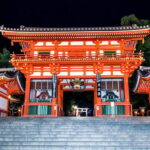
Yoshida Shrine: Shintoism and the feeling of pantheism
Next is Yoshida Shrine, one of Kyoto’s older shrines. The key question is what Shintoism is, and the tour frames the experience with a concept of Shintoist pantheism.
The shrine also comes with a historical thread the tour points to, mentioning it was once a site of government sanctioned practice until 150 years ago. Even if you only catch part of that story, it helps you understand that shrine life is not just private tradition. It also has connections to how society was organized.
This stop is also about 30 minutes and free for admission, so it works well as a reset between larger temple moments.
You can also read our reviews of more private tours in Kyoto



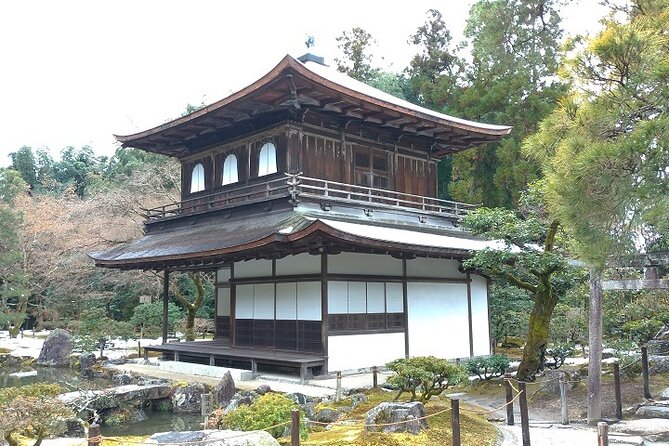
Ginkakuji Temple: Zen, simplicity, and why restraint matters
Then you head to Ginkakuji Temple, famous as a Zen temple and identified in the tour materials as one of Kyoto’s world heritage sites.
Here you are guided with the question about Japanese ideas like simple is the best, and you look for the charm in simpleness.
This is one of those places where it’s easy to turn your brain off and just take photos. The philosophy angle changes that. You are encouraged to notice how minimal design choices shape mood, attention, and meaning.
Admission for this stop is not included, so plan on paying a temple fee if you go inside areas tied to that entry.
Philosopher’s Walk: Japanese thinkers versus Western philosophy
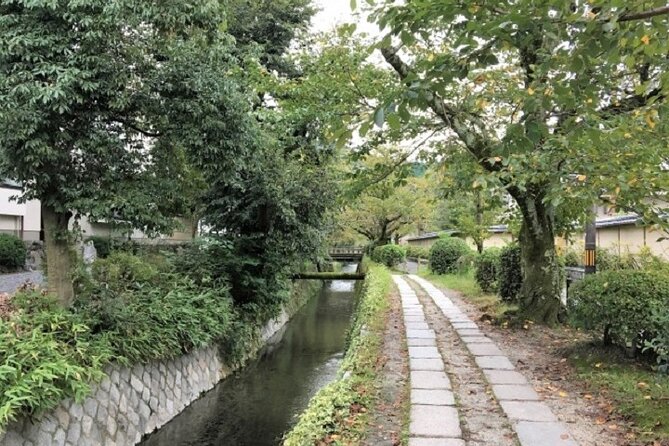
This is the heart of the day for many people: the Philosopher’s Walk segment (also called the Philosopher’s Path in the tour notes).
The discussion prompt is how Japanese philosophers tackled the Western tradition of philosophy. In practice, this is where the tour stops being only about religion and starts being about ideas as culture.
Expect you’ll talk through how concepts translate across cultures. You might not leave with one final answer. You’ll likely leave with sharper questions, and that is the point. This part also tends to be a good emotional match for Kyoto walking, because the pace is slower and the day feels reflective.
Admission for this segment is free.
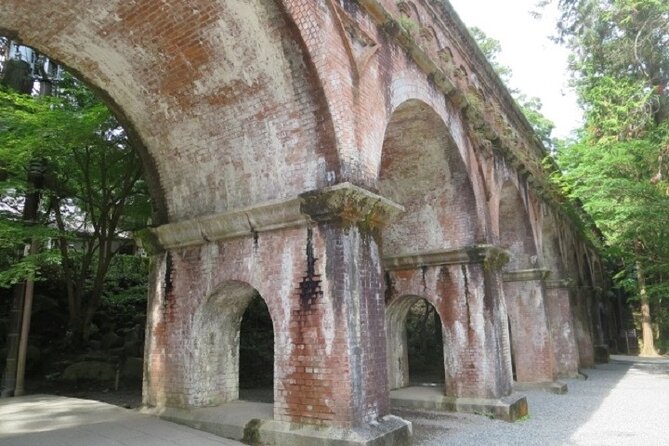
Nanzenji Suirokaku: a Western-style brick aqueduct inside temple space
After the philosophical walking mood, you shift to Nanzenji Suirokaku, the tour notes calling out the Suirokaku Aqueduct.
You’ll learn about an aqueduct built with Western-style brick architecture located within a traditional Buddhist temple setting. The tour also hints at it being built as part of a larger project, with the text beginning to mention a “J…” without finishing the detail.
Even without the full backstory, this stop works because it shows a theme Kyoto travelers don’t always expect. Japanese religious spaces are not stuck in one historical moment. They can contain later layers, including design influences from outside Japan.
This stop is short, about 15 minutes, so treat it like a focused detour, not a long stay.
Admission is free for this stop.
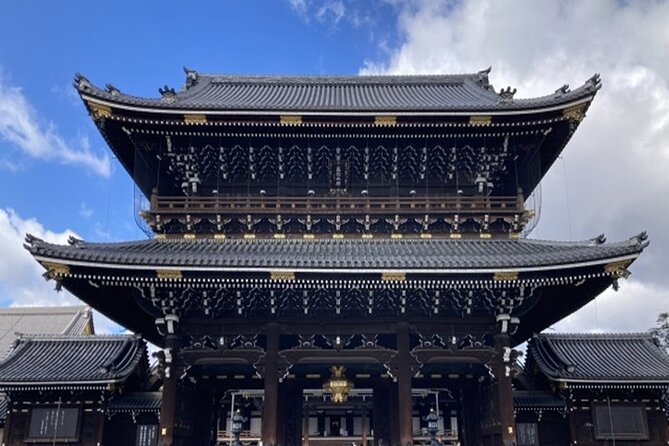
Sanmon Gate: the “three steps” idea of liberation
Next is the Sanmon Gate, with a prompt about theories of enlightenment in Buddhism.
The key idea the tour notes describe is that Sanmon means a gate representing three steps for liberation, and that it is a two-story gate. When you’re standing in front of a structure like this, the scale matters, and the “three steps” framing gives your eyes something to do besides admire the shape.
Admission here is listed as not included, so again, be ready with cash if your time inside depends on entry.
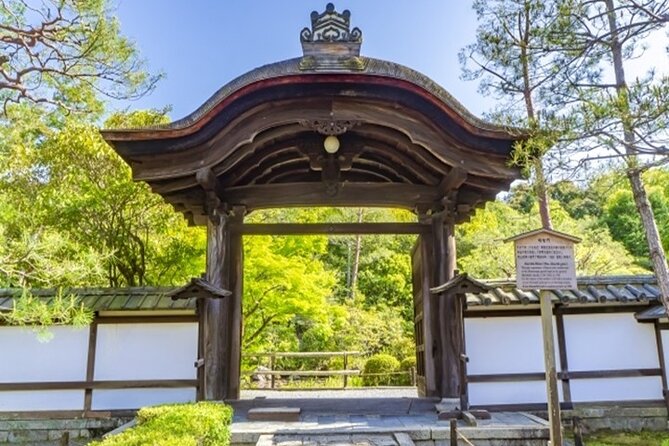
Konchi-in: an authentic Zen garden for people who like details
Your final spiritual punctuation is Konchi-in, a Zen temple the tour materials describe as famous mainly among “history-geek Japanese,” which is a polite way of saying it’s less of a mass-tour stop.
The prompt is what an authentic Zen garden looks like, and this is where you can slow down and really see the design choices. If you enjoy symbolism and you like noticing small contrasts, you’ll likely love this ending.
Admission is not included, so if you want full access, you’ll want to follow the tour’s cash guidance.
Logistics that matter in Kyoto: one mile of walking, stairs, and cash
This is a private tour, so the practical experience depends on comfort, not crowd handling. Here’s what you should plan for using the tour details.
Walking distance and time split
You’ll walk about one mile on the path during the day. That might sound short, but Kyoto walking can still feel like more because you add temple paths, stair approaches, and brief transit moments.
The schedule also includes time for:
- Lunch, about one hour
- Backstreet walking around the spots and public transportation, about 1 hour 45 minutes
So the day is not just “temples on rails.” You will get a genuine neighborhood feel.
Stairs and a two-story building
The itinerary includes a two-story building with only stairs. That matters for anyone who has trouble with vertical movement or wants an easy-going pace.
Wear comfortable shoes. If you know stairs are a deal-breaker, this tour might not be your best fit.
Cash for temple entrances and what the tour doesn’t include
The tour fee includes the guide fee, but not everything you might pay at sites. The tour specifically advises having cash for entrance fees, listed as about ¥1,600 per person. It also says temple entrances are not included for flexibility and transparency.
So my practical advice is: bring that cash, and keep a little extra if you tend to say yes to entry rather than “just peek from outside.”
Also note lunch and drinks are not included. The tour gives you one hour, so pick something simple nearby rather than trying to solve lunch logistics across Kyoto.
Mobile ticket and meeting point
You’ll get a mobile ticket. The meeting point is Bus Ticket Centre / Information Centre, located at 902 Higashishiokōjichō, Shimogyo Ward, Kyoto 600-8216.
It starts at 9:00 am and ends back at the meeting point. Since the meeting spot is near public transportation, you can plan your arrival without stress.
Price and value: is $230 worth a philosophy guide?
At $230 per person for a private 6.5-hour tour, you should judge value by what you get beyond a standard guide.
Here’s what you’re paying for:
- A guide with both licensing and philosophy research training
- A route shaped by questions, not just sight order
- Time for dialogue, not only explanation
- A mix of major and less-obvious stops, including areas tourists may miss
- Private pacing, so you can ask, pause, and refocus
If you love Kyoto but hate being rushed or confused by religious concepts, this is a strong use of money. A temple visit can become a blur. A thinking-focused guide helps you turn the blur into understanding you can carry home.
If your goal is strictly “see the famous stuff quickly,” you may not need this. But if you want your Kyoto to change how you think, that’s exactly what this format supports.
One demand signal: the tour is booked about 43 days in advance on average, which suggests people who like this style plan ahead.
Who this tour suits best in Kyoto
This is a great fit if:
- You like learning through conversation, not just listening to a lecture
- You want Zen, Shinto, and Buddhism explained in a way that connects to your questions
- You enjoy slower walking and atmosphere, and you can handle a bit of stairs
- You want Kyoto to feel more like an exploration of ideas than a checklist
It may be a weaker match if:
- You dislike philosophy talk and would rather focus only on architecture and photos
- You have limited mobility due to stair-only access in one itinerary segment
- You expect all major entrances to be included in the price, since some are not
Should you book the Kyoto Philosophy Walk with Philosopher?
I’d book it if you want Kyoto with a brain, not just a camera. The standout strength is the way Hiroki connects temples and shrines to specific concepts, especially the Pure Land, Shinto, Zen simplicity, and the “Japanese and Western philosophy” angle along the Philosopher’s Walk.
It’s also worth choosing if your travel style leans toward meaning and conversation. This tour is designed for thought, dialogue, and rediscovery, and it gives you a real reason to pay attention while you walk.
If you’re unsure, ask yourself a simple question: do I want temple visiting to be an experience I can talk about later, not just remember visually? If the answer is yes, this is a good match.
FAQ
What is the duration of the Kyoto Philosophy Walk?
It runs for about 6 hours 30 minutes.
How much does the tour cost per person?
The price is listed at $230.00 per person.
What is included in the tour price?
The guide fee is included, and you also receive a mobile ticket.
What should I budget for temple entrance fees and lunch?
Entrance fees are not included, and the tour advises preparing cash of about ¥1,600 per person. Lunch and drinks are also at your expense.
Where do we meet, and what time does the tour start?
The meeting point is Bus Ticket Centre / Information Centre at 902 Higashishiokōjichō, Shimogyo Ward, Kyoto 600-8216. The start time is 9:00 am.
Is this tour private, or do I share it with others?
This is a private tour, so only your group participates.
Is there free cancellation?
Yes, free cancellation is offered up to 24 hours in advance for a full refund.
More Private Tours in Kyoto
More Walking Tours in Kyoto


More Tour Reviews in Kyoto
Not for you? Here's more nearby things to do in Kyoto we have reviewed


Kyoto Temple & Shrine Tours, compared.
 ★ 4.9Tea Ceremony Ju-An at Jotokuji TempleFrom $293,207 reviews
 ★ 4.8Arashiyama Bamboo, Temple, Monkeys, or Secret Sake BreweryFrom $87886 reviews
 ★ 5.0Arashiyama Bamboo Forest, Monkeys, Matcha & Temple TourFrom $53759 reviews
 ★ 4.4Osaka/Kyoto: Arashiyama, Nara & Fushimi Inari Shrine w/LunchFrom $61754 reviews
 ★ 4.2Ninnaji Temple Entry TicketFrom $5650 reviews
 ★ 4.7Imperial Palace & Nijo Castle Guided Walking TourFrom $49453 reviews
 ★ 5.0Kyoto Zen Meditation & Garden Tour at a Zen Temple with LunchFrom $110441 reviews
 ★ 5.0Zen Experience in a Hidden TempleFrom $109437 reviews
Browse the lists this tour appears in