
Reviewed · WALKING TOURS
Kyoto Run & Walk Tour with Locals
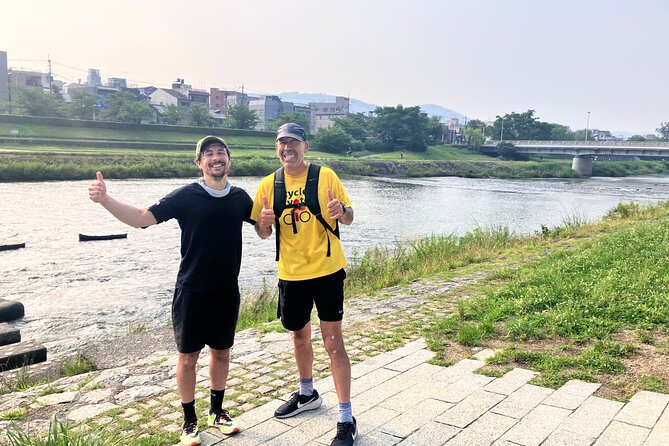
Kyoto goes quiet at dawn. This run-and-walk tour is a simple way to see Kyoto up close, led by an English-speaking local who has lived there for over 30 years, with jogging at a friendly pace. I love that it aims to help you avoid crowds while still getting real sightseeing in, plus you’ll pass temples, calm river scenes, and neighborhood streets that don’t feel like a highlight reel. The one watch-out is the schedule and movement style: it’s early, and even though the pace is easy, you do need a moderate fitness level and comfort with light running.
The vibe here is active but not intense. You’ll jog around 7 to 9 minutes per kilometer (slow and steady), and you’ll pause at key places for explanations, so the route has natural breaks instead of constant motion. The group is tiny, with a maximum of 4 people, and you get bottled water included, but you’ll still want your own running shoes and gear since those aren’t provided.
Key points I’d put on your must-know list
- English local guide (30+ years in Kyoto), easy to talk with and helpful with the route
- Slow jogging pace (about 7 to 9 min/km) that welcomes first-timers
- Early morning timing to skip the heaviest crowds and get fresher air
- Small group size, maximum of 4 travelers, for a more personal experience
- Seasonal scenery like cherry blossoms or autumn foliage, depending on when you go
- Light-rain plan: held if it’s light rain, then it becomes a walking-only version
Early-Morning Kyoto Run and Walk: Why This Timing Feels Right
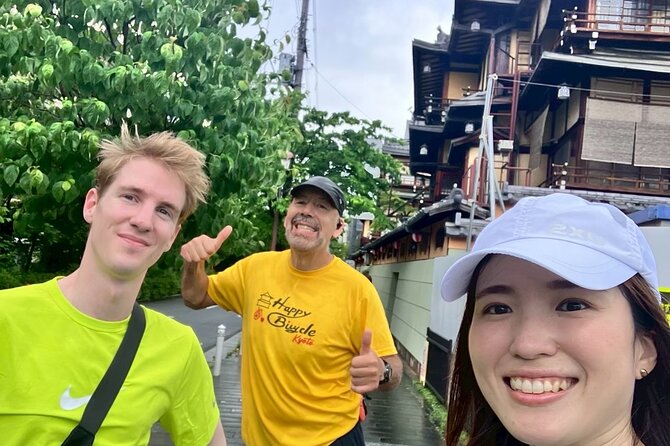
Kyoto has a way of making you feel like you’re in two cities at once. In the early hours, it’s quieter, softer, and easier to read. That’s exactly the appeal of a morning run and walk format, because you’re not just staring at landmarks from a crowd. You’re moving through Kyoto as locals might, slowly enough to notice details and still get a workout.
I also like the philosophy behind this tour: you’re not only chasing famous names. You’re set up to see temples, riverside stretches, and streets that feel more like everyday Kyoto. That matters because the difference between seeing Kyoto and understanding Kyoto is usually time. An early start buys you time, before the city fills up.
One more practical bonus: you’re not locked into long distances. The pace is slow, and there are stops for explanations. So even if you’re not a runner, you’re still getting the rhythm of the city without feeling dragged from stop to stop.
Meeting Point at Kyoto Tower Sando and How the Tour Flows
This tour starts at Starbucks Coffee in Kyoto Tower Sando, in Shimogyo Ward. It ends back at the meeting point, so you’re not dealing with a complicated pickup or return plan. For me, that kind of clean start and finish is underrated. It reduces stress, especially when you’re trying to nail timing in a busy city.
The tour runs about 2 hours on average, with a course length that’s described as about 2.5 hours. Either way, you’re looking at a compact half-morning commitment. You’ll spend time jogging and walking, then stop at set locations for explanations. That means the experience is broken into segments, which helps a lot if you’re not used to running.
And yes, it uses a mobile ticket. That’s a small thing, but it helps the morning run smoother when you’re juggling transit, water, and getting to the start on time.
You can also read our reviews of more walking tours in Kyoto
The Pace: Slow Jogging That Still Counts as a Workout
If you worry that a running tour will be too hard, this is the part to relax about. The pace is intentionally gentle, described as slow jogging around 7 to 8 minutes per kilometer, or about 8 to 9 minutes per kilometer. That’s walking-sensible territory for many people, especially if you treat it like a jog-walk rhythm rather than a race.
The best way to think about it is effort, not speed. You should feel like you can keep talking while you move. There will be pauses at spots for explanation, so you’re not stuck grinding the whole time. The goal is sightseeing plus light exercise, not athletic suffering.
Also, the tour is specifically framed as welcoming all levels, including first-time runners. That doesn’t mean you can ignore comfort, but it does mean the guide expects beginners and adjusts the flow. If you’re comfortable with moderate fitness, you’re likely a good fit.
Why the Tiny Group Matters With a Local Guide in English
The group size is a maximum of 4 travelers. That’s a big deal for a tour like this. With a small group, it’s easier to keep pace together and easier for the guide to check in on you. It also keeps the tour from feeling like a crowded moving line.
The guide here is Soyo, an English-speaking local who has lived in Kyoto for over 30 years. The reviews focus on how easy Soyo is to talk to and how well she knows the area. I’d treat that as a promise of conversation, not just walking directions. When a guide can explain places in clear English, you stop collecting random photos and start collecting understanding.
And because the tour is early, there’s less crowd noise. With a small group and a friendly guide, you can actually hear the explanations instead of straining over tourist chatter.
Stop 1, Higashi Hongan-ji Temple: A Calm Start Before the City Shifts
Your first stop is Higashi Hongan-ji Temple. Starting with a temple setting is smart for a few reasons. First, it helps you ease into the movement. You’re not sprinting right off the bat. Second, you get a quiet, reflective mood early in the morning, when Kyoto feels more like a lived-in city than a stage set.
At this stop, you can expect an explanation from your guide, with time to regroup. There will be some listening and some looking, but it’s also a break point in the run. If you’re new to running, these early pauses are exactly what keeps the workout from feeling stressful.
Potential drawback to plan for: temple areas can mean you’re on your feet in different spots and might take a few slow steps before and after photos. Wear shoes that feel secure on uneven ground.
Stop 2, Takasegawa: The Kind of Place You Appreciate on Foot
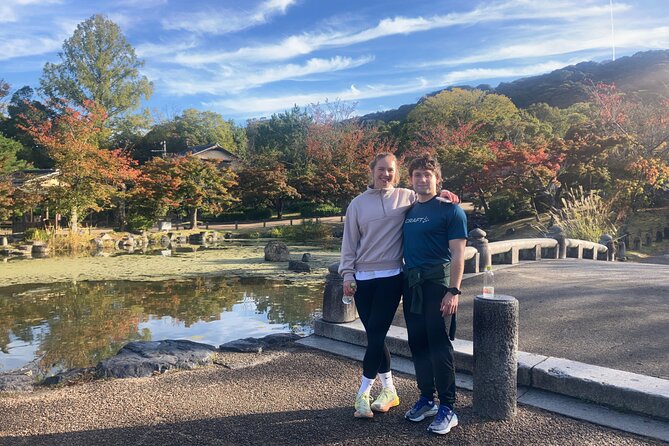
Next up is Takasegawa. Even without a checklist of facts, this stop has the advantage of being a natural pause in the route. Water-related areas tend to reset your breathing and pace, especially on a morning run.
This is also the kind of stop where being on foot matters. You get closer to the setting than you would from a street viewpoint, and you have time to notice the calm rhythm of the area. The guide’s explanations help connect what you’re seeing to why it belongs in a Kyoto route, rather than just labeling it as a stop.
A practical consideration: if it’s cool or slightly damp in the early hours, you might feel that more near river or water areas. Bring a light layer you can manage, and consider how you’ll store it if you warm up.
Stop 3, Kamogawa River: Fresh Air, Easy Strides
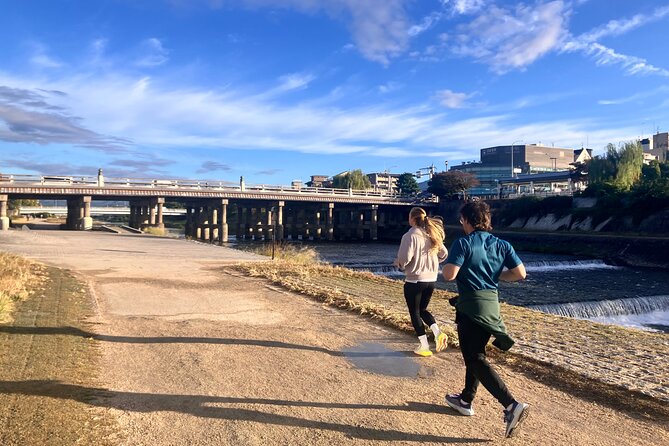
Then the tour heads to the Kamogawa River area. This is a classic Kyoto water corridor, and on a tour like this, it becomes more than scenery. It becomes a space to settle into your pace. With slow jogging, you can let your body find a rhythm. With walking breaks, you can keep your energy steady.
What I like about using a riverside route is that it gives structure. You can anticipate a change in pace and a breather spot. It also reduces the stop-and-go frustration that some sightseeing tours create.
If you’re someone who gets distracted easily, this section can be a nice reset. You’ll have time to watch the morning mood shift as you move, and you’ll still be making progress through the city.
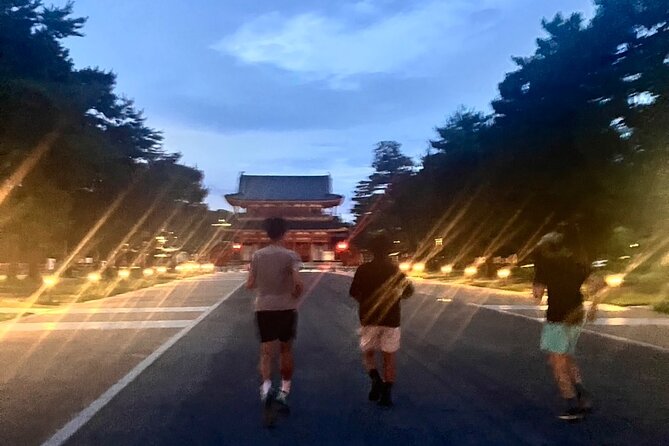
Stop 4, Heian Shrine: Slower Moments With Explanations
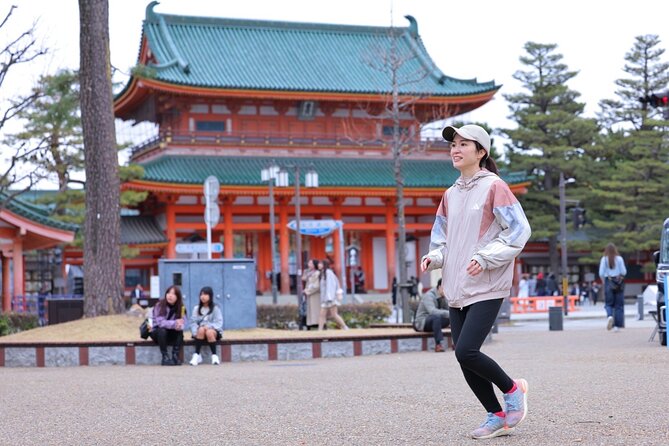
The next stop is Heian Shrine. After river and water stretches, a shrine stop works like a natural gear change. You shift from movement-driven sightseeing to pause-and-look sightseeing.
At this point in the tour, you should already have warmed up. The guide will use the stop for explanations, which can help you place what you’re seeing into the larger Kyoto picture. You’ll likely notice how the early-morning calm changes your focus. Instead of rushing for the perfect shot, you’re more likely to actually look around.
One drawback to remember: shrine grounds can mean some walking at a moderate pace, even during pauses. So even though the jogging is easy, keep your overall comfort level in mind.
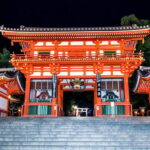
Stop 5, Yasaka Shrine: A Street-Side Transition Toward Kyoto Characters
After Heian Shrine, you visit Yasaka Shrine. The placement of this stop helps your route build momentum in a different way. You’ve had quiet, open spaces and water scenes. Now you’re heading toward a more Kyoto street atmosphere.
This is another explanation stop, so you’ll slow down on purpose. That’s key. A running tour can feel chaotic if every stop is a rush. Here, the rhythm is planned, with breaks built in.
If you’re the type who loves scenery but also wants context, this is where the tour can feel especially satisfying. You’re not just collecting locations. You’re learning how locals might experience Kyoto in the early hours.
Stop 6, Hanamikoji Street: Finishing in a Kyoto Scene
The last stop is Hanamikoji Street. This is where the experience shifts from “quiet early Kyoto” to “a Kyoto street you recognize.” You’ll be walking, taking it all in, and likely spotting the visual character of the area.
Since the tour ends back at the meeting point near Kyoto Tower Sando, this final street segment acts like your runway out of the route. It’s a good time to slow down, grab photos, and take stock of what you’ve seen.
One small tip: if you’re aiming to keep your legs feeling fresh, don’t sprint your last stretches. Save your energy for the walk back. You’re already doing the workout. Finishing strong keeps the experience enjoyable rather than punishing.
Seasons: Cherry Blossoms and Autumn Foliage Without the Hassle
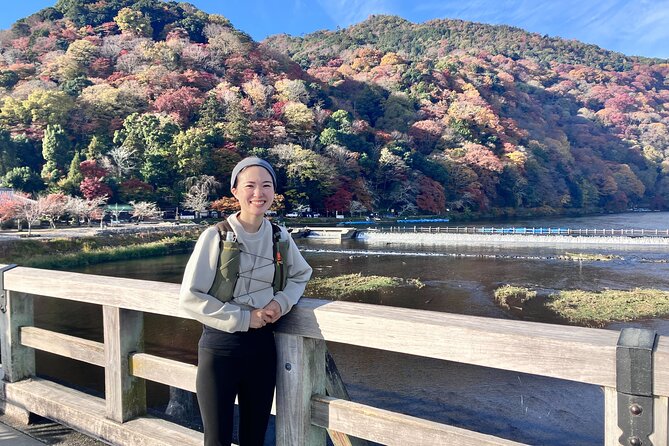
The tour mentions that depending on season, you may see cherry blossoms or autumn foliage. That’s not just decorative. The early timing is what makes seasonal beauty easier to enjoy. When you catch it before the biggest crowds, it feels more personal and less like a queue.
I’d also think about light and comfort. In cooler seasons, you might appreciate the steady jog and warm-up. In warmer seasons, the plan still includes breaks at explanation stops, so you can manage the heat and hydration. If the weather is rough, the tour has a plan, which I’ll cover next.
What You Get, What You Bring, and How to Stay Comfortable
Included in the tour:
- Bottled water
Not included:
- Locker
- running wear and shoes
That last part is the one I’d plan around first. Running shoes are basically non-negotiable if you want the “run and walk” to feel good. Since footwear is not provided, show up ready to move. If you normally walk in comfy shoes but don’t run much, test your comfort before you commit. A morning tour is not the place for first-time shoe experiments.
Also think about clothing. You might start cool and get warmer as you jog. Bring something you can handle for temperature swings, then keep it simple. No need to overpack if the tour is short, about 2 to 2.5 hours.
Rain Plan: Light Rain Still Works, Heavy Weather Changes Everything
Kyoto weather can be unpredictable, and this tour is clear about how it handles rain. In case of light rain, the tour still runs, but it becomes a walking tour. That means you should bring your own rain gear. If you’re relying on poncho-less plans, fix that now.
If conditions are worse, like heavy rain, wind, snow, heat wave, or typhoon weather, a decision is made by noon the day before. You’ll be notified if the tour is cancelled, and if it’s cancelled due to weather you’ll be offered a different date or a full refund.
For me, the big win here is that the tour doesn’t automatically panic at every drizzle. It’s practical. Just come prepared for the reality that weather can shift your route from running to walking.
Price and Value: Why $19.51 Can Be a Smart Kyoto Morning
The price is $19.51 per person, and on average this is booked about 14 days in advance. For that money, you’re paying for more than exercise. You’re paying for an English-speaking local guide, a tiny group size (max 4), and a morning route that tries to reduce crowd pressure.
At this price, you should evaluate what it replaces. A self-guided morning run might seem cheaper, but you’d be giving up the local explanations and the structured stop plan. You’d also likely lose time trying to figure out the best order of places while staying together and keeping pace.
What makes it feel like good value is the combination:
- small group
- local guide with long-term living experience
- clear slow pace designed for beginners
- bottled water included
- early timing that helps you enjoy Kyoto instead of fighting it
If you like learning while you move, and you want an active morning that still feels sightseeing-focused, the cost is easier to justify.
Who This Kyoto Run and Walk Tour Suits Best
This tour is a great fit if you want an early Kyoto experience that feels calm, not chaotic. It suits:
- first-time runners who want a gentle pace
- people who prefer small groups and friendly conversation
- travelers who want to see both iconic names and quieter neighborhood vibes
- anyone who likes a morning routine and fresh air
It might be a less ideal fit if:
- you hate running entirely, even at a slow pace
- you’re dealing with an injury or you’re not comfortable with moderate physical fitness demands
- you want a purely seated sightseeing plan with no jogging
The best approach is honest self-check. If you can do a light workout and stay flexible about breaks and weather, you’ll probably feel good about choosing this.
Should You Book This Kyoto Run and Walk Tour?
I’d book it if you want a Kyoto morning that’s practical, guided, and not locked in tourist traffic. The small group size, English local guide Soyo, and the slow jogging pace make it feel approachable. Add the built-in breaks for explanations, plus the seasonal possibility of cherry blossoms or autumn foliage, and it becomes an easy “yes” for active sightseeing.
I’d skip it if you’re looking for a high-intensity workout, or if you prefer to control every minute of your own schedule without pauses. Also, if you don’t want to deal with early start energy or you’re unsure about running even slowly, plan a different kind of Kyoto day.
If you fall into the flexible, curious, move-your-body category, this is a strong way to experience Kyoto in a way that feels more like a morning with locals and less like a checklist.
More Walking Tours in Kyoto
More Tours in Kyoto
More Tour Reviews in Kyoto
Not for you? Here's more nearby things to do in Kyoto we have reviewed

Walking Tours, compared.
 ★ 4.7Kyoto Geisha Walking Tour: Gion District & Hidden GemsFrom $253,273 reviews
 ★ 4.9Gion Magical Night Walking Tour with Geisha TriviaFrom $242,393 reviews
 ★ 4.7Gion Geisha District Walking Tour – Stories of GeishaFrom $202,187 reviews
 ★ 4.5Night Walk in Gion: Kyoto’s Geisha DistrictFrom $212,003 reviews
 ★ 5.0Kyoto Gion Geisha District Walking Tour – The Stories of GeishaFrom $251,441 reviews
 ★ 5.0Nishiki Market Brunch Walking Tour (7 Tastings + Brunch)From $681,355 reviews
 ★ 5.0Kyoto Arashiyama Walking Tour: Bamboo, Monkeys, Gardens & SecretsFrom $651,216 reviews
 ★ 5.0Kyoto Gion: 2-Hour Geisha Culture & History Walking TourFrom $231,186 reviews
Browse the lists this tour appears in