
Reviewed · KYOTO CRAFT & CALLIGRAPHY WORKSHOPS
Kyoto: Sumi Ink and Brush Calligraphy Experience
Kyoto can be loud, but this class is quiet. In 50 minutes, you grind sumi ink, practice brush technique, then make a bamboo calligraphy board you can take home.
What I like most is how hands-on it is, from the inkstone grinding to writing your own characters, and the class size stays small so you can actually get feedback. You also get both sumi ink painting and brush calligraphy, not just one demo.
One consideration: it is indoor and time-boxed, so if you arrive late or feel rushed by fast pacing, you might want to buffer your schedule.
Key things to know before you go
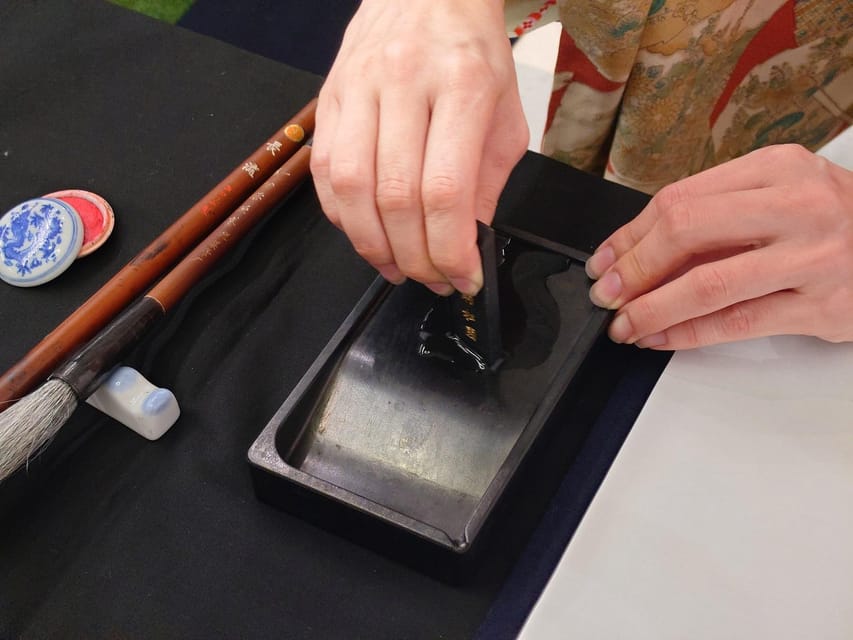
- You start by grinding sumi ink with an inkstone (suzuri), using water plus ink for the full sensory process.
- You practice two brush techniques first: soku-hitsu using the brush side, then choku-hitsu holding the brush upright.
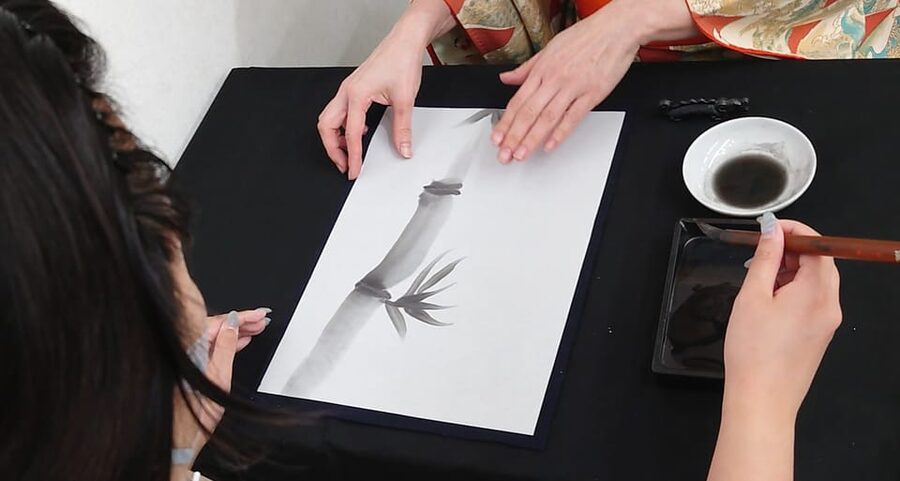
- Your main subject is bamboo, drawn on a shikisi board you’ll take home as a souvenir.
- You finish with kanji, with 竹 (bamboo) and 和 (harmony) offered, plus room for requests.
- Small group format limits the class to 6 participants, with instruction in English or Japanese.
Why this Kyoto sumi ink class feels special in 50 minutes
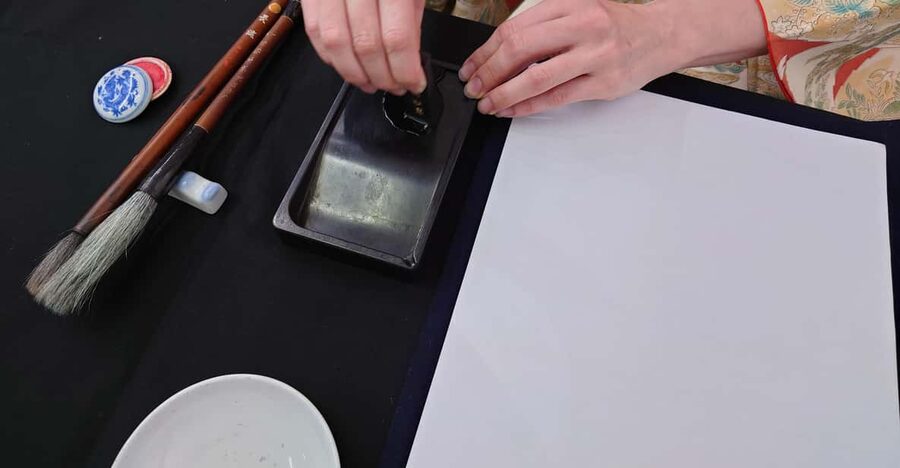
This experience is built around a simple idea: don’t skip the hard-to-copy part. In many calligraphy experiences, you start with ready-made ink and jump straight to strokes. Here, you begin with grinding, so the class teaches patience and control at the same time.
You’ll also love that the work stays practical. You’re not trying to reproduce a painting you saw online. You’re learning how to hold the brush, how pressure changes a line, and how a bamboo stem can look alive with a few deliberate strokes. And because the group is limited to 6, the instructor can spot what you’re doing and correct it before you lock in bad habits.
The vibe is also calming. The session is structured like practice at a steady pace, with enough time to repeat strokes until they feel natural.
You can also read our reviews of more tours and experiences in Kyoto.

Finding the venue near Kani Doraku and planning your timing
The meeting point is near the giant crab sculpture of Kani Doraku. That’s helpful because it gives you a clear landmark in a city where small lanes can confuse you even when you think you know where you are.
Since the class runs about 50 minutes, I recommend you plan to arrive early enough to settle your things and take your place without feeling flustered. The session is conducted indoors, but it still helps to wear comfortable shoes because you could be walking a bit to reach the exact area.
Also note that transportation is not included, so you’ll want to build travel time into your day. Kyoto is easiest when you pair short activities with smart walking, especially when you can combine the class with nearby sightseeing.
Grinding sumi ink with the inkstone: the part most people skip
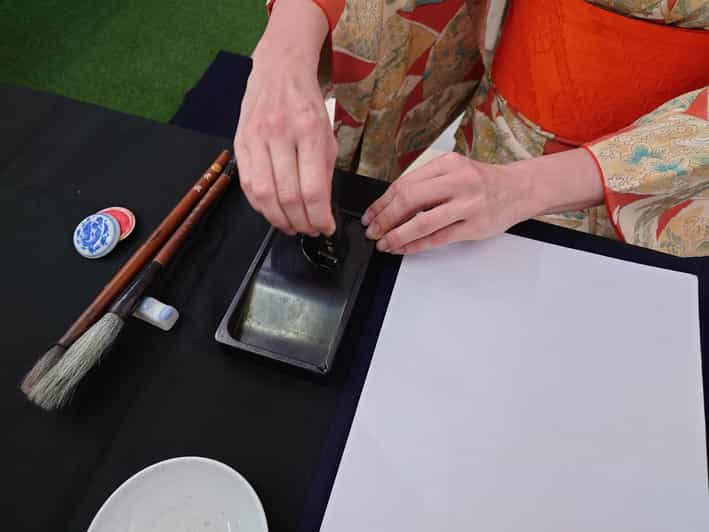
This is where the experience earns its spot on your itinerary. You start by grinding sumi ink with an inkstone (suzuri). Instead of using pre-made ink, you mix it by grinding with water, and you get to experience the fragrance, texture, and the way the ink changes as it’s worked.
Why it matters: calligraphy is physical. If you skip mixing and jump straight to brushwork, you miss the chance to slow down and understand the ink itself. Grinding forces you to feel the material, and it usually helps your brush strokes stay steadier later on.
Expect the class to guide you through it, but you still do the work. This is not a spectator activity. You’ll be focused, your hands will be busy, and the sensory payoff is real. Even if you never cared about calligraphy before, this step can make you care about the craft.
Brush techniques you’ll actually use: soku-hitsu and choku-hitsu
After the ink is ready, you move into technique practice. The class starts with brush basics in a way that makes sense even if you have never held a brush for calligraphy before.
First is soku-hitsu. Here, you practice using the side of the brush. This matters because side contact is where a line gains character. You’re not just drawing a straight stripe. You’re shaping how the brush edge behaves.
Then you practice choku-hitsu, where the brush is held upright. Upright holding usually changes how pressure and movement show up on the board. It’s a small adjustment in your hand position, but it can completely change your results.
I like that the lesson is structured as practice before your final work. You’ll get to repeat strokes and build muscle memory, so when you draw the bamboo, you’re not guessing.
Drawing bamboo on the shikisi board: where your skills become art
Now you get to the main event: drawing bamboo on a shikisi board. This is where the earlier technique practice pays off.
The shikisi board is your canvas, and the bamboo gives you an ideal subject for practicing line variation. Bamboo isn’t one uniform color or one uniform stroke. You’ll be making decisions about curves, thickness, and spacing. The bamboo also lets you incorporate movement into the work, instead of forcing everything into perfect geometry.
A practical note: the class provides what you need, so you’re not hunting for tools. Included items cover the necessary calligraphy setup, including the inkstone for grinding and the shikisi board for your final piece.
This is also a good moment to take your time. If you feel tempted to rush, slow down and focus on your brush angles. The instructor’s guidance is the difference between a board that looks like practice and a board that looks like something you’re happy to hang on a wall.
Writing kanji 竹 and 和 to finish the piece
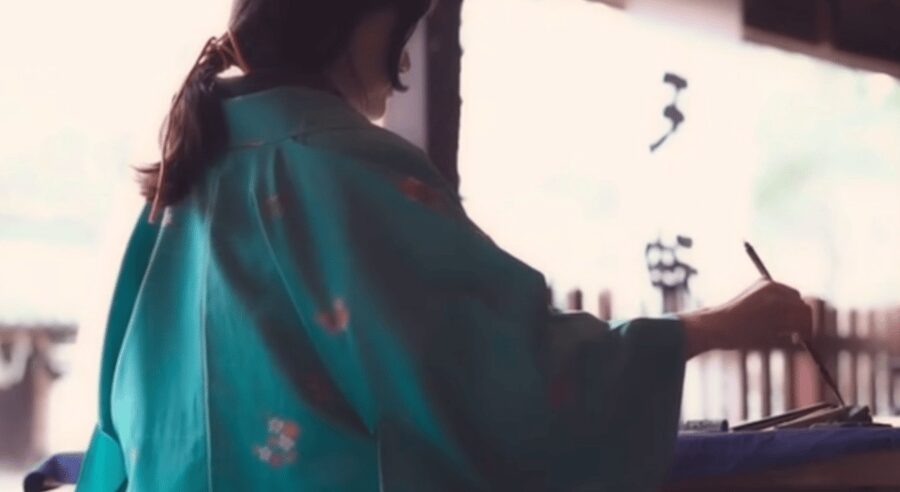
Finishing your bamboo with characters is one of the most satisfying parts of the class. You’ll write kanji next to your bamboo on the shikisi board.
By default, the class offers kanji for:
- 竹 (bamboo)
- 和 (harmony)
You can also make requests, and the guide will help with what you want to write. That option matters, because you get to personalize the piece while still staying within the structure of the lesson.
What you’re really practicing here is placement and flow. Characters need to balance with the bamboo so the final board looks intentional rather than crowded. In a small-group setting, the instructor can guide your hand and remind you about stroke direction so your final strokes don’t drift.
What you take home, and how to use it as a souvenir
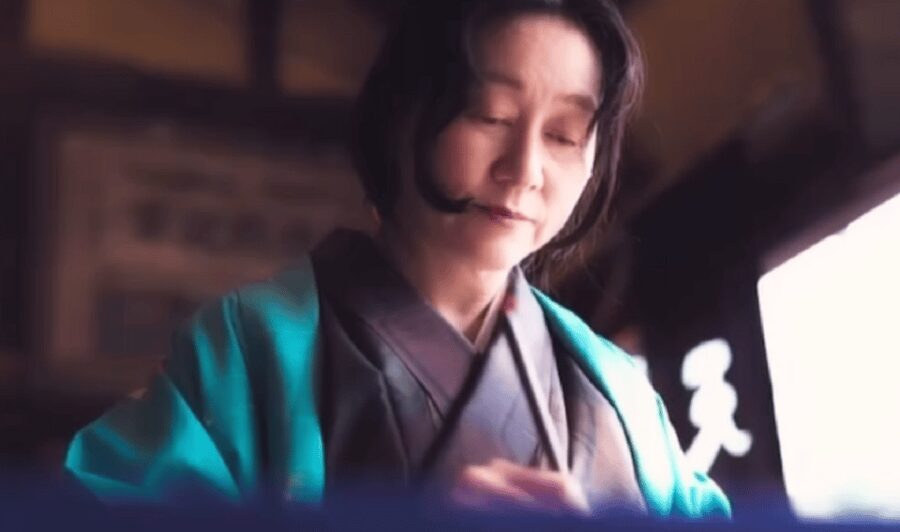
When you finish, you take your completed shikisi board home. That alone makes the class feel more valuable than a one-time photo souvenir.
This is also a souvenir you can display. In practical terms, it’s a ready-to-use piece of wall art for your home, or a gift that doesn’t require extra work. And since you did the grinding, the painting, and the writing, it carries meaning beyond the final visual result.
They also lend you an apron, so you don’t have to worry as much about ink getting on your clothes. Still, I’d keep it simple and wear comfortable clothes that you are okay with using for a messy hand craft.
Price value: is $49 worth 50 minutes of hands-on craft?
At $49 per person for a 50-minute class, the value depends on what you want out of it. If you’re looking for a quick cultural activity you can tick off, you might find cheaper options in Kyoto. But if you want a guided, tool-supported, hands-on craft experience that ends with something you can take home, this price is fair.
Here’s why it feels like good value:
- You are not paying extra for the key materials. Tools are provided, including the inkstone and the shikisi board.
- You get instruction in brush techniques and bamboo drawing, not just sitting down with tools.
- You leave with a finished piece, not an unfinished practice sheet.
The one cost you should plan for is transportation to the venue, since it’s not included. After that, you’re basically paying for a structured lesson plus the materials that become your souvenir.
Who this class suits best (and who should think twice)
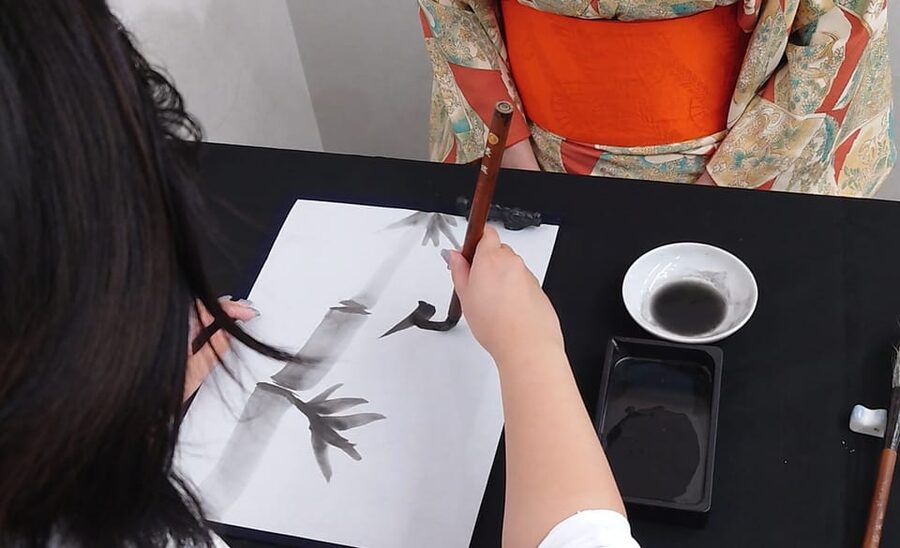
This is a strong fit if you:
- want something calm and hands-on in Kyoto
- like the idea of making ink and then writing with it
- have no calligraphy experience and want guided practice
- enjoy small-group instruction where you can slow down and get corrections
It’s less ideal if you dislike structured practice or you tend to feel uncomfortable with indoor activities that move quickly. And you should pay close attention to the movement and setup needs, because the info includes both a wheelchair-accessible note and a warning that it may not be suitable for people with mobility impairments or wheelchair users. If you have mobility concerns, it’s worth checking with the provider directly before you book.
Practical tips that help you get a better final board
You’ll have an easier time if you show up prepared, even though the class is indoor and provides tools.
Bring:
- comfortable shoes
- a hat
- sunscreen
- water
- comfortable clothes
Even though you’ll be indoors during the class, Kyoto afternoons and walks to meet points can still be sunny. A hat and sunscreen keep your day comfortable.
Also:
- arrive on time, because the class is time-boxed
- wear clothes you don’t mind getting a bit messy, even with the apron
- use the practice time seriously, especially the soku-hitsu and choku-hitsu drills, because they control how your bamboo line quality shows up
Finally, remember that bamboo is forgiving. If one stem is slightly uneven, that’s still part of how brushwork looks. The goal isn’t robotic perfection. It’s confident strokes that feel intentional.
Instructor-led learning in English or Japanese, with step-by-step guidance
Instruction is available in English and Japanese. That matters because calligraphy has plenty of terms for grip, angle, and pressure, and it helps to get guidance in the language you’re most comfortable with.
The teaching style is practical: step-by-step practice first, then application. You’re guided through grinding, then brush techniques, then bamboo, then characters. That order is useful because it builds your ability in stages, instead of dumping everything into the final artwork moment.
The small group format, limited to 6, also helps. It reduces the risk of being one of many people in a line of students, where you only get brief instructions. You’re more likely to get meaningful feedback on what you’re doing with your brush.
Should you book this Kyoto sumi ink and brush calligraphy experience?
I’d book it if you want a short, guided craft session that ends with a finished souvenir, and you like learning by doing. Grinding sumi ink is a rare step in many casual activities, and practicing soku-hitsu and choku-hitsu first gives your final bamboo work a real chance to look good.
Skip it only if you need something very flexible or you strongly dislike any structured practice with tools. Also, if you have mobility needs, confirm suitability directly before booking because the accessibility notes conflict.
If you are the type who enjoys small details, careful handwork, and taking something home that you truly made, this is the kind of Kyoto experience that stays with you longer than a meal or a photo.
FAQ
How long is the Kyoto sumi ink and calligraphy experience?
It lasts about 50 minutes.
What is included in the class price?
You get all necessary calligraphy tools, including an inkstone (suzuri) for grinding ink and a shikisi board for drawing. You also get guidance on brush techniques and drawing bamboo. Pre-made sumi ink is not included.
Do I need prior calligraphy experience?
No prior experience is required.
Can I take my artwork home?
Yes. You can take home your finished shikisi board.
What characters can I write on my shikisi board?
The class provides kanji for 竹 (bamboo) and 和 (harmony). You can request other characters, and the guide will help with them.
Is the activity indoors?
Yes, it is conducted indoors.
What should I bring with me?
Bring comfortable shoes, a hat, sunscreen, water, and comfortable clothes.
Is it wheelchair accessible?
The information includes both that it is wheelchair accessible and that it is not suitable for people with mobility impairments or wheelchair users. If you need accessibility accommodations, you should check with the provider before booking.
More Tour Reviews in Kyoto
Not for you? Here's more nearby things to do in Kyoto we have reviewed






Kyoto Craft & Calligraphy Workshops, compared.
 ★ 5.0Chopsticks Making Workshop in Gion with Engraving OptionFrom $15958 reviews
 ★ 4.8Authentic knife making experience at a blacksmith in KyotoFrom $154350 reviews
 ★ 5.0Calligraphy class at Buddhist temple in city centerFrom $55167 reviews
 ★ 5.0Roketsu dyeing experience: M course Roketsu Dyeing ExperienceFrom $25163 reviews
 ★ 4.9Japanese Archery Workshop with Experienced InstructorFrom $38132 reviews
 ★ 4.8Japanese Calligraphy ClassFrom $5189 reviews
 ★ 5.0TAIKO, Japanese Drum Experience from KyotoFrom $11586 reviews
 ★ 4.7Japanese Calligraphy WorkshopFrom $3284 reviews
Browse the lists this tour appears in