
Toji feels quiet even before you sit down. This Kyoto Toji Temple walking tour pairs history with a guided meditation so you understand what you are seeing, not just where to stand. I like the way the guide connects temple details to the bigger story of Buddhism in Japan, and I also like that the pace works for people who know nothing yet.
The second thing I appreciate is the human touch. In particular, the guide Roy brings a clear, practical tone to Buddhist factions and to the esoteric practices tied to the temple, and one calm seating moment happens in a tranquil hall that many people never experience on their own.
One consideration: this tour is not suitable for people with mobility impairments, and it is built around walking and being present in temple spaces with rules to respect.
Key Points You’ll Care About
- A focused 1-hour walking format that fits easily into a Kyoto day without turning into a half-day project.
- Roy’s clear explanations of Toji and the way Buddhism’s schools and practices connect to everyday spirituality.
- Guided meditation for every level, from total beginner to experienced meditator.
- A calm, less common meditation setting, described as a quiet hall experience.
- Respectful photography rules, with no photos inside temple buildings, but outdoor shots are OK.
- Small group with limited participation, keeping questions and pacing manageable.
Toji Temple in One Hour, South Gate Meeting, Meditation Focus
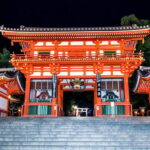
You meet at Toji Temple’s SOUTH Gate, the one labeled なんだいもん on the south side of the grounds. That matters because it gets you oriented immediately. Instead of wandering first, you start with context, and that makes the walking feel intentional from minute one.
The whole experience is 1 hour, which is a sweet spot. You get enough time to learn, move through the area, and have a seated moment, without feeling rushed into a bigger circuit. If you’re visiting Kyoto for the first time, this is a great “learn the meaning” add-on to the usual “see the sights” sightseeing.
The tour is also designed for different comfort levels with meditation. You are not expected to already know posture techniques or have a spiritual background. Instead, you get gentle guidance that brings you into the practice while the guide ties it back to what you are seeing around you.
You can also read our reviews of more walking tours in Kyoto
Meeting Roy: How the Guide Makes Buddhism Make Sense
English and Chinese are offered for the live guide, and the experience is run through Hakumi Co., Ltd. The standout detail from the experience feedback is the person behind the explanations: Roy. You will want a guide who can translate complex spiritual ideas into something you can actually hold in your mind while you walk and sit.
Roy’s approach, as described in the experience notes, is part history teacher and part practice coach. You get historical and cultural insights, but they are not delivered like a textbook lecture. You learn what things mean, then you connect the meaning to the place in front of you.
If you have ever felt overwhelmed by Buddhist terms during Kyoto visits, you’ll likely appreciate the way this tour aims to make the material usable. It also helps that the group is very small, with a limit listed as 1 participant. A small group often means you can ask for clarification and get answers in the tone you need.
Walking the Temple Grounds: Founder Impact and Japanese Buddhist Schools
The heart of the tour is the walking portion of Toji Temple. You start with the temple’s history, including the impact of its founder on Japan’s culture, society, and spirituality. That framing is valuable because it changes your experience from sightseeing to understanding. You stop thinking, This is a pretty temple, and start thinking, This is a place where ideas shaped real life.
Then the guide shifts into the bigger landscape of Buddhism in Japan. You will learn that there are different Buddhist factions, or schools, and that each one has its own practices and emphasis. The point is not to rank them. The point is to show you that Japanese Buddhism is not one single style. It is a collection of traditions that evolved and influenced each other.
On a regular self-guided visit, you can read signs and still miss the relationships between concepts. Here, the guide helps you build a simple mental map: you learn what a school is, you learn what it does, and then you see why an esoteric tradition matters in this specific setting. That kind of structure is what keeps the tour from feeling abstract.
Esoteric Buddhism Practices: What You Learn and Why It Matters
One part of the experience focuses on an esoteric branch of Buddhism and its spiritual significance. Esoteric Buddhism is different from schools people encounter in everyday introductions because it tends to emphasize specific practices and transmissions. In a guided setting like this, you are not just hearing terminology. You are hearing how practices connect to meaning.
For you, that matters because it gives your observation a purpose. When you notice devotional elements around the temple area, you can interpret them through the lens the guide provides. Instead of treating spiritual practices like decoration, you learn how they function as part of a path.
The tour also explains practices associated with that esoteric tradition. The goal is not to make you an expert. The goal is to make you feel oriented. Once you understand the basic idea, your meditation and your walking start to reinforce each other.
If you are new to Buddhism, this section can help you stop feeling like you are missing something. You get a framework before you worry about details. If you already meditate, you may appreciate the way the guide gives context rather than just technique.
Meditation Session in a Tranquil Hall, Built for Your Level
After the history and Buddhism context, you move toward the meditation portion. The tour is explicitly set up so it works whether you are a long-time meditator, a beginner, or someone with no meditation knowledge. That flexible design is a big deal, because meditation instruction can go two ways. It can either assume you know the basics, or it can talk too much and never guide your body.
Here, the meditation is guided. One experience description highlights that the sitting happens in a hall that is tranquil and less known to most tourists. That detail matters because many visitors to major temples focus on what is outdoors and what is photographed most. You get a quieter, more internal moment, which changes the emotional tone of the visit.
In practice, meditation instruction like this usually means posture guidance, attention cues, and a simple structure for sitting. You should expect respect and quiet. You should also expect that your experience will be more meaningful if you actually try the instructions rather than just observing.
Photography rules apply. You cannot photograph inside temple buildings, but outdoor photography is allowed if you are respectful. During a meditation session, you will likely keep your phone away and stay present.
You can also read our reviews of more guided tours in Kyoto



Price and Value at $35, What’s Included and What’s Not
The price is $35 per person for a 1-hour experience. For Kyoto, that is not a bargain, but it is also not trying to compete with cheaper bus-group temple stops. What you are paying for is a guide who can connect history, Buddhism schools, and meditation in one tight timeline.
Here is what that value looks like:
- Guided walking tour with historical and cultural insights
- Introduction to Buddhist practices, including a meditation component
- A small-group feel, with limited participation
What is not included is important for planning. Transportation to the temple is not included, and meals and drinks are not included. Also, an entry fee is not included. That means you should budget a little extra if you decide to go into buildings where an entry charge applies.
If you are the kind of traveler who likes to understand the why behind a place, $35 is easier to justify. You are not just visiting a temple. You are being coached in how to read the place, then sit with it.
Timing, Clothing, and Photography Rules That Keep Things Smooth
This tour is built around walking, and it lasts 1 hour, so your gear should be practical. Wear comfortable clothing suitable for walking. Kyoto weather can swing, so choose layers you can adjust. Keep shoes steady and easy to move in, because you will be moving through temple space rather than riding in a vehicle.
Arrive 10 minutes early at the south gate, なんだいもん. It’s a simple tip, but it prevents that awkward moment where you are late and trying to find a guide while others are already starting.
Photography is one of the most important rules to respect. Photography is not allowed inside temple buildings. Outdoor photography is allowed, but stay respectful of people who are praying or meditating. Also note the basics: no pets and no smoking.
Not suitable for mobility impairments means you should choose differently if walking distance or standing time is a challenge for you.
Who This Tour Is Best For
This Toji Temple meditation walking tour is a strong fit if you want Kyoto spirituality with context. It’s especially good for you if:
- You feel intimidated by Buddhist terms and want clear explanations in plain language
- You want a meditation experience that works whether you are a beginner or experienced
- You like calm, less hectic moments inside major temple areas
- You prefer a short tour that adds depth without consuming half the day
It may not be the right choice if you need step-free routes or have mobility limitations. It also may not suit you if you want a fully flexible, do-what-you-want self-guided temple visit, because this is structured around the guide’s flow and the meditation moment.
Should You Book This Toji Temple Walking Tour?
If you want a one-hour plan that blends temple history with a guided meditation, I think you should book it. The biggest reason is the combo: you get Toji context, you learn how Japanese Buddhism schools connect, and you get an actual meditation session guided to your level.
Also, the guide experience matters. Roy’s explanations are described as inspiring and in-depth, and the meditation setting is described as especially tranquil and less common for typical sightseeing. That pairing is exactly what turns a temple visit into something you remember in your body, not just on your camera roll.
Make the call if:
- You like learning first, then practicing
- You want a respectful, quiet experience
- You are willing to pay for a guide who makes concepts understandable
Skip it if:
- You need accessibility accommodations for walking or standing time
- You prefer self-guided temple exploration without instruction
- You want photography-heavy indoor access, since indoor photos are not allowed
FAQ
Where do I meet for the tour?
Meet at Toji Temple’s SOUTH Gate (なんだいもん) on the south side of the temple.
How long is the Toji Temple walking tour?
The tour lasts 1 hour.
How much does the tour cost?
It costs $35 per person.
What languages are the guides available in?
The live tour guide is available in English and Chinese.
Is the entry fee included?
No, the entry fee is not included.
Can I take photos inside the temple buildings?
No, photography is not allowed inside temple buildings. Outdoor photography is allowed if you are respectful.
Is the tour suitable for mobility impairments?
No, it is not suitable for people with mobility impairments.
Can I cancel for a refund?
Yes, you can cancel up to 24 hours in advance for a full refund.
More Walking Tours in Kyoto


More Tours in Kyoto

More Tour Reviews in Kyoto
Not for you? Here's more nearby things to do in Kyoto we have reviewed


Kyoto Temple & Shrine Tours, compared.
 ★ 4.9Tea Ceremony Ju-An at Jotokuji TempleFrom $293,207 reviews
 ★ 4.8Arashiyama Bamboo, Temple, Monkeys, or Secret Sake BreweryFrom $87886 reviews
 ★ 5.0Arashiyama Bamboo Forest, Monkeys, Matcha & Temple TourFrom $53759 reviews
 ★ 4.4Osaka/Kyoto: Arashiyama, Nara & Fushimi Inari Shrine w/LunchFrom $61754 reviews
 ★ 4.2Ninnaji Temple Entry TicketFrom $5650 reviews
 ★ 4.7Imperial Palace & Nijo Castle Guided Walking TourFrom $49453 reviews
 ★ 5.0Kyoto Zen Meditation & Garden Tour at a Zen Temple with LunchFrom $110441 reviews
 ★ 5.0Zen Experience in a Hidden TempleFrom $109437 reviews
Browse the lists this tour appears in