
Reviewed · KYOTO BIKE & E-BIKE TOURS
Nara: City Highlights Shared Group or Private Bike Tour
Nara by bike is a smart way to see a lot without rushing. I like how the tour strings together the big names, Tōdai-ji and Kasuga Taisha, with calmer moments in-between, like moving through Nara Park at an easy pace. I also appreciate the guide-led teaching, where you get the practical story behind Buddhism and Shinto as you’re actually standing in the places. One thing to watch for is the starting point, which is not in the most tourist-convenient spot, so you’ll want a little extra time to reach the bike base near Toichi Shougakko.
You’ll roll out with a helmet, a solid bike, and a plan that feels efficient instead of frantic. The route covers classic sights plus a working detour at a Kikuichi knife store, which adds a real-world slice of Japanese craft to the day. The main tradeoff is simple: it’s not a walk-only tour, and it’s not designed for anyone who uses a wheelchair or has limited mobility.
Key Highlights Worth Showing Up For
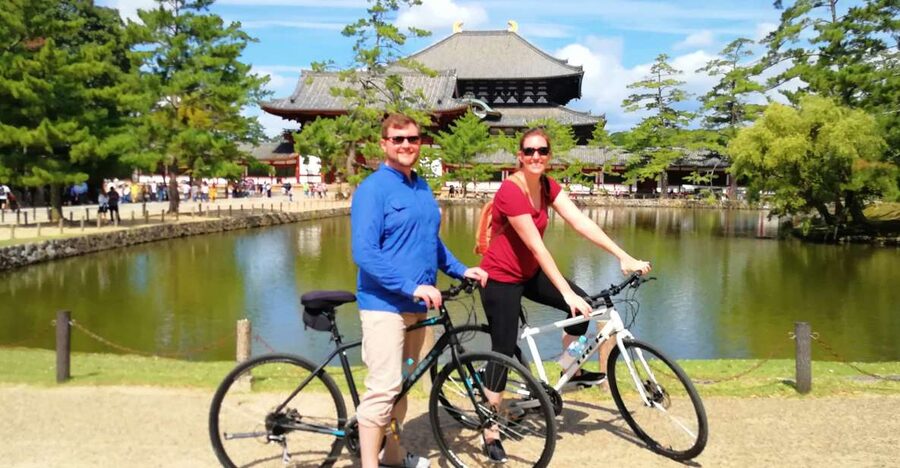
- Nara Park deer time at a relaxed cycling pace, plus calm photo stops
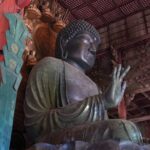
- Tōdai-ji Giant Buddha (15-meter statue area) with on-the-ground context
- Kasuga Taisha lantern viewing with a focus on the shrine’s character
- Bike-first sightseeing that saves you the backtracking that buses can cause
- A Kikuichi knife shop visit that connects culture to everyday Japanese craftsmanship
- English/French/Japanese live guide with strong explanations that make the sites click
Nara on Two Wheels, the Sights That Actually Fit
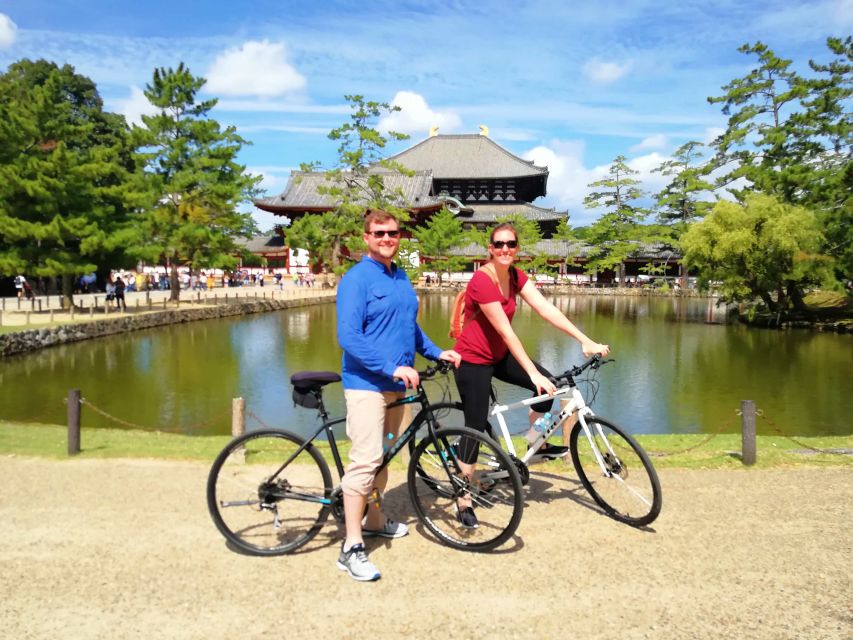
If your Nara day feels too short or too crowded, a small-group bike tour is a very reasonable fix. You cover major landmarks in about three hours (210 minutes) without the stress of trying to connect everything on your own. And because you move by bike, you spend more time seeing, less time waiting, and you get that feeling of gliding through the city rather than shoehorning it into a walking sprint.
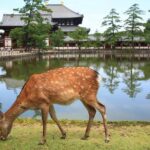
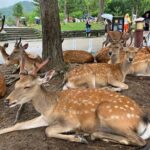
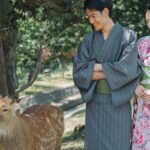
The best part for me is the balance between “big ticket” sights and the quieter rhythm in between. You start by heading out to a spot near Ukimido, then you quickly settle into Nara Park. That’s where the tour pays off in a very Nara way, deer roaming freely, trees around you, and a sense that this place is lived in, not just visited. It’s not a theme-park deer moment either. You’re riding through the park and pausing when it makes sense.
Another big plus is the guide’s role. This tour isn’t only about where to go, it’s about why those places matter. You get explanations tied to Buddhism, Shinto, and Japanese history as you pass shrines, gates, and temple grounds. One guide I saw referenced by name was Robert, and the consistent pattern in the feedback is that the guide is engaging, talkative, and good at translating big ideas into what you can actually see in front of you.
There is one practical consideration. This is a working bike tour. You will be on the bike for meaningful stretches, and there may be a few climbs depending on your exact route. If you hate cycling, or you need fully flat, wheelchair-friendly access, this setup won’t suit you.
You can also read our reviews of more cycling tours in Nara


Getting Started Near Toichi Shougakko (Plan Your Arrival)
Your tour begins at the bike base near the Toichi Shougakko bus stop, and the easiest way to find it is by searching Japan Tour Adventure in Nara on Google Maps. You won’t be picked up at your hotel, so you’ll need to get yourself to the start point.
The good news is that the area is reachable from both JR Nara Station and Kintetsu Nara Station by bus. The tour provider also shares a YouTube link with directions, which can save you time when you are juggling station exits and bus signage.
Here’s my practical take: don’t treat the start time like it’s flexible. Build in buffer time. Even if you’re good with transit, you want enough slack for finding the bike base, getting your helmet, and taking care of small questions before you roll. The tour moves quickly once it starts.
Ukimido to Nara Park: Easy Rolling, Real Atmosphere
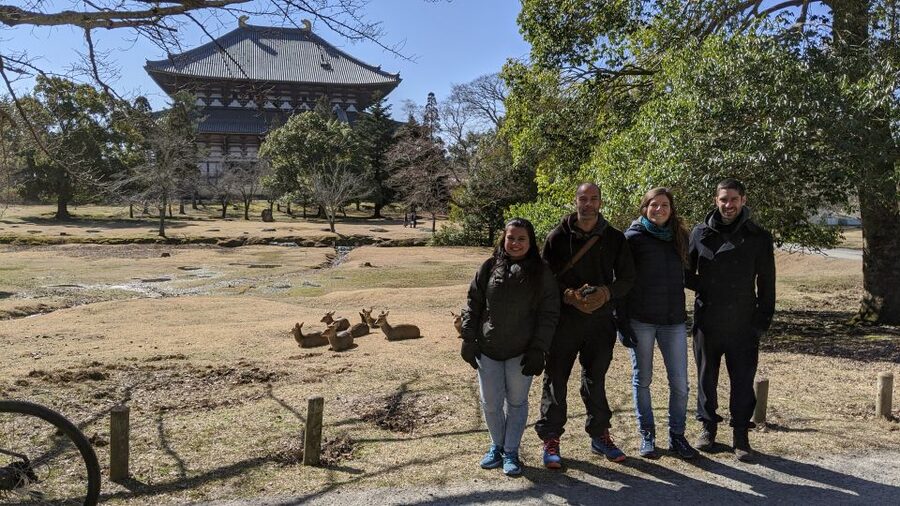
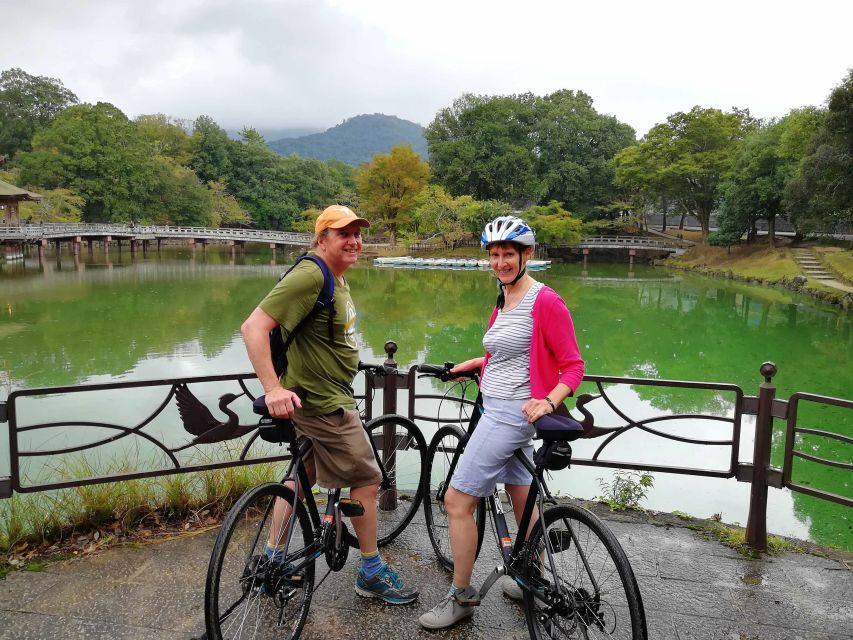
Right after the introduction and safety briefing, you’re on the bike. The first segment is a short ride around Ukimido, about 30 minutes. This matters more than you might think. It’s the warm-up that helps you get comfortable with bike handling and traffic awareness before the tour starts stacking up stops.
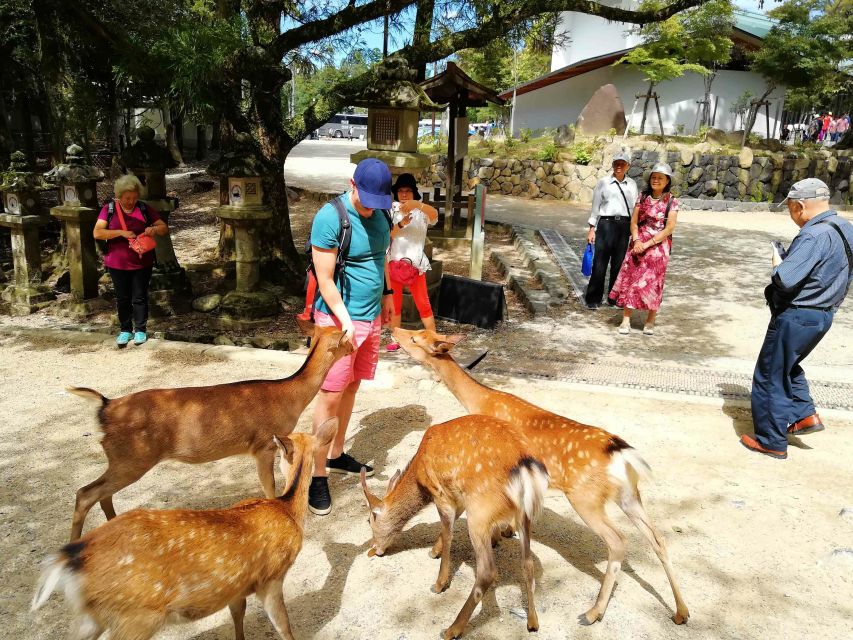
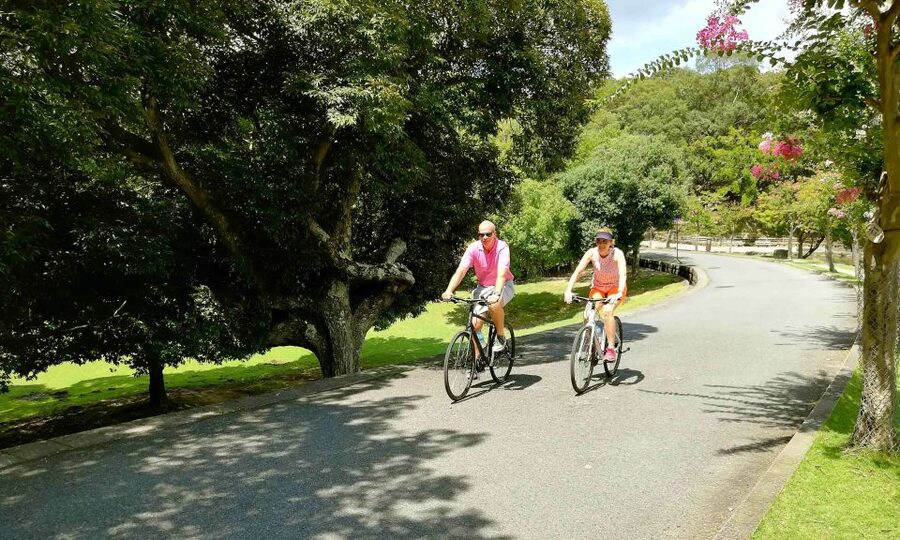
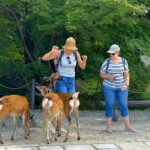
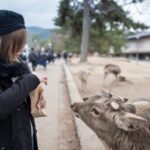
Then comes Nara Park, about 30 minutes of cycling and wildlife viewing. You’re not stuck staring at deer from one tiny spot. Instead, you get the chance to ride through the park at a relaxed pace, look around, and snap photos while the setting stays calm and natural.
A big part of Nara Park is the feeling of scale. You are surrounded by well-kept grounds, and the deer are part of that ecosystem, not just a crowd-control problem. You’ll likely see deer wandering close enough to notice their behavior. If you bring a camera, this is one of your best windows, because the mood feels gentle rather than chaotic.
You also get a key timing advantage. By cycling instead of walking all the distance, you can experience Nara Park while the day still feels like a coherent itinerary rather than a series of rushed sprints between landmarks.
Nandaimon Gate of Tōdai-ji: The Photo Stop That Sets the Tone
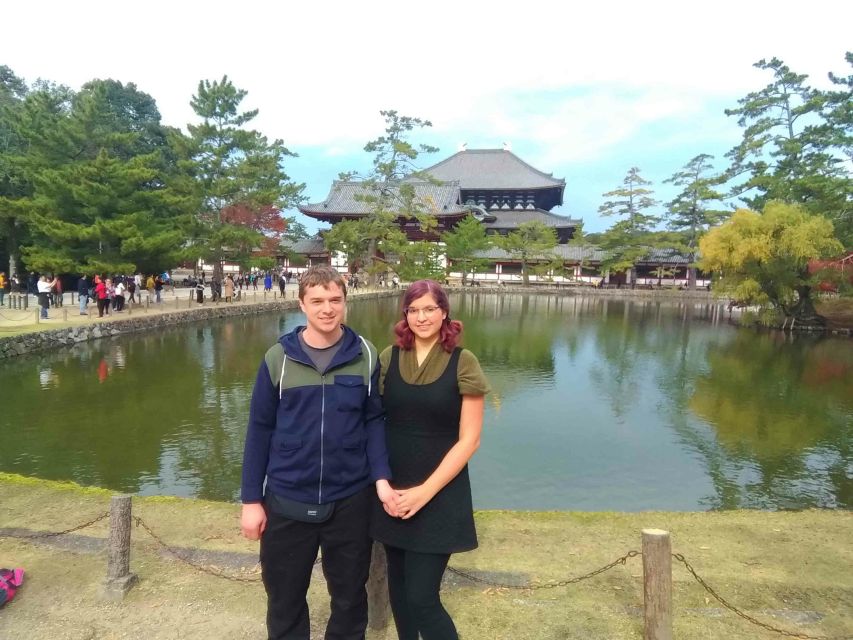
One of your early highlights is the Nandaimon Gate of Tōdai-ji. You’ll get a photo stop and a walk through this area for about 20 minutes. This is a classic threshold moment. You’re moving from the open park feeling into a temple setting with strong visual power.
What makes this stop useful is that it acts like a framing device for the rest of the visit. You’re not arriving at the main temple grounds as a random tourist with no context. The guide’s explanations help you read what you’re seeing as you transition.
Even if you think you already know Tōdai-ji, the guided approach changes your attention. You stop looking for Instagram angles and start noticing how the architecture and the setting are meant to communicate authority and spiritual focus.
Tōdai-ji in Person: Giant Buddha and the Big Ideas
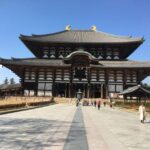
Next is the heart of the tour: Tōdai-ji itself, with about 45 minutes for sightseeing, photo stops, and walking the grounds. The famous reason to come is the giant Buddha statue. You’ll see the massive 15-meter-tall Buddha in the temple complex area, and it’s the kind of scale that makes your brain go quiet for a second.
What I value here is that you get more than a “this is old” explanation. The guide connects the dots between Buddhism and Shinto culture in a way that’s easier to hold in your head because you’re learning it while you’re surrounded by the real objects and spaces. You’re not reading a lecture in a museum. You’re standing on a route that makes the story physical.
Also, this stop works well for different travel styles. If you like to photograph, you can do it without feeling like you’re missing the main point. If you prefer understanding, you can lean into the guide’s comments and take your time scanning details in the grounds during your walk.
The only drawback is how quickly you have to manage your attention. Forty-five minutes sounds like plenty, but it’s a lot to pack into a guided route. If you want a slow, solo deep look at every corner, you might wish you had more time. The tradeoff is that the tour includes multiple major landmarks in one go.
You can also read our reviews of more city tours in Nara
Kasuga Taisha and the Thousand Lanterns: The Shrine Feel You Can Notice
After Tōdai-ji, you head to Kasuga Taisha, with about 30 minutes including a photo stop, sightseeing, some free time, and scenic views on the way. The big hook here is the thousand lanterns. Even without a night-time lantern spectacle, Kasuga Taisha has a distinct character. You can feel the shrine atmosphere, and the lanterns make it visually unforgettable.
This stop is not just about checking a box. You’re cycling in and out of the scene, which gives you a sense of how the shrine fits into its surroundings. The guide’s talking points help you understand why those lanterns are important in the shrine setting, rather than treating them as decoration.
One detail that adds to the experience is the “on the way” scenic viewing. You’re not only stopping at one point and leaving. You get a route where you can pause, look, and take photos with more than one angle.
If you’re the kind of person who likes to see spiritual places with context, this is the leg that tends to stick. It has that mix of quiet and visual impact.
Kikuichi Knife Store: Japan Through Craft, Not Just Landmarks
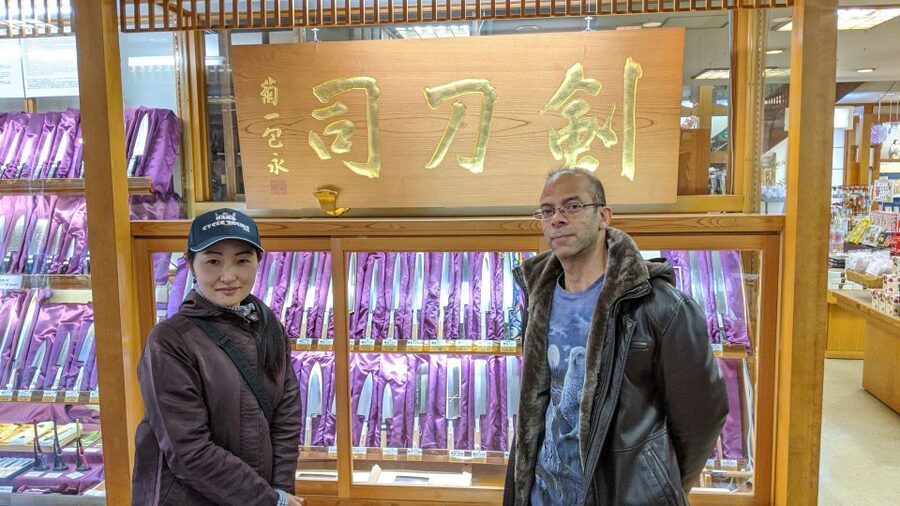
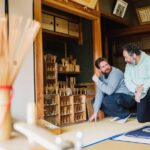
Here’s the part that surprised me, and it might surprise you too: the tour includes a visit to the Kikuichi store, listed as Kikuichimonjushirokanenaga honten. It’s described as a high-end Japanese cooking knife retailer, and you’ll have about 30 minutes for the visit, shopping, and an arts and crafts market visit.
This stop matters because it gives you a different flavor of Japanese culture than temples and shrines. Instead of history-only, you get a connection to craftsmanship, materials, and daily life. Even if you don’t plan to buy a knife, you can learn by simply watching how the store presents its products and explaining what makes Japanese kitchen tools special.
If you are a foodie or a home cook, this is where the trip becomes practical. You can see what people mean when they talk about Japanese cutlery reputation. And if you do decide to shop, you’re getting the experience of walking into a focused specialty shop as part of a guided cultural route.
The main consideration is time and impulse. Because this is a shopping stop, it can slow you down if you start browsing deeply. That’s not a problem, just go in with the mindset that you’re likely to spend time learning even if you don’t buy.
Bike Pacing, Fitness Level, and What the Tour Actually Feels Like

The route is designed to be “not too intense,” but it isn’t a flat stroll. People have noted that it has a few climbs but still feels worthwhile. You should expect to pedal. You’ll ride between stops, then get walking time for photos and temple or shrine ground viewing.
If you want to judge your fit before booking, think about these factors:
- Can you comfortably ride a bike for short to moderate stretches?
- Are you okay with gentle climbing and stopping often for photos?
- Do you like guided explanations while walking rather than free roaming?
The tour is also a good match if you prefer structured sightseeing. It’s “head off to discover,” not “wander and hope.” You get a safe, organized pace with clear stops at places that matter. At the end, you’ll likely feel tired in a good way. This is not a passive tour.
Another good sign: the equipment is included, meaning bike and helmet are provided. You won’t be stuck hunting for rentals, and you can start the day with fewer hassles.
Price and Value: Why This One Costs What It Costs
At $70 per person for roughly three hours, the value is all about what you get inside that price. You’re not only paying for a guide. You’re also getting the bike, the helmet, entrance fees, and bottled water.
Entrance fees add up quickly when you’re visiting major temple and shrine sites. So do the logistics costs if you were to try to connect those stops alone with transit plus rentals. The guide also does real work for you, translating what you’re seeing into something understandable, and keeping the route efficient.
What’s not included is food and drinks, so you’ll want to plan around that. Since there’s a shopping stop and a lot of walking, bringing a snack and water strategy can make your experience smoother. You’re given bottled water, but it never hurts to have your own plan for energy if you’re sensitive to hunger during active days.
Bottom line: if you like bike travel and you want to hit the core Nara highlights in one tidy morning or afternoon, this is a strong value.
Should You Book This Nara Bike Tour?
I’d book it if you want an efficient Nara highlights day with a guide who explains more than ticket line facts. It’s a great fit if you enjoy cycling, you want to see Nara Park deer, you’re excited to visit Tōdai-ji, and you don’t mind a specialty stop at a Kikuichi knife shop.
I’d skip it if you need fully accessible, walk-only mobility, or if you strongly dislike cycling with any climbs at all. Also, if you hate figuring out where to meet and you want hotel pickup, you may find the start point a hassle.
One last tip: arrive early enough to feel calm. Once you’re moving, you’ll likely appreciate how smoothly the route flows from park to temple to shrine to craft.
FAQ
How long is the bike tour in Nara?
It runs for about 3 hours, listed as 210 minutes.
What is included in the price?
The tour includes the bike and helmet, a live guide, entrance fees, and bottle of water.
What is not included?
Hotel pickup and drop-off are not included, and food and drinks are not included.
Where do we meet the guide?
You meet your guide at the bike base near the Toichi Shougakko bus stop. You can find the bike base by searching Japan Tour Adventure in Nara on Google Maps.
Which places does the tour include?
The tour includes Nara Park, Tōdai-ji (including the giant Buddha area), Kasuga Taisha (with its thousand lanterns), and a stop at the Kikuichi store. It also includes the Nandaimon Gate of Tōdai-ji.
Are there free time stops during the tour?
Yes, there is free time included at Kasuga Taisha.
What language is the guide available in?
The live tour guide is available in English, French, and Japanese.
Is the tour suitable for people with mobility impairments or wheelchair users?
No. It is listed as not suitable for people with mobility impairments and wheelchair users.
What happens if it rains?
The tour may be canceled if the day’s weather forecast says the chance of rain is more than 60%. You’re informed in the evening the day before.
What should I bring?
Bring comfortable shoes and clothes, a camera, and passport. You should also bring food and water.
More Cycling Tours in Nara
More Tours in Nara
More Tour Reviews in Nara
Not for you? Here's more nearby things to do in Nara we have reviewed


Kyoto Bike & E-Bike Tours, compared.
 ★ 5.0Hidden Kyoto E-Biking tourFrom $1161,843 reviews
 ★ 5.0Bike Tour Exploring North Kyoto plus LunchFrom $1061,087 reviews
 ★ 5.0Arashiyama Bamboo Forest & Hidden Gems Bike Tour (Early Bird)From $106613 reviews
 ★ 5.05 Top Highlights of Kyoto Full Day Bike Tour (E-bike option)From $172511 reviews
 ★ 5.0Full Day Biking Tour Exploring the Best of KyotoFrom $119498 reviews
 ★ 5.0E-Bike Tours of the highlights of Kyoto!!!From $109291 reviews
 ★ 5.0Afternoon Kyoto Bike Tour: Bamboo Forest, Monkeys & Hidden SpotsFrom $106283 reviews
 ★ 5.0South Kyoto in a Nutshell: Gentle Backstreet Bike Tour!From $79225 reviews
Browse the lists this tour appears in