
Reviewed · KYOTO BIKE & E-BIKE TOURS
Pedal through Kyoto’s Past: A Private Biking Odyssey
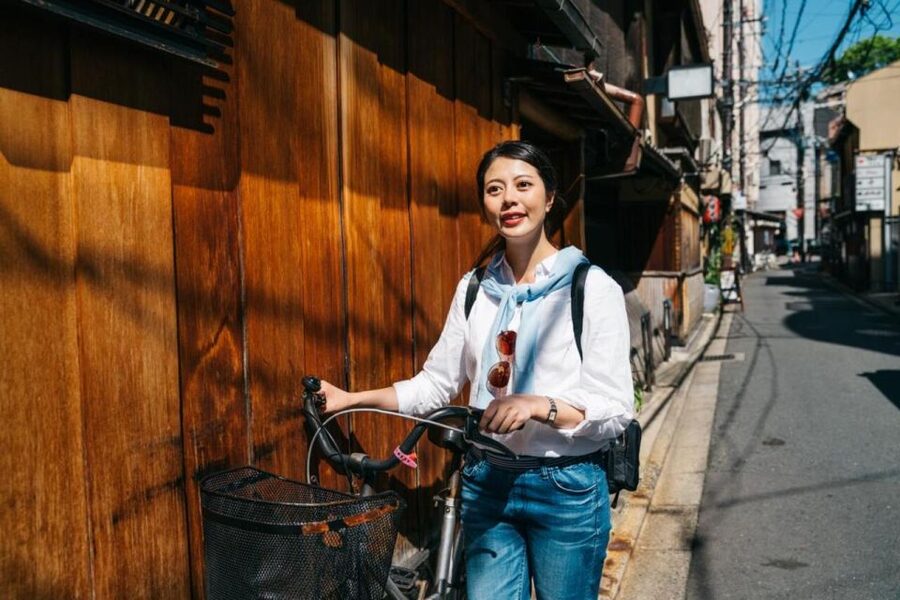
Kyoto by bike feels like getting a backstage pass. A private 6-hour ride through Gion, Kinkaku-ji, and the Senbon Torii gates is a smart way to see the icons without negotiating crowds. I especially like the private group pace, and I also like having a local guide who can explain what you are actually looking at. One consideration: this is not for kids under 13, and you do need to be comfortable riding a bike for the full loop.
Starting near Nishi Hongan-ji, you begin with temple calm, then the day turns into gold reflections, vermilion gates, and classic Kyoto streets. Along the way, your guide can point out meaningful context about emperors, monks, and geisha culture, so the sights land with more weight than photos alone. The trade-off is simple: a bike tour moves you through Kyoto at human speed, so you will want to stay engaged instead of expecting to wander for hours at each stop.
Key Things You’ll Really Notice on This Ride

- Nishi Hongan-ji start: a quieter beginning that sets a respectful tone for the day
- Gion by bike: historic lanes with less crowd stress than typical walking routes
- Kinkaku-ji’s golden look: you get a chance to focus on the pavilion’s reflections and details
- Senbon Torii gates: vermilion pathways where pacing matters more than rushing
- Private guide storytelling: explanation in English, Spanish, German, or Chinese (depending on your choice)
A Private Kyoto Bike Day Beats the Usual Crowd Math
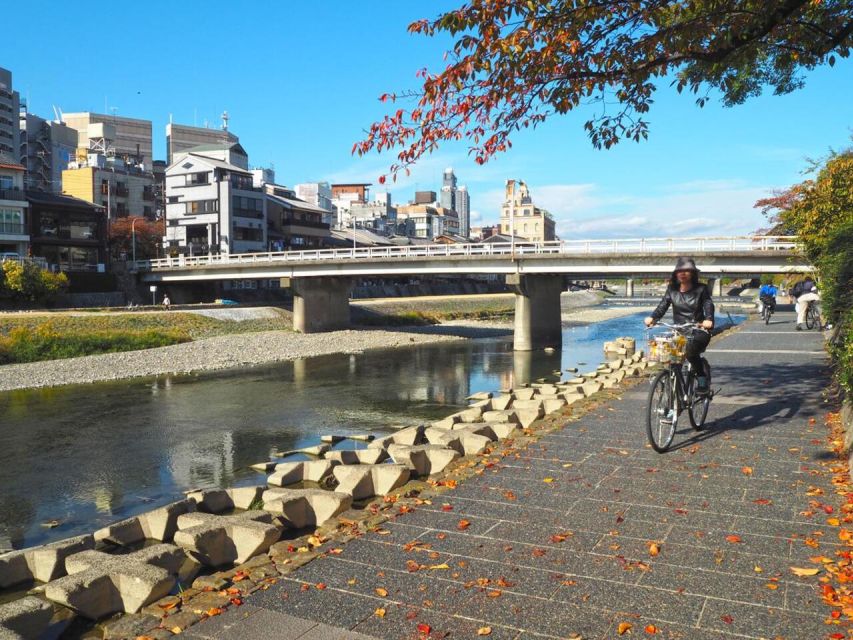
Kyoto is famous for being walkable, but some of its biggest highlights can feel like a long slow queue. This private bike format solves that problem in a practical way. You are not waiting for other groups, and you are not stuck doing the same photo stops over and over.
I like the value in the structure. For $1,369 per group up to 2 people, you are basically buying time and attention: your guide plus a bike, for a full 6-hour window. For couples and close friends, it is easier to justify than it looks, because you split the cost across fewer people and you get more flexibility with the pace.
The big payoff is not just moving efficiently. It is how the day connects. Temples, gates, and historic districts are all different moods, and cycling helps you transition between them without losing the thread.
You can also read our reviews of more cycling tours in Kyoto

Starting Near Nishi Hongan-ji, Calm First, Noise Later
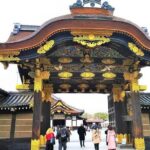
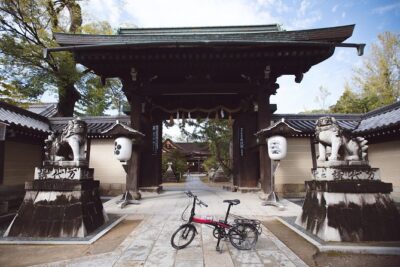
You meet near Nishi Hongan-ji Temple. That matters more than it sounds. If you start in the middle of the busiest tourist corridors, the whole day can feel chaotic. Starting with a temple setting helps you shift gears mentally.
Nishi Hongan-ji is a serious spiritual anchor in Kyoto. Even if you are not there for religious study, you can use the first moments to slow down, get oriented, and let your guide set expectations for the ride. This is also where you can get quick coaching on the bike setup and riding style, so the rest of the day feels smoother.
Practical tip: show up with a little patience for the beginning. Kyoto streets can look easy until you meet real traffic patterns and pedestrian flow. Starting at a temple gives you a safer runway to settle in.
Gion’s Historic Lanes, Seen at the Right Pace
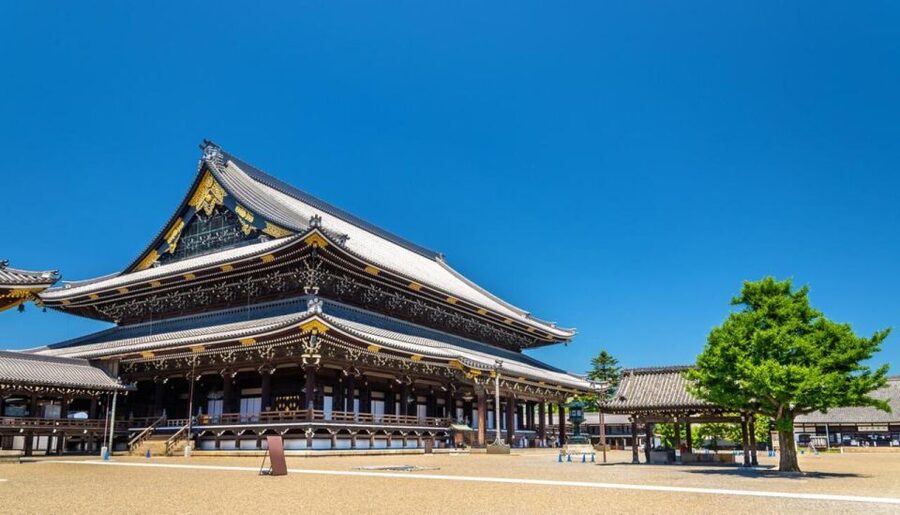
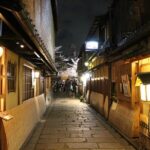
Next, you cycle through Gion, one of Kyoto’s best-known historic geisha districts. The charm of Gion is not only architecture. It is the sense of place, the rhythm of small streets, and the way the area changes with the light and the time of day.
Seeing Gion from the saddle is a smart compromise. If you walk, you get tangled in foot traffic. If you drive, you miss the intimate scale of the lanes. On a bike, you can glide past without feeling rushed, and you can stop where the story makes sense.
This is also where a good guide earns their fee. Gion can be misunderstood if you only see it as scenery. With a local guide, you can connect what you see to the cultural background: how the district fits into Kyoto’s past, and why the streets and structures carry meaning.
What to watch for:
- Traditional street form and building lines that signal older city planning
- Details your eyes would miss if you were only hunting for big landmarks
- The contrast between quieter corners and busier frontage
Kinkaku-ji’s Golden Pavilion: More Than a Photo Moment
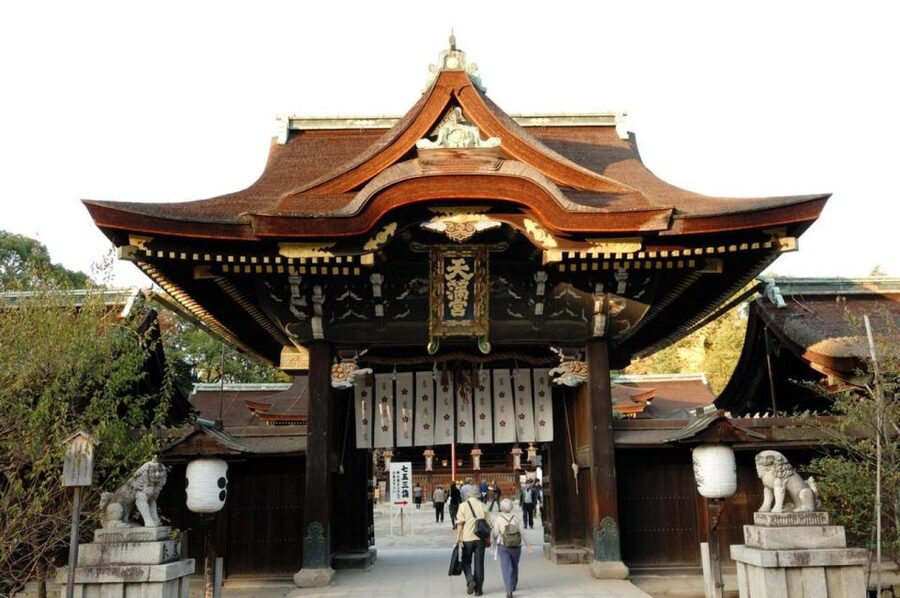
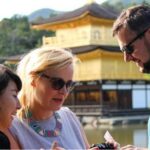
Then comes Kinkaku-ji, the famous golden pavilion. Even if you have seen pictures online, the real experience is about surfaces and reflection. The pavilion’s look changes with weather and surrounding light, and that is where the timing of a bike route can help you slow down mentally.
I like that this stop is framed as something to experience, not just snap. You glide into the area, and you have enough time to focus on the pavilion’s presence, its setting, and the way the gold tone interacts with the landscape around it. If you care about details, this is one of the most rewarding parts of the day.
A balanced note: Kinkaku-ji is still a major attraction. Even on a private tour, you can expect some visitors in the wider area. The advantage is that your guide helps you read the space and make better choices about where to stand and how long to linger.
Senbon Torii Vermilion Gates, and Why Pacing Matters
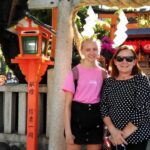
Your route also takes you to the Senbon Torii, Kyoto’s iconic vermilion gate pathways. This is one of those places where the experience is physical as well as visual. The repeated gates create a strong sense of movement, and they can feel longer than they look at first glance.
On a bike tour, you are not forced into a long nonstop march. Instead, you get the benefits of controlled pacing. That matters because Senbon Torii works best when you slow down enough to notice how the corridor tightens your attention. Rushing can turn it into just another landmark. Slowing down turns it into atmosphere.
Practical advice: if you feel tempted to rush for the perfect photo, pause and let your guide guide your timing. The gates are where the day’s mood shifts toward calm and focus.
You can also read our reviews of more private tours in Kyoto
Imperial Palace Area and Tōfuku-ji: Kyoto’s Different Side of Beauty
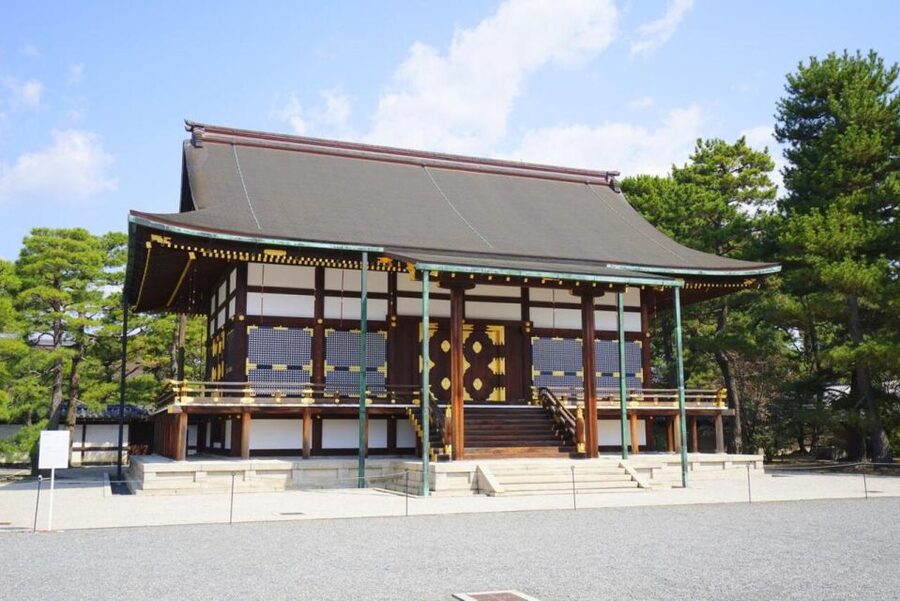
Your day can also include the Imperial Palace area and Tōfuku-ji, with seasonal moments around Tōfuku-ji. This is where the tour becomes more than a highlight circuit.
The Imperial Palace area brings a different scale and a more formal side of Kyoto. Even if you do not spend hours deep inside, the setting helps you understand the city as a political and cultural center, not just a collection of temples.
Tōfuku-ji adds another layer. The key word here is seasonality. The temple grounds can look dramatically different depending on the time of year, and a guide can point out what to look for based on the current season. That turns your visit into something more personal, because you are not just seeing a fixed postcard view.
If you have a short attention span, this section may feel like it has more context than you expected. If you like understanding, it is a treat. This is also where a knowledgeable guide can connect architecture and garden form to the broader Kyoto story.
What 6 Hours Means in Real Terms (Not Just on Paper)
A 6-hour private tour is a sweet spot. It is long enough to cover major highlights in a meaningful way. It is short enough that you avoid the fatigue that comes with a full day of constant walking.
You are cycling between stops, which helps, but you still need to plan your energy. Build in hydration and keep a steady rhythm. Think of it like an active sightseeing day, not a sit-down museum schedule.
Another benefit of the private format is adjustment. Your guide can help you manage transitions so you are not stuck waiting around. That keeps the day moving, but not in a frantic way.
Bike Comfort and Street Sense in Kyoto
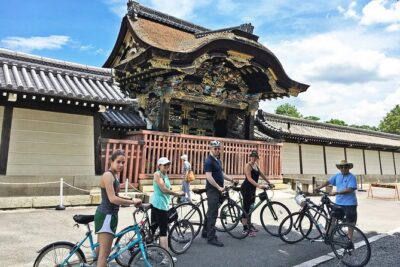
You get a bike included, and the guide helps you get the day rolling. I recommend you treat this as a real bike activity, not just transportation. Wear comfortable shoes. Dress for the weather. Bring a small water bottle if you like to control your own breaks.
Bike riding in Kyoto also means street awareness. You are mixing with cars, bikes, and pedestrians. The best strategy is calm, predictable movement. If you are new to riding or not confident in traffic, you will need to be honest about that upfront. This tour is not suitable for people who cannot ride a bike.
Also, remember etiquette near temples and historic districts. Keep noise down, follow local rules, and treat the stops with respect. Your guide will steer you on what is appropriate in each area.
Your Guide Matters, and Tomomi Is a Standout Name

One reason this experience scores well is guide quality. A guide named Tomomi has been praised for being extremely knowledgeable about Kyoto culture and history, with attention to detailed context. The other part of that praise is just as important: Tomomi is described as pleasant and friendly, which matters a lot on a day that can be physically active.
This is what you should look for in a private tour. You want more than direction. You want someone who can translate what you see into why it matters. When that clicks, the day feels smoother, and the highlights feel connected instead of random.
Even if you do not ask a lot of questions, a good guide will pace the information so you do not feel lectured. That makes it fun, not just informative.
Price and Value: $1,369 for Up to 2 People
At $1,369 per group up to 2, this is not a budget tour. But it is not priced like a massive group experience either. This is a private service, with a professional local tour guide and a bike included, for a full 6-hour outing.
Here is the value math I use:
- If you split the cost between two people, your per-person cost drops.
- You are paying for time, access, and a guide who can help you avoid wasted stops.
- You are getting transportation between key sights, which saves you energy and planning.
If you are traveling solo, it can feel expensive compared to group tours. If you are a pair and you want a calmer, more personal day, this price starts to look fair.
Who This Tour Is Best For (And Who Should Skip It)
This tour fits you best if you:
- Want a private group experience with only your party
- Like active sightseeing, and you can ride a bike confidently
- Want cultural context along the way, not just landmark checking
- Prefer a guide who can work in English, Spanish, German, or Chinese
It may not fit you if you:
- Are traveling with kids under 13
- Cannot ride a bike
- Expect lots of long unstructured wandering in a single place
Should You Book This Private Biking Odyssey?
I would book this if you want Kyoto highlights in a calmer, more guided way. The combination of a private group, a real local guide, and a route built around major landmarks like Gion, Kinkaku-ji, and Senbon Torii is ideal for couples who want a memorable day without crowd friction.
If you are unsure, here is the quick test. Ask yourself if you will enjoy cycling for hours and if you care about context while you see the sights. If yes, this is a strong choice. If you want a slow stroll with frequent stops at your own pace, you might prefer a different style of tour.
More Private Tours in Kyoto
More Cycling Tours in Kyoto

More Tour Reviews in Kyoto
Not for you? Here's more nearby things to do in Kyoto we have reviewed
Kyoto Bike & E-Bike Tours, compared.
 ★ 5.0Hidden Kyoto E-Biking tourFrom $1161,843 reviews
 ★ 5.0Bike Tour Exploring North Kyoto plus LunchFrom $1061,087 reviews
 ★ 5.0Arashiyama Bamboo Forest & Hidden Gems Bike Tour (Early Bird)From $106613 reviews
 ★ 5.05 Top Highlights of Kyoto Full Day Bike Tour (E-bike option)From $172511 reviews
 ★ 5.0Full Day Biking Tour Exploring the Best of KyotoFrom $119498 reviews
 ★ 5.0E-Bike Tours of the highlights of Kyoto!!!From $109291 reviews
 ★ 5.0Afternoon Kyoto Bike Tour: Bamboo Forest, Monkeys & Hidden SpotsFrom $106283 reviews
 ★ 5.0South Kyoto in a Nutshell: Gentle Backstreet Bike Tour!From $79225 reviews
Browse the lists this tour appears in