
Reviewed · WORKSHOPS
Pure Silver Spoon Making Workshop in Kyoto
Silver, hammer, and a spoon you design yourself. This Kyoto pure silver spoon workshop lets you shape a real cutlery piece, right near Shugakuin Imperial Villa, with careful help from the OKUMURA team. It is a rare craft activity where the main event is not a souvenir you watch being made, but one you actually make.
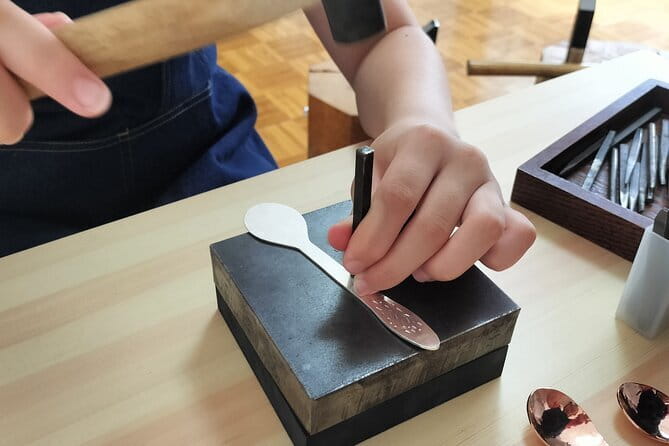
I like two things a lot here. First, the process is hands-on, from carving a pattern using a chisel or stamp to hammering the metal into spoon form. Second, you finish with a practical keepsake, your spoon placed in a paulownia box, plus a metal polishing cloth so you can keep it looking sharp.
One thing to consider: this is focused bench time. You are making your spoon step-by-step for about 2 hours 30 minutes, so it is not built as a sightseeing stroll or a quick stop.
Key things I’d zero in on
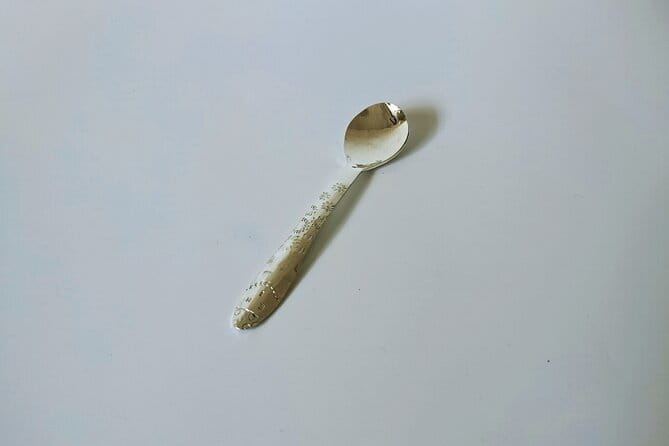
- Pure silver cutlery, not a craft imitation: you are shaping actual silver into a spoon you can use, small tasks included.
- Your pattern is the design: choose the chisel or stamp style, then add your own favorite motif before shaping.
- Hammering and filing are part of the craft: the work feels physical, which is great if you like doing, not just watching.
- Safety-minded polishing step: a craftsman polishes using a machine, and you do the final polishing yourself.
- Paulownia box included: your spoon leaves with proper presentation, which matters for gifting and storage.
Pure Silver Spoon Making near Shugakuin Imperial Villa
Kyoto has endless crafts, but this one is special because it starts with silver and ends with something you can hold daily. The workshop is about an 8-minute walk from Shugakuin Imperial Villa, which puts you in a quieter Kyoto pocket. It also helps if you want to do something “Kyoto” that is not centered on the most crowded streets.
The meeting point is at 1-15 Shūgakuin Yamanohanachō, Sakyo Ward, Kyoto 606-8025, Japan. The activity starts and ends back at this same point, which keeps logistics simple. You can also plan around public transportation since it is near transit.
This is a private activity, meaning only your group participates. That matters for crafts. You get more time and patience, and the instructor can slow down if you want to ask questions.
More Kyoto temple visits, food tours, tea experiences, and day trips to compare

The 2.5-hour flow: build, shape, polish, and take home
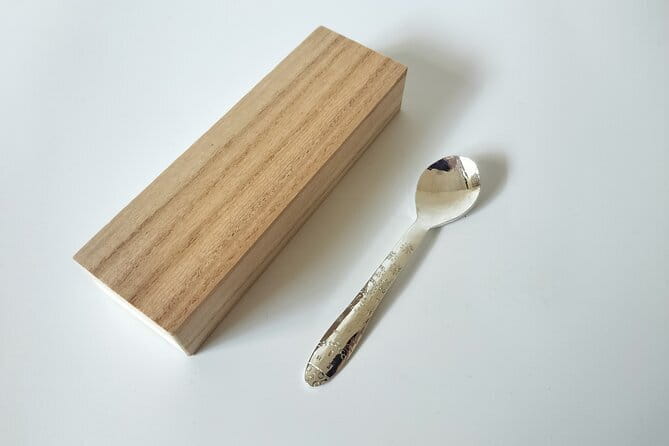
The workshop is designed like a short craft project, not a long lecture. Expect a total duration of about 2 hours 30 minutes, plus time to get oriented and finish your spoon.
Here is what the making typically looks like, step-by-step:
1) Choose and apply your pattern
You will add your favorite pattern to the spoon blank using a chisel or a stamp. This is where your spoon stops being generic. Even if you keep the pattern simple, you get that I made this part feeling, fast.
2) Hammer the metal into spoon shape
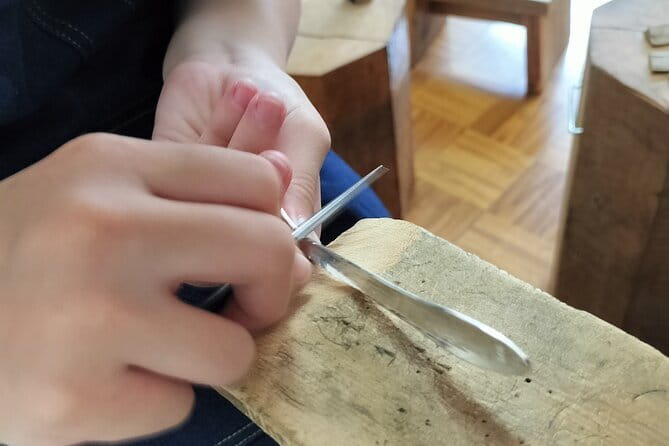
Once the pattern is in place, you use a hammer to form the spoon shape. This part is physical. You are not just smoothing, you are transforming the metal.
3) File and burnish
After shaping, you smooth the sides with a file and a burnisher. This step makes the spoon edges feel more comfortable and controlled, and it helps the final polishing go better.
4) Machine polishing for safety
A craftsman polishes using a machine. The workshop framing is safety-first here, since metal polishing needs steady handling and the right technique.
5) Your final hand polishing
Then you polish it yourself with an abrasive. This is the satisfying moment where you see the finish improve under your own hands.
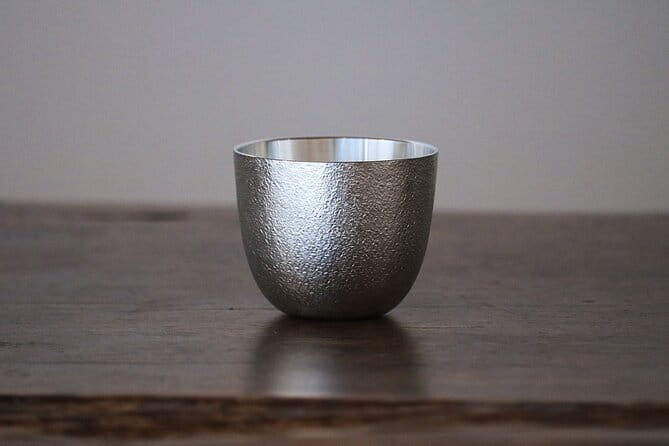
At the end, your finished spoon goes into a paulownia box. The approximate finished size is about 12cm long and 2.7cm wide, and it is recommended for use as teaspoons or similar small portions.
What the hands-on steps teach you (and why it feels worth it)
I like crafts where the steps actually teach technique, even in a short session. This one does.
The pattern stage matters because it changes how you see the metal. Instead of thinking of it as a blank piece, you think of it as a surface you can carve and control. Once you stamp or chisel the design, shaping with a hammer feels more intentional, like you are sculpting around a plan.
Hammering and filing are also a big deal for value. A lot of “souvenir craft” tours are mostly observation. Here, you do real forming, then refine it. That is why the workshop feels memorable. You leave with proof of your work, not just a story.
The polishing sequence is the other value driver. Machine polishing might sound like you are not doing enough, but it makes sense. Silver polishing can be tricky, and the workshop uses a machine for that key stage. Then you do the final polish yourself with an abrasive, which keeps your fingerprints on the end result.
The reviews also point to the hosting style. People describe the couple running the workshop as friendly and patient, and they note that English instructions were prepared. That kind of support matters in tool-based crafts, because it reduces the stress of language and allows you to focus on the metal.
Silver in Japanese culture: talisman, baby gifts, and everyday meaning
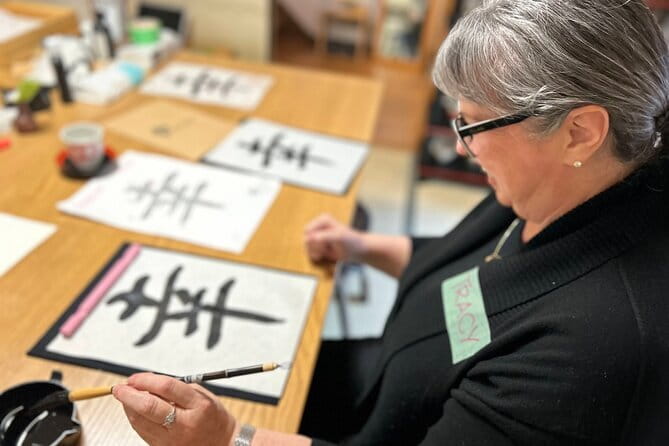
This workshop does more than teach a technique. It also connects silver to Japanese tradition.
Silver has long been seen as a talisman, used to ward off misfortune and evil spirits. There is also a custom of giving a silver spoon to a baby, as a way to wish happiness. That context makes your finished spoon feel like more than a novelty.
It also changes how I think about the gift. If you are buying for someone who likes tradition or meaningful objects, a spoon has a built-in cultural story. The paulownia box then reinforces that, because it supports storage and presentation without you needing to add packaging at home.
And if you are keeping it for yourself, you get a piece that fits into daily life. The spoon is small, about teaspoon size, so it can be a functional keepsake rather than a shelf-only object.
What you get for $141.22 per person
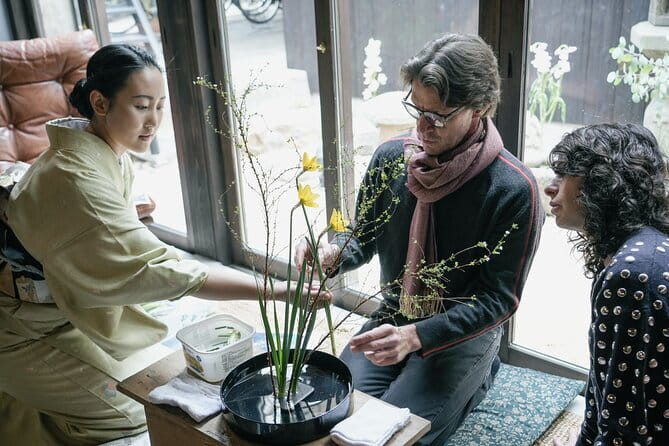
At $141.22 per person, this workshop is not a budget craft. But the value is pretty clear when you look at what is included.
You get:
- Material
- Rental of tools
- Paulownia box
- Metal polishing cloth
The big cost driver here is the silver itself plus the tool time and instruction. Real silver cutlery blanks, combined with the shaping and polishing work, are more expensive than the typical craft materials you might see in Kyoto.
The other value driver is the time you spend doing the making. Two and a half hours is enough for you to complete a full spoon from pattern to finishing steps. That is why the session feels like a complete project instead of a taster.
If you like souvenirs, consider this a different category: you are paying for a skill-based experience and a finished object that already comes with proper presentation.

Logistics that actually matter: private group, mobile ticket, location
This activity is close to public transportation, and you will use a mobile ticket. That is helpful if you are juggling several Kyoto stops and want fewer paper confirmations.
Because it is private, you are not competing for tools or rushing through steps. For crafts, that improves your odds of getting comfortable, taking your time with the pattern, and polishing carefully.
The meeting point and end point are the same, which simplifies timing. You can plan it as a firm block on your afternoon, and you do not have to build in extra buffer for a separate drop-off location.
One practical consideration: you are working with hammering, filing, and polishing. Expect a session that is more hands-on than sightseeing. If you want quiet walking time immediately before or after, schedule this for a time when you can settle in.
Who should book this workshop, and who might not love it
This is a strong fit if you want an authentic Kyoto craft where your hands do the work. The workshop is described as suitable for most travelers, and the location near Shugakuin gives you a calmer environment than some central tourist zones.
It is also a great choice if you:
- Like taking home something made by your own process
- Want a gift with cultural meaning
- Prefer a smaller, private experience with patient guidance
You might think twice if you:
- Want a mostly passive activity
- Are looking for a long sightseeing route or a flexible half-day tour with lots of viewing stops
- Feel uncomfortable with tool use in general
For families or mixed-age groups, you might find it manageable since most travelers can participate, but the workshop is still hands-on. That is the nature of shaping metal.
FAQ
What is the duration of the Pure Silver Spoon Making Workshop in Kyoto?
The workshop runs for about 2 hours 30 minutes.
Where does the workshop meet in Kyoto?
The meeting point is 1-15 Shūgakuin Yamanohanachō, Sakyo Ward, Kyoto, 606-8025, Japan, and the activity ends back at the meeting point.
Is this activity private?
Yes. It is a private tour or activity, so only your group participates.
What do I get included with the workshop price?
Included are the material, tool rental, a paulownia box, and a metal polishing cloth.
Is private transportation included?
No, private transportation is not included.
How far in advance can I cancel for a full refund?
You can cancel up to 24 hours in advance of the experience for a full refund.
Should you book this silver spoon workshop?
If you want a Kyoto souvenir with real meaning and real hands-on work, I think this is an easy yes. The combination of pure silver, a step-by-step tool process, and taking home the spoon in a paulownia box is exactly the kind of craft experience that sticks.
Book it especially if you like the idea of making something you can actually use, not just display. The teaspoon-sized result (about 12cm long) makes it practical.
If you are unsure, ask yourself one question: do you want to spend a couple hours shaping and polishing, or do you want more sightseeing time? If the first one appeals to you, this workshop is a strong match.
More Workshops & Classes in Kyoto

More Tour Reviews in Kyoto

Not for you? Here's more nearby things to do in Kyoto we have reviewed






Workshops, compared.
 ★ 4.345-Minute Tea Ceremony Lesson ExperienceFrom $222,378 reviews
 ★ 5.0Ramen Cooking Class at Ramen Factory in KyotoFrom $1311,937 reviews
 ★ 5.0Chopsticks Making Workshop in Gion with Engraving OptionFrom $15958 reviews
 ★ 4.9Samurai Sword Class by Experts in Traditional ArtsFrom $64657 reviews
 ★ 4.9Ramen Cooking Class at a Ramen Factory with SouvenirFrom $127532 reviews
 ★ 5.0Ninja 1-hour Hands-on Lesson by Japanese master in Kyoto -EntryFrom $80489 reviews
 ★ 5.0Ramen, Gyoza, and Onigiri Cooking ClassFrom $90445 reviews
 ★ 5.0The Original Small-Group Sushi Making Class in KyotoFrom $69436 reviews
Browse the lists this tour appears in