
Reviewed · KYOTO PRIVATE GUIDED TOURS
Treasures of Kyoto: Geishas & Traditions Private Tour
Kyoto can feel like a maze, especially around Gion. This private walk gives you a tight plan plus the freedom to linger, with a local host steering you through the neighborhoods that actually make the city click. You focus on geisha culture and the temples that shape it, without the stress of figuring out the route and timing alone.
I particularly love the short walking distance between major stops, so you get real context instead of just photos. I also like that the stops connect the dots between entertainment, religion, and everyday life, from kabuki origins to Shinto and Buddhism side by side. One thing to consider: this is a walking tour with steps, so wear comfy shoes and be ready for a moderate pace.
If you want big, famous-ticket highlights only, you may find this tour feels more like a guided neighborhood experience than a checklist sprint. But if you want meaning and direction in 2.5 hours, this format fits Kyoto really well.
Key points before you go
- Private, party-only pace so you can ask questions and pause for photos without the group herding
- Gion-focused routing around the old entertainment streets and preservation areas
- Religion made practical with Shinto and Buddhism explained through the places you stand in
- Kabuki to Kyoto traditions through stops tied to Izumo no Okuni and Minamiza Theatre
- A guide who manages crowds by steering you along calmer routes when possible
Why a 2.5-hour Gion-and-temple walk beats a rushed big tour
Kyoto rewards patience, but most visits are short. This tour is designed for that reality, with a sequence that stays in the same general zone instead of dragging you across town. In practice, that means you spend less time figuring out where to go next and more time noticing details you would otherwise miss.
You’re also not stuck listening to a one-size-fits-all script. With a private format, the host can respond to what you care about most, whether that’s the geiko and maiko world, the religion angle, or why certain streets keep their old look. The best part is that it still feels structured, so you leave with a clear sense of how these pieces connect.
You can also read our reviews of more private tours in Kyoto


How the private format actually helps in Kyoto
I like private tours in Kyoto for one simple reason: streets matter. Small lanes, building styles, and shrine details get lost when you’re moving with a crowd and trying to hit ten stops in two hours. Here, the route is compact enough that you can slow down, look up, and ask, What am I looking at?
The guides can be very personable too. People have talked about hosts like Ted, Maha, Kako, Shohei, and Ahmed as warm, engaging, and respectful. One review even mentioned a guide adapting the conversation for kids around ages 10 and 14, which is a strong sign that the tour can flex for families.
You do not need special skills to enjoy it, but you should be comfortable walking and stopping. The itinerary includes temple steps and some uphill moments, so plan on shoes you trust.
Price and value: what $135.45 buys you
At $135.45 per person, this is not a budget add-on. The value comes from what you avoid: wasted time, confusion, and the need to research every stop yourself. You’re essentially paying for someone local to connect the sights into a story while you enjoy a guided neighborhood stroll.
Also, the tour lists private service for your group, local guide, and a carbon-neutral note. Even if you ignore the green label, the practical part is the guide time you cannot recreate easily on your own, especially if you want cultural context fast.
The only cost that can surprise you is what happens around “free” admissions. The itinerary says admission is free at each stop, so that helps, but the tour does not list food and beverages as included. If you want a longer café break, you’ll pay for it yourself.
Getting oriented: start near Kawabatacho, finish by Yasaka
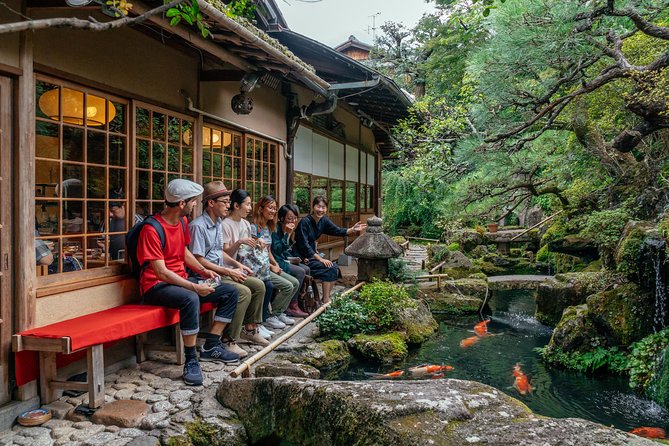
The meeting point is Kawabatacho, Higashiyama Ward. That’s a good area to start because you can get moving quickly toward Gion and the nearby temple cluster without complicated transit juggling.
The tour ends in Yasaka Kamimachi in Higashiyama. The route description also notes finishing near a local café, which is smart, because it gives you a soft landing after temple stairs and shrine sightseeing.
No hotel pickup is listed, so you’ll want to be able to reach the start point on your own using public transit. Since the tour is near public transportation, you should be able to plan it without a taxi budget.
Stop 1: Izumo no Okuni statue, where kabuki begins
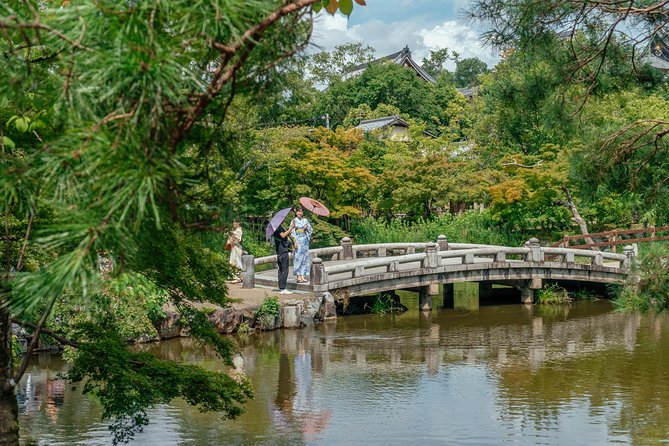
You start with the Statue of Izumo no Okuni, and the quick context is a big win. Okuni is credited as the originator of kabuki theater, so even though you are in a modern city, you’re starting in the roots of Japan’s performance culture.
This stop is short, about 20 minutes, and admission is listed as free. The practical benefit is that it gives you a framework for the rest of the tour. When you later hear about entertainment streets around Gion, the story makes more sense because you already understand how performance shaped public life.
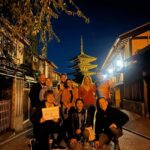
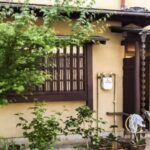
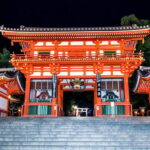
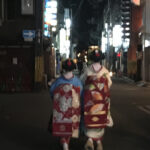
Stop 2: Minamiza Theatre and the Edo-era performance thread
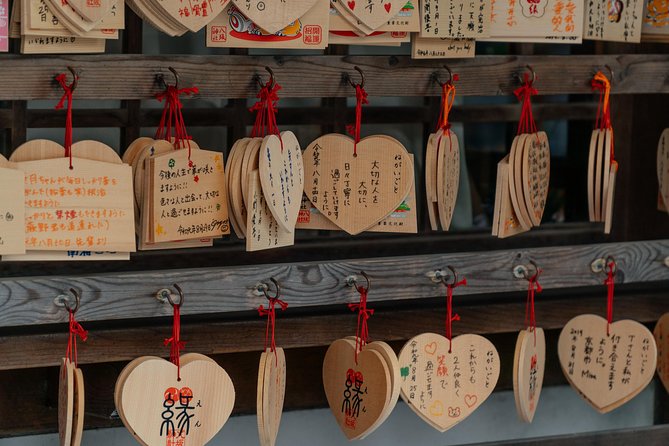
Next is Minamiza Theatre, which traces its roots back to the early Edo period (1596 to 1615). That time span matters because it tells you Kyoto’s arts culture did not appear recently. It’s older than most visitors expect.
This is also listed as a free admission stop with about 20 minutes. Even if you don’t plan to go inside a theater building, the guide can help you read the place as part of Kyoto’s living tradition, not just another historic facade.
Stops 3 and 5: Gion and Shinbashi Dori, the geography of entertainment
Then you move into Gion, and the tour gets more specific. The itinerary references the Gion Shinbashi preservation area and the historical scenery preservation area south of Shijo Street. In plain terms, you’re walking through zones protected for their traditional streetscape, so the neighborhood feels like it has a memory.
You’ll also spend time at Shinbashi Dori, outside traditional banquet buildings where geisha would have entertained customers. This is one of the best cultural translation moments in the whole route. You are not just hearing the word geisha, you are learning what kinds of venues shaped that world, and why certain streets still look the way they do.
Expect short stops here, around 10 minutes each. That can feel quick, but it fits the tour’s pacing, and your guide can still point out what’s worth noticing.
Stop 4: Tatsumi Daimyojin Shrine, where Shinto and Buddhism overlap
At Tatsumi Daimyojin Shrine, the tour highlights how Japanese religion can mix practices. The guide’s focus is the mixture of Shinto and Buddhism, and you’ll hear religion explained through what you see at the shrine.
It’s another free stop, about 20 minutes. If you’ve ever wondered why Kyoto’s religious sites can feel both familiar and unusual, this is where the explanation becomes practical. You start to see religion not as a strict either-or, but as a set of traditions with overlap.
Stop 6 and 7: Chion-in Temple steps and Maruyama Park views
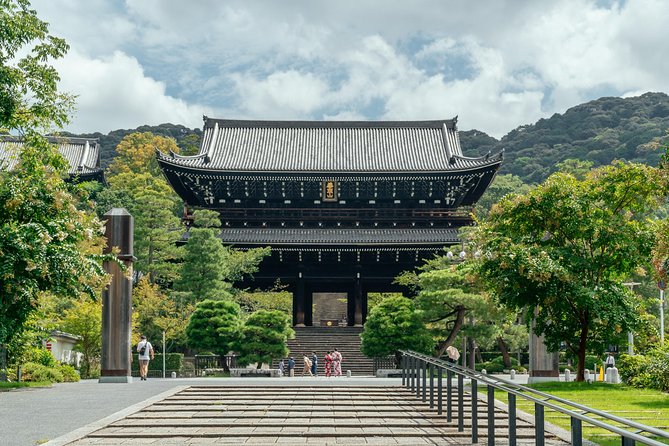
After the entertainment streets, the tour shifts into calm and scenery. At Chion-in Temple, you walk up steps for a better view, and the garden area is part of the experience. This stop works well as a mental reset. You move from street-level storytelling to a more open, contemplative space.
Next is Maruyama Park, reached by walking from the temple toward the park area. This is listed as a 20-minute stop with free admission. Even if you are not a park person, the value here is how it breaks up the temple and shrine run while keeping you in the same neighborhood flow.
Stops 8, 11, and the Yasaka Shrine legends and views
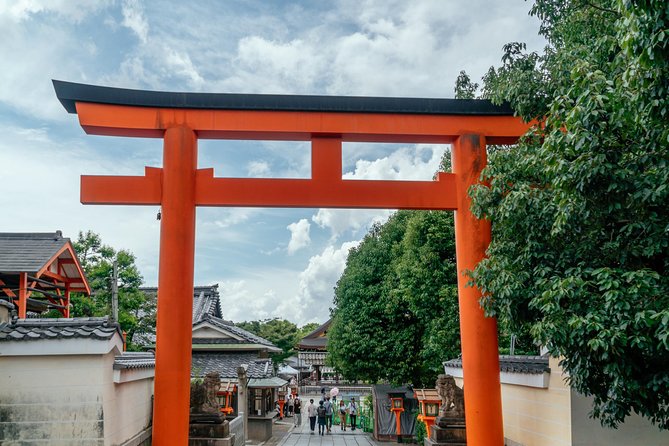
Yasaka Shrine appears twice on the itinerary, and that’s not a mistake. You get more than one angle of the area, including time for background and photo opportunities.
In the first Yasaka Shrine visit, the tour references a legend connecting the shrine’s history to around AC656, which is said to predate the Heian era. You don’t have to memorize the date for it to land. The point is that Yasaka is treated as a long-running, influential place in Kyoto’s spiritual geography.
Later, in the second Yasaka Shrine segment, the focus turns to a picturesque five-story Buddhist pagoda temple and the sweeping views you can get from the top. This part is listed as about 10 minutes, free admission, and it’s a good place to think about stamina. Views are worth it, but you’ll want to handle stairs carefully and pace yourself.
The tour then finishes near a local café. It’s a nice touch because it gives you time to sit, hydrate, and digest what you just learned.
Stop 9: Shijo Dori, how street names preserve older Kyoto
You walk on Shijō Street, and the tour points out that it means Fourth Avenue of Heian-kyō, the ancient capital. This is the kind of detail that turns a walk into understanding.
It takes about 10 minutes and stays in the “free admission” zone, but it changes how you interpret Kyoto’s layout. You start noticing that the city’s present-day street grid is not random, it’s tied to older planning.
If you like history but hate lecture-heavy tours, this is a sweet spot.
Stop 10: Nene-no-Michi and the story behind Kodaiji Temple
The route continues to Nene-no-Michi, a street tied to Nene, and it connects directly to Kodaiji Temple. The itinerary notes that Kodaiji Temple was built in 1605 at Nene’s behest, and the street later took its name.
This stop is also listed for about 10 minutes. It’s short, but it gives you a meaningful cultural thread: Kyoto’s landscapes are shaped by named people and specific eras, not just broad “old times.”
It also makes you more alert to what you see when you wander afterward. After this, you’re less likely to treat temple areas as separate sightseeing bubbles.
Pace and comfort: what you should plan for
This tour is around 2 hours 30 minutes and it’s a walking format. Travelers with moderate physical fitness are recommended, which lines up with what the itinerary suggests: steps at temple stops and short stretches on city streets.
My advice: wear shoes that handle uneven stone and steps. Kyoto sidewalks can be charming, but they can also be slick. If you prefer a slower pace, the private format gives you more control, and you can ask the guide to adjust.
Also, the tour is only for your party. That matters because it reduces the pressure of keeping up with strangers and lets you stop to take photos without feeling rushed.
What you might actually see around Gion
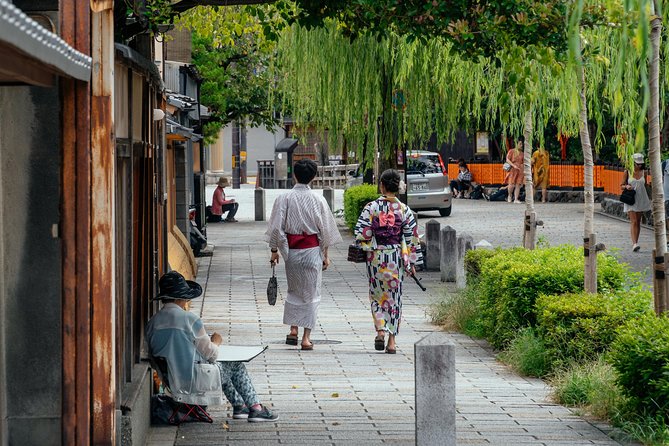
This tour is about traditions and context, not a promise of private, behind-the-scenes access. Still, Gion is a place where you can sometimes catch a glimpse of people dressed for performances or ceremonies, and some experiences have included seeing women in geisha outfits.
Even if you don’t see an outfit in motion, you will still get the deeper payoff: understanding the streets connected to that culture, and why certain areas are preserved. That’s the difference between a “sight photos” tour and a “Kyoto makes sense” tour.
The best guides also help you keep your distance and be respectful around residential areas. The reviews emphasize respect for the geisha community, and that’s worth taking seriously in Gion.
Guides, communication style, and why it matters
The names that come up in feedback, Ted-san and others, suggest a consistent style. The guides focus on history and culture while keeping things friendly, and they adapt to different ages and questions.
If you like talking, you’ll probably enjoy this. Several reports describe thoughtful answers and a personable flow, not just a rapid walk with a lecture. That’s a real value add because it turns the tour into a conversation about how Kyoto works.
If you prefer quiet and minimal talking, you can still enjoy the route, but you might want to signal your preferred vibe at the start.
Who this tour is best for
This fits you if:
- You want a Gion and temple mix in one afternoon
- You have limited time and want a guided route that makes sense fast
- You care about the cultural connections, not just the postcard views
- You are traveling with kids or anyone who will ask questions (the guide can flex)
It may not be the best fit if:
- You want a long temple circuit with minimal walking
- You want only the most famous shrines and nothing about religion or performing arts
Should you book Treasures of Kyoto: Geishas & Traditions Private Tour?
Yes, if you want Kyoto to feel like a connected story instead of a pile of stops. The strongest case is the compact route in the Gion area, plus the way the guide ties together performance culture, street preservation, and religion through specific places.
Book it if you value private pacing and an explanation you can ask questions about. If you’re sensitive to stairs or want lots of free time, you can still do it, but you should plan your energy and bring comfortable shoes.
If your schedule is tight and you don’t want to spend your first Kyoto day mapping routes and reading up on every site, this tour is a practical shortcut that still feels authentic.
FAQ
How long is the Treasures of Kyoto: Geishas & Traditions tour?
It’s about 2 hours 30 minutes.
Is this a private tour or a group tour?
It’s a private tour for your party only.
Where does the tour start and end?
It starts in Kawabatacho, Higashiyama Ward, Kyoto, and ends in Yasaka Kamimachi, Higashiyama Ward, Kyoto.
What’s included in the price?
A private tour, a local guide, and the tour is listed as carbon neutral.
Are there any admission fees for the stops?
The itinerary lists free admission for the stops included in the tour.
What is not included?
Hotel pick-up and drop off are not included. Food and beverages are not listed as inclusions.
Is the tour near public transportation?
Yes, it’s listed as near public transportation.
Are service animals allowed?
Yes, service animals are allowed.
What is the cancellation policy?
You can cancel for a full refund if you cancel up to 24 hours before the experience start time.
More Private Tours in Kyoto


More Tours in Kyoto

More Tour Reviews in Kyoto
Not for you? Here's more nearby things to do in Kyoto we have reviewed




Kyoto Private Guided Tours, compared.
 ★ 5.0Private Kyoto Tour with a Local, Highlights & Hidden Gems, PersonalisedFrom $1021,543 reviews
 ★ 5.0Kyoto 6hr Private Tour with Government-Licensed GuideFrom $1551,369 reviews
 ★ 5.010 Must-see Spots in Kyoto One Day Private Tour (up to 7 people)From $1791,108 reviews
 ★ 5.0Kyoto 4hr Private Tour with Government-Licensed GuideFrom $109629 reviews
 ★ 4.8Private Tour with Local Licensed GuideFrom $106463 reviews
 ★ 5.0Private Kyoto Tour with Licensed Guide & Vehicle (Max 15 persons)From $634417 reviews
 ★ 5.0Kyoto Customized Private Tour: See Top Attractions in 1 DayFrom $132342 reviews
 ★ 4.6Kyoto/Osaka: Kyoto and Nara Customized Private Guided TourFrom $477258 reviews
Browse the lists this tour appears in