
Reviewed · KYOTO CRAFT & CALLIGRAPHY WORKSHOPS
From Kyoto: Japanese Drum Taiko Workshop in Osaka
Taiko hits different when you learn it firsthand. This workshop takes you from JR Kyoto Station to a studio in Osaka for an English-guided, small-group afternoon where you play Japanese drums, not just watch them. I love the way it mixes culture and technique, and I especially like that you learn the basics step-by-step with an instructor named Yusuke. One thing to consider up front is the fixed departure timing, you’ll need to arrive early so the group can catch the train and keep the schedule moving.
The experience starts with context, not performance-only. You get a quick explanation of taiko’s background in everyday Japanese life, then you try simple calligraphy while writing wishes on a traditional Hachimaki headband before you hit the drums. I also like the human vibe: guides named Michiko and Mie (and the studio team) are friendly and clear, and you finish with a commemorative photo in traditional costume. The main drawback is that it’s not long, so if you want hours and hours of drumming practice, you’ll feel a bit of momentum right at the end.
Key highlights you will feel in real life
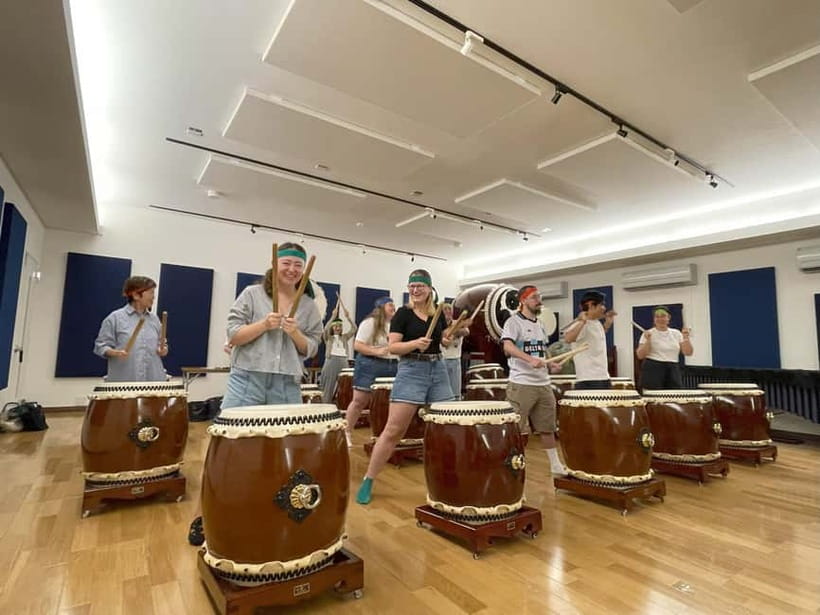
- You learn taiko, not just about taiko, with hands-on movement and a finale you play together
- Pro performance first, so you know what the rhythms are supposed to feel like
- Hachimaki wishes and simple calligraphy, a fun cultural warm-up before you drum
- Small group (up to 15), so the instructor can keep you on track
- A commemorative photo in Happi and Hachimaki, a memorable souvenir beyond the music
Why this taiko workshop is a great first try
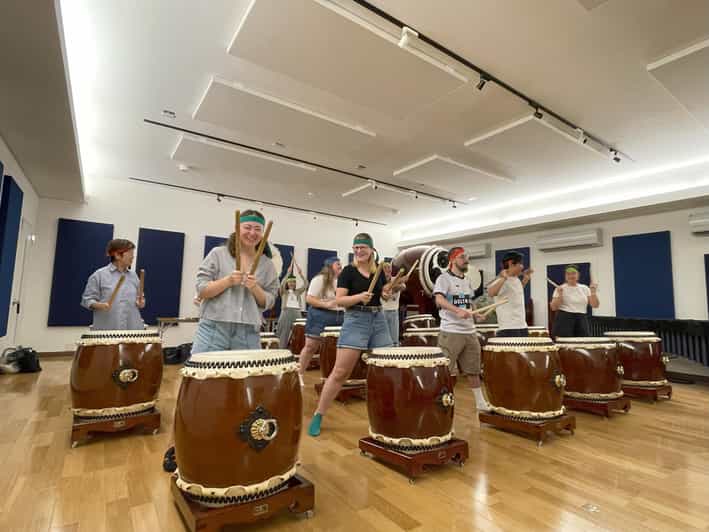
If taiko sounds intimidating, good news. This setup is built for beginners. You are going to learn basic movements and techniques, then assemble a simple piece as a group. The point is confidence, not perfection.
I also like that the workshop treats taiko as more than sound effects. You get a brief explanation of taiko’s history and why it matters in Japanese culture, and you do a small ritual-style craft with your Hachimaki. That combination makes the drumming feel connected to Japan, not like a random activity.
And because you start with watching a powerful professional demonstration, you get a clear mental model. Later, when the instructor has you copy rhythms and patterns, it makes sense quickly. That timing matters when you are working in a short 150-minute window.
More Kyoto temple visits, food tours, tea experiences, and day trips to compare

The Kyoto to Osaka commute is short, organized, and part of the fun
Plan on meeting at JR Kyoto Station, Central Ticket Gate, not the Shinkansen Central Ticket Gate. The meeting point sits on the north side of the station, at ground level, near where you can see Kyoto Tower. Your guide holds a sign that reads TAIKO, Japanese Drum Experience.
From there, the trip is easy math:
- A quick JR train ride from Kyoto to Takatsuki Station (about 12 minutes)
- Then a short private car ride from Takatsuki to the studio area (around 5 to 10 minutes, depending on the day)
This “two short hops” routing is a big part of the value. You are not spending half your afternoon stuck in transit. And because the schedule is fixed, it reduces the stress of trying to find the studio on your own.
One practical tip: Kyoto Station is huge. Walk in with a plan, find the north side, and confirm you are at the correct Central Ticket Gate. If you are even slightly unsure, ask staff at the station for the Central Exit route rather than guessing.
Inside the studio: history, calligraphy, and your Hachimaki wish
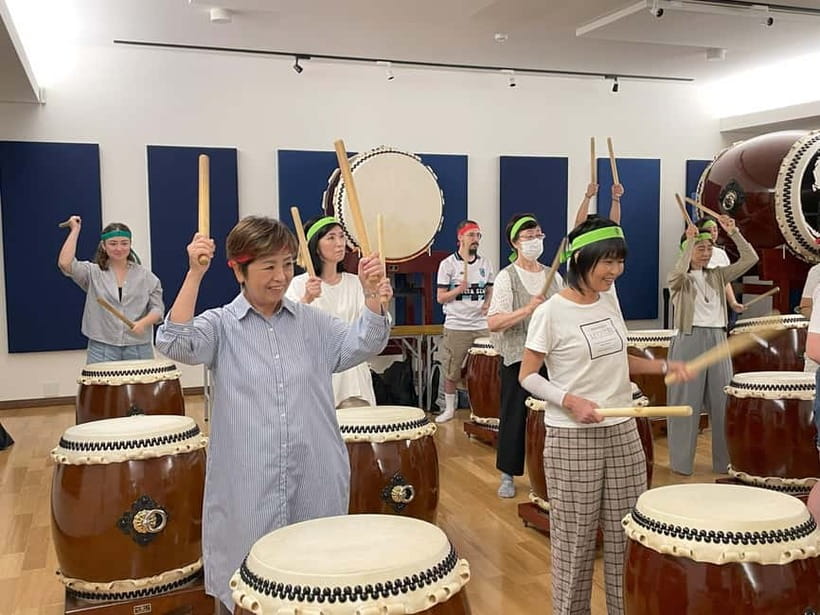
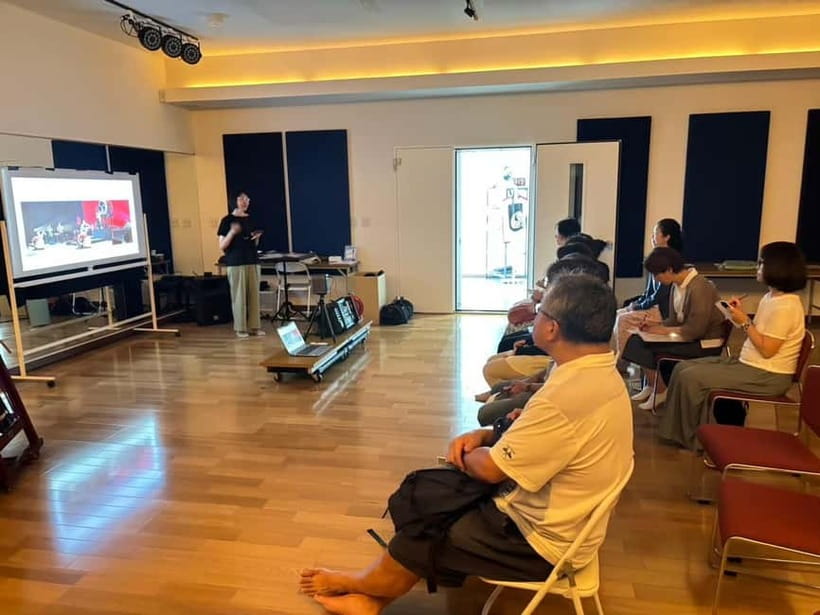
Before the drumming gets physical, you start with an introduction. You’ll get a brief explanation of taiko’s history and how it’s woven into Japanese life. It’s not a lecture that drags. It’s there to give context so the beats later feel intentional.
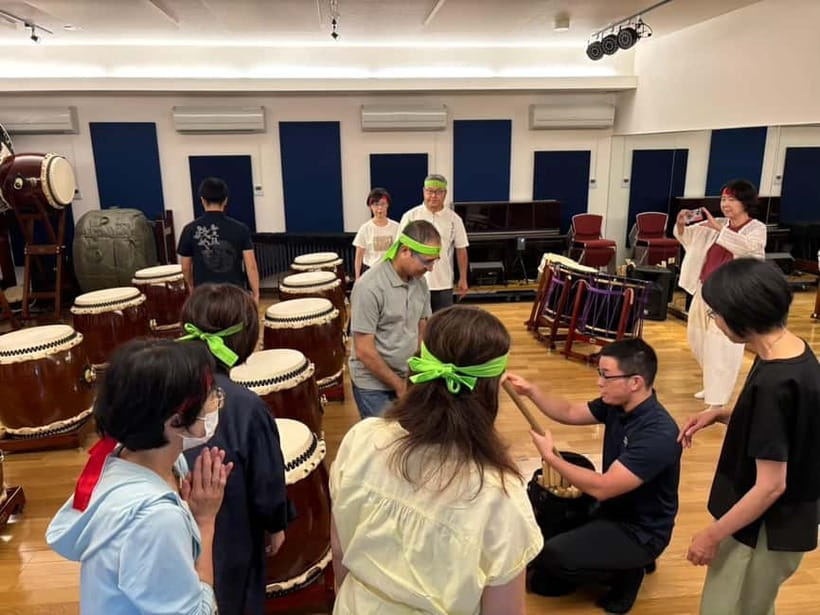
Next comes a surprisingly memorable moment: simple calligraphy. You write a wish on a Hachimaki, the traditional headband used in festival and performance settings. Even if your handwriting is not your strong suit, the activity is meant to be doable. The payoff is that you can look at your headband later and remember the moment you made a wish before you played.
This part also helps you reset your energy. You go from travel mode into “Japan mode” right away. It’s a smart pacing choice in a workshop that otherwise would risk feeling too fast.
The professional taiko performance you watch before you play
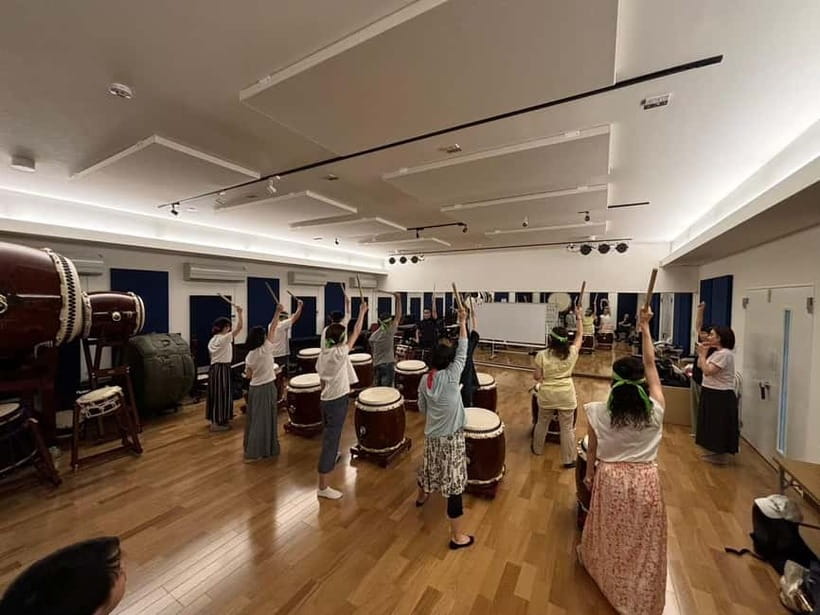
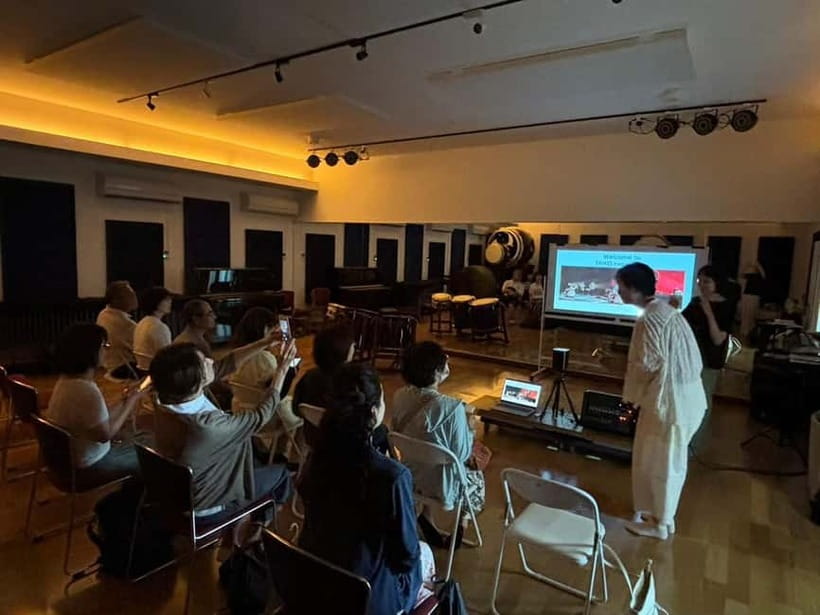
Then the studio brings in a professional player for a powerful taiko demonstration. I like this order, watch first, understand rhythm second, practice third. You’ll see how taiko is supposed to land in your body: strong strikes, clear timing, and big energy without needing fancy theory.
You also get a visual reference for what comes next. When the instructor later breaks down basic movements and technique, you are matching the instruction to something you already saw. That makes the learning curve kinder.
Some sessions also set up video, so you can see how you looked and how the rhythm is supposed to fit. Even if you only catch a small moment on camera, it helps you connect what you did with what you were aiming for.
Learning the basics: technique that works for non-drummers
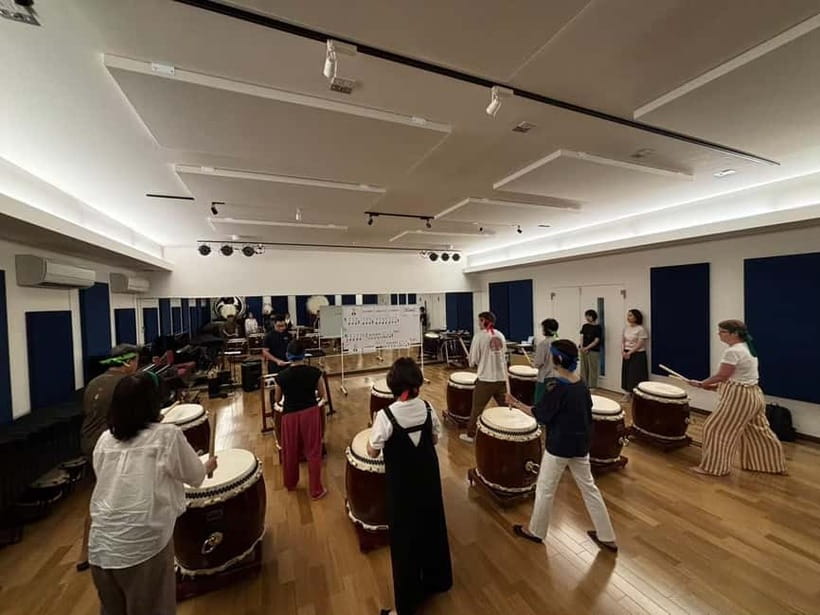
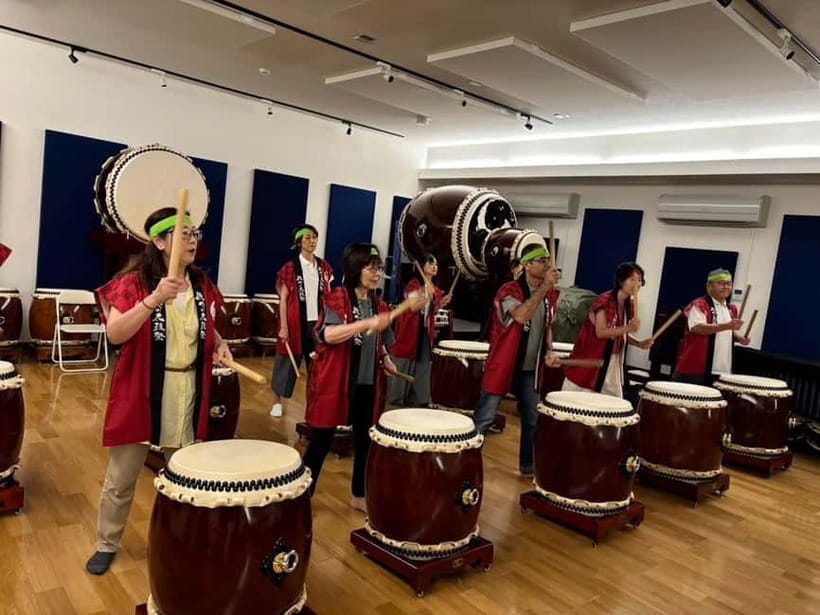
After the demo, a friendly English-speaking instructor guides you through the essentials. Expect instruction on basic hand and arm movements, how to strike the drum for sound and control, and how to follow cues. You don’t need prior music experience.
What makes this part work is how the workshop keeps you active. You spend most of the time practicing the short piece you will eventually perform together. That practice time matters because taiko is physical. You learn by doing, not by reading a rhythm chart.
From a value standpoint, this is where your money turns into a real skill. You leave with muscle memory for basic strikes and a sense of timing. You might not call yourself a taiko expert, but you will have a working feel for the instrument.

The drumming finale: you play as a group
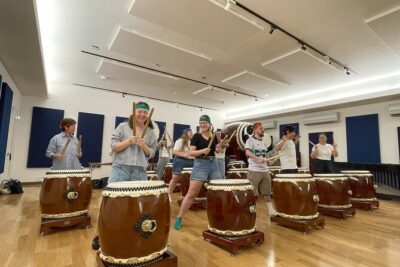
The best payoff is the moment you play a simple piece with everyone in the group. Because the group size stays small, you are not standing around waiting for your turn in a slow line. The goal is collective sound, with you actually contributing.
The finale is not designed to be complicated. It’s designed to be satisfying. When you hear the whole group assemble the rhythms, you get that rare travel feeling: you participated in something cultural and physical, and you can point to a specific moment when it clicked.
And yes, it can be challenging in the good way. Even a short taiko piece asks for coordination. But the structure helps: you start with technique, then build into the piece, then perform together.
The Happi and Hachimaki photo: a souvenir with meaning
After the music comes the fun photo moment. The workshop ends with a commemorative picture in traditional Japanese costume, including a Happi and your Hachimaki. This is more than a generic snapshot. You are wearing the item you wrote your wish on, and that personal connection gives the photo extra weight.
If you care about souvenirs that reflect what you actually did, this is the kind of ending that delivers. A picture like this also helps you remember the workshop details later, which is half the reason to do an activity like this in the first place.
Price and value: $112 for a short, hands-on taiko workshop
At about $112 per person for roughly 150 minutes, you should look at value in two ways: instruction and logistics.
You are paying for:
- A guided experience in English
- A taiko instructor-led lesson with hands-on practice
- A professional demonstration
- The cultural activity (calligraphy and Hachimaki)
- A commemorative photo setup
- JR one-way ticket from Kyoto to Takatsuki
- Private car transfer to and from the studio
The commute is not an afterthought. Transport is included, and it keeps the experience cohesive. If you tried to DIY this, the biggest friction would be timing and coordination, not just the cost of a train ticket.
So who is this worth it for? If you want to actually play, learn a little context, and leave with a memorable, photo-based keepsake, it’s strong value. If you are purely performance-focused and would rather watch an extended show, you might decide it’s too hands-on and too short. But the whole concept is participation first.
Who should book this taiko session
This workshop is a good match if:
- You are in Kyoto and want an Osaka activity that stays easy to reach
- You want a cultural experience you can physically participate in
- You don’t read music and still want to learn a rhythmic piece
- You travel with kids old enough for the rules (children under 7 cannot participate)
It can also be a great choice for couples or solo travelers on days when single bookings are allowed. When single-participant spots are not offered, you may need to book for two people to join.
If you hate group settings or want total free time with no structure, this might feel a little too scheduled. The schedule is part of what keeps it smooth, so if you need maximum flexibility, consider that up front.
Practical tips that keep the experience smooth
First, arrive early. You should be at the meeting point 15 minutes early, because the train schedule is fixed. Late arrivals can miss the start and you cannot join after it begins.
Second, double-check your Kyoto Station gate. Use the correct meeting area on the north side at ground level near Kyoto Tower. Ask staff if you need a quick pointer to the Central Exit area, and make sure you are not at the Shinkansen gate.
Third, plan your post-workshop time. The total duration is about 2.5 to 3 hours including travel, and returning early is not recommended. Give yourself room for the end photo and the ride back, then take it slow afterward in Osaka or hop back to Kyoto when you are ready.
Finally, taxis from Kyoto are not recommended because the travel time and cost can add stress. The planned JR and car routing is the better move.
Should you book this taiko workshop?
Yes, I think you should book it if your goal is a beginner-friendly, hands-on taste of Japanese drumming with real structure. The strongest reasons are simple: you get professional demonstration, guided technique with an English-speaking team (including Michiko and Mie as guides, and Yusuke as the instructor), and you finish by playing together. That combination makes the afternoon feel complete, not like a rushed “try once” show.
I would skip it if you only want to watch performances, or if you need a totally unstructured timeline. Also, if you are worried about catching fixed train timing, this can still work, but only if you plan to arrive early at the meeting point.
If you want one thing in Osaka that feels unmistakably Japanese and gives you an actual skill by the end, this is a smart bet.
FAQ
Where do I meet for the Kyoto to Osaka taiko workshop?
Meet at the Central Ticket Gate of JR Kyoto Station, on the north side of the station at ground level near Kyoto Tower. Your guide will be holding a banner with TAIKO, Japanese Drum Experience. It is not the Shinkansen Central Ticket Gate.
How do I get from Kyoto to the studio?
You take a JR train from Kyoto to Takatsuki Station (about 12 minutes), then ride in the studio’s private car to the venue (around 5 to 10 minutes). Car transport is also provided back to Takatsuki Station.
How long does the experience take?
The activity is listed as 150 minutes, and the total time including travel is about 2.5 to 3 hours. Plan not to schedule your return too tightly.
Is the workshop taught in English?
Yes. The guide and instruction are available in English.
What activities are included besides playing the drums?
You get a brief explanation of taiko’s history, you try simple calligraphy and write wishes on a Hachimaki headband, you watch a professional taiko demonstration, and you play a simple piece together at the end.
What should I know about timing and arrival?
Arrive 15 minutes early. The train schedule is fixed, and late arrivals cannot join after the start time.
Are there age limits?
Yes. Children under 7 cannot participate.
Is it okay to book as a single person?
Some days do not allow single-participant bookings. On those days, you may need to book and pay for two participants to join.
More Workshops & Classes in Kyoto

More Tour Reviews in Kyoto

Not for you? Here's more nearby things to do in Kyoto we have reviewed



Kyoto Craft & Calligraphy Workshops, compared.
 ★ 5.0Chopsticks Making Workshop in Gion with Engraving OptionFrom $15958 reviews
 ★ 4.8Authentic knife making experience at a blacksmith in KyotoFrom $154350 reviews
 ★ 5.0Calligraphy class at Buddhist temple in city centerFrom $55167 reviews
 ★ 5.0Roketsu dyeing experience: M course Roketsu Dyeing ExperienceFrom $25163 reviews
 ★ 4.9Japanese Archery Workshop with Experienced InstructorFrom $38132 reviews
 ★ 4.8Japanese Calligraphy ClassFrom $5189 reviews
 ★ 5.0TAIKO, Japanese Drum Experience from KyotoFrom $11586 reviews
 ★ 4.7Japanese Calligraphy WorkshopFrom $3284 reviews
Browse the lists this tour appears in