
Reviewed · KYOTO PRIVATE GUIDED TOURS
Kyoto Food & Culture 6hr Private Tour with Licensed Guide
Kyoto tastes better with context. This private, licensed food and culture tour makes Nishiki Market’s 100-plus shops feel like part of a bigger story, and it pairs that with guided time in Gion and Pontocho so you are not wandering aimlessly. The one watch-out: lunch, entrance fees at several major sites, and in-tour food costs are not included, so your final day budget can rise.
What I like most is the balance between food stops and cultural stops. The guide is set up to explain what you are seeing, not just point at it. One more consideration: the route is customizable, so if you want a specific lineup of temples or shrine time, you should choose your must-sees carefully before you go.
Key highlights you will feel on this Kyoto tour
- Licensed, private guidance for a smoother, less confusing day in Kyoto’s maze of streets
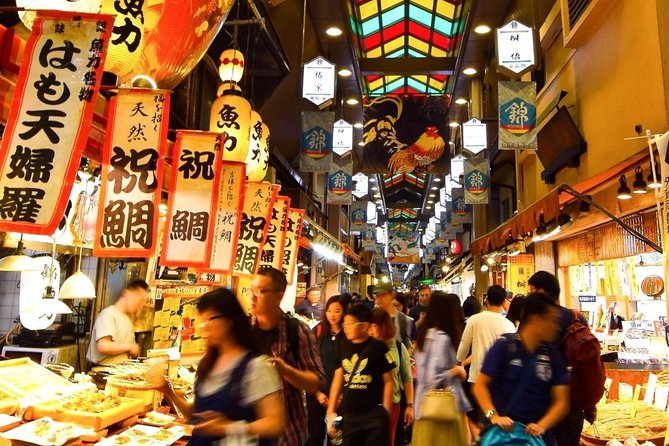
- Nishiki Market as the centerpiece, a narrow shopping strip packed with 100+ shops and restaurants
- Gion and Pontocho for the classic Kyoto atmosphere, with help finding the right alleyways
- Flexible route that picks 3 to 4 sites from a longer menu, so you do not get rushed everywhere
- Culture and meaning behind food taught in plain language, including how religion and tradition connect to daily life
How a private 6-hour food and culture plan really works
Kyoto can be two trips in one. There is the food side, with snack-size tastings and quick bites that are easy to miss when you are just following crowds. Then there is the culture side, where temples, shrines, and courtyards help explain why people eat, pray, and live the way they do.
This tour is built for both, and that matters because Kyoto is not only about big sights. It is also about small details, like how a market street is organized, why a neighborhood has its particular rhythm, and what a temple setting changes about your sense of time.
Your private format helps a lot. A single group can slip into the flow without stopping every few minutes for someone to ask which train exit to use. And because you pick 3 to 4 sites from the plan, you can steer the day toward your real priorities instead of doing a one-size-fits-all checklist.
Pickup is offered, which is convenient if you do not want to map buses and trains mid-day. Still, transportation fees are listed as not included for you and your guide, so if your lodging is far from the usual pickup zone, you should ask about any extra cost up front.
You can also read our reviews of more food & drink experiences in Kyoto

Nishiki Market: Kyoto’s kitchen and how to shop smart
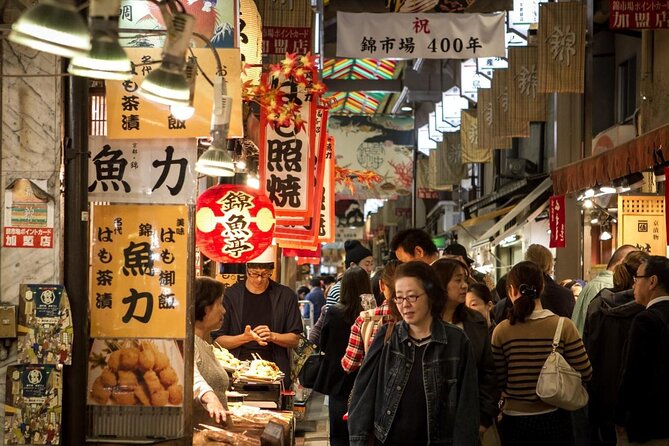
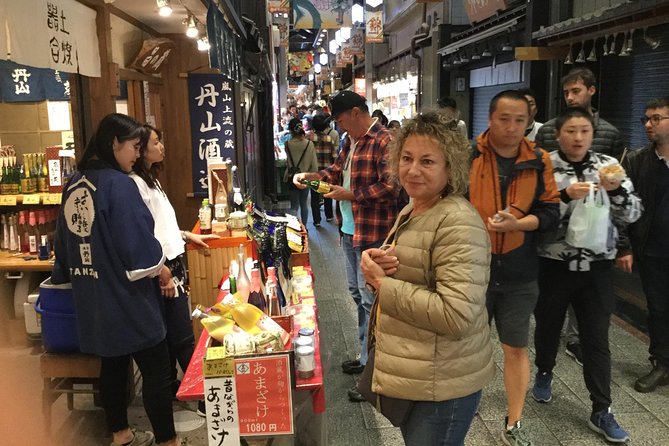
Nishiki Market is the kind of place where your senses work overtime. It is a narrow shopping district, roughly five blocks long, and it specializes in all things food related. The tour frames it as Kyoto’s kitchen for a reason: you can connect a lot of Japanese flavors to where they come from, and you can taste your way through the street without turning it into a full-time shopping marathon.
Here is what makes it a strong first stop on a food tour:
- It is a natural orientation point. If you spend your first hour here, the rest of your day makes more sense.
- You can see what Kyoto does well, from small packaged bites to stalls where you can grab something to eat on the spot.
- It is easy to ask questions while you browse, because the guide can point out what to try and what to skip depending on what you like.
Timing is about 30 minutes on the plan. That is enough for a quick tasting loop, but it is not enough to become a full-time shopper who buys gifts for everyone. If your family includes picky eaters, this short window can be a gift, not a limitation. You taste, you learn, you move on.
One practical tip: eat lightly before you arrive. Nishiki can tempt you into trying more than you planned. Then you hit the next stop, Gion, and suddenly you are walking with snack regret. A small appetite plan makes the day smoother.
Gion’s alleyways and Pontocho’s dining lane: classic Kyoto without the stress
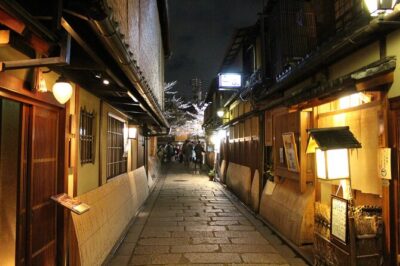
After Nishiki, the tour shifts from market energy to Kyoto neighborhood atmosphere. Gion is the big one, and it can be intimidating for first-timers. The alleys are narrow, and it is easy to drift in circles if you are trying to read signs while keeping an eye on where everyone else is walking.
That is why the guide time matters here. You get a guided walk through the Geisha District area for about 1 hour, with built-in help navigating the streets and finding places that are not obvious from the main road.
What makes Gion special on a culture-and-food tour:
- You can connect street life to what you have seen at the market.
- You learn how tradition shows up in daily routines, not just on postcards.
- You get a sense of scale, the way Kyoto neighborhoods stretch and fold through small lanes.
Then you move to Pontocho. Think of it as a narrow alley full of restaurants, running from Shijo-dori to Sanjo-dori, one block west of the Kamogawa River. It is the kind of place where dinner feels like part of the scenery.
The plan allocates about 30 minutes here. That is enough for photos, people-watching, and learning what to look for, without turning it into a late-night commitment. If you are traveling with anyone who wants a calmer pace, this portion works well. You can slow down without losing your place in the day.
One caution: both neighborhoods can be busy. Your private guide cannot erase crowds, but they can help you avoid spending your whole time walking past the wrong streets.
The Kyoto sweets stop: Kitaza and the appeal of short, memorable breaks
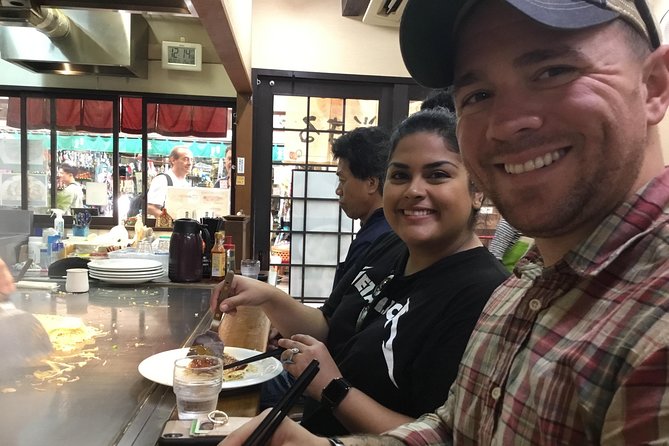
A really nice touch in the itinerary is the stop for traditional Kyoto sweets at a location called The Site of Kitaza. You get about 15 minutes here, and it is described as being in a beautiful building renovated from Kabuki Theater.
This matters because Kyoto sweets are not only about flavor. They often carry seasonal meaning and local identity. The renovated Kabuki building also gives you a cultural shortcut, showing how performance spaces and traditional architecture remain part of today’s experience.
If you like your food tours to include at least one “sit down for a moment” break, this is that moment. Fifteen minutes can sound short, but it works because it gives you a reset before more walking and more temples.
What to expect: a quick stop where you can enjoy original Kyoto sweets on-site. Entrance is listed as free for this stop, so it is a cost-friendly add.
Temple and palace options: pick 3-4 that match your energy
This is where the customization really counts. The tour framework offers a list of major Kyoto cultural sites, but your route can be shaped to your interests, typically choosing 3 to 4 sites from the available options.
Here is how to think about the big options, based on what is on the plan.
More Kyoto temple visits, food tours, tea experiences, and day trips to compare


Kennin-ji Temple: gardens and dry landscape detail
Kennin-ji is close to the bustle of Hanamikoji and Shijo streets, but the grounds are described as expansive and pleasant for walking. The highlight in the description is that it includes karesansui, dry landscape gardens, with two of them on-site.
If you like a temple stop that is not just a single photo angle, this one can be worth your time. Even with a short visit listed in the schedule, it gives you a quieter pocket in the middle of central Kyoto.
Entrance is listed as not included, so budget for that if your route includes it.
Byodoin Temple (Phoenix Hall): UNESCO-level focus, plus extra travel time
Byodoin is in Uji city, outside central Kyoto, and the plan notes extra travel time is expected. The big draw is the Phoenix Hall, a National Treasure of Japan and a UNESCO World Heritage site.
If you are the type who wants one major, high-impact monument on your day, Byodoin is that option. But the schedule warning matters. Because Uji is farther out, this stop can stretch your day and limit how much you can fit elsewhere.
Entrance is not included on the plan, so factor that into the final cost.
Kyoto Imperial Palace: the former imperial residence in a spacious setting
The Kyoto Imperial Palace was the residence of Japan’s Imperial Family until 1868, when the emperor and capital moved from Kyoto to Tokyo. The plan gives you about 30 minutes here.
This works well if you want a structured look at governance and history expressed through architecture and space, not only through shrines and temples. Entrance is listed as not included.
Nijo Castle: Tokugawa-era power made visible
Nijo Castle is a UNESCO World Heritage site, built in 1603 as the Kyoto residence of Tokugawa Ieyasu, the first shogun of the Edo period. Your time here is listed around 30 minutes.
If you like seeing how political power gets displayed in stone, gates, and layouts, this fits. It is also a good counterweight if your day already has a lot of religious sites.
Entrance is listed as not included.
Fushimi Inari-taisha: the shrine that teaches you how to look
Fushimi Inari-taisha is famous, but the plan frames it as a value stop that helps you experience the shrine beyond the quick “walk up and take photos” version. It also notes you can see Japan’s background that is off-limits to ordinary tourists after the tour.
That phrasing is strong, so treat it as a promise of deeper guidance, not just more walking. In practice, what you want from a guide here is context, like what the shrine is doing, why people come, and how the paths and structures guide your attention.
Time is about 15 minutes on the plan. If you love Inari, this might feel a bit short. But for a 6-hour private tour with multiple areas, it can be a smart hit.
Entrance is listed as free for this stop.
Tenryuji and Kiyomizu-dera: big-name temples, but your time may vary
Tenryuji, in Arashiyama, is described as a top Zen temple and registered as a world heritage site. The stop listed is extremely short, about 1 minute, so expect this to be a quick orientation or photo moment unless your customization gives you more time.
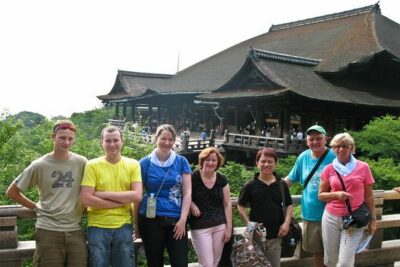
Kiyomizu-dera is described as one of Kyoto’s most popular temples, and the plan includes a guided visit described as a comprehensive 1-hour tour. But the schedule segment in the itinerary is listed as 1 minute, so your exact time at Kiyomizu-dera may depend on what sites you select.
Because of that mismatch, I would treat both as “temple options” where the guide’s ability to adjust pacing matters more than the label. Entrance is listed as not included.
Sanjusangendo: 1001 Kannon statues
Sanjusangendo is famous for 1001 statues of Kannon, the goddess of mercy. It is a very specific kind of sight, the type that makes you slow down because your eyes are trying to count or recognize patterns.
Time on the plan is listed as 1 minute, which suggests it may be a quick stop. Still, if your route includes Sanjusangendo, this is one of the most instantly memorable visuals on the options list.
Entrance is listed as not included.
A guide who connects food to religion and everyday meaning
One reason this tour gets strong ratings is the teaching style. A guide named Lily is specifically praised for opening eyes to the culture, tradition, religion, and the meaning behind what you see. The same praise highlights that she chooses a route that keeps it educational for both young and old.
That is exactly what you want from a private cultural food tour. Food in Japan can feel straightforward until someone explains what is behind it. Why a shrine area has a particular rhythm. Why a temple setting changes how people behave. Why certain sweets feel appropriate for certain seasons or moments.
When the guide is good at turning explanations into something you can understand quickly, the tour stops feeling like a series of checkboxes. It starts feeling like Kyoto is speaking, and you are finally hearing it.
Price and value: what $153.11 per person buys in Kyoto time
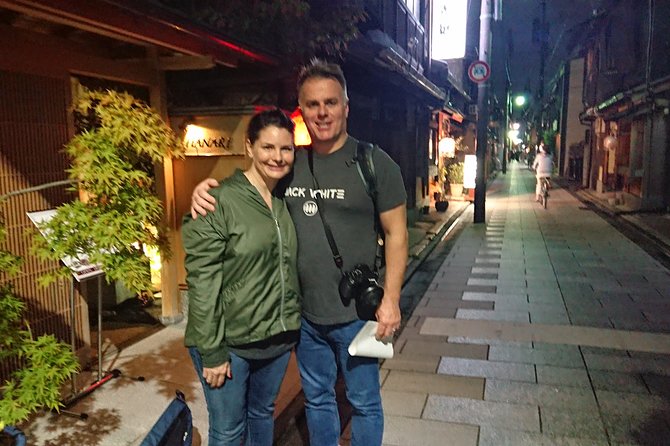
At about $153.11 per person for an approximately 6-hour private tour, the value comes from two things.
First, it is a licensed local guide for a short, focused day. You are paying for time with someone who can steer you through markets and neighborhoods, and who can customize the 3 to 4 sites that match your interests.
Second, several core parts of the day are listed as free admission, like:
- Nishiki Market
- Gion
- The Site of Kitaza
- Pontocho
- Fushimi Inari-taisha
That helps keep your out-of-pocket day costs lower than a plan that is built entirely around ticketed attractions.
The trade-off is that entrance fees are listed as not included for yourself for some major sites like Kennin-ji, Byodoin, Kyoto Imperial Palace, Nijo Castle, Tenryuji, Kiyomizu-dera, and Sanjusangendo. Lunch is not included for you or your guide, and the cost of food and drinks during the tour is also not included.
So, here is the practical way to budget:
- If you select mostly free-admission stops, your final cost stays closer to the listed price.
- If your custom picks include multiple ticketed temples and castles, you will need extra cash on the day.
Also, you get group discounts listed as a feature. If you are traveling with family or friends, that can make the private format feel even more reasonable.
Practical stuff that makes the day go smoothly
What to choose if you want food-focused Kyoto
If your main goal is Japanese street food and market browsing, prioritize Nishiki Market plus Gion and Pontocho. Add a sweets stop like Kitaza if you want one structured, taste-and-learn moment that still fits inside your schedule.
What to choose if you want temples without the cram
If your goal is religion and classic Kyoto architecture, pick fewer big-name sites and give them enough time to matter. Byodoin and Nijo Castle are heavy-hitters, but Byodoin includes extra travel time due to Uji.
For a mix that stays manageable, combine one major temple or castle with one shrine like Fushimi Inari-taisha.
Expect timing to be tight
Even though the itinerary list shows a lot of stops, the tour is designed as a customizable route of 3 to 4 sites. Plan your day with the expectation that you will not cover every famous place in Kyoto in one half day. That is not the point. The point is quality, guidance, and knowing what you are looking at.
Mobile ticket and private group
You get a mobile ticket, and this is a private tour where only your group participates. That means fewer compromises and less waiting around for someone to catch up.
Should you book this Kyoto food and culture private tour?
Book it if you want a half-day Kyoto experience that is both tasty and meaningful, without the stress of planning every turn yourself. This is especially strong if you value a guide who explains the cultural why behind the food, not just where to stand.
Skip it or reconsider if your priority is a free-for-all “see everything” day. This tour is built to select a few high-impact sites and walk you through them well. If you want the maximum number of ticketed attractions, you will likely feel the entrance-fee add-ons quickly, and your lunch and food spending will not be covered.
If you pick your 3 to 4 sites thoughtfully, you will end the day with a clearer picture of Kyoto, and not just a pocket full of snack bags.
FAQ
How long is the Kyoto Food & Culture private tour?
The tour is about 6 hours.
Is this tour private?
Yes. It is a private tour, so only your group participates.
Does the tour include a licensed guide?
Yes. The tour includes a licensed local guide.
Are temple, castle, or shrine entrance fees included?
Entrance fees are not included for the sites listed as not included. Some stops are listed as free admission, but others, including several major sites, are not included.
Is lunch included?
No. Lunch is not included for you or your guide.
Is pickup available?
Pickup is offered, but transportation fees are listed as not included, so it is a good idea to check what pickup covers for your location.
What is the cancellation policy?
You can cancel for free up to 24 hours in advance for a full refund.
If you tell me your must-see list (food only, temples only, or a specific mix), I can suggest an efficient 3 to 4 stop combination that fits a 6-hour half day.
More Food & Drink Experiences in Kyoto
More Tours in Kyoto
More Tour Reviews in Kyoto
Not for you? Here's more nearby things to do in Kyoto we have reviewed
Kyoto Private Guided Tours, compared.
 ★ 5.0Private Kyoto Tour with a Local, Highlights & Hidden Gems, PersonalisedFrom $1021,543 reviews
 ★ 5.0Kyoto 6hr Private Tour with Government-Licensed GuideFrom $1551,369 reviews
 ★ 5.010 Must-see Spots in Kyoto One Day Private Tour (up to 7 people)From $1791,108 reviews
 ★ 5.0Kyoto 4hr Private Tour with Government-Licensed GuideFrom $109629 reviews
 ★ 4.8Private Tour with Local Licensed GuideFrom $106463 reviews
 ★ 5.0Private Kyoto Tour with Licensed Guide & Vehicle (Max 15 persons)From $634417 reviews
 ★ 5.0Kyoto Customized Private Tour: See Top Attractions in 1 DayFrom $132342 reviews
 ★ 4.6Kyoto/Osaka: Kyoto and Nara Customized Private Guided TourFrom $477258 reviews
Browse the lists this tour appears in