
Reviewed · FUSHIMI INARI SHRINE TOURS
Kyoto: Fushimi Inari Hidden Hike (Private)
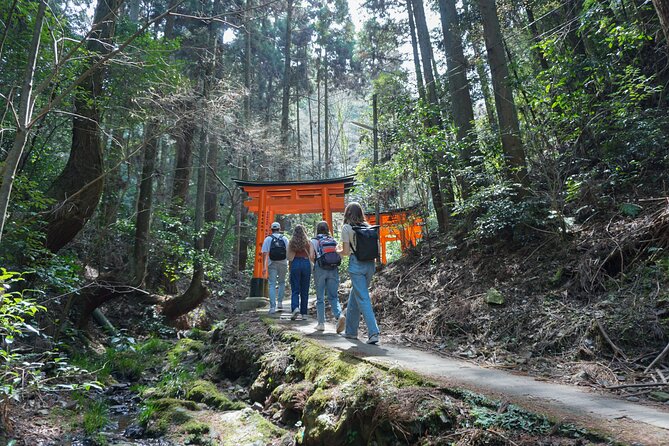
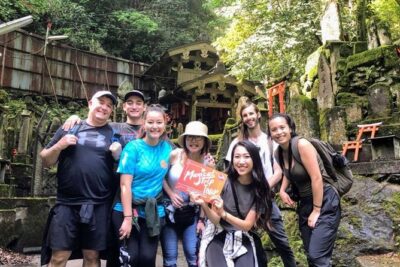
Torii photos get better with quiet routes. This private Kyoto hike takes you away from the busiest paths at Fushimi Inari, threading through calmer trails near Mount Inari with clear route guidance and Shinto context along the way. You also get strong photo opportunities at the iconic orange-red torii gates, plus scenic stops that many people skip.
I love the mix of great walking scenery and a guide who helps you keep moving without second-guessing where to go. I also like that your DSLR photos are handled for you, so you can spend more time looking at what you’re photographing instead of fiddling with your camera.
One thing to consider: this is a hike with a moderate fitness level, and the experience requires good weather, so you’ll want to dress and plan accordingly.
Key things to know before you go
- Private, Kyoto-based guide time so you can ask questions and follow a route that avoids the main crush
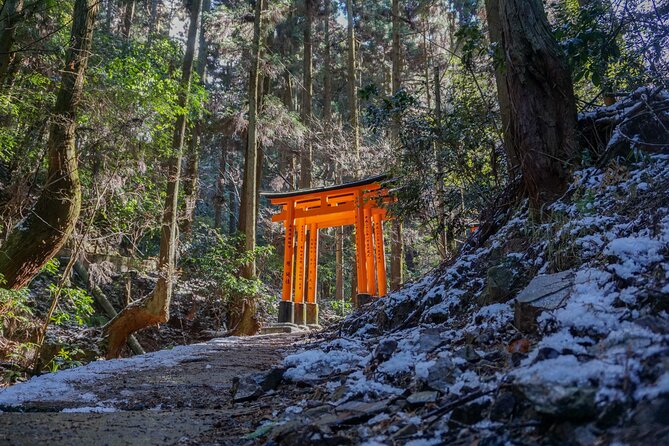
- Quiet trails near Mount Inari for a more peaceful walk than the standard entry paths
- Tofuku-ji views on the way up (one of Kyoto’s Five Great Zen Temples)
- Photo-focused route through vermilion torii gates and bamboo groves
- DSLR photos included, shared after the tour
- Start at 8:30 am to beat the later-day crowds around Fushimi Inari
Why a private Mt. Inari hike beats the main-shrine stampede
Fushimi Inari Taisha is famous for a reason, but that fame means lines, congestion, and people moving faster than you can enjoy the details. A private format changes the feel. You walk with a guide who steers you onto calmer trails, so the mountain experience feels more like a pilgrimage route and less like a theme-park queue.
For me, the best part is that you’re not just seeing torii gates. You’re learning how and why people treat this place with respect. A good guide explains Shinto beliefs, plus the stories tied to the shrine and the broader meaning of the mountain path. That context turns the walk from sightseeing into something you actually understand.
You’ll also spend less energy “figuring it out.” The route is planned, and your guide keeps you oriented as you go up toward the shrine area and then back down. If you’ve ever walked Fushimi Inari alone and ended up zigzagging into crowds, you’ll appreciate the simplicity.
You can also read our reviews of more private tours in Kyoto


Starting smart at the FamilyMart near Tofuku-ji
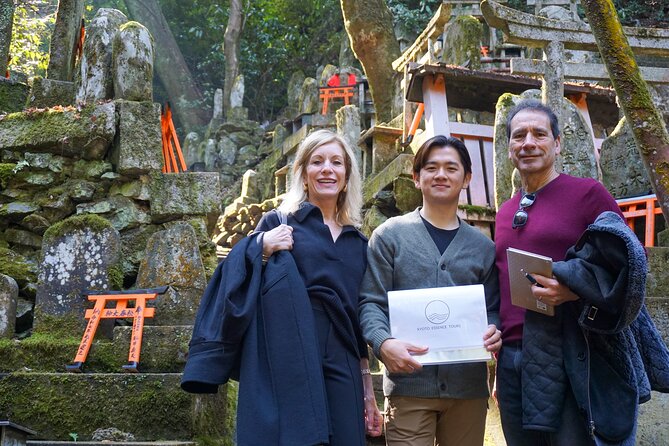
The tour begins at 8:30 am at FamilyMart Nakai Tofukuji, in Higashiyama Ward. Starting early matters here because Fushimi Inari’s busiest areas get louder fast. Even with a private guide, I recommend taking advantage of the early start by arriving a few minutes ahead to settle in.
Right at the beginning, you get a win that helps you “place” the day. On the way up to Mount Inari, you’ll enjoy views of Tofuku-ji, one of Kyoto’s Five Great Zen Temples. That temple viewpoint gives you a sense of scale and geography before you enter the world of torii and shrine paths.
Practical note: there’s no hotel pick-up and drop-off. You’ll be meeting at the stated spot and using public transportation to get there. The meeting point is near public transit, but plan to route yourself in advance so you can arrive calm, not rushing.
Fushimi Inari Taisha: torii gates, bamboo, and the Senbon Torii approach
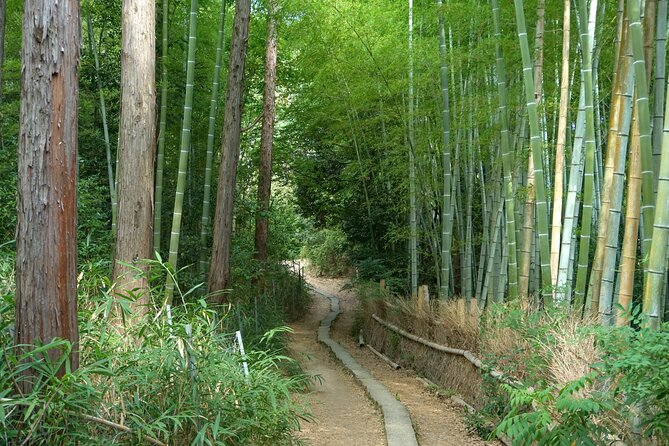
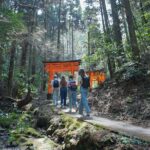
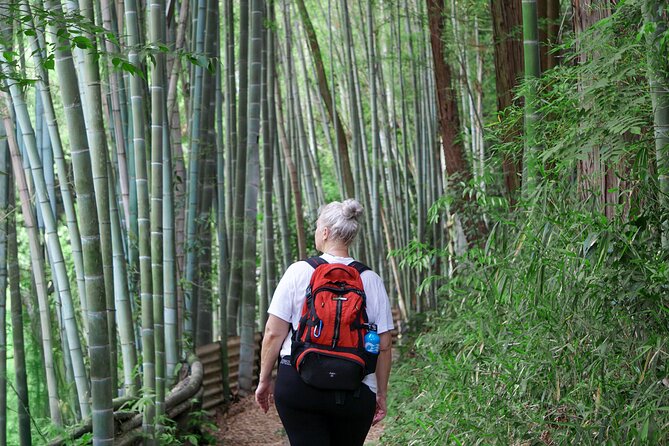
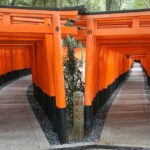
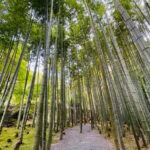
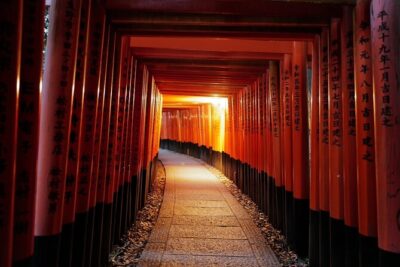
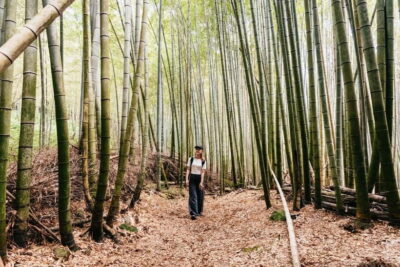
After you start, the main walking focus becomes Fushimi Inari Taisha itself. You’ll pass vermilion torii gates and wild bamboo groves on serene mountain paths. That combo is exactly what makes Fushimi Inari feel distinct, since it’s both ceremonial and scenic.
About two hours are set for this main shrine segment. That timing gives you room to slow down. You’re not forced to sprint from photo spot to photo spot. Your guide can pace you, explain what you’re seeing, and help you find the calmer angles people often miss when they only follow the most direct line.
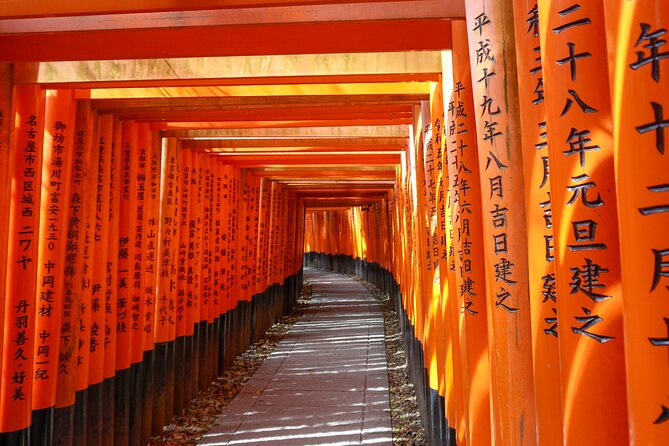
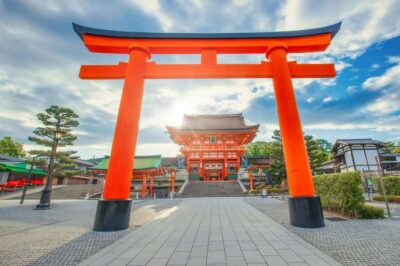
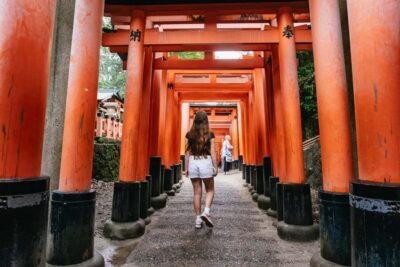
Then comes the iconic stretch: the Senbon Torii Gates and the main shrine area. Senbon literally signals the idea of thousands of torii, and the path can feel visually repetitive in a good way. The effect is like walking through a repeating pattern of orange-red gates, with the shrine’s atmosphere growing more intense the deeper you go.
Possible drawback to keep in mind: this is still a shrine area. Even with a private route, you’ll be in an active place of worship. If you’re hoping for completely empty paths and total silence, temper expectations. What you’ll get instead is a far more manageable experience and better help for timing and movement.
The quiet Mt. Inari trails you actually get to walk
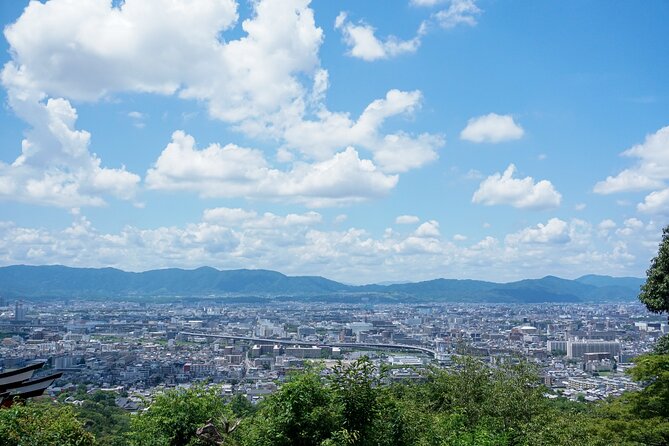
The tour’s big promise is that it takes you away from the main tourist paths and onto quieter Mt. Inari trails. In practice, this means you spend more time where the walking feels natural and less like you’re constantly stopping for other groups to pass.
This is also where your guide’s commentary can really land. As you move through the calmer stretches, the explanations about Japanese culture and Shintoism feel more practical. You’re not trying to mentally translate history while surrounded by noise. You can listen, look around, and connect the stories to the environment under your feet.
I like that the tour calls out a “no getting lost” benefit. That’s not just convenience. It’s also an experience upgrade. When you’re not worrying about whether you’re heading the right way, you can enjoy the turns, the views, and the small changes in atmosphere along the mountain path.
One more detail worth mentioning: the tour includes a moderate physical fitness level requirement. You don’t need to be an athlete, but you should be comfortable with sustained walking on uneven ground and stairs. Wear shoes that can handle Japan’s shrine-path surfaces, because you’ll be on paths for the better part of the morning.
Coming back down with views of Fushimi Momoyama Castle
After the main shrine segment, you’ll head back down toward the end point. On the descent, you’ll enjoy scenic views of Fushimi Momoyama Castle from the mountainside.
This is a smart addition because it breaks the “torii loop.” You get a wider perspective, and the castle view helps you connect the shrine experience to Kyoto’s broader geography. It also gives you a visual reward that feels different from the gate-and-path rhythm.
Even if you’ve seen photos of torii before, this castle-view angle can help you understand where everything sits. That spatial understanding is what makes Fushimi Inari last longer in your memory after you leave.
The tour ends in front of the Romon Gate, just before the Main Hall of Fushimi Inari Taisha. Conveniently, you finish near a key landmark entrance area, so you can transition smoothly into the rest of your Kyoto day without feeling disorganized.
You can also read our reviews of more hiking tours in Kyoto
DSLR photo support, and how to use it for better shots
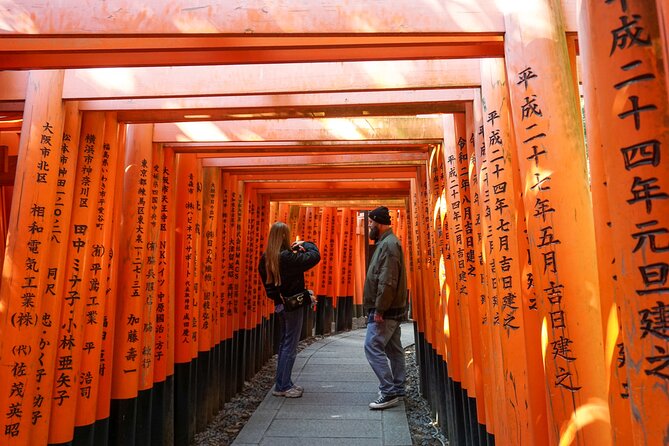
The tour includes complimentary photos taken with a DSLR camera. These are shared after the tour. Translation: you get more “keeper” images without turning your own camera into a second job.
Here’s how to get the most value from this. First, be ready to pause when your guide suggests. DSLR photography in Japan tends to work best when the route is controlled and the timing matches the best light. Second, think about what you want documented: torii gate lines, bamboo groves, and shrine-area portraits with context. Your guide can help you line up shots in areas that are easier to manage than the most crowded spots.
Even if you love taking your own photos, I still like having this backup. It’s especially helpful in areas where the ground is uneven or where you’d rather not juggle camera settings while staying balanced. This lets you enjoy the moment, then review a set of photos that were planned for you.
Commentary on culture and Shinto, without turning it into a lecture
This experience is built around more than movement and photos. You get English narration on Japanese culture, history, and Shintoism. The goal isn’t just to tell facts. It’s to explain what you’re looking at and why the place feels the way it does.
One way to think of it: torii gates are not just decoration. They signal space and meaning in Shinto practice. When you understand what you’re walking through, the Senbon Torii path feels less like an Instagram corridor and more like a structured spiritual route.
This is also where the private format shines. If something doesn’t make sense, you can ask your guide. If you want more detail about a specific story or symbol, you can steer the conversation. With group tours, you often have to accept one-size-fits-all explanations. With a private guide, you can actually match the pacing to your attention.
In April 2025, one guide named Louis was praised for making the hike feel quieter and more personal, even when the weather was rainy. That detail matters because rainy conditions can change how you experience these paths. A strong guide helps you keep the walk comfortable and still find the better route angles.
Price and value: what $62.26 per person gets you
At $62.26 per person for about 3 hours, this isn’t a “cheap ticket” kind of outing. But for Kyoto, a private guide with photo support is often where the money makes sense.
Here’s the value breakdown that matters for real travel decisions:
- You’re paying for private time, not just admission access
- You get English narration focused on what you see
- You also get complimentary DSLR photos, which reduces your effort during the most photogenic segments
- The itinerary includes structured moments on the way up and down, not just a single shrine walkthrough
If you’re traveling solo, the cost may feel steep. If you’re a couple or a small group of friends, it can start to feel more reasonable because the guide’s time is shared across your group. Also, private touring is worth it when you care about photo timing, navigation, and asking questions. If your goal is only to check off torii gates quickly, you could do it cheaper on your own.
My practical take: treat this as “paying for ease and interpretation.” You’re buying a smoother route and a more meaningful walk, not just exercise.
Weather and walking reality for April, rain, and morning starts
This tour requires good weather. If conditions are poor and the experience is canceled, you’ll be offered a different date or a full refund. That makes sense because mountain paths can get slippery, and you want the quiet-trail experience to actually feel enjoyable.
Still, even when it rains, a good guide can help you adjust. In the experiences shared about this tour, Louis led people through a rainy day by taking them to a quieter area, which changed the whole feel of the visit. That’s exactly what you want: not canceling because of inconvenience alone, but using route choices to protect the quality of the experience.
Dress for early morning and possible damp ground. Wear layers you can peel off, and bring shoes with grip. If you hate soggy socks, you already know what to do.
Who this tour suits best (and who should skip it)
This private Fushimi Inari hidden hike is a strong fit if you:
- want a calmer way to experience Fushimi Inari Taisha than the main entry routes
- enjoy learning as you walk, especially Shinto-related context
- care about photos and like not managing everything yourself
- want a guide to handle navigation so you can focus on the scenery
It might be less ideal if you:
- struggle with moderate walking on uneven paths
- want a relaxed stroll with minimal uphill movement
- need food or long breaks built into the plan, since food and drinks are not included
Should you book this private Fushimi Inari Hidden Hike?
I’d book it if you want Fushimi Inari to feel personal, not crowded. The combination of a private guide, quieter Mt. Inari trails, torii photo opportunities, and included DSLR photos is a practical bundle that saves time and stress.
If you’re budget-first and don’t care about route guidance or interpretation, you can do Fushimi Inari on your own. But if you want the experience to run smoothly from Tofuku-ji views up to Senbon Torii and back down with the Momoyama castle view, this is the kind of guided day that pays you back in comfort and understanding.
FAQ
Where does the tour start and where does it end?
It starts at FamilyMart Nakai Tofukuji, 12-chōme-232 Honmachi, Higashiyama Ward, Kyoto, and it ends at Fushimi Inari Shrine Tower Gate near the Romon Gate, just before the Main Hall.
How long is the tour?
The tour is about 3 hours.
Is this tour private?
Yes. It is a private tour/activity, and only your group will participate.
What’s included in the tour besides the guide?
You’ll get an English-speaking local guide, English narration on Japanese culture, history, and Shintoism, visits to quieter Mt. Inari trails away from the main tourist paths, and complimentary DSLR photos shared after the tour.
Are food and drinks included?
No. Food and drinks are not included.
What should I do if the weather is bad or I need to cancel?
This experience requires good weather. If it is canceled due to poor weather, you’ll be offered a different date or a full refund. You can also cancel for a full refund up to 24 hours before the experience starts.
More Hiking & Trekking Tours in Kyoto
More Private Tours in Kyoto


More Tour Reviews in Kyoto



Not for you? Here's more nearby things to do in Kyoto we have reviewed








Fushimi Inari Shrine Tours, compared.
 ★ 4.8Fushimi Inari, Kinkakuji, Bamboo Grove 1 Day Bus TourFrom $1224,316 reviews
 ★ 5.0Fushimi Inari Hidden Hiking Tour (Private Option Available)From $631,750 reviews
 ★ 4.7Kyoto/Osaka: Nara, Fushimi Inari Taisha, Arashiyama Bus TourFrom $521,275 reviews
 ★ 4.4Osaka/Kyoto: Arashiyama, Nara & Fushimi Inari Shrine w/LunchFrom $61754 reviews
 ★ 4.7Nijo Castle, Kiyomizu & Fushimi Inari Guided TourFrom $54700 reviews
 ★ 5.0Nijo, Kinkaku-ji, Arashiyama, Kiyomizu & Fushimi InariFrom $51699 reviews
 ★ 5.0Kyoto Fushimi-Inari Night Walking TourFrom $43320 reviews
 ★ 4.93-Hour Fushimi Inari Shrine Hidden Hiking TourFrom $72270 reviews
Browse the lists this tour appears in