
Reviewed · GION & GEISHA DISTRICT TOURS
Kyoto Gion Private Tour with a Local Guide – Geisha District
Lantern-lit Gion still surprises me. This private walk gives you a local guide who tailors the route to your interests, while you trace Gion’s old streets, machiya townhouses, and historic teahouse culture. The biggest plus is the one-on-one attention, so you get context for what you are seeing, not just photos. One thing to keep in mind: meeting a geiko or maiko is never guaranteed, even when the district is perfect for it.
I like how the itinerary strings together “why this place matters” stops, not just scenic checkpoints. You start around Shijo Kawaramachi, move through Gion’s ochaya street scenes, then shift to Yasaka Shrine, followed by Shinbashi Dori, and finish in Pontocho Alley, one of Kyoto’s oldest nightlife lanes. That flow helps you understand how faith, tradition, and evening culture overlap in eastern Kyoto.
Because it’s a walking tour, plan for steady walking and tight streets. Public transport or a short taxi ride may be used between sites if needed, but the core experience stays on foot. If you have limited mobility, you should message the host early and ask what pace and route they can manage.
Key Highlights You’ll Actually Notice
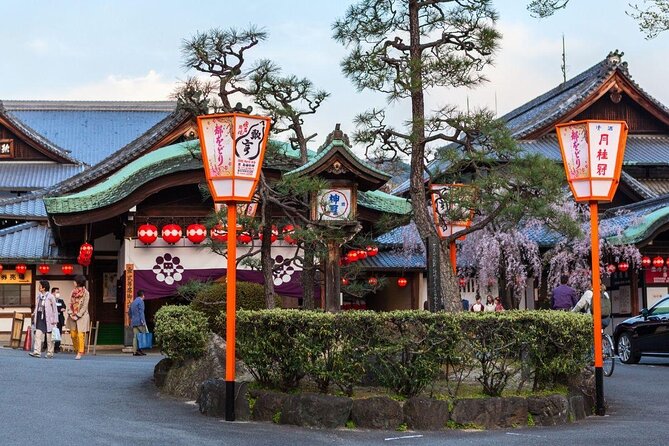
- Private guide focus: your guide adjusts what you do based on your interests through a pre-tour questionnaire.
- Gion, the entertainment district in plain language: learn what machiya, teahouses, and lantern-lit streets signal in Kyoto culture.
- Yasaka Shrine context: more than a photo stop, it’s tied to Kyoto festivals and Shinto practice.
- Shinbashi Dori and Tatsumi Bridge: a classic photo moment with local meaning, not just a viewpoint.
- Pontocho Alley at walking speed: you see why this alley feels intimate, even when it’s lively.
- Guide-quality can vary: most guides are praised for clarity and flexibility, but you should be explicit about geiko and maiko expectations.
Private Gion Tour: Why This Walk Beats Going Alone
Gion looks postcard-ready, but it can feel confusing fast. The streets are narrow, the traditions are subtle, and the “rules” of what to notice are not obvious if you do not have local context.
That is where a private guide pays off. This tour is built around conversation and on-the-ground interpretation. Your guide can point out small cultural markers on the spot, explain what you are looking at, and adjust the pacing when you want more history or more street-level scenes. Guides on this type of itinerary are often praised for making Kyoto feel understandable, with real explanations and a sense of humor. Names like Emi, Alexis, Olan, Ai, Milo, Toga, Kenta, Takaya-san, Brenda, Kenya, Tess, Michael, KOKORO, and Ada show up repeatedly as guides who connect the dots clearly and keep the walk comfortable.
For you, the win is simple: you spend less time wondering what something is, and more time noticing why it matters.
You can also read our reviews of more guided tours in Kyoto


Starting at Shijo Kawaramachi, Then Switching into Kyoto Time
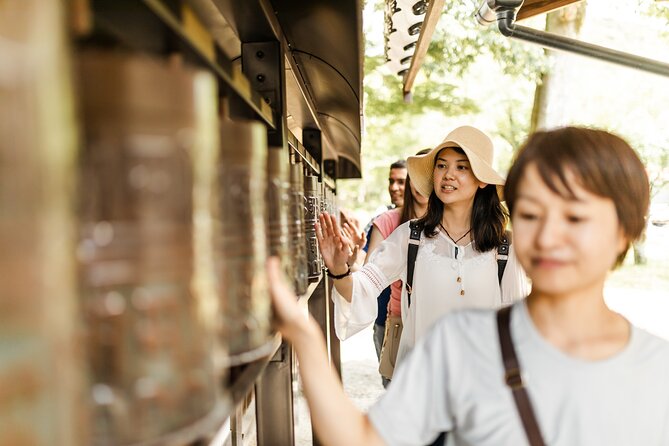
The tour meets near Matsumoto Kiyoshi Kyoto Shijo Kawaramachi. From there, you are walking through one of Kyoto’s most iconic zones, and the plan is designed for roughly 2 to 3 hours.
This is mostly on foot, so you will want practical footwear. Gion and its connecting streets can be uneven, and Kyoto’s sidewalks and crossings can be crowded at peak times. Also, the itinerary can include short transfers using public transport or taxis if your guide thinks it will save time or make the route smoother. Those transfer costs can be discussed with the host after you reserve.
If you want pickup, the experience lists pickup as an option. Because the meeting point is already clearly stated, I suggest you confirm whether pickup changes the start location or just makes it easier to get you to the meeting area.
Gion Streets and Ochaya Lanes: What to Look For
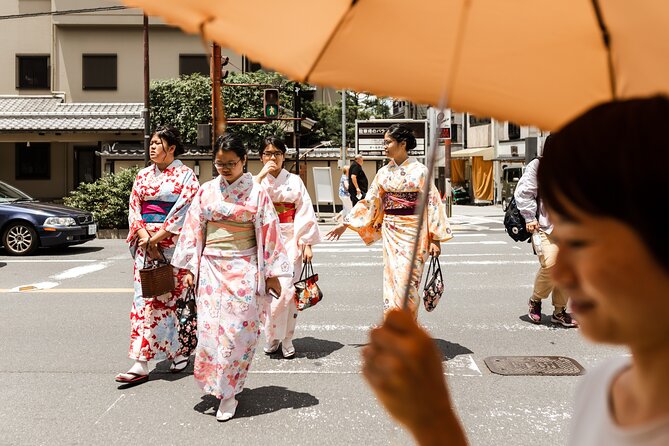
This is the core of the experience: a slow stroll through Gion, Kyoto’s historic entertainment district, where tradition shows up in architecture, lighting, and street layout.
As you walk, expect to see:
- Machiya-style wooden houses lining the lanes
- Lantern-lit streets that give Gion its signature evening look
- Traditional ochaya teahouses along Gion’s most famous street
- Cultural markers your guide can point out as you pass
Here is what makes this section valuable: it teaches you how to read the district without turning it into a scavenger hunt. A good guide will explain what the buildings and locations historically represented, and how modern life still respects those old patterns.
One important consideration: geiko and maiko are associated with Gion, but they are private performers with real schedules. In practice, you might see them, or you might not, depending on timing and chance. I think the best move is to use your questionnaire to say, plainly, that you want geiko and maiko context and any opportunity to look respectfully when possible. Some guides are excellent at this, and others may focus more on general culture.
Crowd levels can also affect what you see. Narrow streets attract people, especially around popular photo areas. If your goal is more quiet and less photo-pressure, tell your guide you want a calmer route, and be flexible if the crowd density shifts.
Yasaka Shrine Between Gion and Higashiyama: More Than a Quick Stop
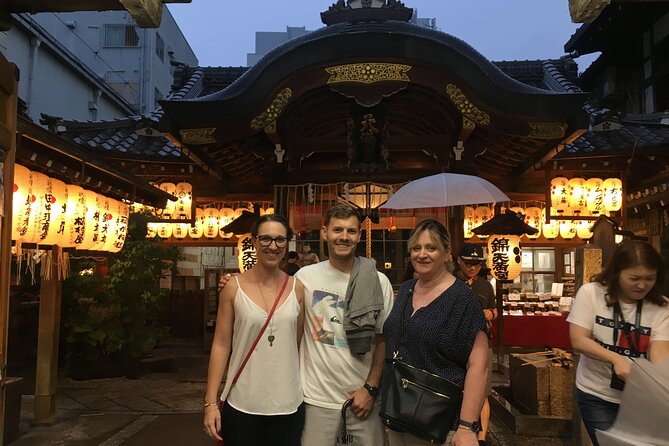
Next comes Yasaka Shrine, a major Shinto landmark sitting between Gion and Higashiyama. It has a history spanning over 1,300 years, and it is closely tied to Kyoto’s famous festivals.
Why this stop matters on your walk: it adds meaning. Without a shrine connection, Gion can feel like pure sightseeing. With Yasaka Shrine, you get a sense of the spiritual engine behind many seasonal traditions in Kyoto.
What you can expect here is a guided visit to a key spiritual site, with your guide helping you understand:
- what role the shrine plays in Kyoto
- how it links to the festival calendar
- what to look for as you move around the shrine area
Practical tip: shrines attract people, and the etiquette is important. Keep your voice down, do not block paths, and follow any cues your guide gives you about where to stand for photos.
Shinbashi Dori, Willow Trees, and Tatsumi Bridge Photo Time
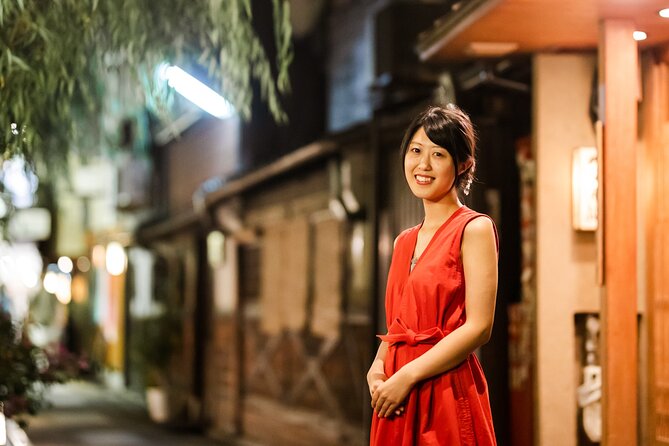
After Yasaka Shrine, the route shifts to Shinbashi Dori, described as one of Kyoto’s most picturesque streets, lined with willow trees and traditional facades.
Then you pause at Tatsumi Bridge, a beloved photo spot with deep local significance. This is where your guide’s “read the place” skills really show. A bridge is easy to photograph, but what makes it special is the story and the way locals use and describe it.
This segment is often a favorite because:
- the street feels classic and Kyoto-specific
- the photo stop is designed for a moment you will remember
- the guide can connect the bridge scene to daily life and local meaning
If you care a lot about photos, tell your guide at the start. Some guides will naturally slow down at key moments, while others prioritize explanations first. You can steer the mix.
You can also read our reviews of more private tours in Kyoto


Pontocho Alley Finish: Where Old Kyoto Meets Evening Life
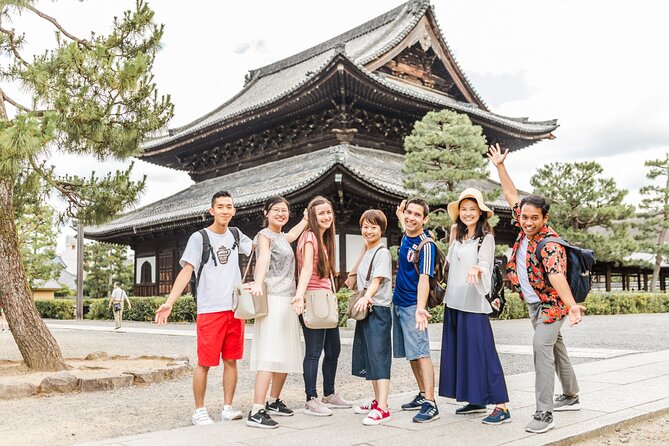
The tour ends in Pontocho Alley, one of Japan’s oldest nightlife areas. The best part of finishing here is that you see a different side of the city than you saw earlier in Gion.
Pontocho is narrow, intimate, and visually theatrical, with traditional Kyoto charm plus active evening energy. With a guide, you are not just walking through a restaurant strip. You are getting help understanding how the alley functions as a social space and why it fits so well with the surrounding culture.
This ending also gives you a practical bonus: if you want to continue your evening, your guide can share local recommendations, and you can ask for advice on where to go next. Some guides in this style of tour are known for helping with dinner planning when the moment calls for it.
A small reality check: if you end at a time when streets are crowded, you may not feel as relaxed as you hoped. On the flip side, the atmosphere is also what makes Pontocho memorable.
Price and Value: Is $101.57 Worth It?
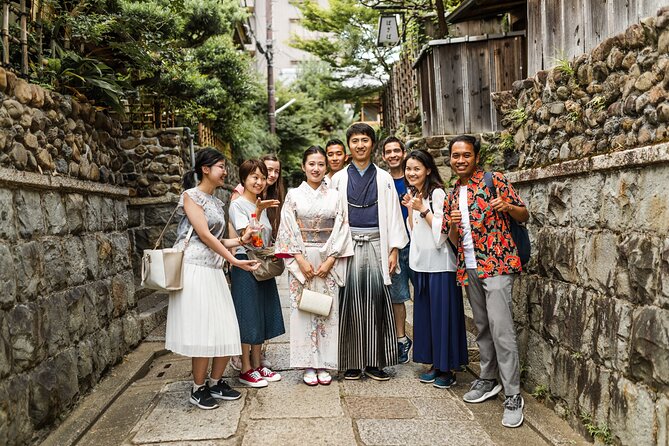
At $101.57 per person, this is priced for a guided, private, short-format walking experience. On paper, it is not cheap compared with joining a group tour. In practice, it can be good value when you count the things that group tours struggle with.
Here is what you are paying for:
- Private guide attention for 2 to 3 hours
- Personal tailoring via a pre-tour questionnaire
- Real-time interpretation while you walk
- Direct communication with your host before and sometimes during planning
- Optional pickup availability (depending on how your start is arranged)
If your goal is to understand Gion and its connections to shrine life and evening culture, the guide time matters. If your goal is only photos and quick stops, you might feel the cost more.
Also consider timing. Bookings are often made well in advance, and average booking time is listed at around 75 days. Popular Kyoto dates sell out or get tight. If you have a specific day and preferred start time, lock it in early.
Timing, Walking Comfort, and What to Bring
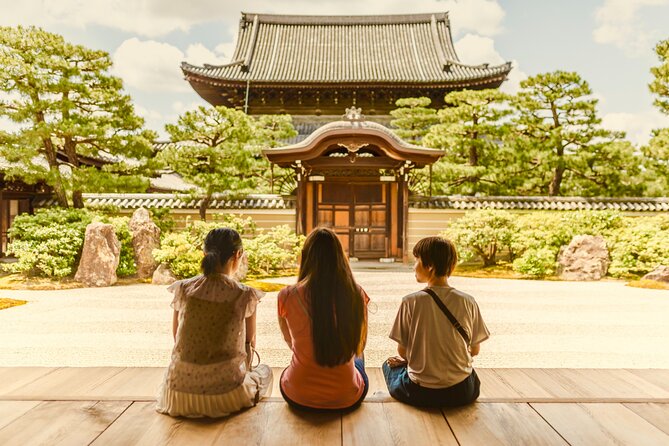
This tour is built for walking. I suggest you plan for:
- shoes you can wear for a few hours on uneven pavement
- light layers, since Kyoto evenings can shift temperature
- a fully charged phone for photos and simple map backups
If you care about seeing geiko or maiko, do not treat it like a promise. But you can improve your odds by choosing a time when the district is active. Ask your guide during planning what timing they recommend for your specific interest.
If you arrive late or have schedule changes, you can often handle it better with a guide who communicates quickly. Several guides connected with this experience are praised for handling timing changes smoothly. Still, as with any meeting point tour, you should double-check your start location and give yourself a buffer.
How Customization Works (And How to Use It)
The tour includes a pre-tour questionnaire, and after you book, your guide reaches out to tailor the itinerary. This is one of the biggest practical strengths of the experience.
Your best move is to tell them:
- what you want most, history, shrine meaning, street architecture, food ideas, or geiko and maiko culture
- how you like to move, quick and efficient or slow and talky
- any must-see requests, especially around Gion culture
This is where guides can really shine. People have praised guides like Alexis for engaging storytelling and humor, and Emi for impressive information depth. Others like Milo and Ai are described as flexible and adapted to group interests. That is exactly what the questionnaire is for: to make sure the guide spends the time where you care most.
If you do not use the questionnaire well, you risk getting a tour that feels too generic for your goals. So do yourself a favor and be explicit.
When This Tour Makes Sense, and When It Might Not
This tour fits best if you want:
- a focused look at Gion’s traditional district through local explanations
- a short, manageable 2 to 3 hour plan
- a private guide who can tailor pacing and interests
- a route that connects Gion to shrine culture and then to Pontocho evening life
You might hesitate if:
- your top goal is a guaranteed geiko or maiko sighting, because that cannot be controlled
- you dislike walking or have mobility limits that make uneven streets hard
- you want a food tour with meals included, since food and drinks are not included
Also note: private tours depend on guide fit. Most guides are praised for professionalism, clarity, and tailoring, but there have been a few bad experiences where the tour felt light on the promised cultural angle or where the guide did not show. I think you reduce risk by writing clear expectations in your questionnaire and confirming your meeting details soon after booking.
Should You Book? My Decision Guide
I would book this tour if you want your Kyoto evening (or morning) to come with context. Gion is pretty, yes, but the best part is learning how the streets, teahouses, shrine culture, and evening life connect.
Skip or reconsider if you are only chasing a checklist. This is not a theme park ride. It works best when you show up curious and communicate what you care about. If you do that, a strong guide like Emi, Olan, Ai, Milo, or Brenda style of guiding can turn a simple walk into a Kyoto you understand.
If you want a quick next step, here’s my simple checklist:
- Tell the guide you care about geiko and maiko culture
- Confirm your start plan, especially if pickup is important
- Wear walking shoes
- Expect culture and storytelling, not a guaranteed sighting
FAQ
How long is the Kyoto Gion Private Tour?
It runs about 2 to 3 hours.
Is this a private tour?
Yes. It is a private experience, with only your group participating.
Where does the tour start and end?
It starts at Matsumoto Kiyoshi Kyoto Shijo Kawaramachi (103-2 Hashimotochō, Shimogyo Ward, Kyoto) and ends back at the meeting point.
Is food or drink included?
No. Food, drinks, and tickets to attractions are not included.
Is transportation included?
Primarily no, since it is a walking experience. Public transport may be used or local taxis may be used for transfers, and any exact costs can be discussed with your host.
Is pickup available?
Pickup is listed as offered, but you should confirm how it works for your specific booking.
Will I see geisha or maiko during the tour?
Geisha district culture is part of the focus, including geiko and maiko association, but the experience does not promise sightings, and results can vary by timing.
What if I need to cancel?
Free cancellation is available. You must cancel at least 24 hours in advance for a full refund.
How does the tour get personalized?
You receive a pre-tour questionnaire to share interests and must-sees, and the guide personally reaches out to tailor the itinerary to your style.
More Guided Tours in Kyoto


More Tours in Kyoto

More Tour Reviews in Kyoto
Not for you? Here's more nearby things to do in Kyoto we have reviewed




Gion & Geisha District Tours, compared.
 ★ 4.7Kyoto Geisha Walking Tour: Gion District & Hidden GemsFrom $253,273 reviews
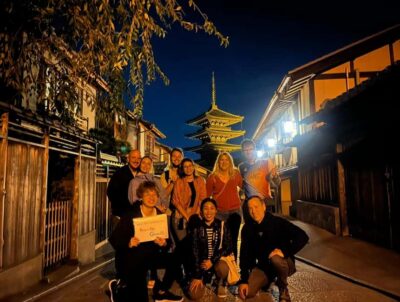 ★ 4.9Gion Magical Night Walking Tour with Geisha TriviaFrom $242,393 reviews
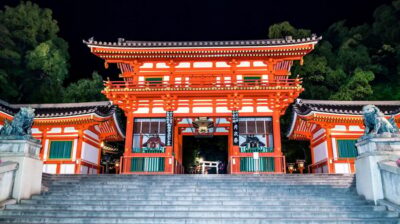 ★ 4.7Gion Geisha District Walking Tour – Stories of GeishaFrom $202,187 reviews
 ★ 4.9Best of Kyoto: Gion, Geisha, Pagodas & CobblestonesFrom $242,058 reviews
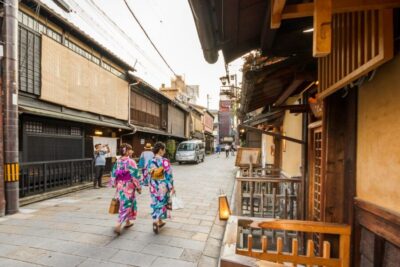 ★ 4.5Night Walk in Gion: Kyoto’s Geisha DistrictFrom $212,003 reviews
 ★ 5.0Kyoto Night Foodie Tour in Gion (9+ dishes + 6 Sake tastings)From $1631,762 reviews
 ★ 5.0Kyoto Gion Geisha District Walking Tour – The Stories of GeishaFrom $251,441 reviews
 ★ 5.0Kyoto Gion: 2-Hour Geisha Culture & History Walking TourFrom $231,186 reviews
Browse the lists this tour appears in