
Reviewed · KYOTO SAMURAI & NINJA EXPERIENCES
Samurai Performance and Casual Experience: Kyoto Ticket
Samurai theater in downtown Kyoto.
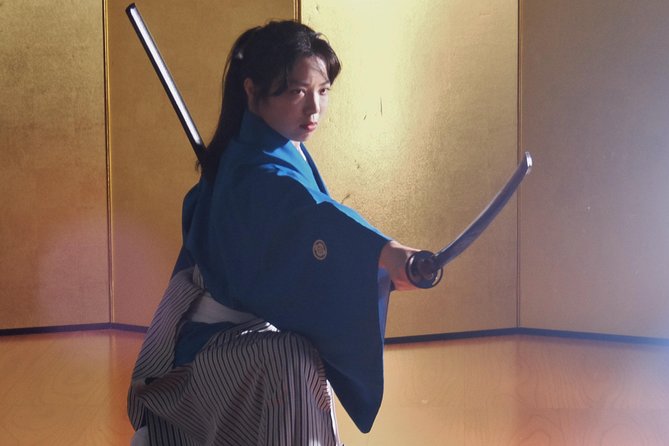
This one is built around Kembu, a traditional sword-and-poetry performance tied to samurai training, plus a post-show photo session where you can hold a sword and fan. I love that the format is short, clear, and easy to fit into an evening, and you get both storytelling and hands-on fun without needing any special skills.
I also appreciate the show’s tone. It stays theatrical and engaging, often with jokes and lively crowd energy, while still explaining what the movements mean in samurai culture. One drawback to consider: if you want a serious, battle-focused reenactment, the program leans more toward narration, history, and stylized routines than pure sparring or advanced fighting technique.
Key points worth knowing
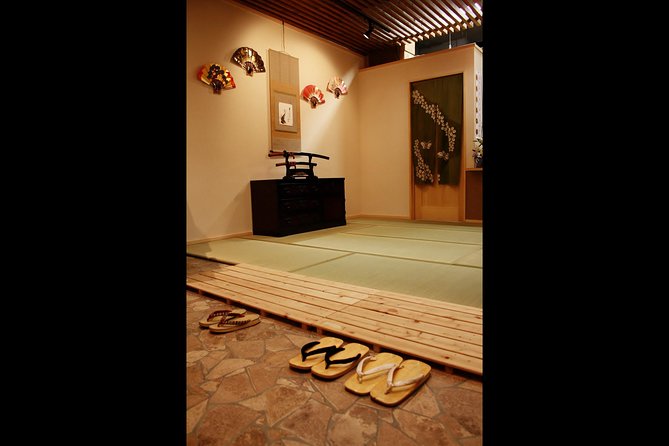
- Shoe-off entry: you remove your shoes when you arrive, in traditional theater style.
- About 40 minutes of stage time: the show itself is timed, followed by a mini hands-on session.
- Traditional and new-style Kembu: you see different variations of the sword routine, not just one segment.
- You get your own photos: after the performance, you can hold a sword and take pictures with performers.
- Fan technique and samurai themes: the program includes folding fan elements and cultural topics explained on stage.
- Intimate, easy-to-follow evening: the venue feels small and audience-friendly, with English narration support.
Kembu Sword Theater in Kyoto: What You Really See in About One Hour
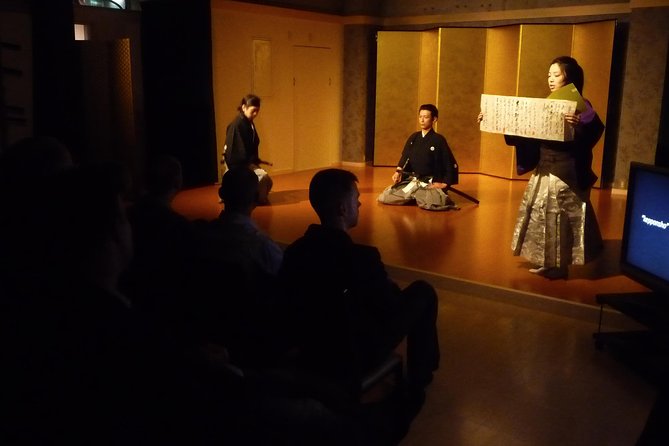
Kyoto is famous for temples, gardens, and quiet streets. This ticket is different. You’re heading into a small downtown theater for Kembu, a sword performance that mixes disciplined movement, dramatic presentation, and short poetic storytelling.
The full experience runs about 1 hour, and the show portion takes roughly 40 minutes. That matters because it turns a museum-like subject into something you can enjoy at night, without burning half a day. You’re also not stuck waiting around for long stretches. The pace is built to keep you oriented.
The vibe is part performance, part cultural lesson. I like it because it gives context, not just spectacle. And I like that the follow-up turns knowledge into something you can physically try for a few minutes, even if you’re not a sword person.
Finding the Theater, Timing the Evening, and the Shoe-Off Moment
The show starts around 4:15 pm for one session, and you can choose between two showtimes. Plan to arrive 15 minutes to 5 minutes early. This is one of those activities where being on time makes the evening smoother, not more stressful.
When you arrive, you’ll enter in a traditional way. You take off your shoes and then find your seat. Expect seating that includes options that sit low to the ground and more standard chair seating. If you’re tall or you don’t love kneeling or low seating, arriving early helps you get comfortable quickly.
Location-wise, it’s in downtown Kyoto and near public transportation. One practical tip from the venue directions: when you go down the stairs, use the right side toward the GOZAN building to reach the reception desk. That simple detail saves you from doing the Kyoto Olympics of “Which door is the right door?”
More Kyoto temple visits, food tours, tea experiences, and day trips to compare

The 40-Minute Kembu Performance: Swords, Poems, and Stylized Power
Once the show begins, you’re guided by narration that introduces the history and techniques behind Kembu. It’s presented as a disciplined art rather than a stunt show. The performances include both traditional and new-style elements, so you’re not watching the exact same move set on repeat.
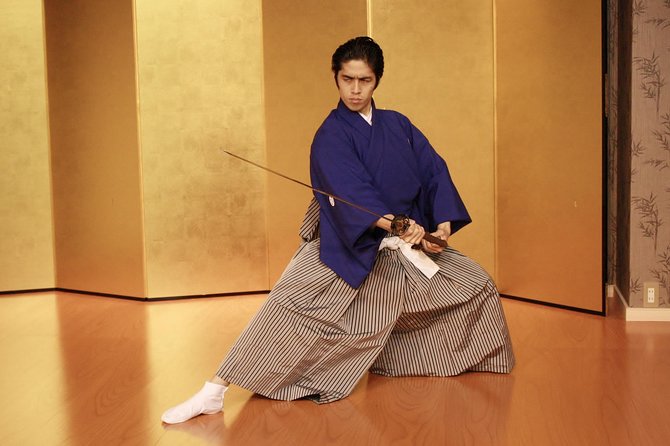
Here’s what you can expect on stage. A performer handles the sword with controlled, precise motions and recites short Japanese poems that connect to samurai culture and the period’s battlefield mindset. The choreography is meant to show more than physical strength. It’s about timing, focus, and presence.
Between segments, you get short “here’s what this means” explanations. That turns unfamiliar movements into something you can follow, even if you’re only casually interested in Japanese history. I found the structure helpful because it keeps you from feeling lost while the stage action moves fast.
Also, a key detail: it’s not about showing injury, violence, or modern combat drills. You’re watching a performance art version of sword practice. Think ceremony and mindset as much as technique.
The Samurai Culture Talk: Courage, Focus, Fan Ritual, and Seppuku Context
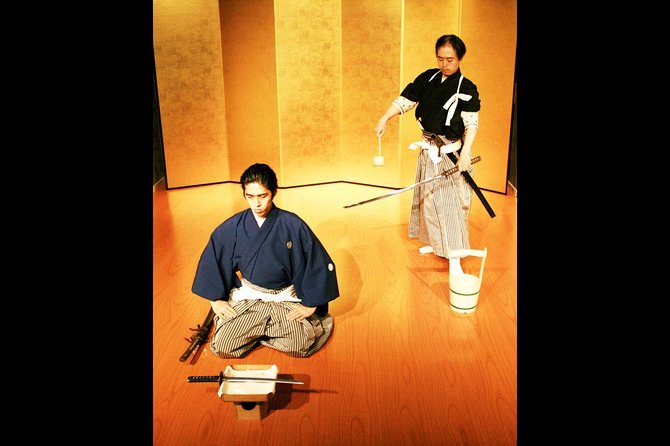
Before and between demos, you’ll hear narration that connects Kembu to samurai life. The show explains how Kembu was said to support samurai in building courage and improving mental focus for the rigors of battle. Even if you know nothing going in, that framing helps you understand why this isn’t just physical movement.
You’ll also learn about the Japanese folding fan as part of the performance. In many Japanese arts, props are never random. Here, the fan supports the gestures and rhythm of the routine, and you’ll hear about what the movements represent.
The show also touches on the ceremony of seppuku (also called hara-kiri). It’s discussed in a cultural and historical context rather than as something graphic. You’ll want to know what you’re watching. The goal is explanation, not shock.
One thing I appreciated: the narration keeps returning to the “why.” Why practice this way? Why these poems? Why the formal structure? That kind of repeated context makes the performance feel more coherent.
The Post-Show Mini Session: Your Sword and Fan Photo Moment
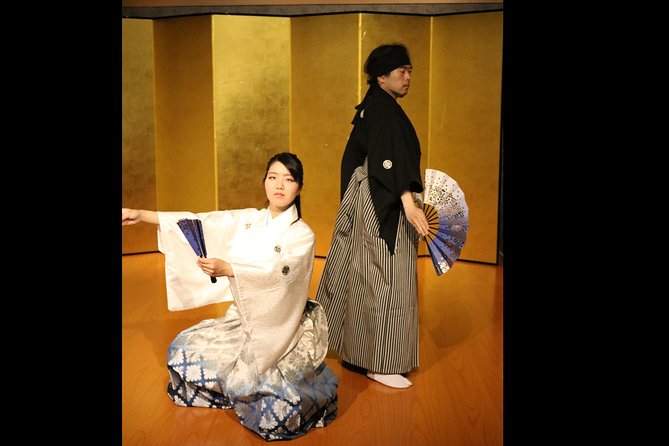
After the stage performance, the ticket shifts gears. You go into a mini experience that focuses on a hands-on, low-pressure photo opportunity.
You can hold a sword and take a few photos with the performers. This is the moment most people remember because it gives you that instant souvenir without needing to stage-manage it yourself. The photo element is part of the fun, and the performers are there to help you get set up.
Some people also report a chance to take part in learning a few fan or sword movements. That matches what the program describes as a short mini experience after the main show. It’s not presented as rigorous training. It’s more like, you get a taste of the choreography so you leave with a physical memory, not just an image on your phone.
A small but delightful note: one review mentions receiving a pair of samurai socks at the end. I cannot promise every session includes the same souvenir, but it’s a good example of the kind of thoughtful, friendly atmosphere this place aims for.
How to Set Expectations: Fun Theater vs. Serious Fighting Training
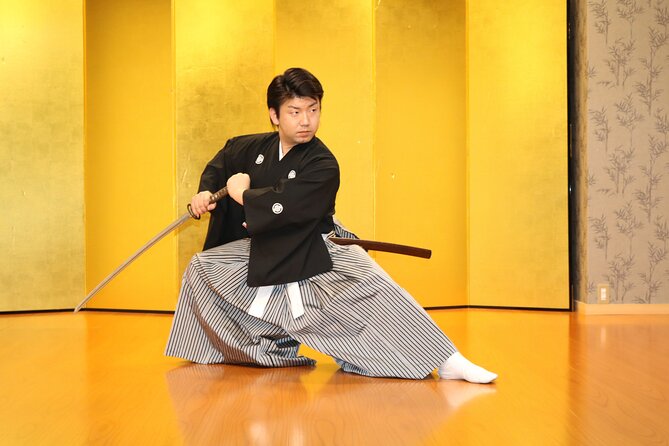
This ticket has a specific style. You’ll see trained performers delivering Kembu with drama, narration, and controlled movement. The tone can be humorous, with staff and performers lightening the mood. In one account, the room even cracked up from laughter at jokes.
That’s great if you want an evening that’s educational but not stiff. It’s also ideal if you’re traveling with family. Several comments describe it as a good choice for kids because it’s engaging and interactive.
But it’s not a martial arts workshop or a deep technical class. If you come expecting more serious battle reenactment or a deep breakdown of fighting methods, you might find the balance tilts toward storytelling. The show includes learning and explanation, and the action is stylized for performance.
So I’d frame it this way: this is culture through performance, plus a short interactive photo moment. Not a combat simulation.
Who This Kyoto Ticket Best Fits (And Who Might Want Another Option)
I think this experience fits best if you check one or more boxes below:
- You want something distinctly Kyoto that is not another temple hour.
- You like performing arts and short stage history lessons.
- You want a simple, rainy-day plan that stays indoors.
- You want hands-on fun without taking a full class.
It can also work well for travelers who enjoy photos and don’t want to spend time hunting for a costume rental or studio. The key is that the sword-and-fan photo session is built into the experience.
Who should consider a different option? If you’re a hardcore martial artist looking for detailed technique progression, this won’t fully satisfy that niche. The structure is about presentation and cultural explanation, not advanced training drills.
Price and Value: Why About $33 Can Work for an Easy Evening
At $33.03 per person, this isn’t the cheapest thing in Kyoto. But it’s also not trying to be. You’re paying for a live, staged performance plus dedicated time for a post-show interaction.
Here’s where the value comes from:
- You get about 40 minutes of guided stage demos with narration, not just a silent show.
- The venue includes a mini experience after the performance, where you can hold a sword and get photos.
- The time commitment is short, about 1 hour total, which helps you spend your daylight hours on temples or neighborhoods you care about.
In travel terms, this is one of those “buy time and access” experiences. You’re not just paying for entertainment. You’re paying for the organized flow that gets you into the show and then hands you the prop moment afterward.
The provider is Ginbu Co., LTD. (formerly Samurai Kenbu Co., LTD.), so you’re dealing with an established operator for this kind of performance.
A Practical Game Plan: Making the Most of Your Evening Without Stress
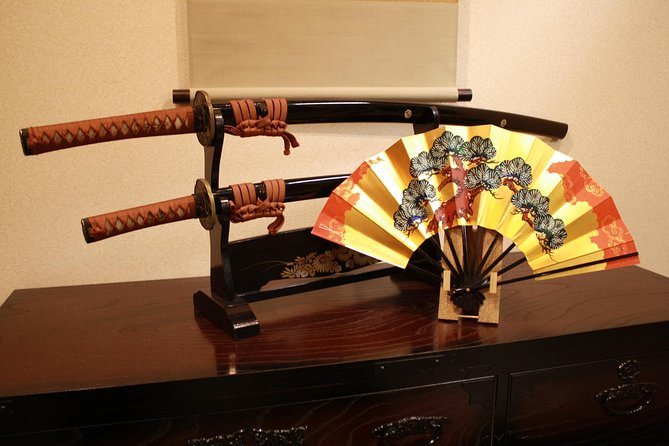
Here’s how I’d play it to feel relaxed and get the most out of it:
1) Plan your afternoon so you’re not rushing. A 4:15 pm show means you’ll want a low-stress itinerary earlier in the day. Kyoto mornings can run long. Give yourself room.
2) Wear shoes that are easy to take off. You’ll be removing them on entry. That’s normal here, and it’s part of the experience.
3) Bring a camera and keep your phone charged. The photo session is part of the attraction, and you’ll want to grab a few shots when you’re set up.
4) Go with curiosity, not a checklist. Kembu is stylized. The poems, the fan elements, and the narration about samurai focus all work together. If you treat it like a live explanation, you’ll enjoy it more.
Should You Book This Samurai Kembu Kyoto Ticket?
I’d book it if you want an evening that’s different from Kyoto’s usual sightseeing, and you like the idea of learning as part of the entertainment. The format is compact at about an hour, and the combination of performance plus your own sword-and-fan photo is a strong value.
Skip it or consider another option if you’re expecting a serious sword battle spectacle or advanced martial arts training. This is theater-driven and culture-driven, with humor and storytelling in the mix.
If you can handle a little historical narration and you like hands-on photo moments, this ticket is a fun, affordable way to understand a samurai art tradition you can’t really replicate on your own in Kyoto.
FAQ
How long is the Samurai Kembu Kyoto Ticket?
The experience is approximately 1 hour total. About 40 minutes of that is the show portion, followed by a mini hands-on photo session.
What is included in the ticket price?
You get admission to watch a Kembu performance at Samurai Kembu Theater. After the show, there is a mini experience that includes time for photos where you can hold a sword and take pictures with performers.
Where is the meeting point?
You start at Samurai Kembu Theater in downtown Kyoto. You should come down the stairs on the right side toward the GOZAN building to reach the reception desk.
What time does the experience start?
A listed start time is 4:15 pm, and you can choose from two showtimes.
Is food or drinks included?
No. Food and drinks are not included.
Do I need hotel pickup or drop-off?
No. Hotel pickup and drop-off are not included.
What should I do when I arrive?
You should arrive about 15 minutes to 5 minutes before the start time. Plan to take your shoes off when entering and find your seat.
Is this ticket available as a mobile ticket?
Yes. The ticket is listed as a mobile ticket.
Is the venue near public transportation?
Yes. It is near public transportation.
Can I cancel for a refund?
Yes, free cancellation is available. You must cancel up to 24 hours in advance for a full refund. If you cancel less than 24 hours before the experience starts, you will not receive a refund.
More Tickets in Kyoto
More Tour Reviews in Kyoto

Not for you? Here's more nearby things to do in Kyoto we have reviewed






Kyoto Samurai & Ninja Experiences, compared.
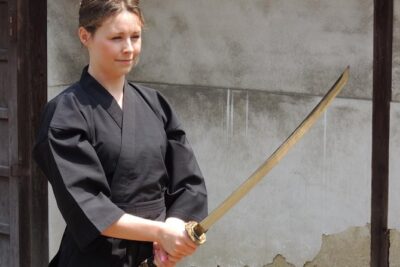 ★ 5.0Kyoto Samurai ExperienceFrom $1191,294 reviews
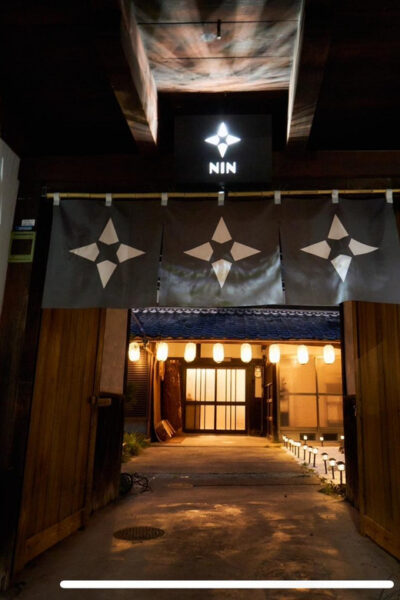 ★ 4.9Kendo and Samurai Experience with Uniform and GearFrom $103815 reviews
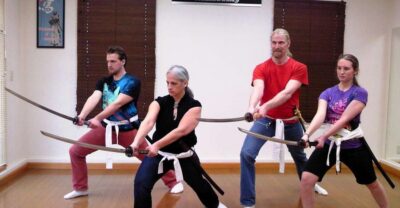 ★ 4.9Samurai Sword Class by Experts in Traditional ArtsFrom $64657 reviews
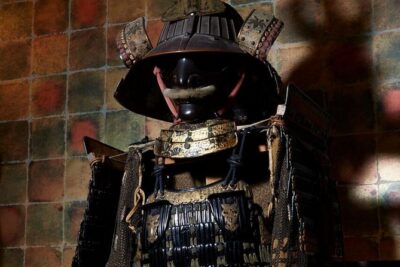 ★ 4.5Skip the lines Basic Ticket at SAMURAI NINJA MUSEUM KYOTOFrom $28632 reviews
 ★ 5.0Ninja 1-hour Hands-on Lesson by Japanese master in Kyoto -EntryFrom $80489 reviews
 ★ 4.8Ninja Weapon Forging ExperienceFrom $148478 reviews
 ★ 4.5Samurai Kenbu Traditional Sword Dancing ShowFrom $32426 reviews
 ★ 5.0Samurai Training with Modern day Musashi in KyotoFrom $132256 reviews
Browse the lists this tour appears in