
Reviewed · KYOTO CRAFT & CALLIGRAPHY WORKSHOPS
Kyoto: Japanese Calligraphy Class in 150 years old townhouse
A brush, a paper, calm Kyoto time. In the historic Ninenzaka streets, you’ll learn traditional Japanese calligraphy inside a 150-year-old townhouse, with a pace that works even if you’ve never held a brush before. It is a small-group class designed to feel steady and rewarding, not stressful.
What I like most is the how of the teaching: patient guidance, clear step-by-step instruction, and a bit of history so the strokes mean something. I also appreciate that classes run in English every day, so you can focus on technique instead of translation.
One thing to consider is time: it is about a 50-minute session, so you need to concentrate and move at the class flow. Also, you must wear socks in the space, and if you forget, you’ll need to buy a pair on site.
Key calligraphy class details worth knowing
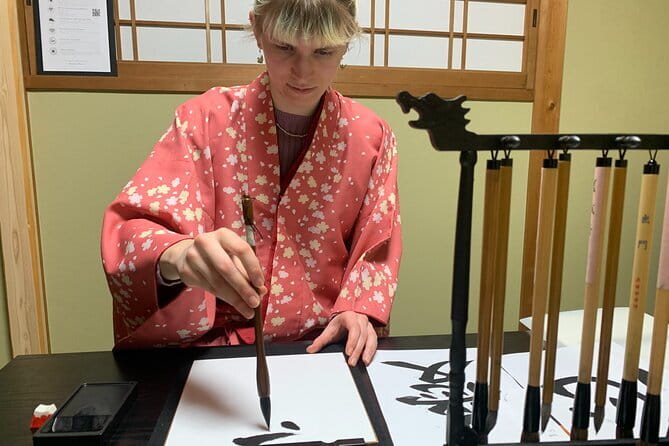
- 150-year-old townhouse setting in Ninenzaka for a Kyoto mood that feels more like a calm room than a classroom
- English instruction every day for beginner-friendly learning without the language barrier
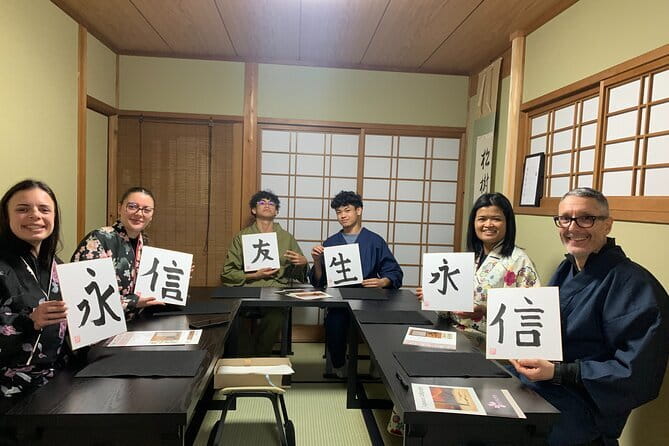
- Small groups up to 18 so the teacher can actually correct your posture and brush movement
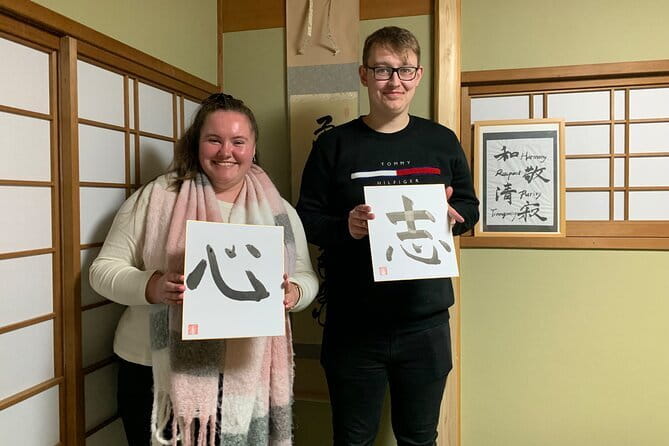
- A take-home result so you leave with your own calligraphy keepsake
- Socks required if you forget, plan on buying them at the start
Why Ninenzaka makes this class feel extra Kyoto
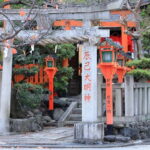
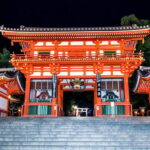
Ninenzaka is one of those Kyoto areas where the streets already tell a story. You walk through historic lanes, with the kind of atmosphere that slows your pace without forcing it.
That matters for calligraphy. Calligraphy is control, patience, and small movements. When you start in a neighborhood that feels quiet and old-world, the practice clicks faster. You feel less like you’re rushing to an activity and more like you’re doing a short, meaningful craft break in the middle of sightseeing.
This class also starts at a dedicated cultural spot in the Ninenzaka area, so you’re not hunting around for a studio location that’s hard to find. You’ll meet at Tea Ceremony & Cultural Experience Kangetsu Kyoto, Nihon Bunkakuen Kyōshitsu Kangetsu Kyoto, the address is listed as 349-19 Masuyachō, Higashiyama Ward, Kyoto 605-0826.
More Kyoto temple visits, food tours, tea experiences, and day trips to compare

Inside the 150-year-old townhouse: the atmosphere you’re paying for
This is not a generic workshop room. The class takes place in a historic townhouse, and that setting shows up in the feel.
In small classrooms, the room matters. A townhouse layout tends to create natural boundaries between teacher space and student space, which helps you focus on your own work. It also creates a more intimate feeling because the group is capped at 18 people.
You also get a gentle contrast with Kyoto’s busy streets. Many visitors plan a long day of temples and crowds, then want one hour that is quiet, hands-on, and not location-heavy. This class is that hour.
The tone is also described as calm and peaceful, with a “nice way to spend a brief part of your visit” vibe. If you like learning by doing, the atmosphere supports it.
What you actually do in a 50-minute Japanese calligraphy session
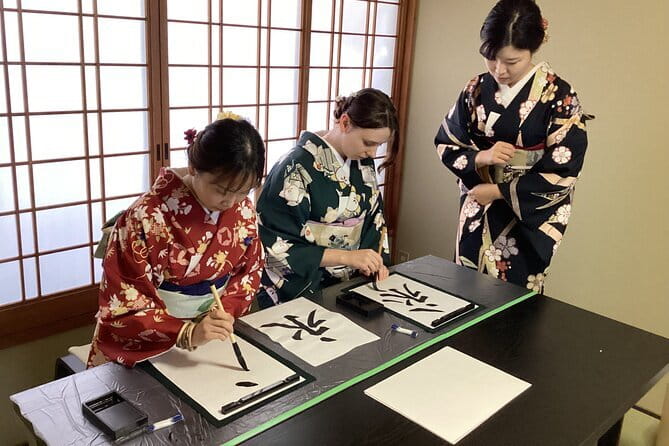
The class runs about 50 minutes. That sounds short, but for beginners it is often the right length. You get enough time to learn the basics, try your own strokes, and leave with a finished result.
Here is the flow you should expect, in plain terms:
- Warm welcome and setup
You start in the meeting location and head into the workshop area. Before you write, the instructor frames the goal: learning essential techniques and producing your own piece.
- Brief teaching plus technique
You get guided instruction on how to form characters with brush control. The teaching is designed for beginners, so you’re not expected to already know how the strokes work.
- Time to practice
You do more than watch. You repeat strokes and character parts until your technique improves. This is where the small group size helps, because the teacher can correct issues without letting you drift.
- Finish and take-home piece
The class is set up so you leave with an actual souvenir. In practice, that means you’re working toward a final look, not just making random brush marks for the experience.
One note: a handful of people feel the class could be longer, with one comment that they would prefer 90 minutes. So if you are the type who likes slow coaching and lots of retries, you may feel a little time pressure.
But for most beginners, the time limit becomes a benefit. It forces focus and keeps the session from turning into a wandering “try stuff until time runs out” workshop.
Beginner-friendly coaching that doesn’t talk down to you
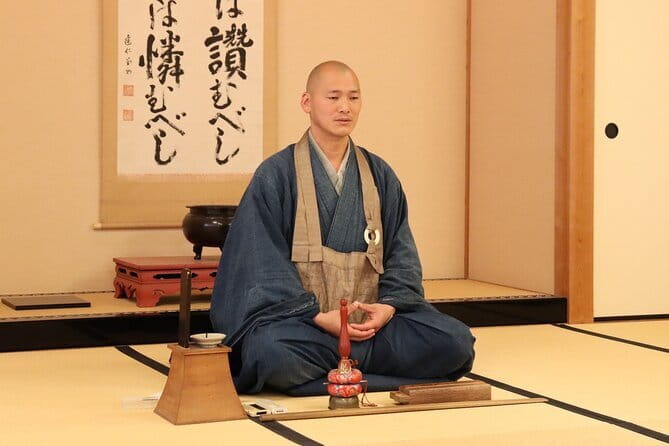
This is a beginner class, and the biggest advantage is the teaching style. The instructors are described as patient, instructive, and supportive, with teachers who take time to make sure you can do the basics correctly.
When people say they took a few tries and the teacher kept helping, that’s the real value. Calligraphy punishes impatience. If the strokes look off, it can feel frustrating. Here, the guidance is set up so you keep progressing instead of giving up.
Another detail I like: you get a short history of Japanese calligraphy. It is not just hands-on. The idea is to give meaning to what you’re writing, so the finished piece is more than a pretty souvenir.
Also, the class is taught in English every day. That is a major quality-of-life detail. You can ask about technique, understand explanations faster, and avoid missing instructions that are crucial for brush movement and posture.
For families, this is also a consideration: children under 12 are not allowed. That can actually make the class calmer, because the group composition tends to be older and more able to focus for the full session.
The master, the assistant, and why small groups matter
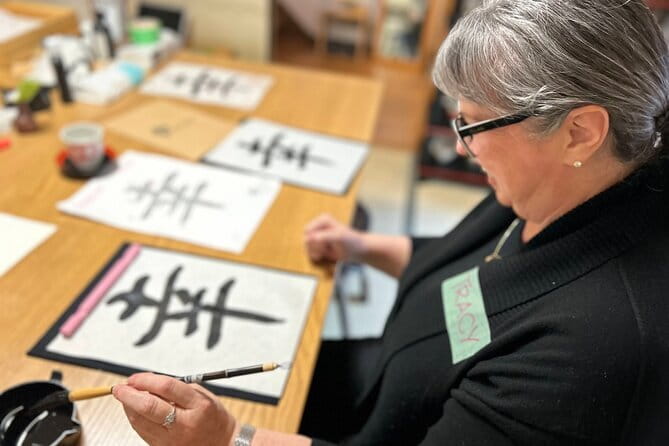
This is taught by a master teacher with an assistant support role. That duo approach makes the classroom more responsive.
With a master teacher, you get the main instruction and the key demonstration. With an assistant present, you tend to get quick help with individual issues like how you’re holding your brush, how you’re positioning your wrist, or whether you’re following the stroke sequence.
And again, group size is capped at 18 travelers. In a class where concentration matters, smaller groups reduce the chaos factor. You don’t feel like you’re writing in a crowded hall.
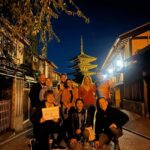
This kind of setup is also good for meeting people. The class is social in a quiet way, because you’re working side by side and sharing the same learning curve. If you like connecting with fellow travelers for a short moment without a big group tour vibe, this works nicely.
Socks and focus: the practical stuff that can trip you up

Let’s talk about the stuff that can ruin your start if you’re not ready.
Socks are required
You must wear socks. If you forget, the instructions say you can purchase socks. That’s an easy fix, but it’s still better to show up prepared.
This detail matters because it affects comfort and timing. If you start the class searching for socks, you lose your first minutes, and in a short 50-minute session, first minutes count.
Good concentration helps
One review framed it as a fun hour, but you need to concentrate. Calligraphy is not passive watching. You have to pay attention to each stroke, and your brain has to switch from sightseeing mode to “slow hands, steady movement.”
If you are tired from walking all day, plan for a mental reset. Think of it like a short focus workshop, not an entertainment show.
Price and value: $43 for technique and a take-home keepsake
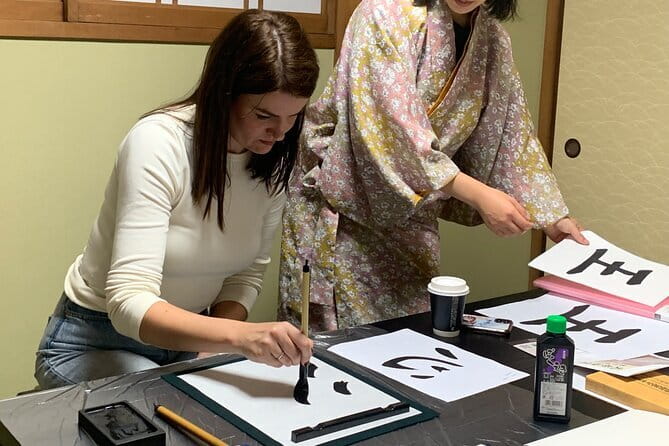
At $43 per person, this is positioned as an affordable Kyoto craft experience. The value comes from the mix of things you actually get:
- Instruction tailored for beginners
- A take-home souvenir from your own work
- English support every day
- A historic townhouse setting that adds real atmosphere
A lot of low-cost activities either give you minimal teaching or leave you without something concrete to show for the time. This class is built so you finish with a result, and that is what makes the price feel fair.
The 50-minute duration is also part of the value equation. You get an experience that fits into sightseeing days without stealing half your day.
If you’re trying to pick one hands-on cultural thing in Kyoto that won’t require planning ahead like a long ceremony, this is a strong contender.
How to plan this in your Kyoto day
You’re in the Ninenzaka area and the class is near public transportation. That makes scheduling easier because you can pair it with the nearby streets and other Higashiyama sights.
For planning, I suggest you treat it like a break that resets your legs and attention. Calligraphy is slower than temple-hopping, and it gives your day a rhythm.
A smart approach is to do this after you’ve walked enough to work up appetite for calm. If you do it too early, before you’ve seen the area, you might not fully enjoy the contrast of historic street energy versus quiet craft time.
Because the session is about 50 minutes, you also want enough buffer before or after. Kyoto sidewalks can be crowded and you don’t want to rush your start.
Who should book this calligraphy class (and who should skip it)
This experience is a great fit if you want:
- A beginner-friendly introduction to Japanese calligraphy
- A calm, low-stress activity with clear instruction
- A take-home souvenir you can be proud of
- English support every day
It is especially good for first-time learners who are worried they will mess it up. The teaching is designed for retries, not perfection on the first attempt.
Skip it if:
- You want a long-form class experience. A few people have mentioned the 50-minute session can feel slightly rushed.
- You have a hard time concentrating for a full hour of hands-on work. It is not a background activity.
For families, note the rule: children under 12 are not allowed. For teens and adults, it can be a nice change of pace during a busy Japan trip.
Should you book Kyoto Japanese calligraphy in Ninenzaka?
If you want one hour in Kyoto that’s quiet, hands-on, and actually produces something tangible, I think you should book this class. The historic townhouse setting plus patient instruction plus English support is the winning combination.
Just be honest with yourself about time and focus. This is a 50-minute session, so show up with socks on, arrive ready to pay attention, and aim for steady progress rather than slow perfection. If you do that, you’ll leave with a real keepsake and a better understanding of what makes calligraphy more than pretty brushwork.
FAQ
Do I need to wear socks?
Yes. You are expected to wear socks. If you forget, you can purchase socks.
Is this class for beginners?
Yes. The class is designed for beginners and focuses on essential techniques so you can create your own calligraphy.
Do you offer the class in English?
Yes. English experiences are provided every day.
How long is the calligraphy class?
It runs for about 50 minutes.
What is the group size?
The class has a maximum of 18 travelers.
Who can participate?
Most travelers can participate, but children under 12 years old are not allowed.
Where do I meet for the class?
Meet at Tea Ceremony & Cultural Experience Kangetsu Kyoto, 日本文化体験教室 寒月 京都二年坂349-19 Masuyachō, Higashiyama Ward, Kyoto 605-0826, Japan.
What if the weather is bad?
This experience requires good weather. If it is canceled due to poor weather, you will be offered a different date or a full refund.
More Workshops & Classes in Kyoto

More Tour Reviews in Kyoto

Not for you? Here's more nearby things to do in Kyoto we have reviewed




Kyoto Craft & Calligraphy Workshops, compared.
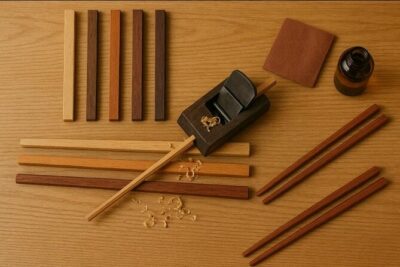 ★ 5.0Chopsticks Making Workshop in Gion with Engraving OptionFrom $15958 reviews
 ★ 4.8Authentic knife making experience at a blacksmith in KyotoFrom $154350 reviews
 ★ 5.0Calligraphy class at Buddhist temple in city centerFrom $55167 reviews
 ★ 5.0Roketsu dyeing experience: M course Roketsu Dyeing ExperienceFrom $25163 reviews
 ★ 4.9Japanese Archery Workshop with Experienced InstructorFrom $38132 reviews
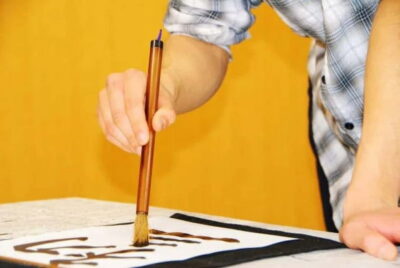 ★ 4.8Japanese Calligraphy ClassFrom $5189 reviews
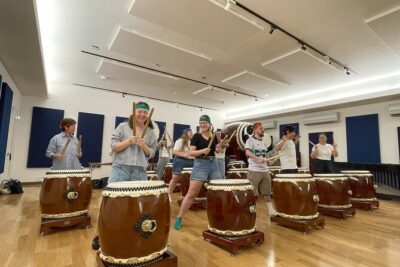 ★ 5.0TAIKO, Japanese Drum Experience from KyotoFrom $11586 reviews
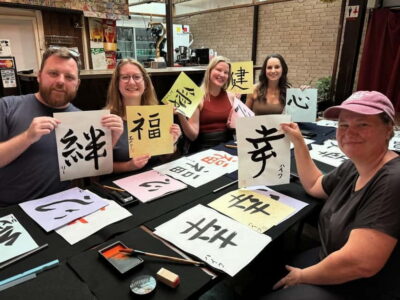 ★ 4.7Japanese Calligraphy WorkshopFrom $3284 reviews
Browse the lists this tour appears in