
Reviewed · NARA DAY TRIPS FROM KYOTO
Kyoto, Osaka, Nara Full Day tour by Car English speaking Driver
Kyoto feels way easier when you skip the transfers. This private car day strings together the city’s biggest hits from Arashiyama to Fushimi Inari with an English-speaking driver and pickup built in.
I really like the photo-friendly flow. One driver, Rana Usman, was praised for being punctual, friendly, and helping with explanations and photos, even with kids in tow.
My only real caution is how much guidance you’ll get. This experience is often described as an English-speaking driver experience more than a full, talk-every-minute tour guide, so if you want deep narration, clarify that expectation up front.
Key highlights you should know
- Private car for up to 6 with hotel or terminal pickup and drop-off
- A single Kyoto day plan hitting Arashiyama, Kiyomizudera, Kinkakuji, Fushimi Inari, Gion, and more
- Air-conditioned vehicle for summer days, plus meet-and-greet support
- Entrance fees are not included, but you can skip paid stops if you want
- Time windows at each stop help you see a lot without feeling lost
- English-speaking driver/guide who can share background, though depth may vary by driver
Price and logistics for a Kyoto day, private car style
You are paying $650.30 per group for up to 6 people. The value depends on how full your van is. If you fill all six seats, you can think of it like roughly a little over a hundred dollars per person for the whole day of private transport, which is often the hard part to solve in Kyoto on your own.
What you get for that price is practical, not flashy. Private transportation is for your group only, the car is air-conditioned, and your plan includes highway tolls plus gas. You also get meet-and-greet, plus pickup and drop-off, so you are not spending your day figuring out trains, stairs, and transfers.
One more logistics detail that matters: you’ll have a hotel-to-hotel time window of about 10 hours, and if you go past 10 hours there is an overtime charge listed (5000 yen per extra hour, charged per booking). Some drivers may extend time, but treat 10 hours as the real target when you plan meals and entry timing.
More Kyoto temple visits, food tours, tea experiences, and day trips to compare


What you actually get: English-speaking driver versus full guide
The biggest “know before you go” point is role clarity. This is described as an English-speaking driver/guide, but the word guide can mean different things in practice. Several bookings liked the interactive vibe, explanations at stops, and the way the driver helped with photo moments and walking you through key areas.
At the same time, a few people felt the narration was lighter than expected, basically a private car with an English-speaking driver rather than a constantly guiding storyteller. That does not make it bad. It just means you should set your expectation early.
Here’s how to do that: ask what kind of commentary you’ll get at each main stop, and whether the driver can actively help you navigate within the sites. If you care about cultural context, ask for a more talk-through style. If you mainly want efficient transport and a hand with logistics, this format can work great.
Arashiyama Bamboo Grove: first stop, best photo momentum
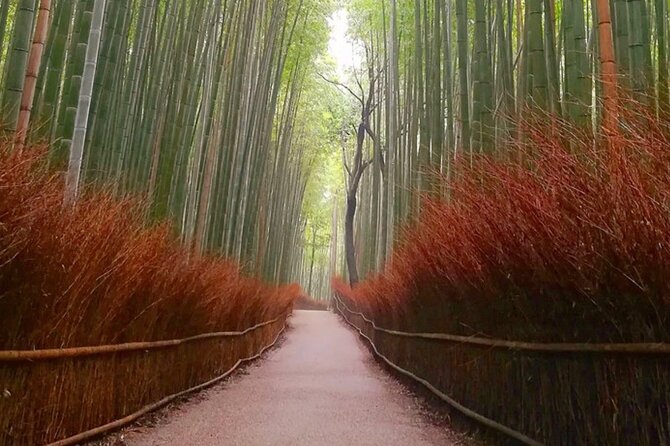
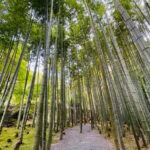
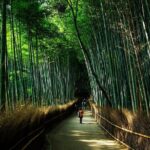
Your day starts in Arashiyama, Kyoto’s western sightseeing district. The star is the Arashiyama Bamboo Grove, and the time window is about 30 minutes, with the admission ticket not included.
Why this stop works at the start of the day: bamboo groves are all about quick orientation. You want to arrive, get your bearings fast, and then spend your limited time photographing what you came for. With a car driver doing the logistics, you avoid that first-day stress of getting into the area and finding the right approach.
What to consider: 30 minutes is enough for a look and photos, but not for lingering like a slow stroll day. If you are the type who likes to spend 45 to 60 minutes per photo spot, you may want to adjust expectations or ask to rebalance the schedule.
Kiyomizudera and Kinkakuji: two temple icons with ticket extras
Next up is Kiyomizudera (Kiyomizudera Temple), about 1 hour. This is one of Kyoto’s best-known temples, founded in 780, set in wooded hills east of Kyoto near the Otowa Waterfall area. Admission is not included, and the listing gives an adult fee of 400 yen (students 200 yen).
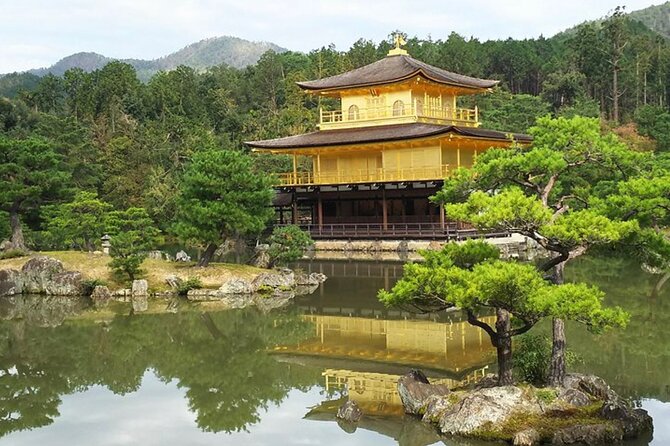
Then you move to Kinkakuji (Kinkakuji Temple, Rokuon-ji) for about 40 minutes. This is the famous Golden Pavilion Zen temple and it is described as one of Kyoto’s most popular buildings. Admission is not included, and the listing gives 500 yen for adults.
This pairing makes sense because you get contrast. Kiyomizudera is all about elevated views and temple drama, while Kinkakuji is about the iconic structure and its Zen setting.
What to plan for: these two paid entries add cost, and the visits are time-boxed. So arrive ready to do the key sights quickly. If you want more time inside the grounds, you may need to skip or shorten another shopping stop later.
Fushimi Inari and Gion: torii gates and a classic Kyoto neighborhood
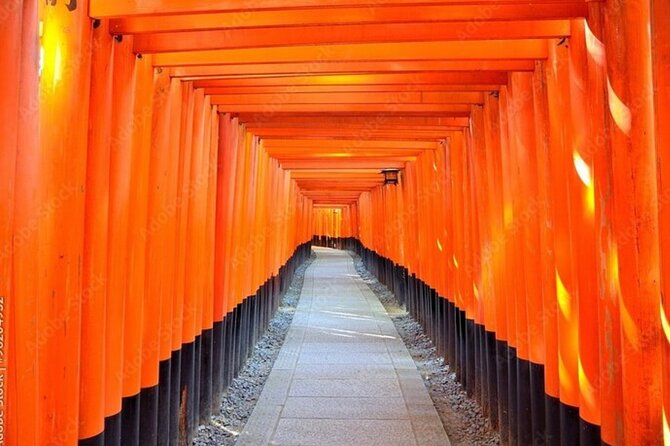
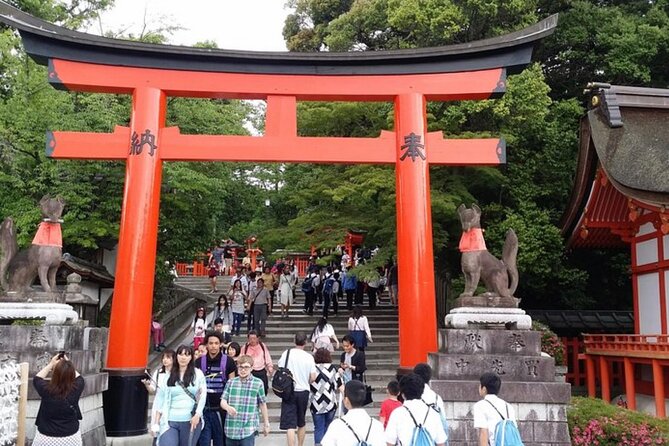
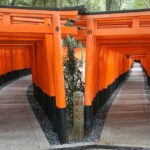
Fushimi Inari-taisha Shrine is next, about 40 minutes. This is the shrine famous for thousands of vermilion torii gates. It is one of the most distinctive visual experiences in all of Kyoto, and it really changes your sense of the city because it is so different from the temple architecture elsewhere.
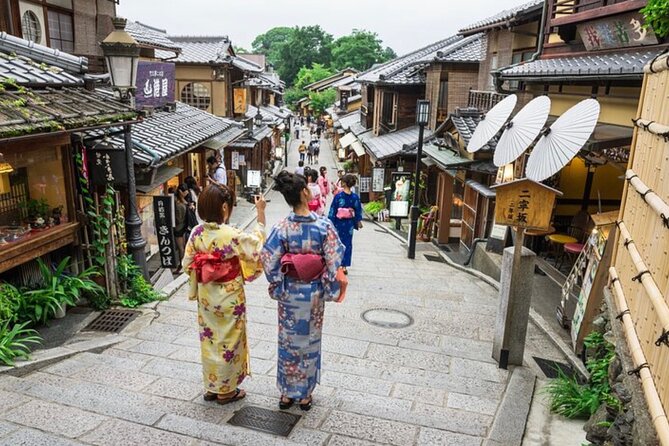
Then you head to Gion for about 30 minutes. Gion is Kyoto’s famous geisha district around Shijo Avenue between Yasaka Shrine and the Kamo River. In this short slot, you are mostly there to soak up the street vibe, shop a little, and connect it to the cultural identity of Kyoto.
Why the drive-between-stops format helps here: Fushimi Inari and Gion are not naturally “next to each other” like you might think. A private car reduces the friction so you can keep momentum.
What to consider: Fushimi Inari can be visually demanding. You can walk deeper, but you only have 40 minutes in this plan. If you want the more dramatic gate sequence farther in, you may want to focus your walking and save energy.
More Kyoto temple visits, food tours, tea experiences, and day trips to compare


Sanjusangendo, Ginkakuji, and Nishiki Market: art, Zen calm, and snacks
Now the itinerary shifts into a great trio of different flavors.
First is Sanjusangendo for about 40 minutes. It is famous for its 1001 statues of Kannon, the goddess of mercy. This stop is a nice change from the big-name photo icons because it is highly specific. You get a clearer “this is what makes this temple unique” moment.
Then you visit Ginkakuji (Ginkakuji Temple, Silver Pavilion) for about 1 hour. It is a Zen temple along Kyoto’s eastern mountains, tied to the retirement villa of Ashikaga Yoshimasa in the late 1400s. Admission is not included, though ticket prices are not listed for this stop in the data you provided.
After that, you get Nishiki Market for about 1 hour, the busy shopping district known as錦市場. It began as a fish market during the Edo period, and today it is a long strip of shops where you can browse and snack.
This sequence is a smart balance for a single day. You get a concentrated dose of temple meaning at Sanjusangendo, then Zen aesthetics at Ginkakuji, then real-world Kyoto life at Nishiki Market.
What to consider: market time passes fast, especially if you are tempted by every stall. If you have a shopping goal, pick it before you arrive. Otherwise you end up spending the full hour deciding what to buy.
Kyoto Imperial Palace and Nijo Castle: from imperial residence to Tokugawa power
Two big history anchors land next.
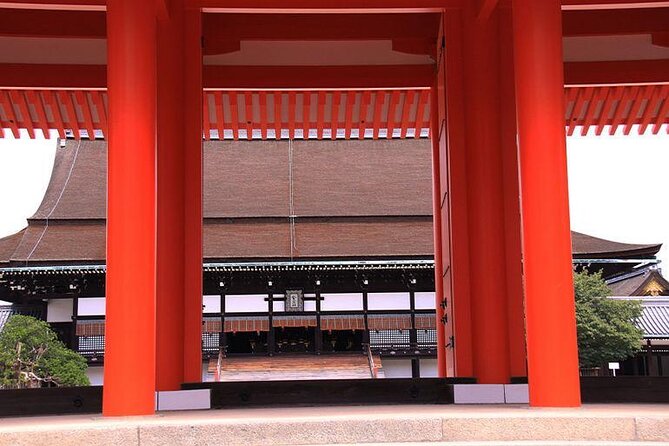
Kyoto Imperial Palace is about 1 hour. It used to be the residence of Japan’s Imperial Family until 1868, when the capital moved from Kyoto to Tokyo.
Then you move to Nijo Castle for about 1 hour. It was built in 1603 as the Kyoto residence of Tokugawa Ieyasu, the first shogun of the Edo period, and his grandson Iemitsu completed the palace buildings.
Why these two stops work in one day: they give you a timeline in plain terms. Imperial Kyoto on one hand, Tokugawa-era rule on the other. It helps connect the dots between the religious and cultural Kyoto you saw earlier and the politics behind the scenes.
What to consider: if you usually do museums and historic interiors slowly, the one-hour slots can feel tight. But as a “best of” day, this is exactly what you need.
Eikando Zenrinji and Yasaka Shrine: your calmer closing arc
You finish with a more grounded, less frantic pair of stops.
First is Eikando Zenrinji Temple for about 1 hour. It is noted as the main temple of its school, and it began as a training temple of Esoteric Buddhism of the Shingon sect in 853. In other words, it’s a temple that carries long religious lineage, not just a quick photo stop.
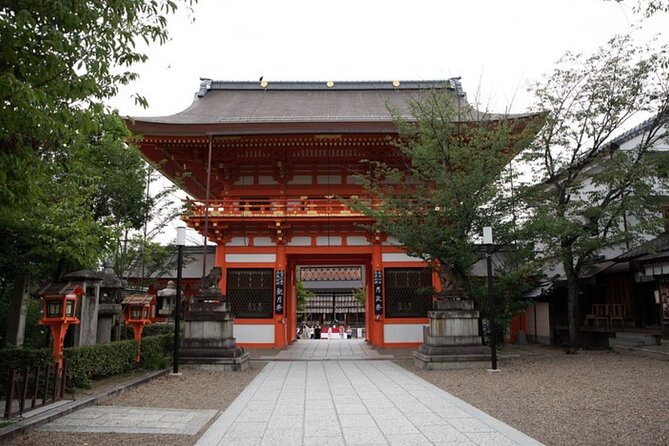
Then you end at Yasaka Shrine for about 30 minutes. The listing notes theories about its origins and says records may go back as far as 656 in the Heian era.
This finale is good because it gives your brain a breather. After markets and major icons, you end with two places that tend to feel more like you are observing Kyoto’s spiritual everyday presence rather than chasing the most famous postcard angles.
Who should book this Kyoto private car day?
This is a strong fit if you want to see multiple major Kyoto sights without the hassle of trains, station exits, and timing your connections. It is also a good match for families, first-time visitors, and people who prefer someone else handling the driving while you focus on what you want to experience.
It is especially useful if you care about photo moments. Some bookings highlighted the driver helping with photos and walking between key spots, which is exactly what saves time.
I’d think twice if you want a nonstop, lecture-style tour guide. A few people felt the commentary was limited. If that matters to you, message the provider in advance and ask how much storytelling you can expect at each stop.
Should you book this Kyoto by car tour?
If you are optimizing for convenience and a compact “Kyoto greatest hits” day, I think it is worth considering. The private setup, pickup and drop-off, and the fact that the schedule is built around real Kyoto icons makes it a practical choice for many groups.
Book it if you:
- Want a single-day Kyoto plan that covers temples, neighborhoods, and one major shopping area
- Prefer a private vehicle and an English-speaking driver over public transit juggling
- Are okay with entrance fees not being included, and you can choose which paid sites to prioritize
Skip it or clarify expectations if you:
- Want heavy, continuous guided narration throughout the day
- Have a flexible start time and might struggle to fit everything into a 10-hour window
- Are sensitive to car noise, since at least one booking mentioned a noisy ride
If you do book, do one simple thing that pays off immediately: list your must-sees, and tell the driver your pace. With a route this packed, your priorities are what turn a long day into a great day.
FAQ
How many people can join this Kyoto day tour?
It is priced per group for up to 6 people, and it is a private tour, so only your group participates.
What is included in the price for the Kyoto car tour?
The price includes private transportation, an air-conditioned vehicle, highway tolls and gas, an English-speaking driver/guide cost, pickup and drop-off, and meet-and-greet support. Mobile tickets are also offered.
Are temple entrance fees included?
No. Entrance fees are not included, and you can skip stops if you prefer. The provided info lists Kinkaku-ji at 500 yen for adults and Kiyomizu-dera at 400 yen for adults. Osaka Castle is listed as 600 yen, but that applies if your plan includes Osaka.
Where can you get picked up from?
Pickup is offered from your own location in Osaka, Kyoto, Kobe, or Nara, including Osaka Kansai airport and the Osaka cruise terminal.
How long is the tour?
The duration is about 10 hours.
What happens if the tour goes past 10 hours?
Overtime is listed as 5000 yen per extra hour after 10 hours (hotel to hotel time). Some extended time experiences were mentioned, but the listed policy is the overtime charge.
Is the driver really English speaking, and do I get guidance?
The service includes an English-speaking driver/guide. Some bookings praised interactive explanations and photo help, while others felt guidance was lighter than a full tour guide. If you want more commentary, it is smart to ask about the expected level when you book.
What is the cancellation policy?
Cancellation is free up to 24 hours in advance for a full refund, based on local time. The experience requires good weather, so a weather cancellation can offer a different date or a full refund.
More Full-Day in Kyoto
More Tours in Kyoto
More Tour Reviews in Kyoto
Not for you? Here's more nearby things to do in Kyoto we have reviewed
Nara Day Trips from Kyoto, compared.
 ★ 5.0World Heritage Kyoto & Nara Uji Authentic Matcha ExperienceFrom $1291,573 reviews
 ★ 4.7Kyoto/Osaka: Nara, Fushimi Inari Taisha, Arashiyama Bus TourFrom $521,275 reviews
 ★ 5.0Nara Half Day Trip Walking Tour (Private Option Available)From $105937 reviews
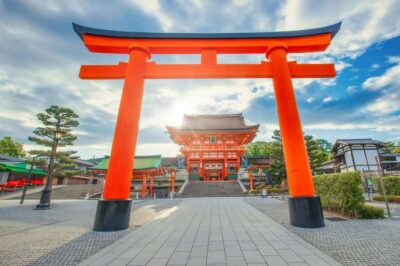 ★ 4.4Osaka/Kyoto: Arashiyama, Nara & Fushimi Inari Shrine w/LunchFrom $61754 reviews
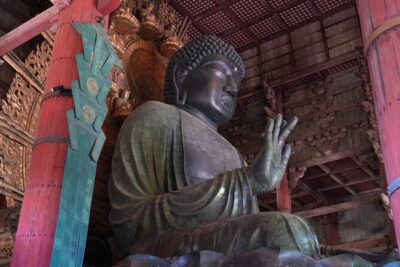 ★ 5.0Nara Early Morning Tour (Kyoto or Osaka Departure Available)From $61676 reviews
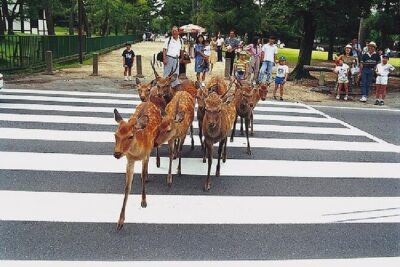 ★ 4.5Kyoto and Nara Day Trip from KyotoFrom $194445 reviews
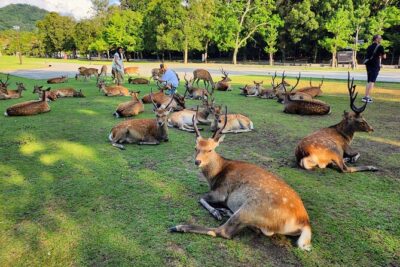 ★ 5.0Full Day Guided Tour to Kyoto and Nara from Osaka by VanFrom $106420 reviews
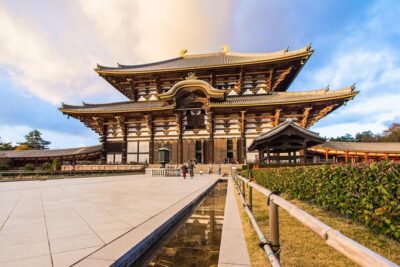 ★ 4.5Nara Afternoon Tour from Kyoto or OsakaFrom $102390 reviews
Browse the lists this tour appears in