
Reviewed · NARA DAY TRIPS FROM KYOTO
Nara Todaiji Lazy Bird Walking Tour
Nara feels like a step back in time, and deer make it fun. This 4-hour guided loop stacks major sights into one afternoon, including Todai-ji and Nara Park deer time, without you wrestling maps. It’s built for people who want the highlights of Nara fast, from Kyoto or anywhere nearby.
I especially like how the guide keeps things moving while still giving you time to look, take photos, and ask questions. I also like that you can choose to buy deer crackers and hand-feed the semi-tame deer, which turns the day from sightseeing into an actual Nara moment. One thing to consider is that the main temple admission fees are not included, so you’ll want to budget for them before you go.
Key things that make this Nara walk worth your afternoon
- A tight 4-hour route that hits major Todaiji grounds plus Kasuga Grand Shrine and Kofuku-ji
- Deer cracker feeding time at Nara Park, with help choosing where to stand and how to interact
- A guide-led shortcut through the confusing parts, so you can focus on temples and photos
- The big Todai-ji payoff, including the Great Buddha Hall stop long enough to actually feel it
- Lantern-and-forest atmosphere at Kasuga Grand Shrine, ideal for calm, photo-friendly wandering
- A sake brewery stop added to the half-day mix, so the day is not only temples
Why this 4-hour Nara temple loop makes sense
If your days are tight, Nara can still feel full. This tour is designed as a “great hits” half-day: you start in the afternoon, then bounce between the city’s most important temple and shrine stops without spending your brainpower on routes.
What makes it especially practical is the guide factor. Even if you’re the type who likes wandering, Nara’s key sites are spread out enough that getting the sequence wrong can cost you time. Here, the guide helps you keep the momentum, which matters a lot when you only have four hours.
You also get a built-in rhythm. Stops are timed out, including a longer look at Daibutsuden (the Great Buddha Hall), so you are not just “passing through” the most famous place.
A small bonus: the tour is listed as popular enough that it’s often booked well ahead (on average, about 87 days). If you’re traveling during a busy season, you’ll feel that popularity when you try to wing it.
You can also read our reviews of more walking tours in Nara
Nara Park and deer crackers: fun that also needs a plan
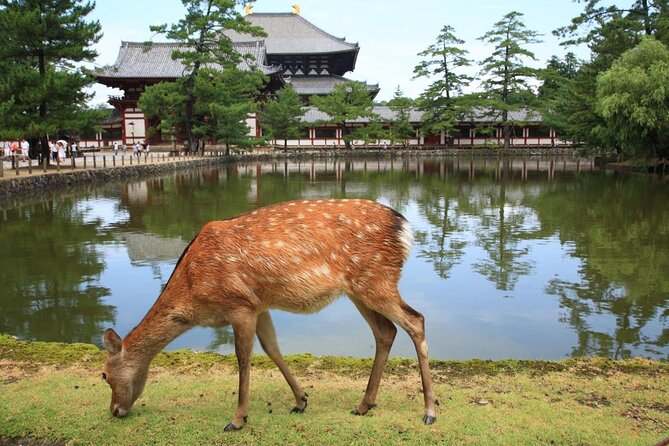
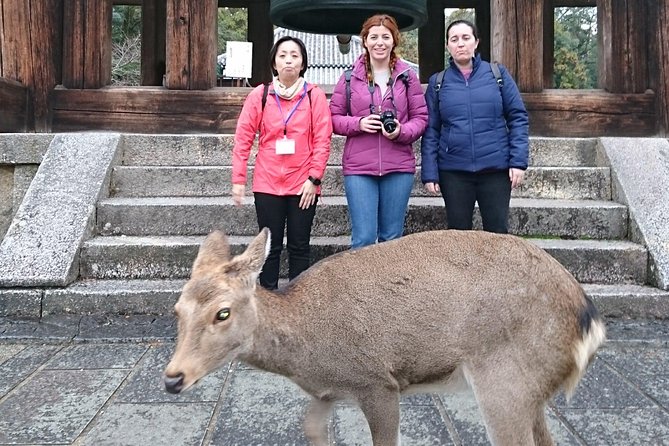
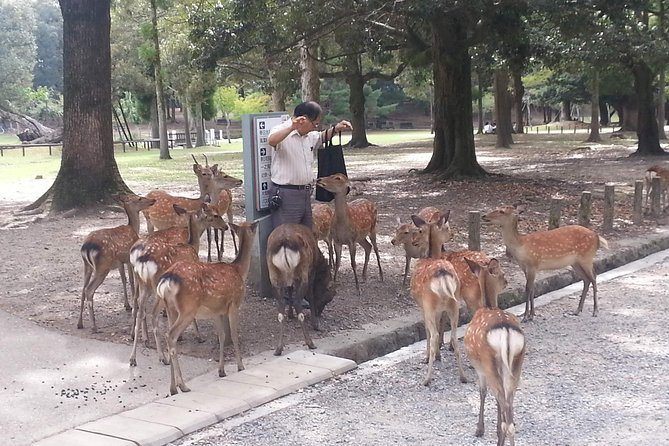
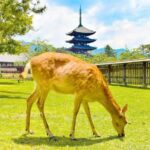
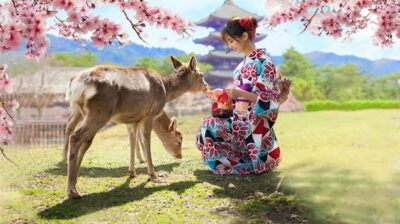
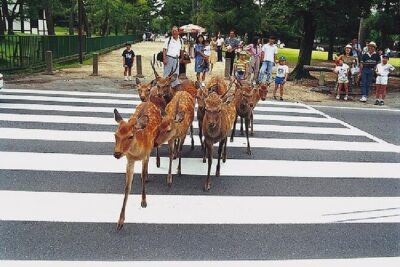
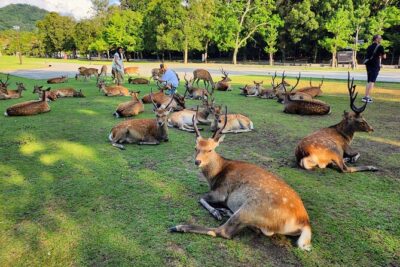
Nara Park is one of Japan’s easiest “wow” moments. You walk in, and hundreds of deer roam around like they own the place, because in a way, they do.
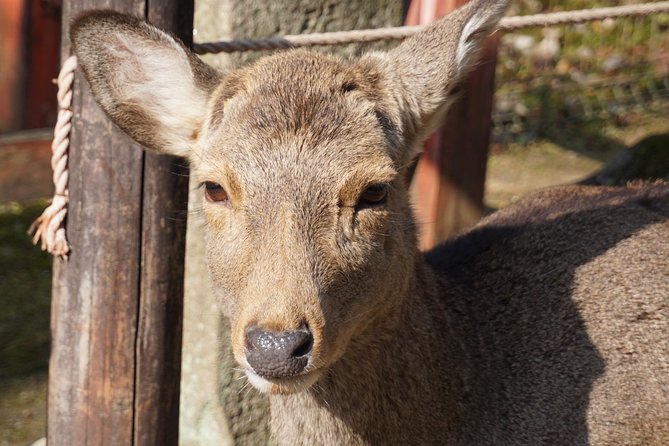
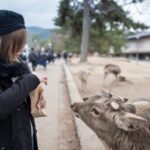
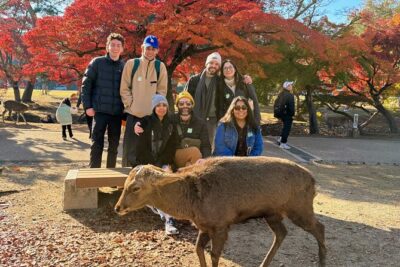
This stop is about getting comfortable in that situation. You have around 30 minutes to interact and take memorable photos, and you can choose to buy deer crackers to hand-feed the deer. That choice is useful because not everyone wants the interaction, and the tour gives you the option rather than forcing it.
The practical advantage of a guide here is where to stand. In the best moments, you get deer nearby without turning it into a chaotic crowd scene. Based on what guides have done with groups (for example, Masa introducing guests to the nicer deer), you’re more likely to have a calmer experience if you follow the guide’s suggestions on where to pause and when to move.
What to do in your real life:
- Wear comfortable shoes, because Nara Park walking adds up fast.
- Keep your attention on your hands if you’re feeding, since deer can be quick.
- If you don’t want deer contact, you can still enjoy the park’s atmosphere and photos without buying crackers.
Nigatsu-do’s terrace views: the photo moment most people skip
After Nara Park comes a temple stop that feels almost like a local secret: Nigatsu-do. You get about 20 minutes here, with the kind of setting that makes photos easy. The hall area includes lanterns hanging from the roof, and the terrace look gives you an elevated perspective over Nara City.
This is the kind of stop that rewards you for not rushing. The terrace view works best when you slow down and let your eyes adjust, because you’re trying to take in both the architecture and the city layout beyond.
There’s also a crowd advantage. A lot of people focus on the huge-ticket names and forget the in-between spots. Nigatsu-do gives you a different angle on Nara and helps you understand the city’s scale.
Admission at this stop is listed as free, so you’re not juggling tickets at every turn. That makes the flow easier, especially if you’re trying to keep the day smooth.
Hokke-do: oldest-on-the-grounds vibes and 8th-century statues
Next is Hokke-do, on the Todaiji temple grounds. You’ll have about 30 minutes here, and the focus is on age and artistry. Hokke-do is said to be the oldest building on the Todaiji grounds, and it houses Buddhist statue masterpieces from the 8th century.
Even if you do not read every sign, you can still appreciate what you’re looking at once you know what to look for: the “oldest building” angle gives the stop weight, and the mention of 8th-century statue work puts the viewing in historical context.
This is a good place to ask your guide a question if you’re curious. Guides have a strong track record of explaining big concepts clearly, including religion basics like Shinto and Buddhism, and that can turn Hokke-do from “another hall” into something you remember.
You should know admission is listed as not included for Hokke-do, so be ready for the extra fee at the temple.
Daibutsuden and the Great Buddha Hall: the stop you’ll talk about later
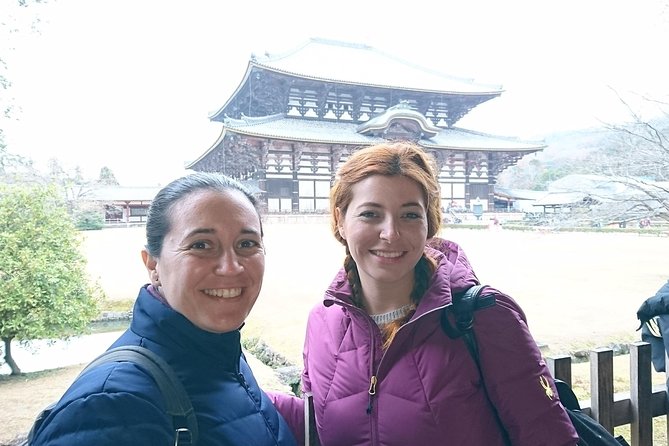
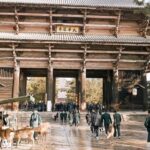
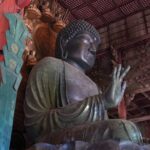
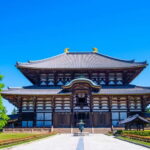
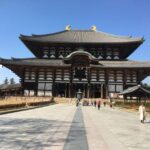
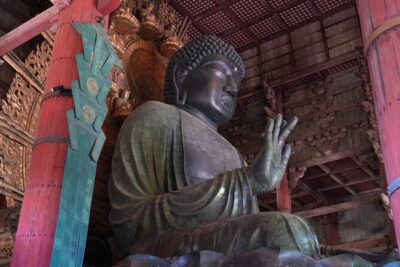
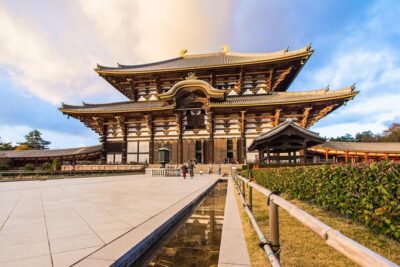
Then comes the major payoff. Daibutsuden is where you stand in front of the Great Buddha Hall, famous as the world’s largest wooden building. You get about 45 minutes here, which is long enough to do more than snap one picture and move on.
There’s also a built-in emotional rhythm. The approach passes through areas where deer are freely roaming, which means you’re not just walking into a hall, you’re transitioning from Nara Park energy into a sacred, massive interior moment. That switch is part of the magic.
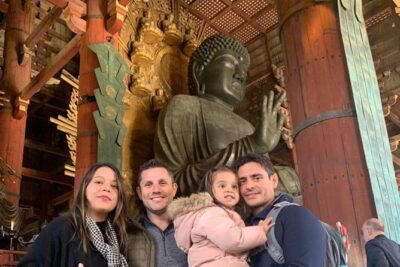
Inside, the scale does the work. The Great Buddha Hall is described as awe-inspiring because of size, and that checks out with how the site is typically experienced: you feel the scale first, then your brain catches up.
What’s smart here is the time allocation. A 45-minute stop lets you:
- pause for the main viewing
- step back and reframe your photos
- take a moment to absorb what you’re seeing
Daibutsuden is another stop where admission is listed as not included, so again, plan for that cost.
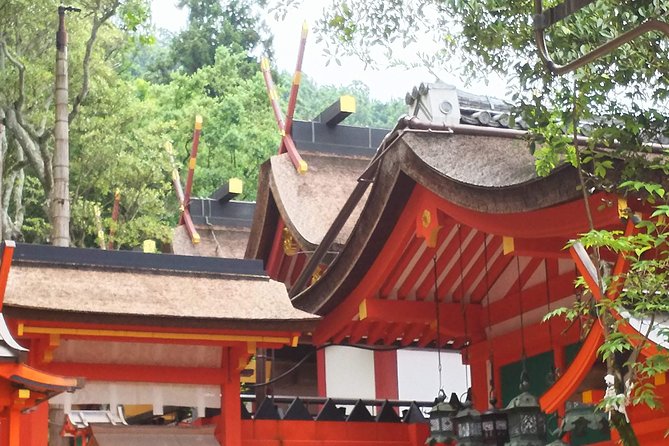
Kasuga Grand Shrine forest stroll: lanterns, vermillion, and calm pacing
After Todai-ji grounds, the mood shifts. Kasuga Grand Shrine is all about atmosphere. You get around 30 minutes to stroll through the peaceful forest area, with bright vermillion buildings and old stone lanterns plus hanging lanterns that create a layered photo backdrop.
This is the stop that feels like a breather, even though you’re still walking. The shrine grounds help you reset after the largest-building intensity of Daibutsuden.
If you’re the type who likes taking photos, this is a place where timing matters less than careful wandering. The hanging lanterns and stone lanterns give you multiple angles without needing perfect weather. If you’re traveling with family, it’s often a favorite because it feels scenic rather than strict and “do not touch” focused.
Admission here is listed as free. That means more of your day stays predictable, aside from the major fee temples.
Kofuku-ji’s five-storied pagoda: short stop, strong shape
Kofuku-ji is where the tour keeps momentum but doesn’t overstay. You get about 10 minutes here, with attention on the five-storied pagoda built about 600 years ago.
The big idea is structure. The pagoda is made out of thick logs joined together, described as splendid and dynamic in how the woodwork comes together. Even with a brief stop, the tower shape hits your eyes immediately.
It’s a “get the image and move on” kind of stop. If you want lingering time, you can always revisit later on your own. Within a four-hour tour, though, this works as a final strong visual before the walk back toward the start point.
Admission is listed as free for this stop, which keeps things simple late in the route.
Where the sake brewery fits in your half-day
One more item that changes how the day feels: the tour includes a sake brewery stop. You’re not told the full timing details here, but it’s part of the experience plan, so expect it as a planned break from pure temple viewing.
That matters if your group includes people who need variety. Temples are great, but after a couple of major halls and shrine wandering, a food-and-drink-related stop can be the moment everyone relaxes, sits for a bit, and shares opinions.
Because the brewery is included, it also adds value versus a tour that only covers buildings and gates.
Price and value: what you pay, what you still need to cover
The tour price is $86.49 per person, and it includes the guide fee. That guide fee is not a small detail. In Japan, the difference between “reading signs and guessing” and “having someone lead you” is often the difference between a smooth half-day and a frustrating one.
Still, you do have extra costs. Admission fees are listed as ¥800 per person, and that will apply based on the stops where admission is not included. Public transportation fare is listed as ¥460 per person.
So the real value question becomes: does the guide save you enough time and stress to make the added costs worth it? For most people doing Nara as a day or afternoon side trip, the answer is yes.
You are paying for:
- someone to map out the best sequence
- help handling the flow at deer areas
- clear explanations at major sites like Todai-ji and its halls
- a route that fits the half-day window
Also, the tour is set up as a private activity, meaning only your group participates. If you’re traveling with family or friends and you want a more personal pace, that can make the cost feel more reasonable.
Getting there, wearing the right shoes, and handling the walking
The tour starts at 2:00 pm from Nara Station 1 Sanjohonmachi. It ends back at the meeting point, so you can plan the rest of your day without worrying about a long transfer.
This is a walking tour, and the info clearly calls for comfortable shoes and moderate physical fitness. One practical implication: if anyone in your group has mobility limitations, the walking-heavy format could be a challenge. The good news is that the tour is private, so your guide can often adjust within reason.
For your own packing, think simple:
- comfortable walking shoes
- layers if the weather changes
- water, since drink and food are not included
The schedule also depends on weather quality. The experience requires good weather, and if it’s canceled for poor weather, you should be offered a different date or a full refund.
Who this tour suits best, and who might want a different plan
This is a strong match if you want Nara highlights without the planning fatigue. If you’re coming from Kyoto, Nara is easy to reach, and the tour itself is built with that half-day side trip mindset in mind.
It also fits families. Guides have been praised for being patient and accommodating with kids, including a 10-year-old. So if your group includes younger travelers, you’re not stuck in a “silence and stairs” tour style.
It’s less ideal if your group cannot manage walking distances. The tour is timed and packed with key sights, so it needs a baseline level of mobility.
If you’re the kind of person who loves religious architecture but also wants a few fun moments, you get both. Deer feeding at Nara Park gives you a break from temples, and the Kasuga forest stroll gives you the calm contrast you often want after large halls.
Should you book this Nara Todaiji Lazy Bird Walking Tour?
If you want a smooth afternoon in Nara and you’re not trying to build your own route from scratch, I’d book it. The strongest reason is the combination: Todai-ji plus Kasuga plus deer feeding, all handled with a guide and in a time window that actually feels manageable.
I’d pause only if you dislike paying extra on top of the base price. Admission fees and transport fare are separate, and the route is still walk-focused. If you can handle walking and you can budget for those extra costs, this tour is a practical way to experience Nara without missing the big stuff.
FAQ
How long is the Nara Todaiji Lazy Bird Walking Tour?
It’s about 4 hours.
What time does the tour start, and where is the meeting point?
It starts at 2:00 pm, and you meet at Nara Station 1 Sanjohonmachi, Nara, Japan.
Is the tour private?
Yes. It’s listed as a private tour/activity, so only your group participates.
What’s included in the price?
The guide fee is included, and you’ll receive a mobile ticket.
What admission costs should I expect?
Admission fees are listed as ¥800 per person, and some stops specify admission is not included.
Is deer feeding part of the experience?
Yes. You can choose to buy deer crackers to hand-feed the semi-tame deer at Nara Park.
Which places does the tour cover?
It includes Nara Park, Nigatsu-do, Hokke-do, Daibutsuden (Great Buddha Hall), Kasuga Grand Shrine, and Kofuku-ji, plus a sake brewery stop.
Are food and drinks included?
No. Drink and food are not included.
Is public transportation fare included?
No. Public transportation fare is listed as ¥460 per person.
Is the tour weather-dependent?
Yes. The experience requires good weather, and if it’s canceled due to poor weather, you’ll be offered a different date or a full refund.
More Walking Tours in Nara


More Tours in Nara
More Tour Reviews in Nara
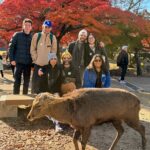
Not for you? Here's more nearby things to do in Nara we have reviewed
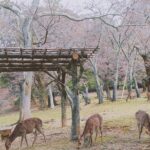
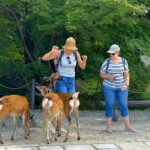



Nara Day Trips from Kyoto, compared.
 ★ 5.0World Heritage Kyoto & Nara Uji Authentic Matcha ExperienceFrom $1291,573 reviews
 ★ 4.7Kyoto/Osaka: Nara, Fushimi Inari Taisha, Arashiyama Bus TourFrom $521,275 reviews
 ★ 5.0Nara Half Day Trip Walking Tour (Private Option Available)From $105937 reviews
 ★ 4.4Osaka/Kyoto: Arashiyama, Nara & Fushimi Inari Shrine w/LunchFrom $61754 reviews
 ★ 5.0Nara Early Morning Tour (Kyoto or Osaka Departure Available)From $61676 reviews
 ★ 4.5Kyoto and Nara Day Trip from KyotoFrom $194445 reviews
 ★ 5.0Full Day Guided Tour to Kyoto and Nara from Osaka by VanFrom $106420 reviews
 ★ 4.5Nara Afternoon Tour from Kyoto or OsakaFrom $102390 reviews
Browse the lists this tour appears in