
Reviewed · GION & GEISHA DISTRICT TOURS
Authentic Maiko Experience&Kyoto Dinner (Free drink) at Noh Stage
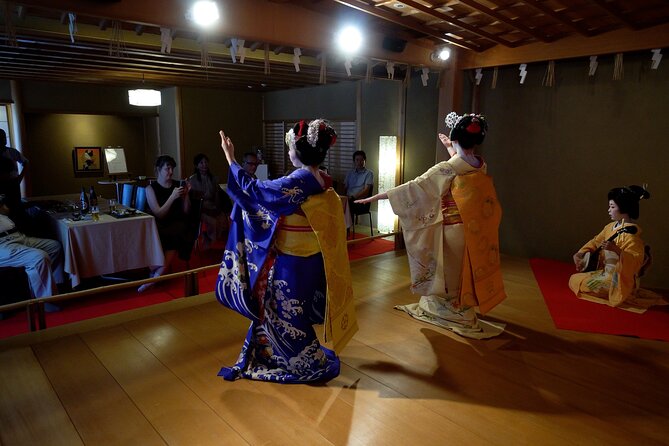
Maiko nights can be touristy. This one is more precise and personal: you watch a maiko dance up close, then talk, play games, and eat a proper dinner in the same evening rhythm. I loved the live shamisen paired with the performance, and I also liked the practical touch of unlimited drinks for the whole 2-hour window. The main catch is that this is intimate, so you will not get the big-crowd flexibility you might expect from a larger show.
What makes it feel truly Kyoto is the setting and pacing. You meet at a Noh stage space in Okazaki, gather on the 2nd floor, and you get structured time for photos (with socks or tabi, and no eating or drinking up there). The program is capped at 20 people, so the whole ozashiki feel stays quiet and conversational instead of chaotic.
Key points to know before you go
- Small group, big attention: Maximum 20 travelers, built for real conversation, not a cattle-call format.
- Noh stage photo time plus a two-shot: You get free photo time on the stage, then an included two-shot photo with the maiko.
- Live shamisen throughout the evening: A jikata (shamisen player) appears with the performance and supports the ozashiki games too.
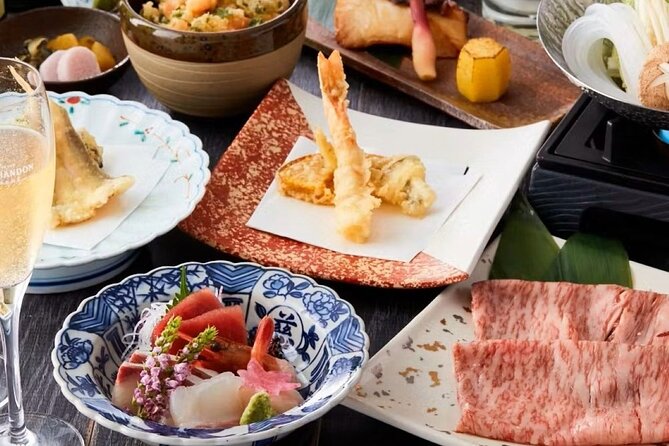
- Kaiseki dinner and unlimited drinks included: You eat a Kyoto-style dinner and keep drinks flowing for about 2 hours.
- Q&A that gets specific: You can ask questions during kimono and kanzashi introductions and conversation time.
- Language support is built in: A Kyoto-certified interpreter helps make the evening understandable.
A Kyoto Noh stage dinner that feels like ozashiki, not a show
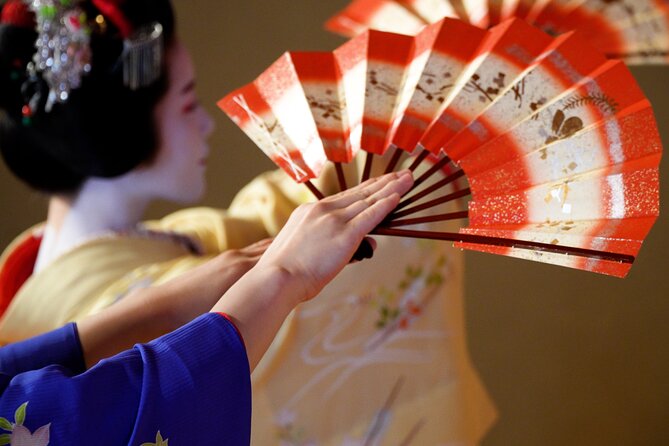
Kyoto has plenty of performances. Most of them are built for scale: quick applause cues, lots of standing room, and little room for actual talk. This experience is the opposite. It is built around an ozashiki evening style flow, where your attention stays on small details, etiquette, and the in-the-room energy between performers and guests.
I like that it is not trying to imitate a teahouse vibe with cheap tricks. Instead, the whole evening is structured like the kind of refined social time people associate with hanamachi. You are not just watching. You are participating in a way that stays respectful.
One more reason it works: the format is capped. With a max of 20 people, the interpreter can keep up, introductions land, and the games actually feel like games, not an awkward forced activity. It also helps you settle into the moment when you step onto a space tied to Noh tradition, even though this night is focused on maiko dance and ozashiki entertainment.
More Kyoto temple visits, food tours, tea experiences, and day trips to compare

Quick fit check
This is a great match if you want:
- A close-up maiko performance without rushing
- A meal that feels like part of the experience, not an afterthought
- Time to ask questions and speak directly
It may feel like overkill if you only want a fast photo and do not care about etiquette, conversation, or dinner pacing.
Your evening timeline, from doors open to the final game
The night runs about 2 hours. Start time is 6:00 pm, with doors opening at 5:50 pm so you can settle in.
5:50 pm, doors open and a place to wait calmly
When you arrive early, you can relax in the 1st-floor café space. This matters more than it sounds. In Kyoto, lines and crowds can eat your energy. Here, you get a simple buffer so you are not stressed when it is time to gather.
6:00 pm, gather on the 2nd floor of the Noh stage
At 18:00, everyone gathers on the 2nd floor of the Noh stage. This is where the rules are clear and you start moving into performance mode.
You’ll have:
- Free photo time on the Noh stage
You need socks or tabi. You also must avoid eating or drinking during that stage-photo window.
- A welcome toast, then dinner begins
This is a smart setup because you get the photos before you sit down and eat. It keeps the stage clean and the schedule smooth.
More Kyoto temple visits, food tours, tea experiences, and day trips to compare
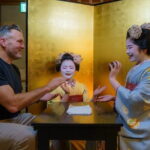
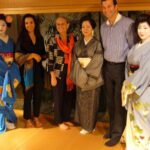

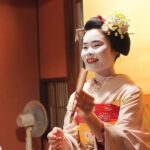
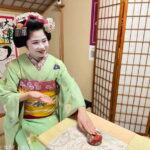
Maiko entrance, jikata shamisen, and the main dance moment
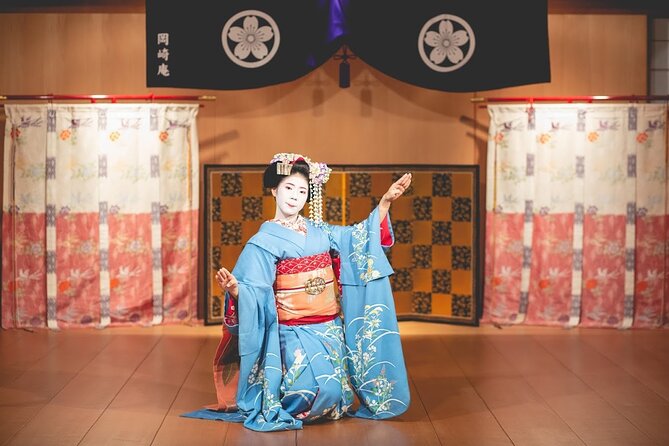
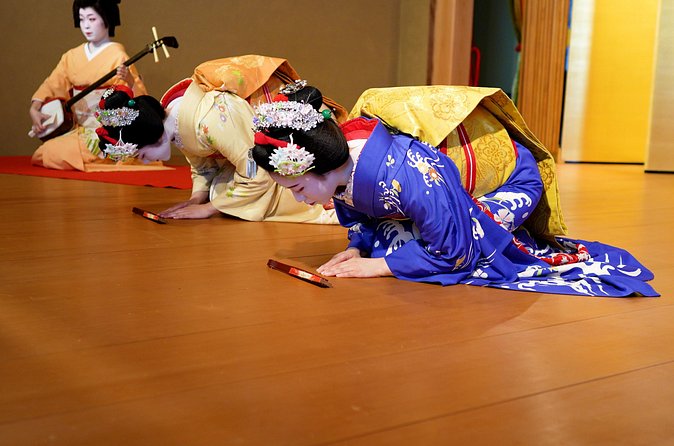
Next comes the most important part: the entrance of the maiko and the jikata (the live shamisen musician). Then you watch a maiko dance performed on the Noh stage, to live shamisen.
Why this sequencing matters:
- Live shamisen makes the dance feel less like a recorded soundtrack and more like live conversation in sound.
- Because the performance happens right after the toast and dinner start, the energy stays focused. You are not waiting half an hour while dinner cools.
Introductions, kimono and kanzashi Q&A, and a two-shot photo
After the dance, you get a built-in structure that turns the evening into more than a performance:
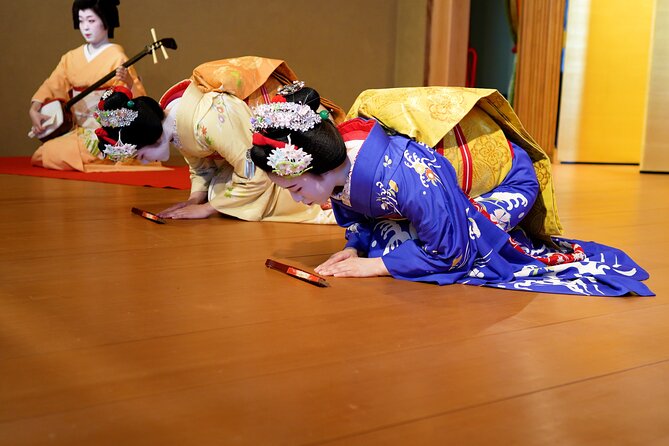
- Greetings and self-introductions (maiko and participants)
- Kimono and kanzashi introduction, plus Q&A
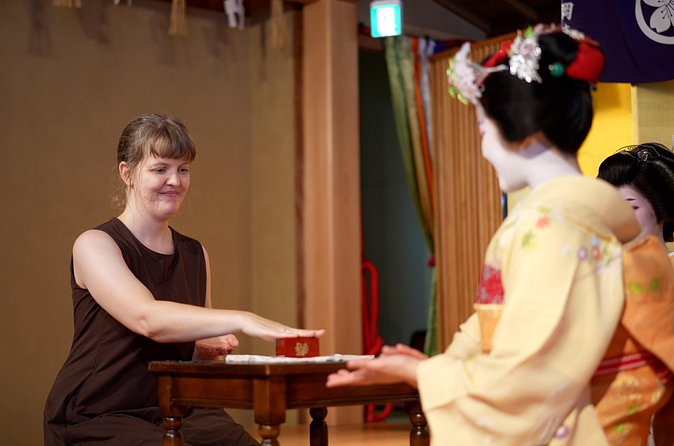
- An included two-shot photo with the maiko on the Noh stage
The Q&A format is one of the most praised pieces in the feedback style shared about this experience. It’s not just a short “nice to meet you.” You can ask questions, and the interpreter helps you understand what’s being explained.
A two-shot photo is also more meaningful than random photos from the sidelines. You are positioned for a real memory, not a shaky zoom.
Conversation time, then ozashiki games
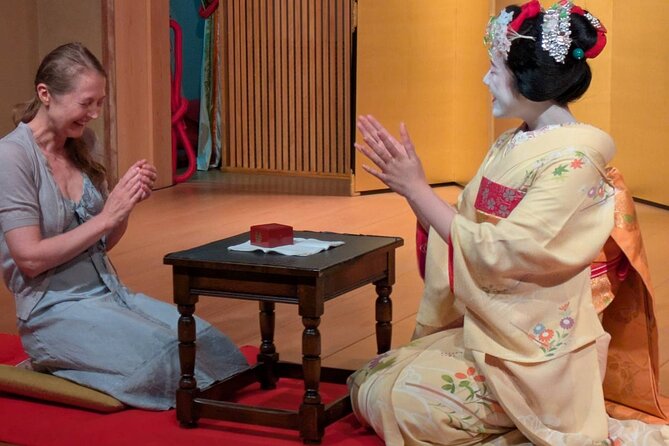
Then you get time for conversation with the maiko. Think of this as the heart of the ozashiki approach. The goal is friendly, respectful talk, guided by the interpreter and the evening’s flow.
Finally, you do ozashiki games on the Noh stage, with live shamisen keeping the mood lively.
A practical note: games can feel a little awkward in some settings, especially if you hate being put on the spot. Here, the group size cap and the staged flow help it stay manageable.
8:00 pm, end
The experience finishes around 8:00 pm and returns to the meeting point area.
What you are really paying for: access, time, and restraint
$150 for about 2 hours in Kyoto can sound high until you break down what you’re actually getting.
You’re paying for:
- A live maiko performance on a Noh stage, not a distant stage show
- Kaiseki-style dinner (meals are included)
- Unlimited drinks for the duration
- A two-shot photo and conversation time
- Ozashiki games that keep you active in the evening
- A Kyoto-certified interpreter to reduce language friction
- Small-group format (max 20)
If you compare this to a typical dinner-with-show option, the biggest difference is time and interaction. A big venue often gives you a seat and a curtain call. This experience builds in structure so you actually speak with the performer, not just listen to an introduction.
The cost also reflects restraint. The program emphasizes not being a simplified tourist performance. That matters because the evening is meant to feel like an authentic teahouse rhythm, where etiquette and pacing are part of the point.
The Noh stage setting: why it feels different
Even if you know almost nothing about Noh, the space signals seriousness. You are on a Noh stage environment, and you also follow basic respect rules like socks or tabi, and no food or drink during stage photo time.
This gives the whole night an intentional feel. It is not just “a room where something happens.” You treat the space like part of the performance.
And yes, the photo moment matters. Being allowed to take photos on the stage is usually the thing people remember most, because it’s rare. Here, you also get the included two-shot photo, which is the safer, more guided kind of memory.
Food and drinks: the kaiseki dinner piece that shouldn’t be skipped
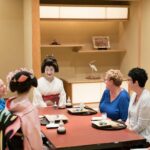
You will have dinner during the evening, and drinks are included. The schedule is set so the welcome toast happens, then dinner starts.
What I like about that: it means you are not trying to eat while everyone’s focused on choreography. You’ll feel like dinner is part of the evening flow instead of something you have to rush through.
The food is described as Kyoto-style dinner, and reviews consistently point out that it is delicious and well prepared. If you care about Japanese meals, this is not the throwaway “dinner included” option.
For drinks, you get unlimited drinks for 2 hours. That’s useful because it keeps the social tone relaxed. It also makes conversation time easier, since you’re not stuck juggling one glass and then watching the clock.
The interaction: what “talking with a maiko” actually means
Let’s get real. “Meet a maiko” can mean anything from a posed greeting to a short wave from across a room. The difference here is the set number of interaction blocks:
- Greetings and self-introductions
- Kimono and kanzashi Q&A
- Conversation time
- Plus interaction through ozashiki games
You’ll also have interpreter support, so you are not left guessing.
From the feedback tone tied to this experience, one highly praised element is how much people learn. The questions and explanations during kimono and kanzashi introductions are the kind of topics that turn a costume sighting into understanding: why details matter, how presentation works, and what those choices signal.
Also, the social tone is playful but respectful. That is the whole ozashiki point. You’re not trying to break character. You’re joining a conversation where the performer remains in that refined, guided rhythm.
Who should book this, and who should consider other options
Book this if you:
- Want a small-group Kyoto night
- Love live performance with a live shamisen component
- Care about etiquette, conversation, and structured Q&A
- Want a dinner that is genuinely part of the experience
- Like the idea of an evening that ends around 8:00 pm, without dragging on
Skip it or compare alternatives if you:
- Want a loud, big-venue spectacle
- Hate games or group interaction
- Need lots of downtime before a performance
- Are traveling with oversize luggage, since that is not included
One more consideration: the experience requires socks or tabi for the stage-photo time and specifically says not to go barefoot. So plan for your footwear and socks early.
Tips to make your evening smoother
- Arrive with time. Doors open at 5:50 pm, and being early gives you a calmer start.
- Bring socks or tabi for stage rules. This is not optional during stage photo time.
- Go in curious, not rushed. The best moments are the Q&A and conversation blocks.
- Treat the Noh stage as part of the performance space. Follow the no eating and no drinking rule during photo time.
- Keep your questions thoughtful. Kimono and kanzashi introductions are your best chance for detailed answers with the interpreter.
Should you book this Maiko Experience and Kyoto Dinner on the Noh Stage?
If your ideal Kyoto night includes maiko dance, live shamisen, kaiseki dinner, and real conversation, I think this is an excellent choice. The value comes from the interaction time, the small-group cap, and the fact that the meal and entertainment are connected into one paced evening.
I would especially recommend it to couples and solo travelers who enjoy being treated like people, not like a moving line. If you’re searching for a way to experience Kyoto’s hanamachi culture without the usual tourist-show shortcuts, this one fits that goal well.
Just be honest with yourself about the vibe: this is intimate and respectful, not a party. If that sounds like your style, book it and give yourself enough patience to enjoy the slower, more nuanced rhythm.
FAQ
What time does the maiko experience start and when does it end?
The experience starts at 6:00 pm and ends around 8:00 pm.
Where do I meet for the tour?
You meet at Japan, 606-8344 Kyoto, Sakyo Ward, Okazaki Enshōjichō, 91-65 岡崎庵. The activity ends back at the meeting point.
Is dinner included, and are drinks included?
Yes. Meals and free drinks are included, and drinks are unlimited for about 2 hours during the evening.
Can I take photos on the Noh stage?
Yes, you get free photo time on the Noh stage. You’ll need socks or tabi, and you cannot eat or drink during the stage photo time.
How big is the group?
The program has a maximum of 20 travelers.
Can I get a full refund if I cancel?
Yes. You can cancel up to 24 hours in advance for a full refund. If you cancel less than 24 hours before the start time, the amount paid is not refunded.
More Dinner Experiences in Kyoto
More Dining Experiences in Kyoto
More Tour Reviews in Kyoto

Not for you? Here's more nearby things to do in Kyoto we have reviewed


Gion & Geisha District Tours, compared.
 ★ 4.7Kyoto Geisha Walking Tour: Gion District & Hidden GemsFrom $253,273 reviews
 ★ 4.9Gion Magical Night Walking Tour with Geisha TriviaFrom $242,393 reviews
 ★ 4.7Gion Geisha District Walking Tour – Stories of GeishaFrom $202,187 reviews
 ★ 4.9Best of Kyoto: Gion, Geisha, Pagodas & CobblestonesFrom $242,058 reviews
 ★ 4.5Night Walk in Gion: Kyoto’s Geisha DistrictFrom $212,003 reviews
 ★ 5.0Kyoto Night Foodie Tour in Gion (9+ dishes + 6 Sake tastings)From $1631,762 reviews
 ★ 5.0Kyoto Gion Geisha District Walking Tour – The Stories of GeishaFrom $251,441 reviews
 ★ 5.0Kyoto Gion: 2-Hour Geisha Culture & History Walking TourFrom $231,186 reviews
Browse the lists this tour appears in