
Reviewed · GION & GEISHA DISTRICT TOURS
Kyoto Geisha Show Cultural Hour with an apprentice geisha, Maiko
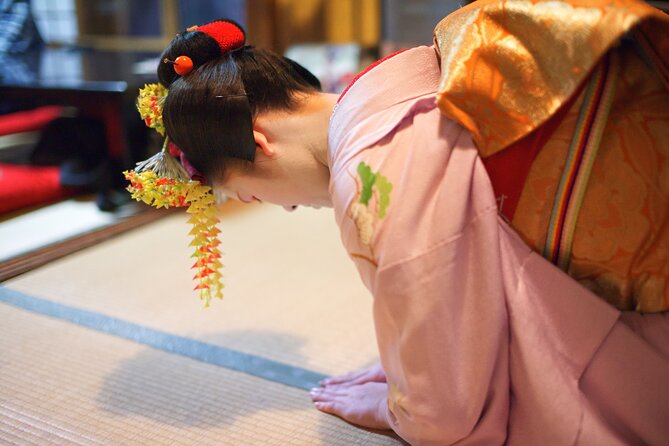
A maiko on stage is rare in Kyoto. This small-group hour gives you a guaranteed look at traditional performance from an apprentice geisha, paired with a guide who helps you understand the signals and etiquette around it.
I especially like the Q&A that follows the performance, and the fact that you get English translation. You are not stuck guessing, and you can ask the questions that actually matter, like training routines and daily customs.
One possible consideration is that plans have to be firm: it is non-refundable and it depends on good weather.
Key highlights to look for
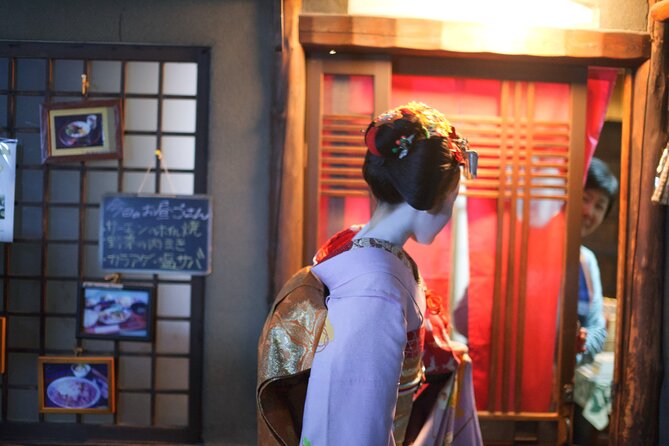
- A real maiko performance, not a vague culture talk, with one or two songs included
- Q&A time where your guide translates so you can ask directly
- Small-group size (max 14), which helps this feel calm instead of frantic
- A guided walk and context, so you understand what you are seeing and why it matters
- Near public transportation, so you can keep the rest of your Kyoto schedule moving
What makes a maiko show in Kyoto feel so different
Kyoto’s geisha culture is real, but it is also easy to misunderstand from the outside. Street sightings are rarer than they used to be, and even when you do catch something, it can be brief and confusing. This is built for the opposite experience: you get a scheduled, staged performance by an apprentice geisha, so you can focus on the art and the meaning.
What I like about this setup is that it does not treat the maiko like a prop. You get context up front, then you get the performance, and then you get conversation time. That order matters. It turns the show from entertainment into something you can actually learn from, including the discipline behind the movements.
And because you are in a small group, the whole thing feels more like a careful cultural meeting than a cattle-call show. You can watch closely, listen closely, and ask questions without speaking over a crowd.
More Kyoto temple visits, food tours, tea experiences, and day trips to compare


Meeting in Honmachi, then getting oriented the right way
You meet in the Honmachi area (Kyoto 5-chōme-182 Honmachi), and it is near public transportation. That sounds like a minor detail, but in Kyoto it can make a big difference. You do not want to build your day around one event and then lose time hunting for the start point.
Once you are gathered, your guide handles the heavy lifting: where to stand, how the session runs, and what to notice during the performance. Several people have described the guide as doing a good job of balancing formality with comfort, especially around the maiko. That matters because geisha culture has strict etiquette, and the guide helps you stay on the respectful side without turning everything stiff.
In practice, the guide also gives you a quick look at the surrounding district. The lesson is not just names and dates. It is how the geiko districts work, how houses and agencies relate, and how performances are connected to clientele. Even if you think you know Kyoto already, this kind of orientation helps everything click.
The format: Q&A first in your mind, performance next, conversation after
The session runs about 1 hour 30 minutes, with a core 1-hour geisha show and meeting. The show itself includes a performance with one or two songs.
Here is why that structure works: the performance is short enough that it stays focused, but you get time to talk afterward. A lot of cultural experiences stop at the stage. This one gives you follow-up conversation, and that is where you usually learn the stuff that changes how you view the art.
During the Q&A, your English-speaking guide translates so you can ask directly. That removes the most frustrating part of Japan cultural experiences: the feeling that you are watching something meaningful but not getting to the meaning.
From the conversation side, expect questions about training, daily routine, and customs. People have specifically highlighted how authentic the answers feel because the maiko is speaking directly, not just sending you a message through a tour explanation.
Depending on the flow that day, you may also get small extra moments like time for a party game or photo time. Those are not the core reason to book, but they can make the experience feel warm and human instead of strictly formal.
The maiko performance: what you should actually pay attention to
Even if you do not know any Japanese, you can still get a lot out of a dance performance when someone gives you the right framing. The guide’s job is to help you read what you are seeing without turning it into homework.
Watch for these things:
- Pacing and control: apprentice geiko training shows up in how clean the transitions feel
- Posture and gestures: these are not random, they are part of a system
- Formality in movement: the elegance is the point, but the discipline is the story
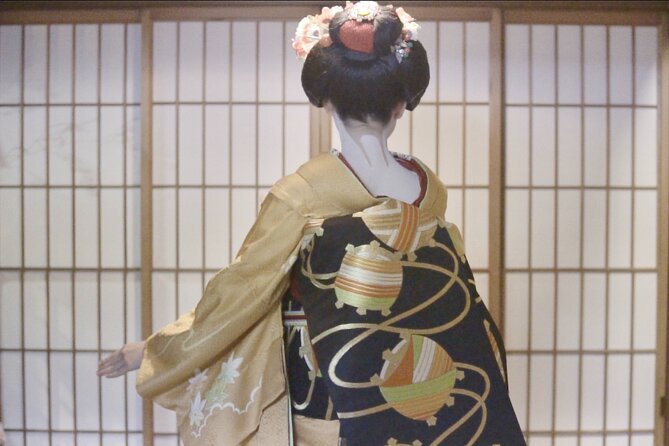
The performance is described as beautiful and captivating, with traditional dances that people remember as a highlight of their trip. That makes sense. In just a short window, a maiko can show skill, stage presence, and the training behind it.
Also, it helps that you are not squeezed into a huge crowd. You can watch without constantly adjusting around other people’s heads.
Translation plus small-group size, the practical wins
Let’s talk logistics, because they affect how enjoyable this will be.
- Maximum group size is 14 travelers. That usually means the guide can manage the room, keep your questions orderly, and keep the interaction feeling personal.
- There are no language barriers because the guide translates. That does not just help you ask questions. It helps the maiko’s answers land in a way you can use.
- It is designed to help you skip crowded shows. If you have ever done a timed entry show in Japan with lines and noise, you know how much that drains attention.
There is another practical benefit that shows up in real life: when people have had trouble finding the address, guides have reportedly helped them get sorted quickly using text-style communication. The takeaway for you is simple. Have your phone handy, save the meeting info, and show up a few minutes early so you are not stressed.


Price and value: what you are paying for around $105

At $105.42 per person for about 1.5 hours, it is not a bargain compared with walking tours or museum tickets. But it is also not overpriced in the way some “culture experiences” are.
You are paying for three main things:
- A live maiko performance (with one or two songs)
- A guided Q&A with translation, so you actually learn instead of just watching
- A small-group format that keeps the experience respectful and comfortable
Also, timing matters. This kind of booking is on the schedule side of tourism. It is often booked about 44 days in advance on average, which tells you there is steady demand. When you plan early, you can lock in a spot without having to gamble on last-minute street sightings.
If you love Japanese culture and you want something that feels specific and personal rather than generic, the price starts to make sense. If you are only looking for casual entertainment and you do not care about Q&A, then you might decide it is too pricey for you.
Who should book this and who should skip it

This experience is a great fit if:
- You want a scheduled, guaranteed chance to see traditional performance from an apprentice geisha
- You like learning from Q&A, not just watching
- You want a smaller, calmer event instead of a packed show
It might not be your best match if:
- You dislike anything formal or structured
- You are very price-sensitive and can only spend on free or low-cost activities
- You are traveling with uncertainty about weather. This one requires good weather to run
A few real-world tips to make the most of it
These are the small things that can upgrade your experience from good to memorable:
- Arrive a little early so you can settle in without rushing
- Bring a few prepared questions for the Q&A, like what training looks like or how daily customs work
- Keep your tone respectful. The guide usually helps you know what is expected, but your attitude sets the tone
- Treat it as a cultural meeting, not a photo shoot first. Photos are often part of the experience, but the real value is the interaction and learning
Also, remember that coffee and/or tea are not listed as included. If you want a drink, have a plan to buy one separately, or just be pleasantly surprised if tea shows up during the session.
Booking considerations you should know before you commit
This is non-refundable and cannot be changed once booked. That means you should only book it when you are comfortable with your schedule.
It also requires good weather. If it gets canceled because of poor weather, you will be offered a different date or a full refund. And because it has a minimum number of travelers, it can also be canceled if that minimum is not met, with an alternative date or full refund.
Should you book this Kyoto geisha show with a maiko?
If you want one Kyoto experience that gives you both performance and conversation, I think this is an excellent choice. The combination of a maiko on stage, a translated Q&A, and a small-group format makes it feel intentional rather than random.
Skip it only if you are chasing bargains, you hate structured cultural etiquette, or your dates are too flexible to risk weather and schedule changes.
If Kyoto geisha culture is a priority for your trip, this is one of the few options that turns appreciation into understanding, in about 90 minutes.
FAQ
Where is the meeting point for the Kyoto geisha show?
The tour meets in the Honmachi area at 5-chōme-182 Honmachi, Kyoto.
How long is the experience?
It lasts about 1 hour 30 minutes total, including a 1-hour geisha show and meeting.
How many people are in the group?
The experience is limited to a maximum of 14 travelers.
Will there be English support?
Yes. An English-speaking guide is included, and the guide provides translation during the Q&A.
What happens during the show?
You’ll see a geisha performance with one or two songs, followed by a meeting and Q&A session.
What payment or ticket format should I expect?
You receive a mobile ticket.
Is coffee or tea included?
Coffee and/or tea are not included.
Is the experience near public transportation?
Yes, the meeting location is near public transportation.
What happens if the weather is bad?
The experience requires good weather. If it is canceled due to poor weather, you will be offered a different date or a full refund.
Is this tour refundable if I cancel?
No. The experience is non-refundable and cannot be changed for any reason.
More Shows & Entertainment in Kyoto


More Tour Reviews in Kyoto

Not for you? Here's more nearby things to do in Kyoto we have reviewed





Gion & Geisha District Tours, compared.
 ★ 4.7Kyoto Geisha Walking Tour: Gion District & Hidden GemsFrom $253,273 reviews
 ★ 4.9Gion Magical Night Walking Tour with Geisha TriviaFrom $242,393 reviews
 ★ 4.7Gion Geisha District Walking Tour – Stories of GeishaFrom $202,187 reviews
 ★ 4.9Best of Kyoto: Gion, Geisha, Pagodas & CobblestonesFrom $242,058 reviews
 ★ 4.5Night Walk in Gion: Kyoto’s Geisha DistrictFrom $212,003 reviews
 ★ 5.0Kyoto Night Foodie Tour in Gion (9+ dishes + 6 Sake tastings)From $1631,762 reviews
 ★ 5.0Kyoto Gion Geisha District Walking Tour – The Stories of GeishaFrom $251,441 reviews
 ★ 5.0Kyoto Gion: 2-Hour Geisha Culture & History Walking TourFrom $231,186 reviews
Browse the lists this tour appears in