
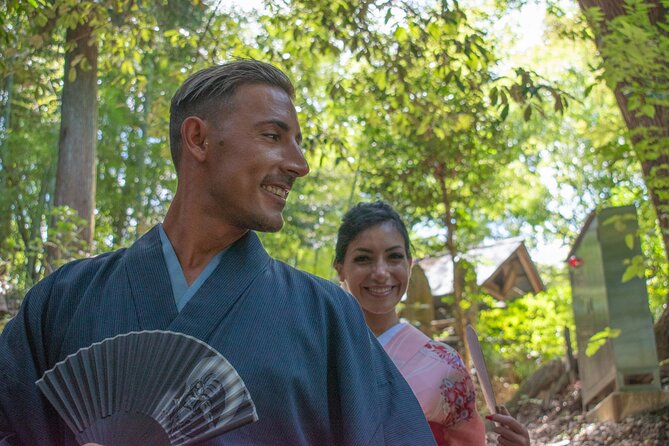
Reviewed · NARA DAY TRIPS FROM KYOTO
Kyoto, Nara and Osaka private up to 9 pax picked up from Kyoto
Three cities. One private car. That’s the big hook. This Kyoto-Nara-Osaka plan is built for a full day of contrasts, with hotel pickup in Kyoto, a smooth drive between sights, and stops focused on peaceful shrine-and-temple moments plus classic highlights. I also like that the guide, Takashi, communicates clearly and is said to be especially good at helping with photos, which matters a lot when you are bouncing between iconic spots and quieter ones.
The main tradeoff is that this is a long, packed day, and the stated duration can vary, so you will want to double-check your exact route length before you commit.
What makes it feel different is the mix of well-known and off-the-map stops. I like the secret-leaning temple sequence in Kyoto, where you get gardens, rock arrangements, moss, and historical details without the same crush you see at the most famous gates. The possible drawback is simple: because it is private and schedule-driven, you will be walking and moving at the pace of the plan, not at your own whim.
Still, if you want maximum wow per hour, this is a strong choice. It is private for up to 9 people, and you can even pick a drop-off location so you can head straight to dinner after the last stop.
Key things to love about this Kyoto-Nara-Osaka private day
- Private pick up in Kyoto, with direct drives to sights so you spend less time figuring out trains and more time looking around
- Kyoto’s quieter temples like Rengeji and Koetsuji, where the timing feels calmer than the big-name circuit
- Historic Kyoto icons with context including Kinkakuji and the story behind the Golden Pavilion
- A dessert stop that feels local with Kyoto-style sweets like mochi variations and yuzu or matcha shaved ice
- Nara’s classics plus a serene matcha temple break to slow the day down after deer and Buddha Hall crowds
- Osaka street energy plus a high-city viewpoint with Dotonbori and Abeno Harukas observatory
Why a three-city private day works (and when it doesn’t)
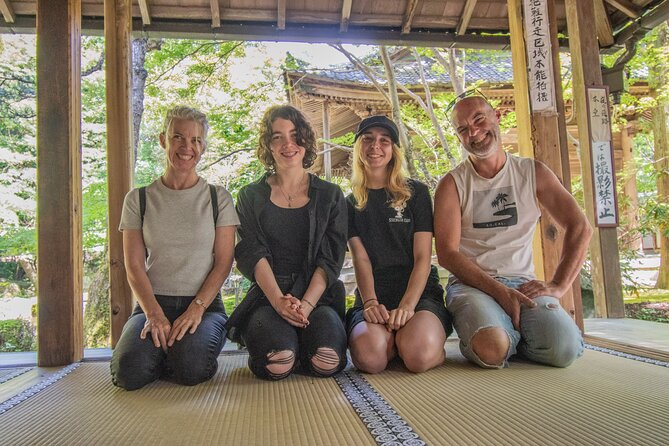
Most people underestimate how much time Kyoto, Nara, and Osaka take when you do them one by one. A private plan fixes that by handling the driving and keeping you on a tight sequence, which is the whole point of doing three cities in one day. If you hate wasting half a day on transit, you will get your time back here.
This is also a group-friendly setup. It is private for only your group, up to 9 people, and it can come with group discounts depending on your booking. That matters for families and small groups, because you are not paying private-car pricing for just two people if you can split the cost.
The one consideration is the day length. The experience is listed at about 7 hours, but the example three-cities route is described as a longer day, around 12 hours. Before you book, check which option and schedule you are actually getting, then plan your stamina accordingly.
You can also read our reviews of more private tours in Kyoto

Kyoto first: Fushimi Inari and the “wow” factor of tri-gates
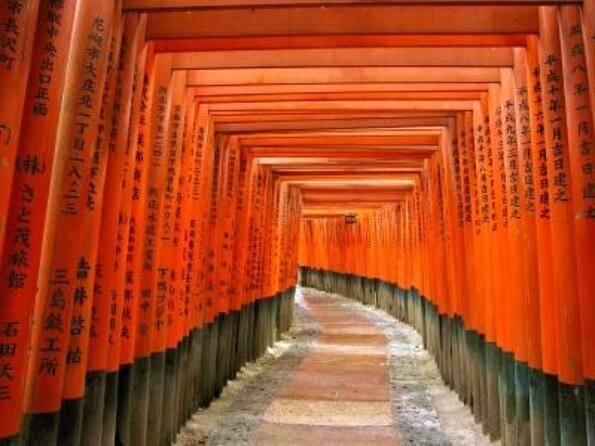
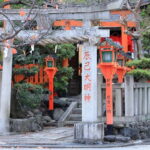
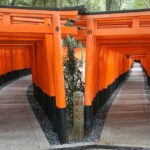
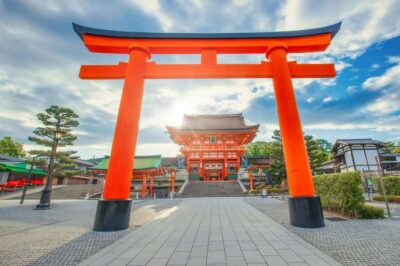
The day usually kicks off at Fushimi Inari-taisha, the shrine famous for thousands of torii gates marching up a mountain. What you should expect is not just photos, but atmosphere. You’ll walk through repeating red shapes that make it easy to lose track of time, and the mountain-feeling setting helps it feel bigger than the postcards.
A good private guide helps you pace it. You do not want to sprint and then regret it at the first steep section, or stop too long and rush the rest of the day. With a car waiting and multiple stops ahead, you get a more balanced rhythm than self-guided sightseeing.
If you are sensitive to crowds, timing matters. A private pickup from Kyoto can help you avoid the worst peaks, and the plan’s flow is designed to keep you moving while still leaving time to look closely. I like that the focus stays on experience, not just checkboxes.
Kyoto temples beyond the big-name circuit: Rengeji, Myomanji, Koryu-ji
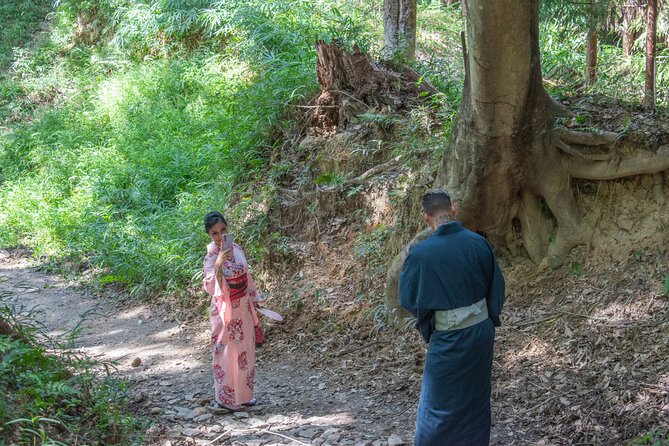
The heart of this tour’s Kyoto side is the “secret temple” style stops. Rengeji is highlighted for its moss garden, and the point is that it is not a high-visibility, mass-tour stop. That means you are more likely to get quiet moments to watch the textures of moss and stone instead of constantly fighting for space.
Myomanji is the kind of place that rewards slowing down for a minute. It is known for an organized garden of tiny rocks, arranged into a broader pattern you can really appreciate once your eyes adjust. The guide’s job here is to help you read what you are seeing, so it does not turn into just another pretty courtyard.
Koryu-ji adds a different flavor with a historical connection. It is described as originally erected by the Hatashi, sometimes described as a Korean-rooted group, and it survived an 8th-century burn-down. Even if you only catch the highlights, the story gives the site weight, and you will feel less like you are just passing through.
Kinkakuji and Koetsuji: Golden Pavilion meets garden calm
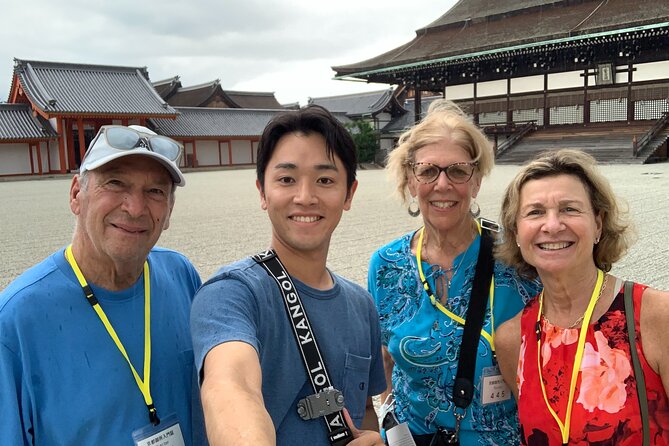
Then you get the iconic Kyoto stop: Kinkakuji, the Golden Pavilion. It is the villa of Shogun Yoshimitsu Ashikaga, later converted into a temple after his death, and two upper floors are covered with gold leaf. Even if gold leaf is not your thing, the setting and reflections are hard to ignore, and a good guide helps you know where to stand for the best sightlines.
Right after, Koetsuji Temple brings the day back down to a gentler pace. It is described as an art master’s property, connected to tea ceremony and calligraphy, and the garden is the payoff. If you find yourself temple-fatigued, Koetsuji can be a reset because it is more about quiet observation than spectacle.
One practical tip: in a day like this, you want to pace your photos. The guide is said to be great at helping with photography, which is useful because temple lighting changes fast and you do not want to lose time aiming blindly.
A Kyoto dessert and shrine stop that breaks the driving rhythm
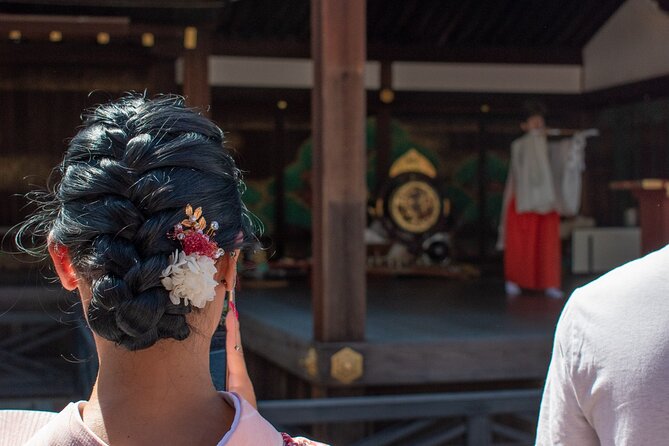
Between temples, you’ll hit Nakamuraken for a local dessert stop. The sweets are described as Kyoto-styled, including mochifu, which is pounded rice cake with different textures than standard mochi. You’ll also see shaved ice flavored with yuzu or match, and that is a smart break when you are walking more than you expected.
This type of stop is not just about sugar. It gives you a chance to cool down, regroup, and get something you can taste while still staying close to your sightseeing route. For many people, that break makes the rest of the day feel more enjoyable instead of rushed.
Then Matsuo Shrine adds a community-side Kyoto feel. It is described as the biggest shrine erected by the Hatashi tribe and beloved by the neighborhood, and it has a koi fish pond where you can feed the fish. That kind of small interaction can be more memorable than another wide-angle temple gate, especially if you are traveling with kids.
The Nara shift: Todai-ji and deer park without the chaos
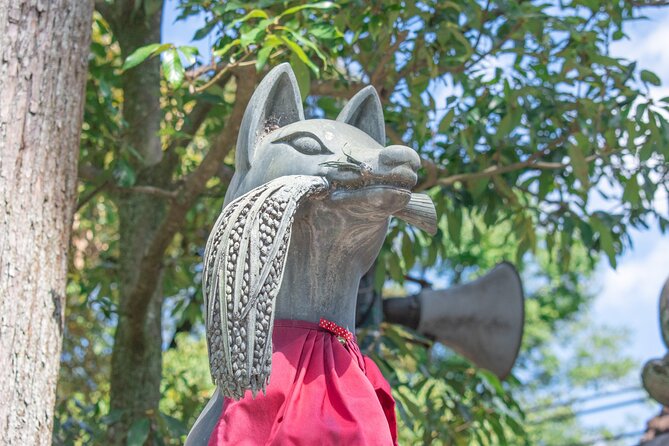
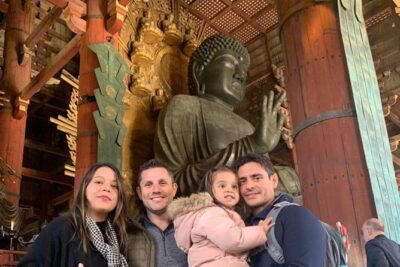
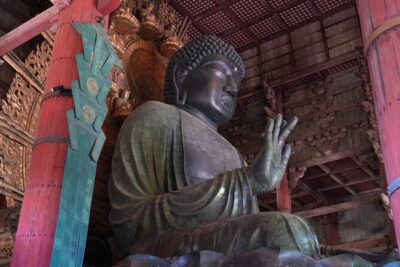
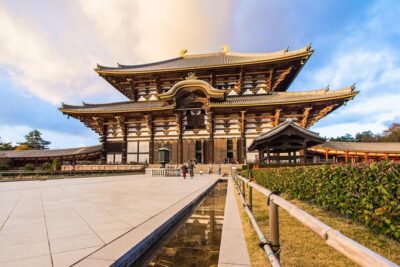
After Kyoto, Nara brings the massive scale you came for. Todai-ji and its great Buddha hall are highlighted as a massive statue experience. This is the kind of stop where your brain needs a moment to adjust, because the scale can feel almost unreal compared with the smaller neighborhood shrines.
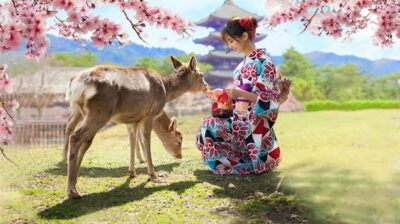
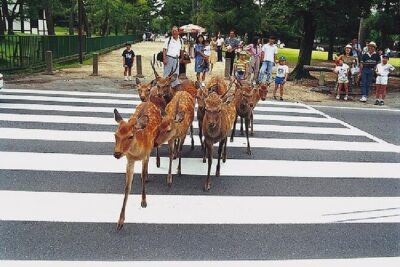
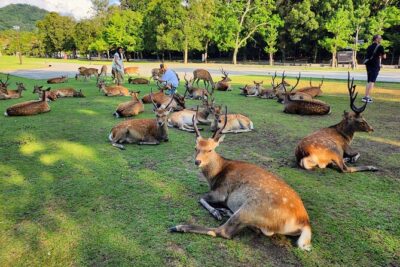
Nara Park follows, with deer and cracker feeding. This part is straightforward and fun, but it helps to have a plan for managing the small chaos. When deer are around, you will want to keep your snacks secure and stay aware of your space.
The best part of this Nara sequence is that it does not run straight back into sightseeing intensity. It includes a secret temple stop for matcha tasting in a serene place. That calm break is a strong counterbalance to the deer park energy and helps the day feel less like a sprint.
Osaka payoff: Dotonbori street food energy
Osaka is where the day picks up speed again, and Dotonbori is the centerpiece. The plan is described as walking and eating local dishes on the streets. This is the section where you can lean into your own preferences, because street food is perfect for grazing between photos and people-watching.
A private car helps here too, because you are not trying to navigate Osaka transit at the end of a long day. You are already positioned and moving, so you can spend your energy tasting and walking instead of figuring out trains.
If you are the type who likes a mix of famous and street-level local food, Dotonbori tends to deliver. It is also ideal for groups, because everyone can pick something different and you can share.
Abeno Harukas observatory: finishing with a big-city view

Finally, Abeno Harukasu observatory gives you a high viewpoint and a clean finish to the day. It is described as the highest skycraper with an observatory, which makes it a natural way to end after street-level walking.
Even if you do not stay long, the viewpoint helps you reset your sense of distance between spots you saw earlier. It also makes the day feel more complete because you end with a sense of the whole city, not just a narrow street or single temple.
What “private up to 9 pax” really means for your day
Private means you control the comfort level. You can move through the temples and shrines without waiting for a big group, and you avoid that awkward spacing where half the group is late and the front half is bored. In a route this packed, that matters.
It also means your guide can tailor pacing around your group. The plan emphasizes that guides make choices from special recommendations, so the flow can feel more like a custom day than a rigid script. If your group is quieter or more energetic, you are less stuck than you would be on a public group bus.
One small but important note: the plan includes an alcohol rule. The minimum age for alcohol consumption is 18. That matters only if your group is doing tastings that include alcohol, but it is good to know up front so no one is surprised.
Price and value: $329.02 per person, and what you get for it
At $329.02 per person, this is not a budget day. It is priced for convenience, which you are buying in three ways: hotel pickup, private driving, and guide time across multiple major areas.
For value, I look at the cost against effort saved. A three-city day with stops like Fushimi Inari, Todai-ji, and Dotonbori is the kind of day that can become exhausting when you self-arrange. Here, the drive logistics are handled, and you get a guided context, especially on the temple side where stories add a lot.
You also get an efficiency edge. Many of the Kyoto stops are marked as free admission in the plan, including Fushimi Inari-taisha, Rengeji Temple, Myomanji Temple, Koryu-ji Temple, Kinkakuji, Koetsuji Temple, and Matsuo Shrine. That can help your budget because it reduces paid entry costs in Kyoto. For attractions outside that list, like observatories, you might still have separate admission, so plan for that possibility.
One more value detail: mobile ticket. A mobile ticket can speed up check-in and reduce the chance of missing a paper ticket at the start of a busy day.
Logistics that can make or break your experience
Pickup and drop-off are a big deal in Japan because station navigation and transfers can eat time. This plan offers hotel pickup in Kyoto when you stay in Kyoto, and it can take you directly to the sites. It also lets you choose your drop-off location, so you can head to a restaurant after the tour instead of scrambling to get back to your hotel.
That flexibility is especially helpful if you have dinner reservations. It also helps groups with mixed preferences, because you can set drop-off near the places you want to continue.
There is also a cancellation policy that is friendly on paper. Free cancellation is offered up to 24 hours in advance. That is not a guarantee you should book later, but it does reduce risk if plans change.
Finally, plan your shoes and water. You are hitting shrine steps, garden paths, and street walking in one day. Even if the temples are beautiful, your feet will judge the schedule.
Who this tour is best for, and who might be happier elsewhere
This is ideal for couples, families, and small groups who want a high hit-rate day without transit stress. It fits people who like guided context, because the temple stops are chosen with story and setting in mind, not just famous gates.
It is also a good fit if you want the quiet side of Kyoto. The emphasis on moss gardens, rock arrangements, and out-of-the-way shrines is exactly what you want when you feel temple fatigue from only mainstream stops.
If you hate long days or you prefer to linger slowly in one area for half a day, this might feel too structured. Because the day can run long, and because you have many short stops rather than one deep explore, it is less ideal for travelers who want lots of unscheduled time.
Should you book this private Kyoto-Nara-Osaka tour?
Book it if you want a private driver-guide day that strings together the big names plus calmer temple moments. If your priority is convenience, guided context, and getting from Kyoto to Nara to Osaka without logistics headaches, this matches your goal.
Skip or ask lots of questions if you are timing-sensitive, because the route length can be longer than the listed estimate. Also check what your group counts as a match for walking, since the plan includes gates, gardens, deer park time, and Dotonbori street walking.
If you do book, do two things that make the day smoother: wear comfortable shoes, and confirm the exact duration and which option includes both Nara and Osaka. Then you can relax and let Takashi handle the pacing and the thoughtful stops.
FAQ
Is pickup available for this tour?
Yes. If you stay in Kyoto, hotel pickup is available and the tour can take you directly to the sites.
How big is the group for this private tour?
It is private, so only your group participates, with a group size of up to 9 people.
How long is the tour?
The tour duration is listed at about 7 hours, and an example three-city route is described as a longer day, around 12 hours. Confirm the exact timing for your selected option.
What are the main stops in Kyoto?
The plan includes stops such as Fushimi Inari-taisha, Rengeji Temple, Myomanji Temple, Koryu-ji Temple, Kinkakuji, Koetsuji Temple, a dessert stop at Nakamuraken, and Matsuo Shrine.
Are there admission fees for the temples and shrines?
For the Kyoto stops listed in the plan, admission is marked as free. Other attractions outside that list may have separate charges, such as the observatory.
Does the tour include Nara and Osaka too?
Yes, this is designed as a Kyoto-Nara-Osaka day, with Nara stops like Todai-ji and Nara Park, and Osaka stops like Dotonbori and the Abeno Harukas observatory.
What is the cancellation window?
Free cancellation is available up to 24 hours in advance for a full refund. If you cancel within 24 hours, the amount paid is not refunded.
More Private Tours in Kyoto
More Tour Reviews in Kyoto

Not for you? Here's more nearby things to do in Kyoto we have reviewed


Nara Day Trips from Kyoto, compared.
 ★ 5.0World Heritage Kyoto & Nara Uji Authentic Matcha ExperienceFrom $1291,573 reviews
 ★ 4.7Kyoto/Osaka: Nara, Fushimi Inari Taisha, Arashiyama Bus TourFrom $521,275 reviews
 ★ 5.0Nara Half Day Trip Walking Tour (Private Option Available)From $105937 reviews
 ★ 4.4Osaka/Kyoto: Arashiyama, Nara & Fushimi Inari Shrine w/LunchFrom $61754 reviews
 ★ 5.0Nara Early Morning Tour (Kyoto or Osaka Departure Available)From $61676 reviews
 ★ 4.5Kyoto and Nara Day Trip from KyotoFrom $194445 reviews
 ★ 5.0Full Day Guided Tour to Kyoto and Nara from Osaka by VanFrom $106420 reviews
 ★ 4.5Nara Afternoon Tour from Kyoto or OsakaFrom $102390 reviews
Browse the lists this tour appears in