
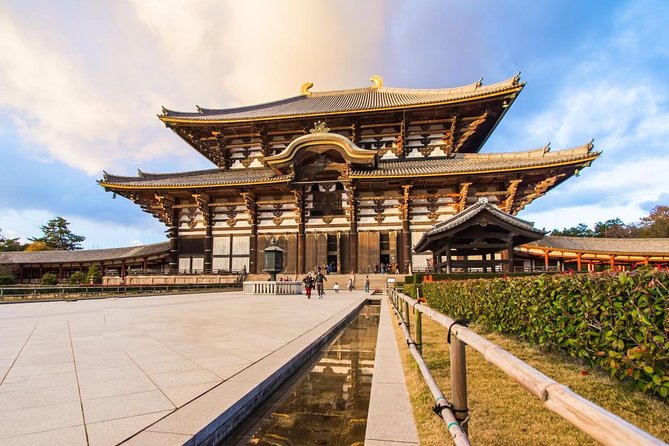
Reviewed · KYOTO PRIVATE GUIDED TOURS
Nara World Heritage PRIVATE TOUR
Deer and giant temples, in one efficient half-day. This private walking tour is a great way to orient yourself fast in Nara, moving from Todai-ji to Nara Park without wasting time figuring out routes. I also love that the tour includes the deer feeding moment with a packet of crackers, so you get the Nara-only experience instead of just watching from a distance.
The main thing to consider is that this is outdoors and in summer it can get brutal, with August often hitting 35 C plus, so you will want heat protection and a slower pace if you need it.
Key highlights
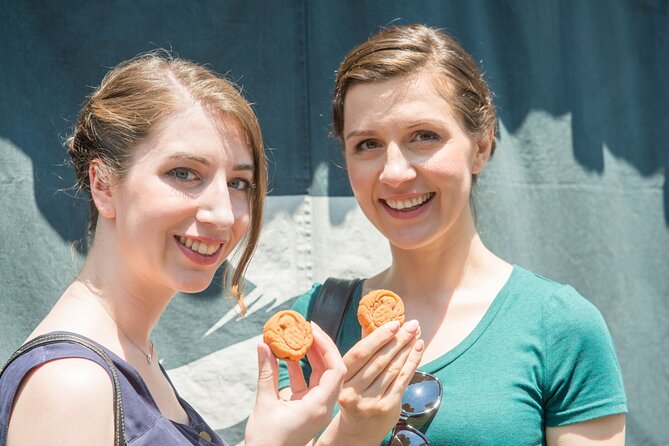
- Fully private walking plan for your group, with a professional guide handling the flow
- Todai-ji route in sequence, starting at the museum area and moving through Nandaimon to the main temple
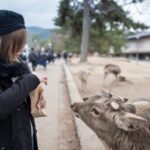
- Deer feeding included (one packet of crackers) at Nara Park
- Ukimido Pavilion photo moment at Sagiike, where the pavilion sits over the water
- Kofuku-ji Five-Story Pagoda stop, including a look at one of Nara’s most recognizable temple structures
- Entrance fees included for the shrines and temples you visit, so you can focus on sightseeing
Why This Private Nara Walk Feels Like a Shortcut
Nara can feel a little overwhelming at first. You land, you see the deer, you spot the big temple names, and suddenly you are trying to stitch together a plan while the walking adds up. This tour cuts through that stress by following a logical path, so you are not zigzagging across the city like a confused tourist with a map app open.
I like that it is built as a 3 to 4 hour experience with the right mix of power stops and quieter scenery. You get the big Todai-ji sights, then you get Nara Park and its deer culture, then you shift to calmer, scenic water at Ukimido, and finish with Kofuku-ji. It is basically the Nara highlights, but with someone local guiding the timing.
The other reason it works well is that it is truly private. You are not stuck watching a group herd or waiting for the slowest person in front of you. If your group has kids, or you want extra time at one stop, this format makes it easier to adjust your pace.
You can also read our reviews of more private tours in Nara
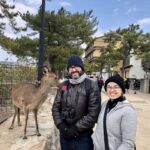
Meeting Point at Todai-ji, Then You’re Immediately in the Story
The tour starts at Todai-ji Museum, inside the Todai-ji General Culture Center area. That is a smart first step because it sets context before you climb into the most famous structures. If you walk into a huge temple complex cold, you can miss the why behind what you are seeing. Starting there helps your brain connect the dots quickly.
From there, you follow the classic Todai-ji progression: museum area, then the great gate, then the main temple grounds. You are also not guessing what order makes sense, which matters when you are trying to fit Nara into a short window.
The tour ends at Kintetsu-Nara Station, which is convenient if you are heading back toward Kyoto or Osaka after your half-day. And since this ends near a major station area, it is straightforward to continue your day on your own.
One practical note: the tour is a mobile ticket experience. That generally means you can keep things simple on your phone once you have your confirmation.
Todai-ji Museum and Nandaimon: Set Your Bearings Fast
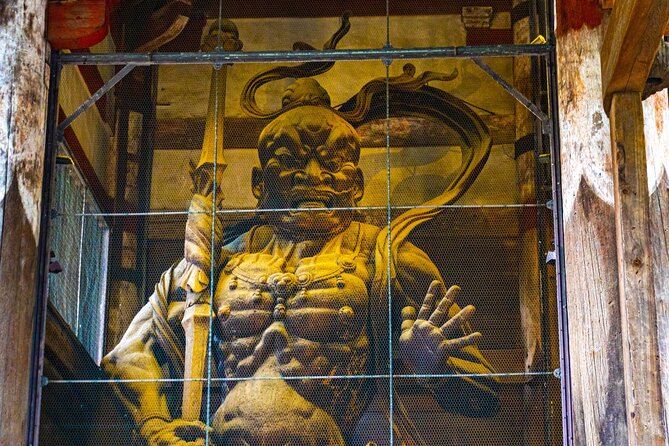
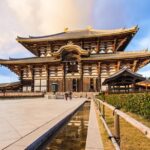
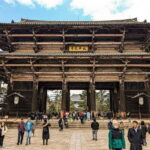
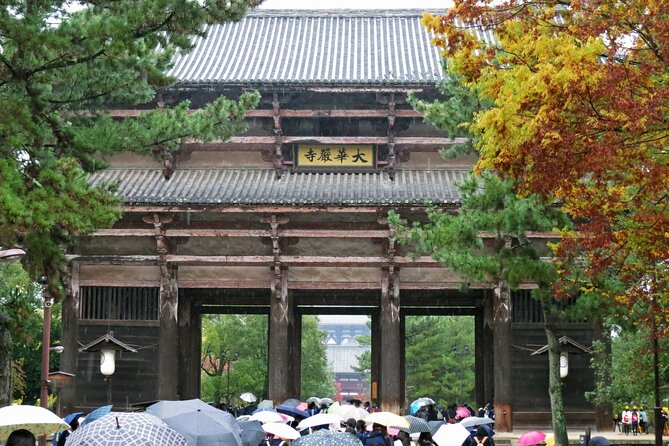
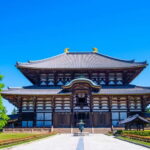
Todai-ji is not just one building. It is a whole temple world, and the scale hits you once you step onto the grounds. The tour begins with a short stop at Todai-ji Museum, then you move to Todai-ji Namdaimon, the Grand South Gate.
Even with just about 10 minutes at each of these early points, the value is real. You get oriented right away. The Nandaimon gate is described as a massive wooden gate, rebuilt in the 13th century. It is one of those spots where the architecture itself tells a story, before you even see the big statue.
This is also where having a guide matters. If you are walking on your own, you can look up and take photos, but you might miss the details that explain what you are looking at and why it matters. With a guide, you get that quick mental framework so the rest of the tour feels easier to follow.
Todai-ji Temple and the Daibutsu: The Main Stop That Earns the Crowds
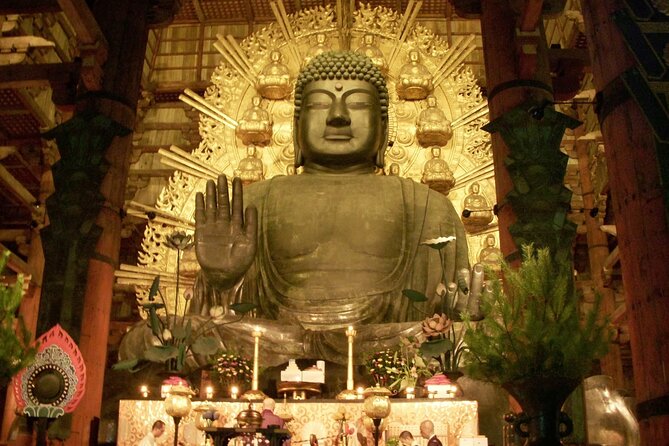
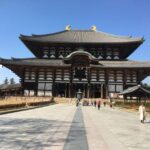
The heart of the tour is Todai-ji Temple itself, with about 1 hour and 5 minutes here. This is the stop built around the famous Daibutsu, the large Buddha statue in Japan. The tour time is long enough for a real walk through the grounds, not just a quick look and sprint to the next location.
What I like about this portion is that Todai-ji works on multiple levels. It is visually dramatic because of the scale. It is also emotionally effective, because you are moving through a temple complex surrounded by nature. The grounds help you slow down even when the crowd level rises around you.
If you are going on a tight schedule, this is exactly where you should spend your attention. Todai-ji is the anchor. Everything else on the tour adds variety, but this is the place that gives you the strongest Nara “wow” factor.
Nara Park Deer Feeding: A Nara-Only Moment You Should Not Skip
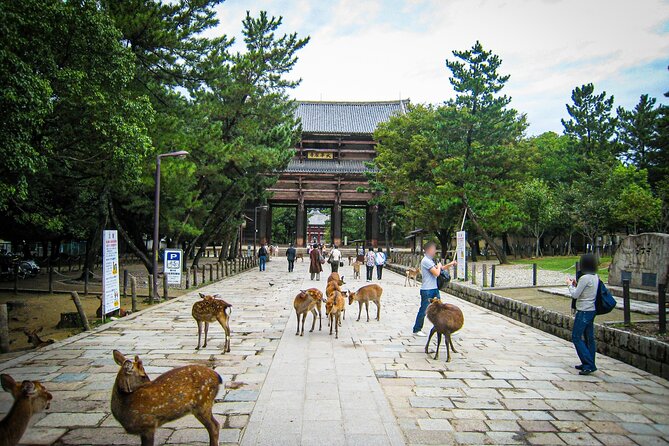
Nara Park is where the tour becomes uniquely Nara. You have about 35 minutes here, which is enough time to see the park atmosphere, find the right deer-feeding window, and still keep moving.
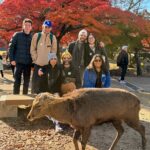
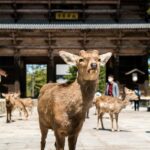
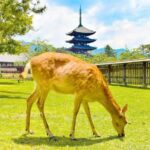
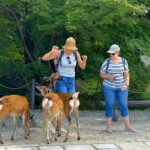
The tour includes a packet of crackers for feeding the sacred deer. This is the kind of experience that is hard to replicate elsewhere, even if you can find deer in other places. In Nara, the deer are revered and roam freely through the city, and that is part of what makes the whole scene feel special.
A couple of practical points to keep in mind. First, this is a “get your timing right” stop. If you arrive when it is at its busiest, you can lose time to crowd flow. One helpful tip from guide-focused feedback is to go early to avoid the crowd crush.
Second, you will want to stay aware of your own comfort. A review example included a family dealing with around 39 C heat, and the guide handled patience around the slower pace needed for kids. That is a good sign that guides can adapt, but you should also plan your mindset for it being hot and outdoor.
You can also read our reviews of more historical tours in Nara


Ukimido Pavilion at Sagiike: The Calm Break Between Temple Hits
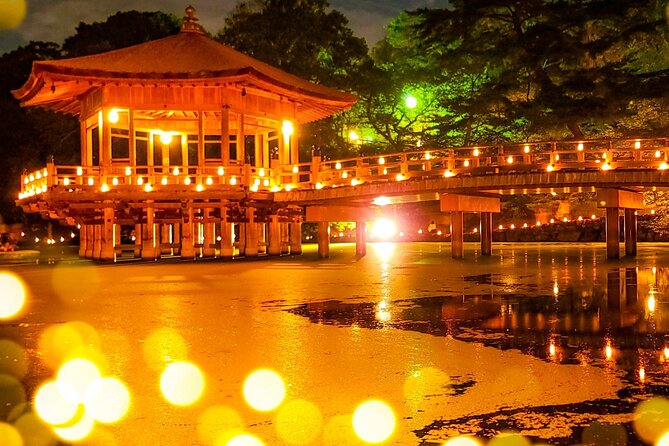
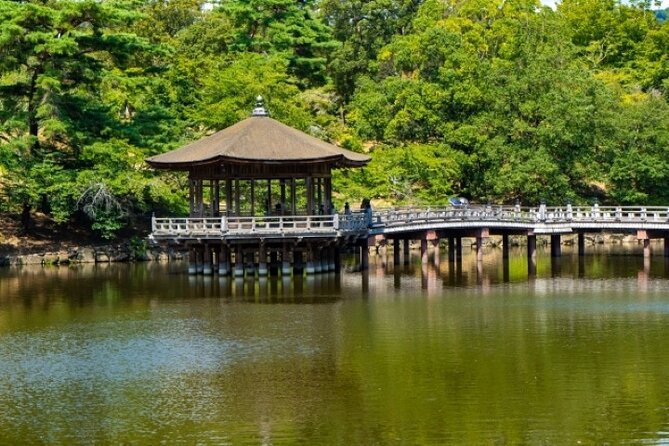
After Todai-ji and deer time, the tour shifts into a quieter, more scenic rhythm with Ukimido Pavilion. You spend around 30 minutes at the hexagonal pavilion floating in Sagiike.
This stop is valuable because it is a different kind of Nara memory. Todai-ji gives you monument scale. Nara Park gives you movement and deer interaction. Ukimido gives you a water-and-sky viewpoint where the pavilion reflects on the lake. The tour description even notes that on a clear day you can see the sky color and nature reflected in the water, which is exactly the sort of visual that makes your photos look like Nara postcards.
It also helps you recharge. If you have been walking in temple crowds, a water stop is a nice mental breather. It is not “just a photo spot,” either. The pavilion is a specific structure in a specific setting, and the time you get here helps you take in the scene rather than rushing past.
Kofuku-ji and Its Five-Story Pagoda: A Tall Finish With History on Display
You end the main sightseeing stretch with Kofuku-ji, spending about 30 minutes there. The standout is the Five-Story Pagoda, a traditional Japanese architecture landmark first built in 730. The tour notes that it stands about 50 meters tall, which is part of why it is so recognizable even when you are far away.
This stop works well as a “final anchor” because it gives you a different temple silhouette than Todai-ji. If Todai-ji is broad and monumental, Kofuku-ji’s pagoda presence feels sharper and more vertical. That contrast helps your brain remember Nara as a set of distinct places, not just one big temple day.
Also, the fact that the stop is time-boxed helps you avoid the common problem of running out of energy before you reach the final site. By planning your finish here, you leave with photos you will actually want to show people later, not just tired shots taken while speed-walking.
Price and Value: Paying for Time, Tickets, and a Real Plan
At $96.67 per person, you are paying for convenience plus content. This is not just a guide standing next to you, it is a guided order of sights plus admission fees.
Here is what you are getting that pushes the value above a simple DIY walk:
- Entrance fees included for the temples and shrines on the route
- A guide who handles the flow and explains what you are seeing
- Deer feeding crackers included, so the most “Nara-only” activity is built in
If you were to do it on your own, you would need to plan the route, purchase several admissions, and figure out the best timing to enjoy Nara without feeling stuck in crowds. For a lot of first-time visitors, paying for that structure is the point of booking a private tour.
One more angle: this tour is often booked about 31 days in advance on average. That does not guarantee anything about your exact day, but it is a sign that people use this experience as a planned highlight, usually when their itinerary is already tight.
So the value question is simple. If you want Nara’s top sights in a clean half-day without decision fatigue, this price can make sense. If you like wandering slowly with no structure, you might prefer a self-guided day instead.
Guide Style Can Make or Break the Day
One of the most consistent themes in the guide feedback is that the tour quality often comes down to the guide. Some guides were described as friendly, polite, patient with children, and very helpful with details that made the sites more enjoyable. Names like George and Kimu come up in the feedback, and both sound like strong matches for visitors who want a mix of explanations and a smooth pace.
There is also at least one cautionary story where the guide did not interact much and seemed to follow a script, possibly due to language or communication style. That does not mean the tour is poor overall, but it does mean you should set your expectation that private tour quality can be personality dependent.
If you want lots of interaction, show up with questions ready. Ask early about what to focus on at Todai-ji, what to watch for at the deer feeding area, or what time of day is best for Ukimido photos. A good guide will respond, and even if your language is limited, pointing your interest at specific sights usually helps communication.
Best For First-Time Visitors, Families, and Short Trips
This tour is designed for first-time visitors to Nara. It is also a strong fit if you have limited time, like when you are doing Nara as a half-day add-on from Kyoto or nearby.
I also think it suits families well. One feedback example mentioned the guide being patient with children during extreme heat around 39 C, and that kind of flexibility matters when kids get tired fast. The private format also helps families move at a pace that works instead of being pushed by a larger group.
Where it might not be the best match is if your travel style is very slow and free-form. This is a walking itinerary with set stops, so you will be doing a lot of moving. If you want to linger only where you feel like it, you might feel slightly constrained.
Heat in Nara: Plan Like It’s a Sunny Outdoor Sport
Nara summers can be intense. The tour information specifically warns that in August temperatures often exceed 35 C, and the outdoor nature of the tour means you should take heatstroke prevention seriously.
So plan like you are going to be outside for a while. That means hydration, shade when you can, and something like a parasol for sun protection, exactly as the tour guidance recommends. It also helps to choose a time of day that keeps you from cooking during peak sun, and if your schedule allows, going early can help you dodge crowd pressure too.
This is one of those experiences where “comfort planning” is part of the quality of your day. If you go in prepared, you will enjoy the temples more. If you ignore the heat, even a great guide cannot fully erase the discomfort.
Should You Book This Nara World Heritage Private Tour?
Book it if you want:
- a private half-day plan that covers the Nara essentials
- the deer feeding experience with crackers included
- major sights like Todai-ji, Nara Park, Ukimido, and Kofuku-ji without spending your time planning
Skip it or consider a different approach if:
- you prefer no-fixed itinerary wandering
- you are sensitive to heat and can only handle short outdoor periods
- you want ultra-interactive guiding and you are worried about communication style, since guide personality can vary
For most first-timers, this is a smart way to see Nara with less friction and more meaning per minute. It is also a nice choice when you want to leave with both iconic images and a sense that you actually understood what you saw, not just that you checked boxes.
FAQ
What’s the duration of the Nara World Heritage private tour?
It runs about 3 to 4 hours.
Is this tour private?
Yes. It is a private tour, and only your group participates.
What does the tour price include?
Entrance fees for the temples and shrines you visit are included, plus one packet of cracker to feed a deer, and a professional tour guide.
What if I want to buy food while we’re out?
Extra food and drinks are not included, so you can purchase them separately from street vendors.
Where do we meet the guide?
The start is at Todai-ji Museum, inside Todai-ji General Culture Center in Nara.
Where does the tour end?
The tour ends at Kintetsu-Nara Station.
Does the tour include the deer feeding experience?
Yes. You get one packet of cracker for feeding the deer at Nara Park.
Is the tour weather dependent?
Yes. The experience requires good weather. If it is canceled due to poor weather, you will be offered a different date or a full refund.
How flexible is cancellation if plans change?
You can cancel for a full refund if you cancel up to 24 hours in advance of the experience start time.
More Private Tours in Nara
More Tours in Nara

More Tour Reviews in Nara
Not for you? Here's more nearby things to do in Nara we have reviewed



Kyoto Private Guided Tours, compared.
 ★ 5.0Private Kyoto Tour with a Local, Highlights & Hidden Gems, PersonalisedFrom $1021,543 reviews
 ★ 5.0Kyoto 6hr Private Tour with Government-Licensed GuideFrom $1551,369 reviews
 ★ 5.010 Must-see Spots in Kyoto One Day Private Tour (up to 7 people)From $1791,108 reviews
 ★ 5.0Kyoto 4hr Private Tour with Government-Licensed GuideFrom $109629 reviews
 ★ 4.8Private Tour with Local Licensed GuideFrom $106463 reviews
 ★ 5.0Private Kyoto Tour with Licensed Guide & Vehicle (Max 15 persons)From $634417 reviews
 ★ 5.0Kyoto Customized Private Tour: See Top Attractions in 1 DayFrom $132342 reviews
 ★ 4.6Kyoto/Osaka: Kyoto and Nara Customized Private Guided TourFrom $477258 reviews
Browse the lists this tour appears in