
Reviewed · GION & GEISHA DISTRICT TOURS
One Hour Geisha Show in Kyoto
Kyoto has a way of making traditions feel personal. This Maiko show brings you close to an apprentice geisha with short, graceful performances, plus time to ask questions and take photos. I especially like how the show is structured around real interaction, not just watching from a distance, and how the guides help you understand the details like hair, makeup, and accessories. The main drawback is timing, the Maiko won’t be performing continuously for the full hour.
If you book, you’ll choose between two setups with different atmospheres. The Tea House option includes a shrine session, while the Gion Theater option is a showhouse experience with different wheelchair access. One more thing to consider: you need socks, and the experience is best for people who can stay engaged for a shorter, segmented performance.
Key highlights at a glance
- Meet a real Maiko (Kyoto has only about 40 Maikos left, so this is a rarity)
- Up close dance time that stays short by design, including a traditional dance around 10 minutes and then two shorter dances
- Photo and video time plus a photo moment with the Maiko
- Q&A with translation support from the professional guide
- A traditional Japanese game where you get to participate, not just watch
- Optional Kitano Tenmangū shrine session (only with the Tea House option)
Why a one-hour Maiko show in Kyoto can feel rare
Kyoto is basically the only place where you can still experience the geisha world in a way that feels rooted in place. That is why this show matters: it is built around meeting an actual apprentice geisha, the Maiko, and watching her perform up close.
What makes it more special is the size and exclusivity. You are not walking into a massive stage show where everything happens at arm’s length. The group sizes are capped at 23 for the Tea House option and 30 for the Gion Theater option, which makes the Q&A and photo time feel realistic and personal.
Also, don’t expect a constant “one long performance.” The point of geisha and maiko culture is that the art stays intentionally short, graceful, and controlled. You’ll get real moments to watch, then you’ll shift into interaction mode.
More Kyoto temple visits, food tours, tea experiences, and day trips to compare


Tea House option vs Gion Theater option: pick the vibe that fits you
This tour comes in two flavors, and your choice changes the overall feel of the afternoon.
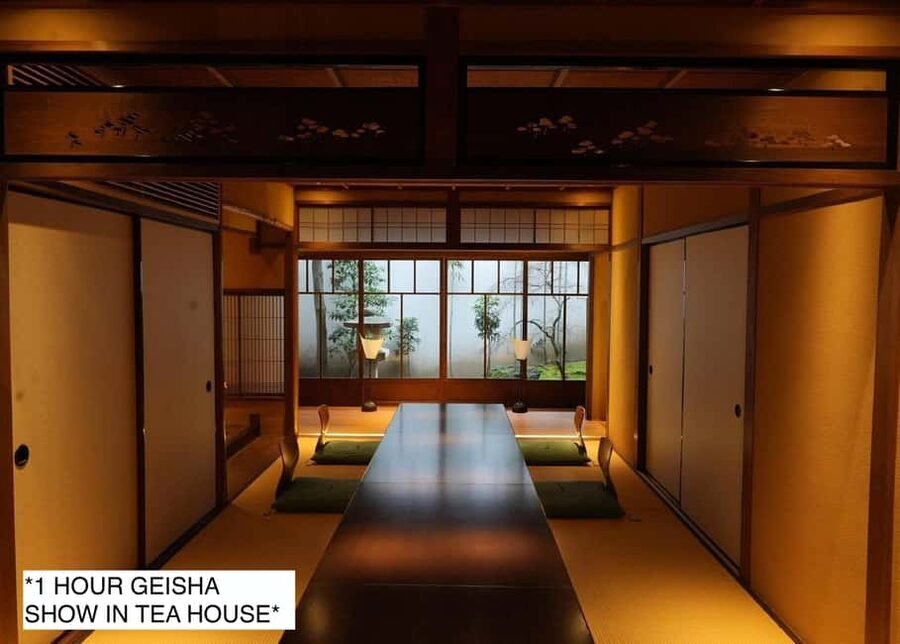
Tea House option: Kyoto-style room, plus a shrine session
The Tea House option takes place in a Japanese Kyo-Machi-ya (a Kyoto-style townhouse). It also includes a 30 minute Kitano Tenmangū Shrine session with the Maiko, and there is a walking component tied to that shrine visit.
If you like the idea of being in something that feels like a Kyoto home space, rather than a modern show facility, this is the route that tends to feel more atmospheric. It is also the only option that includes that shrine time.
Gion Theater option: showhouse energy, wheelchair access included
The Gion Theater option is held in a showhouse setting. It includes the Maiko show experience, Q&A, and interaction elements, but the shrine add-on is not part of this option.
Wheelchair access is also different here: the Tea House option is not wheelchair accessible, while the Gion Theater option is.
My practical advice on choosing
- Choose Tea House if you want the added shrine moment at Kitano Tenmangū and you’re comfortable with the location setup.
- Choose Gion Theater if you want a more showhouse-style environment or you need wheelchair access.
More Kyoto temple visits, food tours, tea experiences, and day trips to compare


Starting point and timing: how to make the first 10 minutes painless
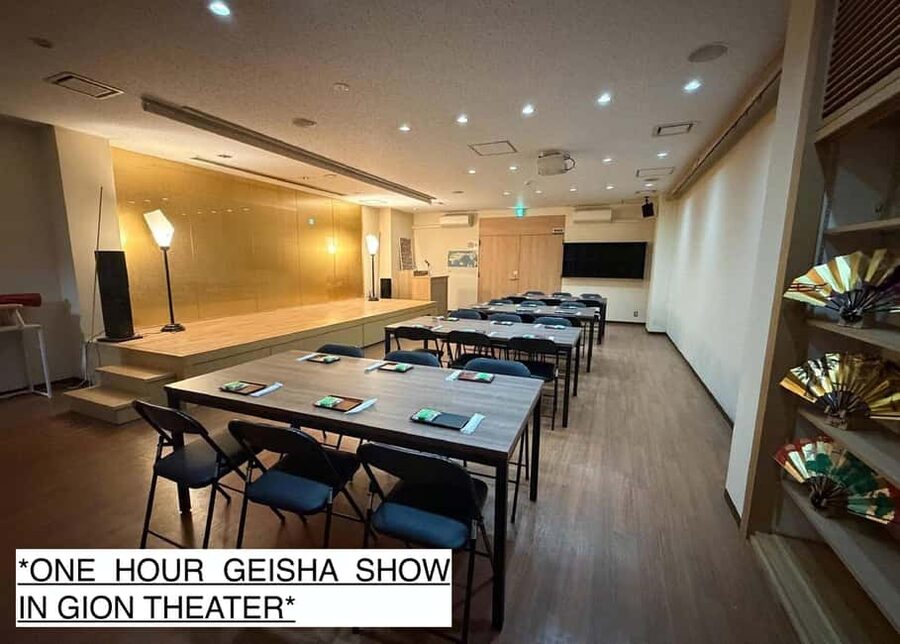
Meeting points can vary by option, so don’t treat the day like a casual wander. The tour lists specific starting locations, including a starting point at 梅乃 UMENO (302-2 Daikokuchō, KOHYO Kamishichikenten). From there, you’ll be led through the experience and later dropped off at one of three locations, including 梅乃 UMENO and Kitano Tenmangu Shrine.
Because this is an appointment-style show, I recommend you build your Kyoto day around it. If you arrive rushed, you’ll feel it during the short performance segments and the Q&A.
Two details matter for comfort:
- You’ll want to be wearing socks (bare feet aren’t allowed).
- The experience is not designed for strollers, and baby strollers are not allowed.
What the one-hour window really includes (and what it doesn’t)
The show is scheduled for 1 hour to 105 minutes, depending on the option and start time. Within that, the Maiko’s performance is intentionally short and spaced out.
Here’s the flow you should expect:
- You meet the Maiko and the guide sets the context.
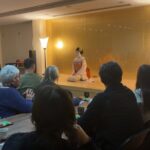
- The Maiko performs a traditional dance for about 10 minutes.
- There are then two additional dances, each about 5 minutes.
- After the dances, you shift into Q&A, and you get time for photos and a game.
So yes, you will spend an hour in the experience, but the Maiko isn’t continuously dancing the whole time. That actually helps you enjoy it. You can watch, ask questions, and participate without feeling like you’re stuck waiting for one long uninterrupted act.
Up close is the point: the dance, the structure, and the attention
The best part is that you’re seeing a Maiko in a controlled, intimate setting. The dances are short, but they are not “clipped” in a way that feels rushed. They’re designed to preserve grace and make each movement land.
In one described flow, the dances were performed from both sides of the table so the full group had the same chance to see the Maiko. Even if your exact seating arrangement differs, the intent is clear: you’re not paying to watch from across a room.
You’ll also benefit from the guide translation support. Guides like Genki, Chihiro, Rin, and Ai are mentioned as part of the experience, and their role is to keep communication smooth between you and the Maiko.
Q&A and photos: how to get more than a postcard memory
This is not just a performance with a quick photo at the end. The format builds in chances to connect.
Q&A time
After the dances, you’ll get Q&A. The guide helps translate questions and answers. That means you can ask about what you noticed, like the meaning of dress and hair details, and get responses that feel grounded and human rather than generic.
Photos and videos
You are explicitly welcome to take pictures and videos during the show. The experience is set up so photo-taking isn’t an awkward interruption. And you also have time for a photo moment with the Maiko.
A traditional game, and the fun part you might not expect
Then comes the traditional game portion. In at least one session, someone played Konpira Fune Fune and lost, which is exactly the kind of memory that makes these tours feel different from standard sightseeing. The game is light, participatory, and it gives you something to share beyond a “we watched a dance” story.
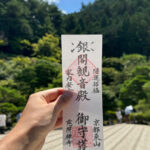
Kitano Tenmangū shrine time: what you get if you choose Tea House
If you book the Tea House option, you add a 30 minute Kitano Tenmangū Shrine session with the Maiko. That is a big reason people choose this option over the theater route.
The experience also includes a walking element tied to the shrine. That means you should plan for a bit of moving on your feet. You’ll want comfortable socks, stable footing, and the mindset that this is part of the cultural moment, not a rushed stop for photos.
Also, because this option has wheelchair restrictions (wheelchair access is not available), make sure it matches your mobility needs.
Price and value: is $50 a fair trade for Kyoto culture?
At $50 per person, you’re paying for a rare access moment. This isn’t a museum ticket. It’s a paid slot in a controlled setting with a real Maiko, guided explanation, tea and snacks, and time for Q&A, photos, and a game.
What you get that you typically cannot replicate on your own:
- Up-close Maiko viewing with built-in interaction time
- Translation and context from a professional guide
- Tea and traditional Japanese snacks included
- A structured show flow where you’re not guessing what to do next
What costs extra:
- Additional drinks or food
For me, the value depends on your travel style. If you like hands-on cultural experiences, short-format arts with storytelling, and photo moments that actually include conversation, this price starts to make sense fast. If you prefer long performances only, you might find yourself wishing for more dancing time. But the whole point is that the performances are short and intentional.
Etiquette and practical tips that keep the experience smooth
A few rules are clearly stated, and following them makes the event better for everyone.
Bring and wear what the tour asks for
- Bring socks. Bare feet are not allowed.
- Skip baby strollers. They aren’t allowed.
- Don’t bring alcohol or drugs.
Expect a guide to manage the pace
The guide is there to handle translation and keep the group organized, and several guides are mentioned by name in the experience. In practice, this matters because the flow includes dances, then Q&A, then the game, then photos. If you’re a little nervous about language, that support is one of the main “value drivers.”
Keep expectations realistic about dancing time
You will see multiple short dances, including a longer first dance. But again, the Maiko is not performing continuously for the full hour. That means you should enjoy the full schedule as a mix of art and conversation, not just “watching time.”
Who should book this Kyoto Maiko experience
This tour is a strong fit if you:
- Want a once-in-a-while Kyoto cultural experience, not just another temple photo stop
- Enjoy Q&A and learning what you’re seeing
- Like structured access that removes guesswork
- Want time to take photos and video without chaos
It may not be ideal if you:
- Need extended nonstop performance time
- Struggle with the requirement for socks and the no-stroller rule
- Have mobility limitations that don’t match your chosen option (Tea House option wheelchair access is not available)
There’s also a stated age suitability note: it is not suitable for people over 95 years. If that applies, I’d consider a different Kyoto experience route.
Should you book the One Hour Geisha Show in Kyoto?
I’d book it if you’re the kind of traveler who values access, context, and interaction. For the money, you’re getting a rare meeting with an apprentice geisha, structured dance time that stays authentic to the art form, and a guide who helps you understand what’s happening while you take photos and participate in a game.
Choose the Tea House option if the shrine visit to Kitano Tenmangū is a must for your Kyoto day, and you can comfortably do that portion. Choose Gion Theater if you prefer a showhouse setup or need wheelchair access.
If you’re on the fence, here’s my quick decision test: do you want a short, respectful arts experience with conversation built in? If yes, this one is worth reserving.
FAQ
How long is the Maiko show experience?
The experience runs about 1 hour, with a listed duration of 1 hour to 105 minutes depending on availability and the option booked.
Is the Maiko performing the entire hour nonstop?
No. The Maiko will not be performing continuously for one hour. The performances are intentionally short, and the schedule also includes Q&A, photos, and a traditional game.
Can I take photos and videos during the show?
Yes. You’re welcome to take pictures and videos during the show.
What is included with the tour price?
The package includes the geisha show (1 hour), tea and traditional Japanese snacks, and a professional tour guide. The Tea House option also includes a 30 minute Kitano Tenmangū Shrine session with the Maiko.
Do I need socks?
Yes. Socks are required, and bare feet are not allowed.
Which option includes the Kitano Tenmangū Shrine session?
Only the Tea House option includes the Kitano Tenmangū Shrine session (30 minutes). The shrine walking component applies only to the Tea House option.
More 1-Hour Experiences in Kyoto
More Shows & Entertainment in Kyoto

More Tour Reviews in Kyoto


Not for you? Here's more nearby things to do in Kyoto we have reviewed





Gion & Geisha District Tours, compared.
 ★ 4.7Kyoto Geisha Walking Tour: Gion District & Hidden GemsFrom $253,273 reviews
 ★ 4.9Gion Magical Night Walking Tour with Geisha TriviaFrom $242,393 reviews
 ★ 4.7Gion Geisha District Walking Tour – Stories of GeishaFrom $202,187 reviews
 ★ 4.9Best of Kyoto: Gion, Geisha, Pagodas & CobblestonesFrom $242,058 reviews
 ★ 4.5Night Walk in Gion: Kyoto’s Geisha DistrictFrom $212,003 reviews
 ★ 5.0Kyoto Night Foodie Tour in Gion (9+ dishes + 6 Sake tastings)From $1631,762 reviews
 ★ 5.0Kyoto Gion Geisha District Walking Tour – The Stories of GeishaFrom $251,441 reviews
 ★ 5.0Kyoto Gion: 2-Hour Geisha Culture & History Walking TourFrom $231,186 reviews
Browse the lists this tour appears in