
Reviewed · KYOTO CRAFT & CALLIGRAPHY WORKSHOPS
Private Japanese Calligraphy in Kyoto – Learn Shodō with a Master
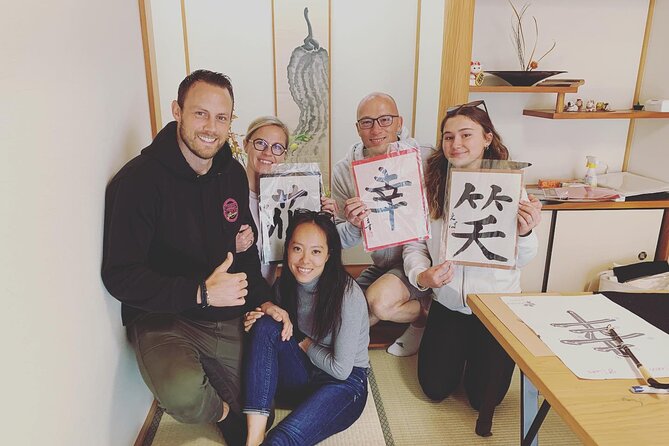
One hour, one brush, a Kyoto keepsake. This private Shodō class in a cozy home near Nijo Castle teaches correct calligraphy brush strokes and then lets you write a chosen kanji plus your name in Japanese. The main thing to consider is the tight timing and etiquette, you need clean socks and you must be on time, because arriving more than 15 minutes late means the class cannot start.
What I like most is the setup: you get full attention from Aya, a calligraphy master with more than 55 years of experience, and it is truly private, not a shared workshop. I also love the payoff, you leave with your own finished artwork, plus all the tools and paper are provided. If you want a long, slow, perfectly paced art session, this is still an hour, so go in ready to choose your character and practice with focus.
Key Things You Should Notice Before You Go
- A real private lesson with Aya, only your group, no rotating strangers.
- Tools and paper included, so you can show up empty-handed.
- You pick the kanji and write it your way, then add your name in Japanese.
- Tatami etiquette matters: clean socks required, barefoot in the tatami room is not permitted.
- Nijo-area meeting point is close to public transport, but it can be tricky if you rely only on maps.
- English and Japanese are available, so you can actually understand what you are doing.
Why Japanese Calligraphy in Kyoto Is Worth the Time
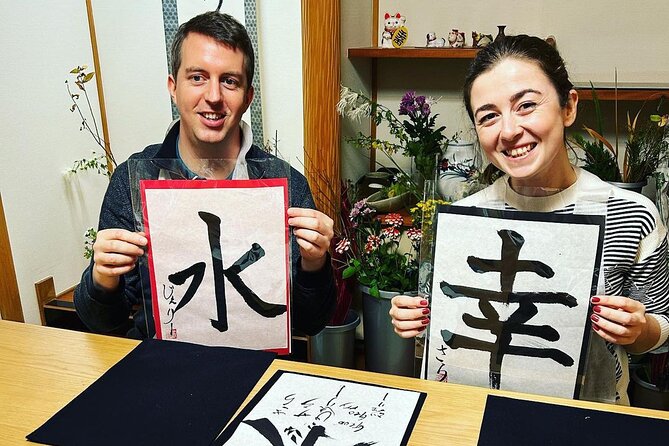
Kyoto is famous for temples and gardens, but Shodō hits a different nerve. You are not just looking at tradition, you are making it, one controlled brush movement at a time. That tiny physical effort sounds simple until you realize calligraphy is basically handwriting with rules, balance, and a mental state behind every stroke.
This is a smart choice if you want something cultural that still feels personal. You get a clear learning path, then you apply it immediately. And because you take your finished piece home, the class stays with you after you leave the neighborhood, instead of turning into yet another photo on your camera roll.
You can also read our reviews of more private tours in Kyoto



Meet Aya at the Nijo Home Location
The lesson happens at the SAKURA Experience Japanese Culture Nijo Home meeting point in Nakagyo Ward, Izumichō, Kyoto, with the name on the start point as さくら日本文化体験 二条城教室. This is set in a local home, with a calm studio space for the tatami room lesson.
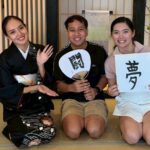
Aya is the calligraphy instructor you will work with. In feedback, she is repeatedly described as patient, encouraging, and attentive, and you can feel the difference between generic instruction and a teacher who adjusts to your pace. Her husband Manabu also shows up as part of the hosting support, including helping guests with practical needs like taking pictures during the class and making it easier to get situated.
One practical note: the location is close to Nijo Castle, and Aya’s own guidance has pointed out it is about 200 meters straight west from the front of Nijo Castle. Still, a number of people find the meeting point hard due to map oddities, where the street view can point you the wrong way even if the pin is correct. If you are even a little unsure, take the time to confirm the exact pin position before you walk off.
What the One-Stop Itinerary Really Looks Like
This experience is basically one stop, and that is a good thing. There is no hopping across town, no time wasted on transferring between locations. You meet at the home, then the class runs there.
In that one-hour window, the flow is simple:
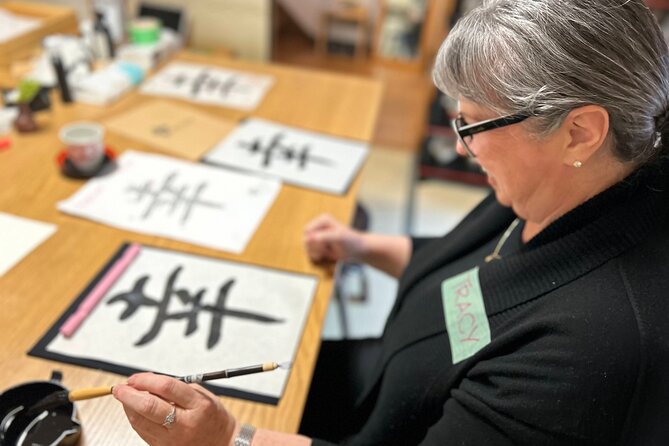
- You get oriented to the tools and the basics of brush handling.
- You learn the correct brush movements for clean strokes.
- You choose a kanji character, guided by the instructor.
- You write the kanji, then add your name in Japanese.
- You finish with a take-home artwork made during the session.
That flow matters, because Shodō is not something you can learn by watching for 10 minutes. The class uses short practice loops, so you see how a stroke should look, then you correct quickly and keep moving. It also helps that the class is private, so the pacing can adapt to your comfort level.
The Lesson Goals: Brush Technique, Not Just Pretty Writing
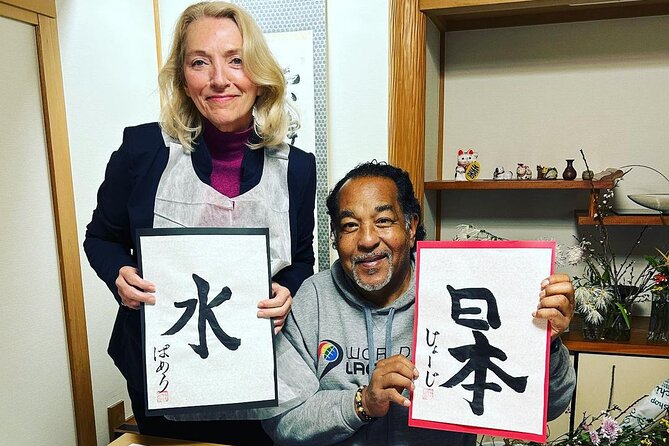
The teaching focus is on technique. The goal is not artistic perfection, it is correct brush movement. That means things like how you start, how you move through the stroke, and how pressure and direction change the character shape.
Aya also brings context while you practice. In feedback, people mention history of calligraphy and guidance on how to approach writing without pressure. That context helps because it turns the lesson from random copying into something you understand. You are learning why strokes behave the way they do, not just memorizing one example.
And you get to make the class yours. You select a favorite kanji, then you personalize it with your name in Japanese. That is where the souvenir becomes more than a demonstration. It becomes your handwriting, with your decision behind it.
Tatami Socks and Timing Rules You Must Respect
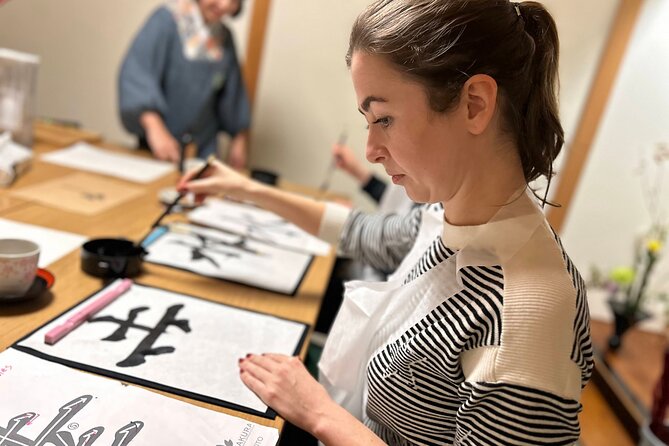
Kyoto etiquette is not a vibe, it is a rule set. For this class, you need clean socks, and entering the tatami room without socks is considered impolite. Barefoot in the tatami room is not permitted, so plan for it. This is an easy fix if you pack a clean pair in your day bag, especially if you are coming from temple steps where you might have walked in whatever footwear you brought.
Timing is the other must-know rule. If you arrive more than 15 minutes late, the class cannot be offered, and refunds are not available. That does not mean the host is being difficult, it means they have prepared materials and room setup for your slot. To make the day smooth, aim to arrive a bit early and wait nearby, rather than trying to sprint in at the last second.

Price and Value: What $77.51 Buys You in Kyoto
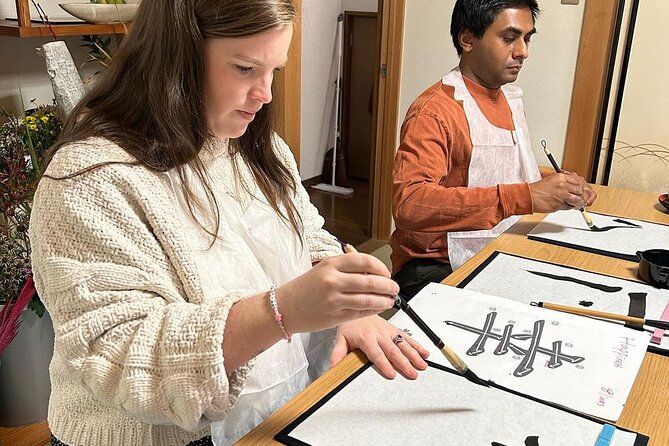
At $77.51 per person, this is not a cheap souvenir craft. But it is also not a generic group activity. The price covers a true private lesson with Aya, plus calligraphy tools rental and paper, plus guidance choosing and writing your kanji, plus your finished artwork to take home.
Here is the value math that matters:
- You are paying for instruction quality and time with a master.
- You are not paying extra for tools, paper, or the final piece.
- You are paying for cultural context, history, and feedback on stroke technique.
One detail that affects value is duration. It is about 1 hour, and that can feel fast if your name is long or if you want multiple practice attempts. A few people felt there was not enough time for more extensive writing. If your goal is simply a beautiful final piece and a clear intro, the one-hour format is a great fit. If your goal is heavy practice and lots of extra characters, you may want to mentally budget for a single focused piece.
Also keep an eye on group discounts. If you are traveling with friends or family and you book multiple spots for the same time, that can improve value.
Language Support: English and Japanese Instruction
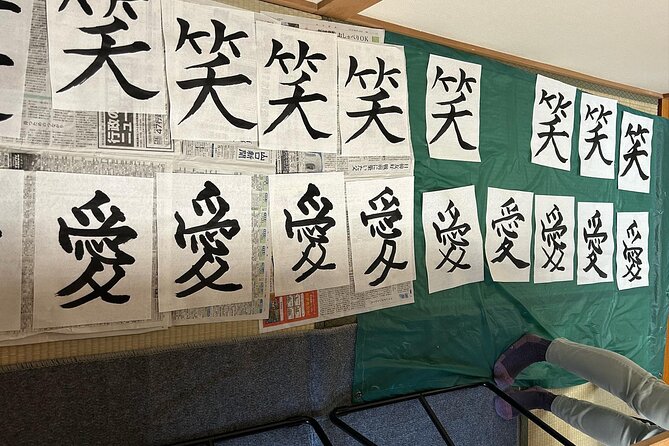
The class is offered in English and Japanese. That matters because calligraphy instruction relies on exact explanations. If you are nervous about learning characters or interpreting directions, language support reduces guesswork fast.
In the feedback, people often mention that Aya speaks English well and that she is patient, which helps if you are a beginner. Even if you have never held a brush, the instruction is structured so you can follow along and build confidence quickly.
What to Do Before You Go: Small Prep That Pays Off
You do not need to study kanji beforehand, but you can make the session smoother with two simple choices:
- Decide what kanji you want ahead of time, or at least have a short list. A favorite symbol helps you commit and move faster once you arrive.
- Bring your clean-socks solution. Either pack a spare pair or wear something that stays clean.
If you are prone to getting turned around in Kyoto, treat this like a real appointment. That means checking the walking route once you land at Nijo Castle and not only trusting street view screenshots.
Who This Class Suits Best
This is a strong match for:
- Beginner calligraphy lovers who want real instruction, not just a quick try.
- People who like calm, respectful cultural experiences in a home setting.
- Anyone who wants a take-home souvenir that is genuinely personal.
Age matters. Children under 12 cannot be accommodated due to maintaining a quiet learning environment. If you are traveling with kids, this is better suited to older teens who can handle the tatami-room quiet and focus. In feedback, families with older children mentioned enjoying the class, as long as everyone was engaged.
If you dislike structured lessons, or if you want an artsy, free-form session with lots of discussion and no practice, you might find the hour feels tightly focused. A few comments mentioned feeling rushed or that history was not explained as clearly as hoped for. The good news is that because it is private, you can ask follow-up questions during the practice.
Should You Book This Private Shodō Class in Kyoto?
If you want one memorable Kyoto experience that is hands-on, calm, and culturally grounded, I would book this. The best reason is simple: you are not just watching calligraphy, you are learning the stroke logic from Aya, and you take home the result.
Book it if:
- You want a private lesson near major sights like Nijo Castle.
- You like the idea of writing your name in Japanese with correct brush guidance.
- You value a souvenir that looks like it came from you, not from a workshop line.
Skip it if:
- You need a very long session or multiple finished characters.
- You know you will likely be late, because arriving more than 15 minutes late can end your slot.
If you do book, go in with clean socks, arrive early, and come ready to practice one character carefully. One hour is enough to leave with real confidence, not just a piece of paper with ink on it.
FAQ
How long is the private Japanese calligraphy class in Kyoto?
The class lasts about 1 hour.
Is this a private class or do I share with other people?
It is a private tour/activity. Only your group participates.
What is included in the price?
The price includes a private calligraphy lesson with an experienced master, tools rental and paper, guidance selecting and writing your favorite kanji, and your finished artwork to take home.
What languages are offered during the class?
The class is offered in English and Japanese.
Do I need to bring anything for the tatami room?
Please wear or bring clean socks. Entering the tatami room without socks is not permitted.
Is there an age limit for this experience?
Yes. Children under 12 cannot be accommodated to maintain a quiet learning environment.
What happens if I arrive late?
If you arrive more than 15 minutes late, the class cannot be offered and refunds cannot be offered.
Can I cancel for free?
You can cancel up to 24 hours in advance for a full refund.
More Private Tours in Kyoto


More Tour Reviews in Kyoto

Not for you? Here's more nearby things to do in Kyoto we have reviewed







Kyoto Craft & Calligraphy Workshops, compared.
 ★ 5.0Chopsticks Making Workshop in Gion with Engraving OptionFrom $15958 reviews
 ★ 4.8Authentic knife making experience at a blacksmith in KyotoFrom $154350 reviews
 ★ 5.0Calligraphy class at Buddhist temple in city centerFrom $55167 reviews
 ★ 5.0Roketsu dyeing experience: M course Roketsu Dyeing ExperienceFrom $25163 reviews
 ★ 4.9Japanese Archery Workshop with Experienced InstructorFrom $38132 reviews
 ★ 4.8Japanese Calligraphy ClassFrom $5189 reviews
 ★ 5.0TAIKO, Japanese Drum Experience from KyotoFrom $11586 reviews
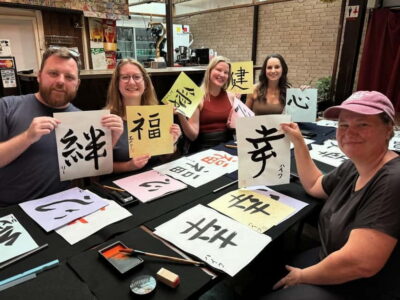 ★ 4.7Japanese Calligraphy WorkshopFrom $3284 reviews
Browse the lists this tour appears in