
Reviewed · NARA DAY TRIPS FROM KYOTO
Osaka and Nara Day Tour with Private Transportation
Private car, deer, and a Buddha, all in one day. I like the private transportation because it links Nara and Osaka with almost no thinking, and I like the English guide style that keeps the stops understandable and not rushed. The main thing to watch is the day is packed into about 6 to 9 hours, with time-boxed visits, so if you like to linger, you may feel the clock.
I also love starting in Nara, where the Todai-ji experience sets a calm tone before the fun chaos of Nara Deer Park. You get a guided route through big temple sights, then a short window to meet the bowing deer in a place that still feels like a real temple zone, not a theme park.
By the time you roll into Osaka, the plan keeps shifting from landmark photos to street-level energy. You’ll hit Osaka Castle, then finish in the neon-heavy areas around Dotonbori and Namba Yasaka Shrine, where the whole day turns into a practical food-walk finish.
Key highlights worth caring about
- Private vehicle with travel time built in, so you are not budgeting your day around train transfers
- Todai-ji entry included, with a focused visit through major gate and hall highlights
- Nara Deer Park timing works, you get deer time without losing the rest of the day
- Osaka Castle visit is planned to fit, including entrance coverage and a clear 1-hour block
- Dotonbori plus Namba Yasaka Shrine photo stop, a good mix of food streets and quick icon photography
- English guide attention to real details, including practical advice for deer encounters
The real value of private transport between Kyoto and Kansai
This tour is built for people who want the highlights without turning the day into a logistics puzzle. You are picked up from Osaka or Kyoto areas, then you are taken to each stop with travel time included, and you get dropped back to your hotel. That matters because Nara and Osaka are close enough to do in one day, but far enough that DIY can get annoying fast when you add walking, stations, and connections.
In at least one past experience, the meeting point included the cruise port, and the car was spacious and air-conditioned, which is not a small deal in Japan when the weather is warm. I also like that this is a private tour, meaning it is only your group, not a giant mix of strangers and different pacing.
Physically, you should be ready for moderate walking. Todai-ji and the deer park involve outdoor paths and temple ground strolling. Osaka Castle adds more walking around the perimeter areas. If you are comfortable with that, the private setup makes the whole day feel controlled instead of chaotic.
You can also read our reviews of more private tours in Kyoto

Todai-ji Temple: Nandaimon Gate to the Great Buddha Hall
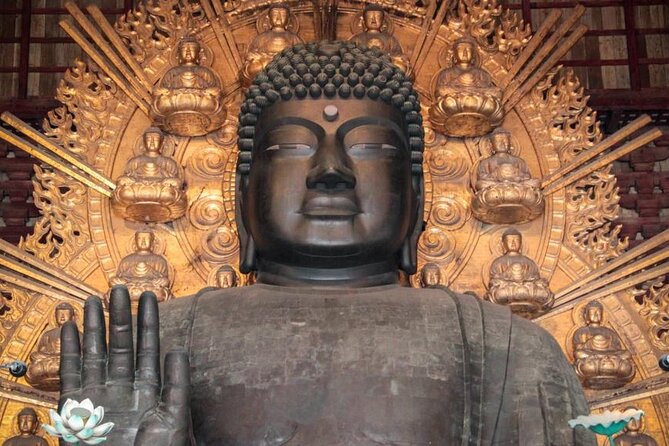
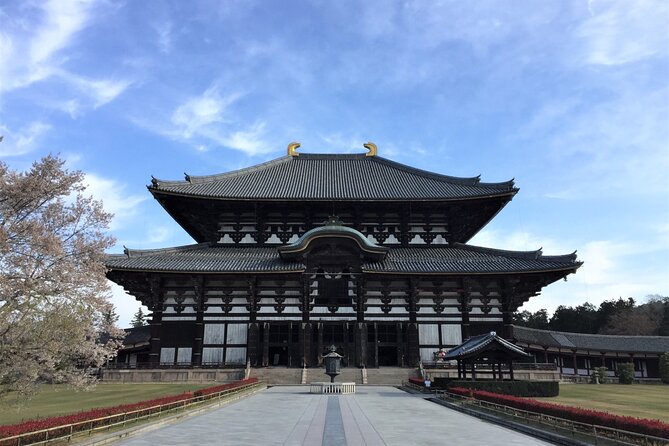
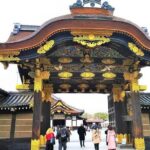
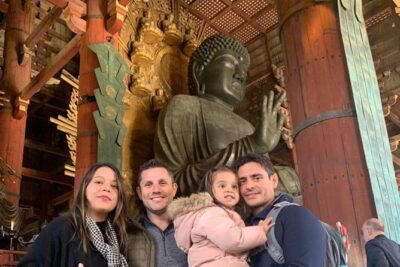
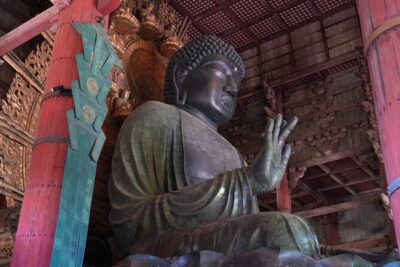
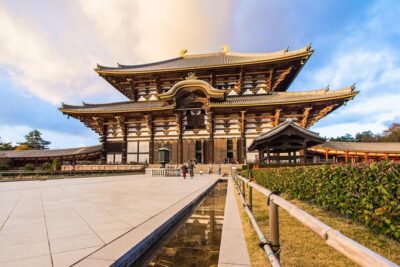
Todai-ji is where the day earns its big “first stop” energy. The tour starts with an about 1-hour visit, and the 800 yen entrance fee is included. You enter through the Nandaimon Gate, where you will see the two large guardian statues that frame the experience immediately. It is the kind of moment that tells you you are not just sightseeing, you are stepping into a major temple complex.
From there, the focus moves to the Great Buddha Hall. The highlight here is the scale, and the fact that you are inside a hall designed to present one of Japan’s most impressive temple icon experiences. The tour structure matters because it keeps you from wandering aimlessly for too long. You get a guided route through the must-see parts, then you move on while you still have energy for the rest of the day.
What I like as a traveler: temple visits are easy to do poorly if you do not know what you are looking at. Having an English guide helps you connect the dots fast, especially around how the gate and guardian statues set the tone before you reach the main hall focus.
Possible drawback: this is a highlight tour, so you do not get hours of slow temple exploration. If you want to sit and study, you might feel nudged forward. But for most first-time visitors, this is a strong use of your limited time.
Nara Deer Park: bowing deer and a short, sweet deer window
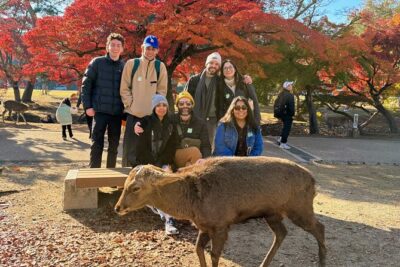
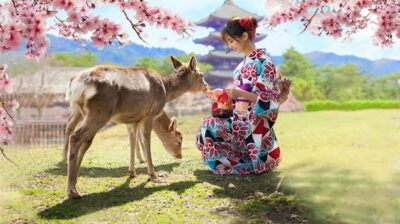
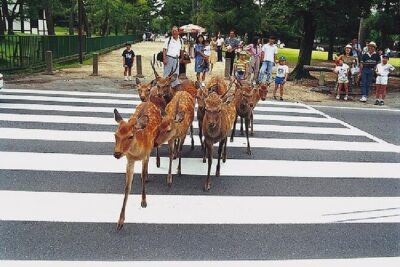
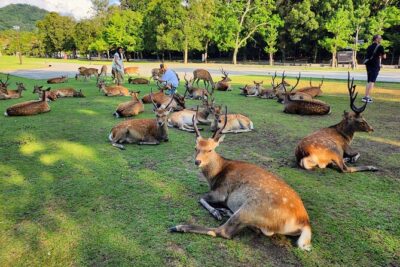
Next comes Nara Deer Park, with about 40 minutes on the ground. Admission here is free, and the whole area is known for free-roaming deer that often bow when visitors approach. The tour timing is smart: you get enough time for photos and close-up moments without letting deer interactions eat the entire morning.
One practical detail I really value is that your guide can help with the deer experience. In past guided experiences, Ben was praised for giving clear advice on how to feed the deer. Even if you are only there for the pictures, it helps to know what is safe and what to avoid so the moment stays fun, not stressful.
How to make the most of the short deer window:
- Keep your camera ready, deer movements happen fast.
- Listen to your guide’s guidance first, then act.
- If deer get close, do not panic. Follow the pace your guide sets.
The other upside: this stop adds contrast. You move from temple scale and stone into open grounds and animal encounters. That rhythm keeps the day from feeling like one long march of monuments.
Osaka Castle in one hour: a classic exterior-focused visit that fits
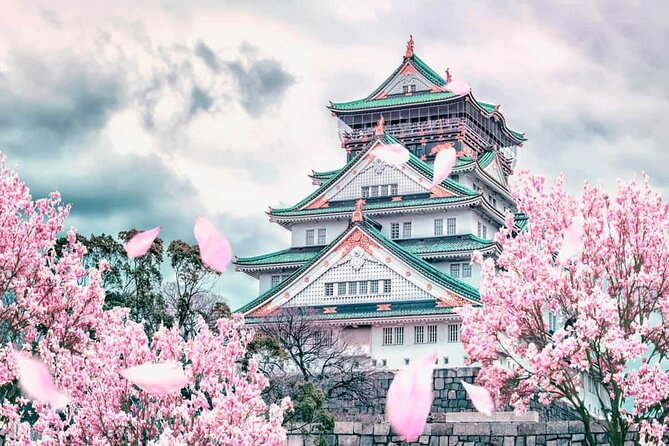
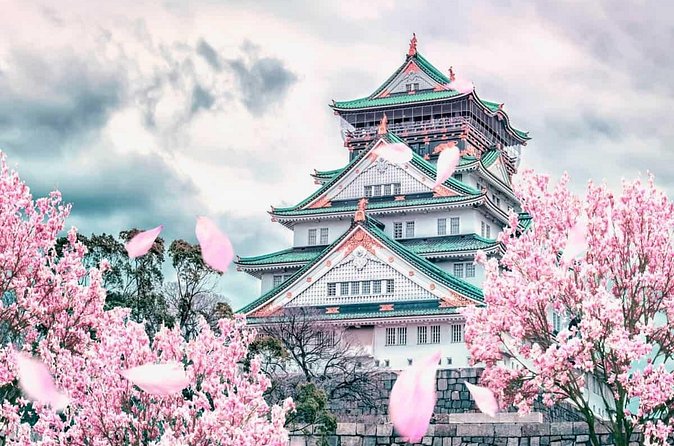
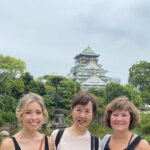
After Nara, you go to Osaka Castle with an about 1-hour stop. The castle grounds are surrounded by stone walls and moats, and you get views of the castle rise with white walls and golden accents topped by green roof tiles. Even if you are not a castle-collector, the exterior and surroundings are the kind of visual that instantly reads as Osaka in photos.
In the package details, the 1200 yen entrance fee for Osaka Castle is included. That is a meaningful value point because castle entry costs add up quickly in Japan, and you avoid surprise add-ons later.
Why this stop works inside a day tour: Osaka Castle is iconic enough that a shorter visit still feels rewarding. You get the core sight, the moat-and-stone setting, and you can take your time with viewpoints and photos without being stuck for a whole half-day. This is exactly the kind of stop that benefits from a guide too, because it is easy to “walk past” the best angles if you are going in blind.
Possible drawback: 1 hour is not long. If you want to read every sign, go deep into exhibits, or you prefer slower museum pace, you may wish you had more time. Think of this as the castle “hit,” not the castle “life story.”
Dotonbori Tsuribori and Namba Yasaka Shrine: neon finish plus a photo payoff
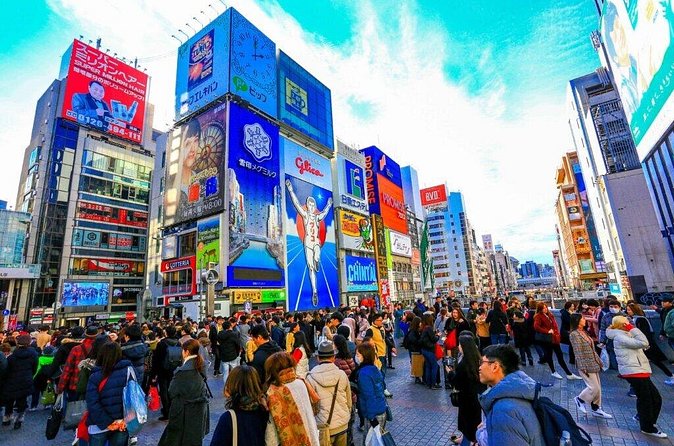
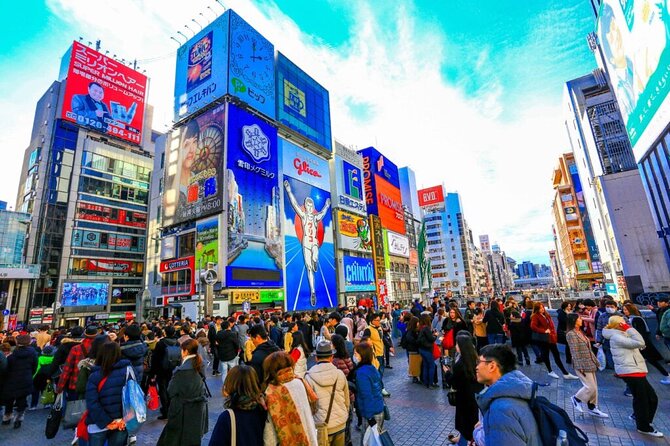
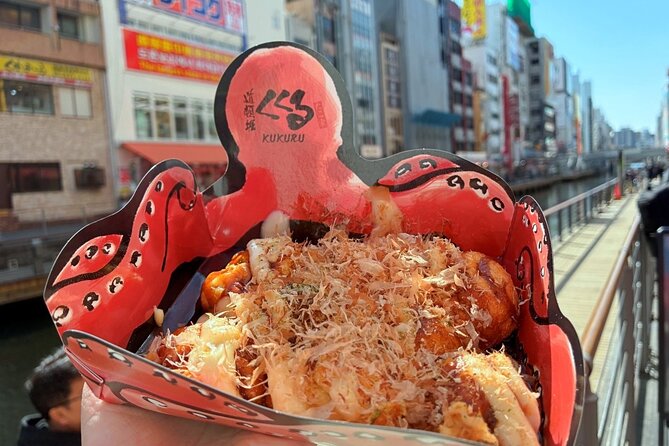
The tour ends with Osaka street energy. First is Dotonbori Tsuribori, with about 2 hours. This district is famous for neon lights, busy streets, and the kind of atmosphere that makes you want to wander even when you are hungry. It is also where the tour’s food-walk spirit fits naturally, because street stalls and restaurants are built around local favorites like takoyaki.
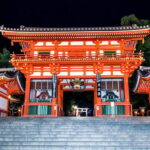
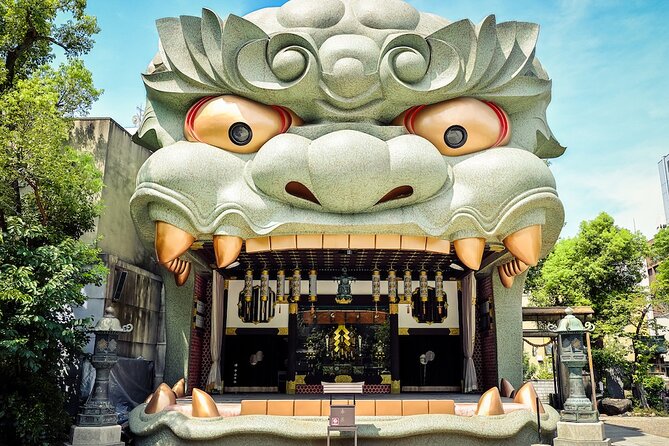
Then you visit Namba Yasaka Shrine for about 1 hour. This is a great pairing with Dotonbori because it adds a quick cultural icon stop without derailing the evening vibe. The tour highlights the lion-head altar for surreal photo opportunities. If you love odd details and iconic corners, this is a smart use of time.
One thing I appreciate about this ending sequence is the pacing. A day that starts with temple calm ends with Osaka’s sensory energy, so the trip feels complete. You also get flexibility. You will be dropped back after the tour, but you finish in an area where you can keep walking on your own if you want.
Practical tip for the food side: this is a takoyaki-friendly zone, but your exact snack plan will come down to budget and appetite. Since lunch and personal spending are not included, I recommend setting aside cash or a card buffer so you can say yes to the small bites that tempt you at the stalls.
Price and logistics: is $241.07 per person good value?
At $241.07 per person, this is not a bargain in the “cheapest tour wins” sense. It is priced like what it is: a private, guided day with transportation and key admissions handled. When I judge value in Japan, I look at two things: time saved and friction removed.
Here, your friction reducers include:
- Private transportation with travel time from Osaka or Kyoto back to your hotel
- An English tour guide to keep you oriented through temple and street areas
- Entrance fees included for Todai-ji (800 yen) and Osaka Castle (1200 yen)
- Mobile ticket convenience
- Group discounts listed as available
What you still pay for:
- Personal expenses and lunch
- Gratuities are appreciated
So when does the price feel fair? It tends to feel fair when you would otherwise spend time connecting trains, navigating multiple neighborhoods, and then paying for admissions anyway. It also feels fair if you want a guided route that helps you make sense of what you are seeing quickly. This tour is basically a “high-efficiency highlights day,” and it is doing its job well.
When might it feel too pricey? If you love independent travel, you already know how you will handle transit, and you plan to visit only 1 or 2 of these sights. In that case, you could build a DIY day for less. But if you want the whole mix, private transport plus tickets handled is where the money goes.
The guide factor: why people single out Ben’s style
Guides can make or break a tour day. The standout pattern in past experiences is that Ben was praised for clear English, friendly help, and historical and local knowledge explained in an easy to understand way. That matters because temples and shrine areas can look confusing if you only have an app and a few minutes.
A good guide also helps you move efficiently. In those experiences, Ben was noted for knowing his way around and meeting the group promptly, including scenarios like cruise port pickup. The result is less waiting around and fewer “what now?” moments.
You also get on-the-spot practical advice, including tips tied to deer feeding. That kind of guidance turns a potentially awkward situation into a fun, safe interaction.
If you book, do not be shy about using the guide’s brain. Ask where to take the lion-head altar photos from the best angle, or what timing makes sense for Dotonbori walking. Even simple questions can save you from wandering in circles.
Who should book, and who might want a different plan
This tour is a strong match if you:
- Are short on time and want Nara and Osaka highlights in one go
- Prefer a private vehicle over train transfers and station navigation
- Want an English guide to explain what you are seeing at Todai-ji and Osaka Castle
- Like a day that mixes major landmarks with street-level fun and food
It may not be ideal if you:
- Want slow, deep temple study time
- Hate time-boxed schedules
- Are on a strict budget for every meal and tip, since lunch and spending are your responsibility
- Want a fully flexible route you control minute by minute
Also, the tour is weather-dependent. If conditions are poor, you will be offered a different date or a full refund. For best odds, plan it when your trip has some backup room.
Should you book the Osaka and Nara Day Tour with Private Transportation?
I would book this if your goal is a stress-free, high-efficiency highlights day. The private car does real work here, because it keeps your energy for the sights instead of spending it on transit stress. Add an English guide who can explain the temple and city stops in plain language, and you have the ingredients for a day that feels smooth.
If you want a gentle pace with lots of unstructured time, you might feel constrained by the 6 to 9 hour plan and the fixed visit lengths. But if you are the type who likes checking off the big anchors, then ending in Dotonbori with neon streets and takoyaki energy is a satisfying way to wrap the day.
FAQ
FAQ
How long is the Osaka and Nara day tour?
The tour runs about 6 to 9 hours.
Is pickup included?
Pickup is offered, and the tour includes travel time from Osaka or Kyoto to the destinations and back to your hotel.
Is the tour private?
Yes. It is a private tour, and only your group participates.
What does the price include?
The tour includes private transportation, the entrance fee to Todai-ji Temple (800 yen), an English tour guide, travel time from Osaka or Kyoto to the destinations and back to your hotel, and the entrance fee to Osaka Castle (1200 yen).
What is not included?
Lunch and personal expenses are not included, and gratuities are appreciated.
Do I need to buy tickets for Todai-ji and Osaka Castle?
The entrance fees for Todai-ji Temple and Osaka Castle are included in the tour.
Is there a mobile ticket?
Yes, the tour offers a mobile ticket.
What are the main stops on the itinerary?
The day includes Todai-ji Temple, Nara Park, Osaka Castle, Dotonbori Tsuribori, and Namba Yasaka Shrine.
What fitness level is required?
The tour calls for a moderate physical fitness level.
What happens if the weather is poor?
The tour requires good weather. If it is canceled due to poor weather, you will be offered a different date or a full refund.
More Private Tours in Kyoto
More Tours in Kyoto
More Tour Reviews in Kyoto
Not for you? Here's more nearby things to do in Kyoto we have reviewed
Nara Day Trips from Kyoto, compared.
 ★ 5.0World Heritage Kyoto & Nara Uji Authentic Matcha ExperienceFrom $1291,573 reviews
 ★ 4.7Kyoto/Osaka: Nara, Fushimi Inari Taisha, Arashiyama Bus TourFrom $521,275 reviews
 ★ 5.0Nara Half Day Trip Walking Tour (Private Option Available)From $105937 reviews
 ★ 4.4Osaka/Kyoto: Arashiyama, Nara & Fushimi Inari Shrine w/LunchFrom $61754 reviews
 ★ 5.0Nara Early Morning Tour (Kyoto or Osaka Departure Available)From $61676 reviews
 ★ 4.5Kyoto and Nara Day Trip from KyotoFrom $194445 reviews
 ★ 5.0Full Day Guided Tour to Kyoto and Nara from Osaka by VanFrom $106420 reviews
 ★ 4.5Nara Afternoon Tour from Kyoto or OsakaFrom $102390 reviews
Browse the lists this tour appears in